


Commercial Refrigeration in Dallas: Protect Your Inventory, Not Just Your Comfort
Walk-in coolers, freezers and ice machines repaired by licensed refrigeration technicians – usually one part, not a whole new system.
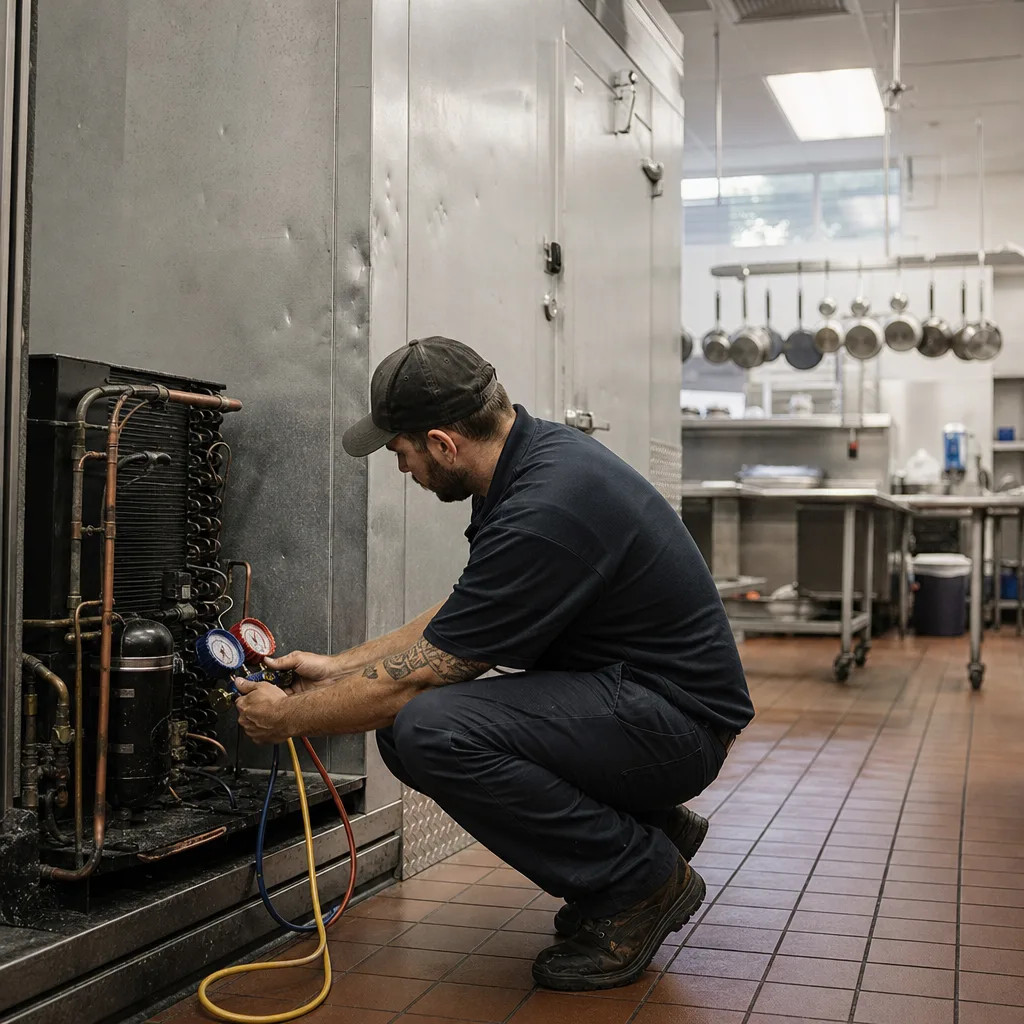
What’s Covered on This Page
- What a Commercial Refrigeration Call Covers
- Why Certified Technicians Matter for Refrigerant Work
- Urgent Signs vs. Problems That Can Wait
- What You Can Check Before Calling a Technician
- How the Repair Visit Works, Start to Finish
- Can I just add refrigerant myself to save time?
- How long can product sit safely while I wait for a repair?
- What’s the difference between a refrigeration problem and an electrical problem feeding my unit?
- Does a torn door gasket really matter if the box still holds temperature?
What a Commercial Refrigeration Call Covers
When your walk-in cooler is creeping up in temperature or your ice machine quits during the lunch rush, you need two answers fast. What’s wrong, and what will it cost to fix? Here’s how a call works with us, start to finish.
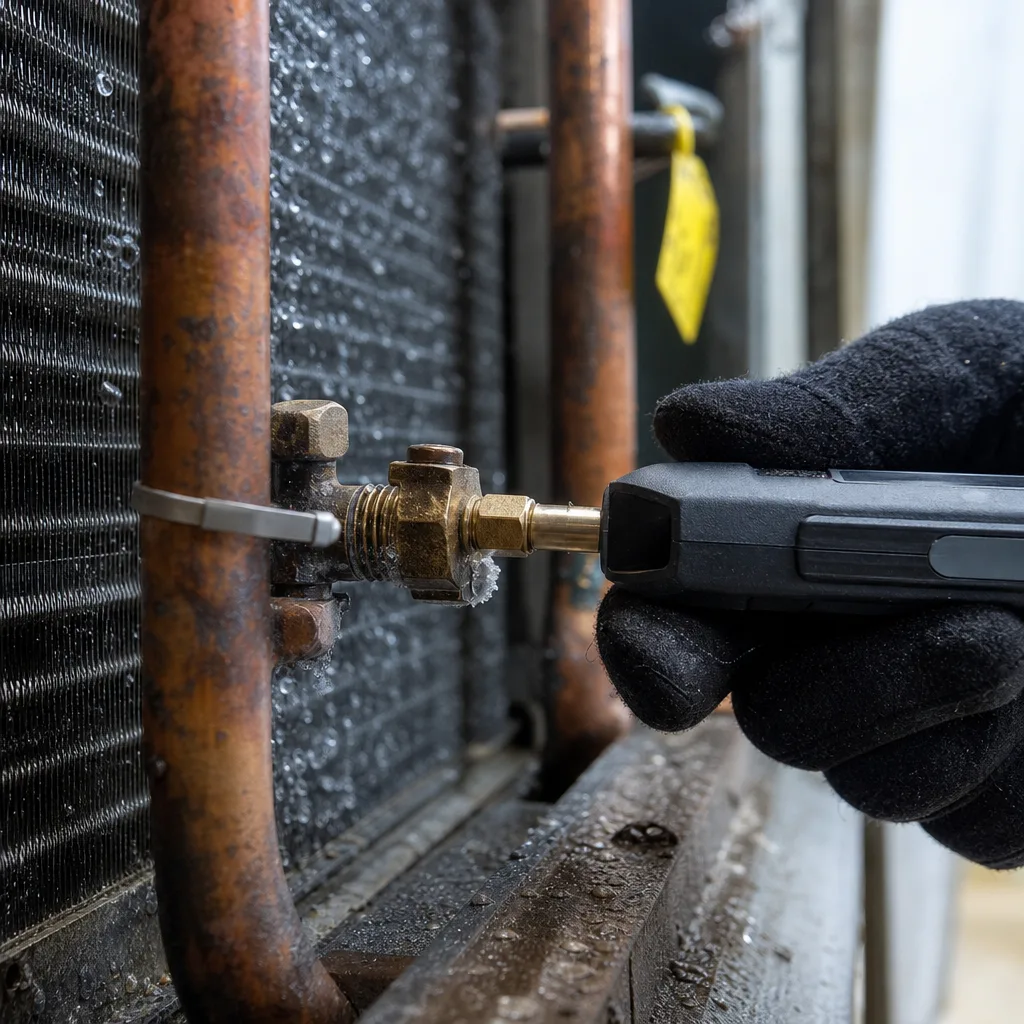
Our technician finds the failed part, repairs or replaces it, and then checks that your system runs correctly before leaving. Most calls are a single common failure fixed on the first visit. That matters when you’ve got product sitting in a box that’s losing its cold.
You’ll see the price before any work starts. We use upfront flat-rate pricing, so you approve the number first and there’s no meter running while we work.
- Service-call fee: $26 to $99, credited toward the repair if you move forward with Xtreme Air Services.
- Most common repair: $300 to $2,400.
- Full typical range for commercial refrigeration work: $300 to $5,000.
- Included: diagnosis, labor, the standard replacement part, testing, and cleanup.
- Quoted separately: additional failed parts, major components, code upgrades, or permits.
Your repair’s cost depends on a few things. The first is how far the failure has gone. The second is what the part costs and how easy it is to get. The third is your equipment’s age and brand. The last is whether more than one component has failed. A single bad part on a newer unit sits at the low end. An older box with several worn parts costs more, and we’ll tell you that plainly before you decide.
Timing won’t change your bill. Coolers don’t wait for business hours, especially when a Dallas summer afternoon keeps your condenser working its hardest. That’s why there’s no extra charge for nights or weekends. A Saturday night call costs the same as a Tuesday morning.
If the fix turns into a bigger job, like replacing a major component or putting in new equipment, flexible financing is available on qualifying installations and larger jobs, on approved credit. That way you can get your business running again without having to pay for the whole job at once.
A call covers more than just reach-in coolers. We handle walk-in cooler repair, walk-in freezer repair, ice machine repair, and refrigeration leak detection. Because we’re one team for HVAC, plumbing, electrical, and refrigeration, an issue that crosses trades can stay with one company. A tripped circuit feeding your compressor is one example. A clogged drain under your ice machine is another.
Why Certified Technicians Matter for Refrigerant Work
Refrigerant is the part of your cooler you never see, and it’s the part that most needs a trained hand. When your walk-in or reach-in can’t hold its cold because of a refrigerant problem, the fix isn’t just adding more. Someone has to figure out why it’s low, stop the leak, and put back the exact charge your system was built to run on.
That work is regulated, too. Federal EPA rules require technicians who handle refrigerant to be certified, and they don’t allow refrigerant to be released into the air. In Texas, air conditioning and refrigeration contractors are licensed through the Texas Department of Licensing and Regulation. Xtreme Air Services is fully licensed and insured, and our HVAC license number is TACLA29023C. You can look it up before you ever pick up the phone.
Here’s why this matters for your business, not just for the paperwork.
- A top-off doesn’t fix a leak. If your system is low on refrigerant, it went somewhere. Adding more without finding the leak might buy you a few days or weeks. Then you end up paying for the same refrigerant again.
- The charge has to be right. With too little, the box can’t hold temperature. With too much, the compressor runs under extra strain. Either way, the most expensive part of your system wears out early.
- The refrigerant has to match your equipment. Different systems use different refrigerants. Mixing them or using the wrong one can damage the equipment and make future repairs harder.
- Old refrigerant has to be captured, not vented. A trained tech recovers it properly so it doesn’t end up in the air, and so the job stays within the rules.
Dallas heat raises the stakes. In July, your condenser is already working hard to push heat outside. A system that’s even a little short on refrigerant has less room to keep up. A small leak nobody noticed in April can turn into a box that won’t hold temperature on the hottest afternoon of the year. That’s when your product starts to warm and your day gets a lot harder.
Whoever you call, it’s fair to ask a few straight questions first:
- Is the technician working on my system certified to handle refrigerant?
- What’s your Texas contractor license number?
- Will you find and fix the leak, or just add refrigerant?
- Will I see and approve the price before any work starts?
A good company won’t mind those questions. Our licensed, background-checked technicians expect them, and we’ll show you the price before we start. We’d rather you ask up front than learn the hard way, when a quick recharge leaks back out over a holiday weekend and takes your inventory with it.
Urgent Signs vs. Problems That Can Wait
Not every odd noise or bit of frost means you need a technician tonight. Here’s how to tell what can’t wait, what can go on next week’s schedule, and what you can check yourself in five minutes.
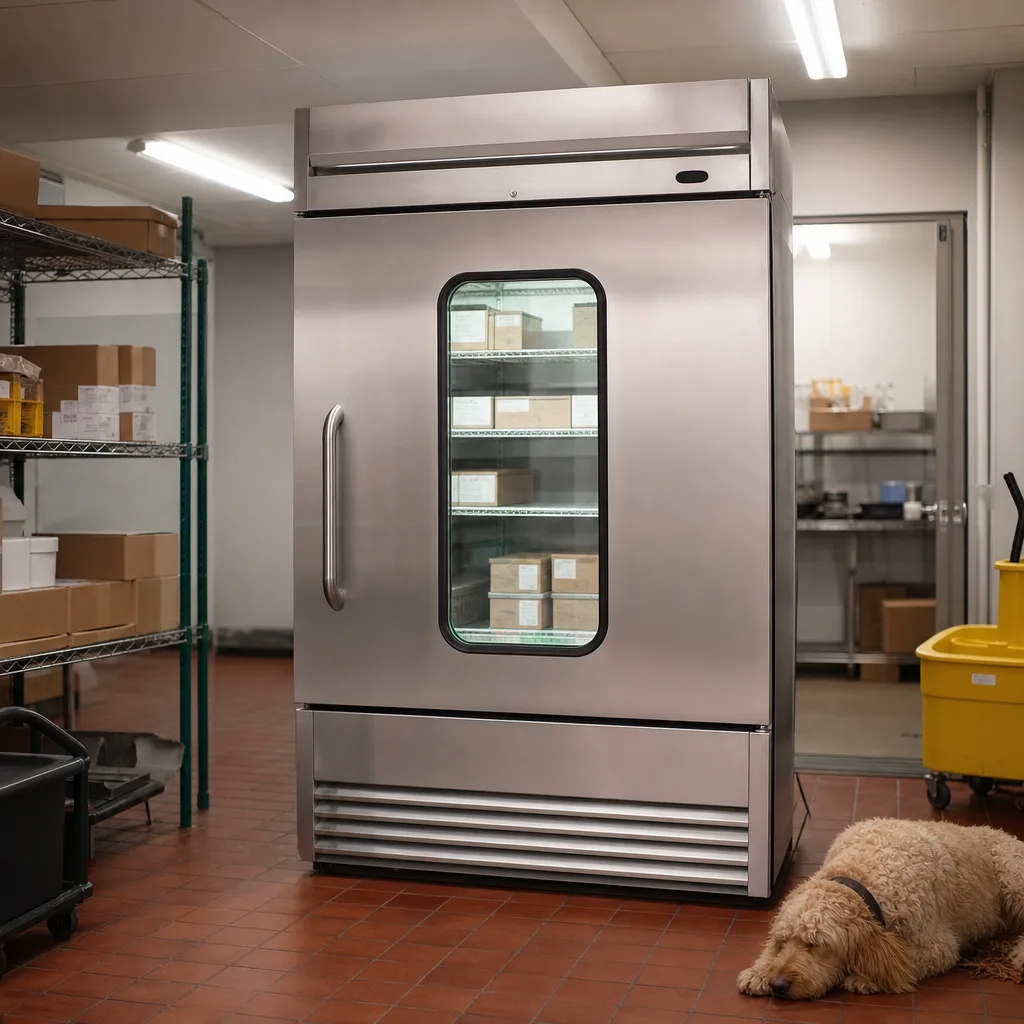
Call today if your product is at risk. These signs usually mean the box is losing ground and won’t recover on its own:
- The temperature keeps climbing and doesn’t come back down, even with the doors shut for a while.
- The compressor won’t run, or it clicks on and off every few minutes.
- Ice has built up over the evaporator coil and won’t clear after a defrost cycle.
- Water is pooling on the walk-in floor or leaking from under the unit.
- A breaker trips again right after you reset it, or you smell something burning.
- You hear hissing near the lines or see oily spots on the tubing. Those can point to a refrigerant leak, which needs a certified tech as covered above.
In Dallas, these move faster in summer. A condenser on a rooftop or behind your building in afternoon sun is already working at its limit. A box that’s slipping a few degrees in the morning can be well out of range by the dinner rush.
Some problems can wait for a scheduled visit. If the box is still holding its normal temperature, these are worth fixing but not worth an emergency call:
- A door gasket that’s torn or not sealing all the way. It makes the system work harder and should be replaced soon, but it’s rarely a same-day crisis.
- A fan that’s gotten louder but is still moving air.
- Light frost on the coil that melts off during normal defrost.
- Fog or sweat on glass doors on a humid day.
- An ice machine making smaller or cloudier cubes than usual but still producing.
Keep an eye on these. If the temperature starts to drift, they move up to the first list.
Check these yourself before you call anyone. Some “broken” coolers aren’t broken at all:
- Make sure the door is fully closing. A box of product or a bent shelf can hold it open just enough.
- Look at the thermostat or controller. Someone may have bumped the setting during a busy shift.
- Clear anything blocking the vents or fans inside. Stacking product tight against them can choke off airflow.
- Give the box time to recover after a big delivery or a long restock with the door open. Warm product takes a while to pull down.
If one of those fixes it, you just saved yourself a service call, and that’s a good day. If you’ve checked them and the temperature is still climbing, it’s time to get a technician out.
Not sure which list you’re on? A quick look at the trend helps. One warm reading after a rush isn’t the same as a box that’s warmer every time you check. If it’s getting worse hour by hour, treat it as urgent.
Not sure what your Commercial refrigeration project needs? Ask us.
Call Today, Get Service Today. Xtreme Air Services — Oak Lawn is ready to help.
What You Can Check Before Calling a Technician
You’ve already looked inside the box. The door shuts, the setting’s right, and nothing is blocking the fans. Here are a few more safe checks that take only a few minutes. They might solve the problem. If they don’t, they’ll help our technician find the fault faster.
- Look at the condenser outside. That’s the unit on your roof or behind your building that pushes heat out. Make sure nothing is stacked against it, like empty boxes, pallets, or trash bags. If the fins look matted with dust, leaves, or kitchen grease, that alone can keep it from shedding heat on a hot Dallas afternoon. After a hailstorm, check for flattened fins too.
- Check that the condenser fan is spinning. If the unit is humming but the fan isn’t turning, shut it off at the switch and call. Don’t poke at the blades.
- Look at the breaker panel. If a breaker for the cooler has tripped, you can reset it once. If it trips again, stop there. That’s on the urgent list for a reason.
- Try the dollar-bill test on the door gasket. Close the door on a bill. If it slides out with no pull, cold air is leaking out at that spot. Check a few spots around the door.
- For an ice machine, make sure the water supply valve is open and the water filter isn’t long overdue. A full bin or a stuck bin sensor can also make a machine stop on purpose. Clear some ice and watch whether it starts again.
There are some things you should leave alone. Don’t take off service panels, bend refrigerant lines, or add refrigerant yourself. As covered above, that work belongs to a certified tech. And skip the pressure washer on the condenser. It can fold the thin fins flat and make airflow worse.
If the checks don’t fix it, take two minutes to jot down a few things before you call. It helps us show up ready.
- The brand, model, and serial number from the data tag on the unit. A phone photo works fine.
- Any error code or flashing light on the controller.
- A few temperature readings with times, so we can see whether the box is holding steady or slipping.
- When it started, and anything that changed around then, like a storm, a power blip, or a big delivery.
- Any sounds, smells, water, or ice you’ve noticed.
With that model number in hand, we can often tell you on the phone what part might be involved. That helps when the part has to be ordered. It also gives you a clearer idea of where the repair might land before anyone shows up.
Call now
Watch Our Video
See How We Handle Commercial refrigeration in Dallas
Xtreme Air Services — Oak Lawn
How the Repair Visit Works, Start to Finish
When your cooler is warming up, you want to know what the next few hours look like. Here’s the path from the moment you call to the moment your box is back on track, and what you should expect to see at each step.
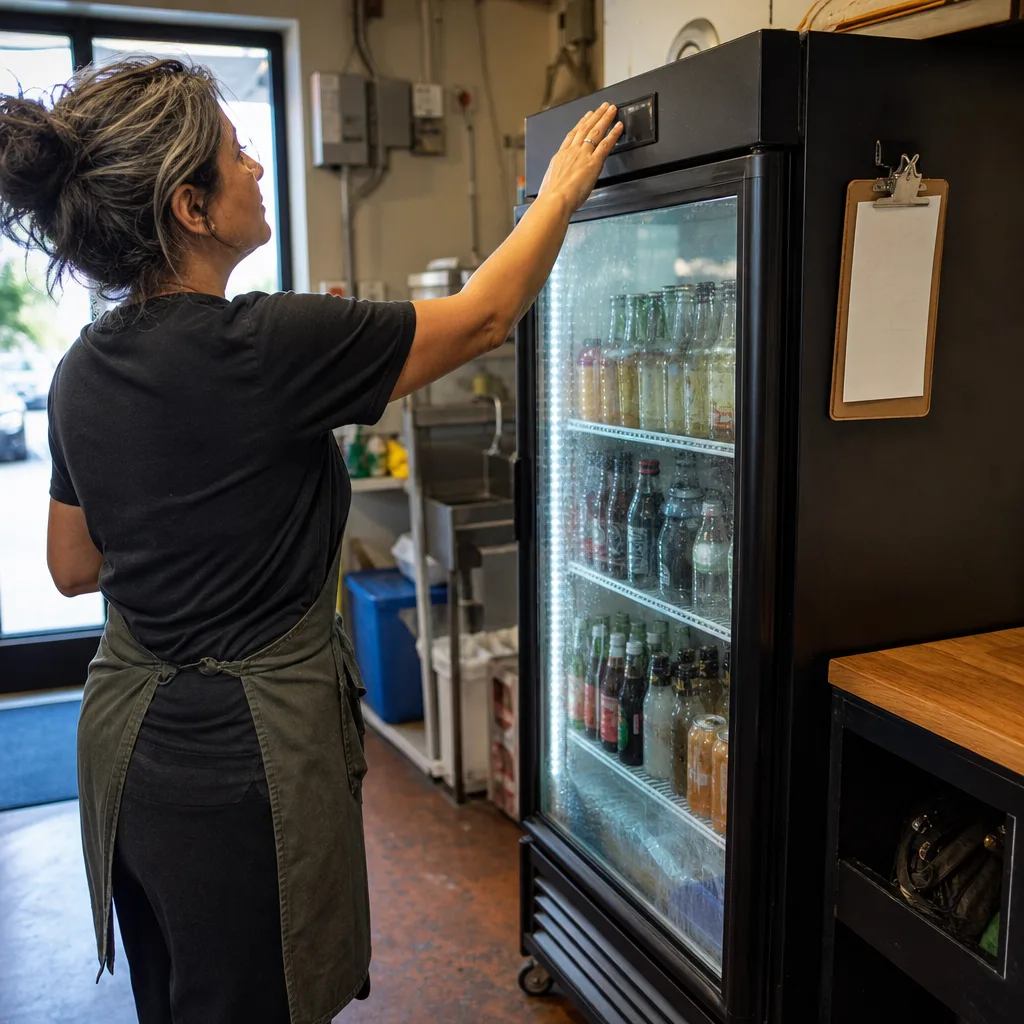
It starts with a phone call, and you’ll talk to a real person. Our team answers around the clock, and same-day service is available. If you’ve jotted down the model number and temperature readings we mentioned earlier, share them on that first call. They help the technician show up with a head start.
Next comes finding the failed part. A good diagnosis is testing, not guessing. A commercial refrigeration system has a lot of parts that can make a box run warm, and several of them can look alike from the outside. A thorough check usually looks at:
- Box temperature compared with the controller setting
- Whether the compressor and fans are starting and running the way they should
- Electrical parts like capacitors, contactors, and relays
- The evaporator coil, defrost system, and drain line
- The condenser and whether it can shed heat
- Refrigerant pressures, if there are signs of a leak
The goal is to find the real cause. A part that failed because of a deeper problem will often fail again if only the part gets swapped.
Once the cause is found, you’ll hear what failed and why, in plain English. You’ll see the price before anything gets fixed, as covered above. If the technician finds more than one worn part, those get quoted separately. That way you decide what gets done today and what can wait. You stay in control of the call.
Then the repair happens. Our technician repairs or replaces the failed part. Most calls are a single common failure fixed on the first visit. If a part is hard to get for an older or less common unit, ask what you should do with your product in the meantime. Then you can plan your next shift around it instead of finding out at closing time.
The last step is checking that it really works. A repair isn’t finished when the new part goes in. It’s finished when the system runs correctly. That means the box pulls back down toward its set temperature, and the compressor and fans cycle normally. Defrost should do its job, too. In Dallas, that check matters even more on a summer afternoon, because the condenser is working under the heaviest load it’ll see all year. If it holds up then, you can trust it through the dinner rush.
Testing and cleanup are part of the job, so your kitchen or stockroom isn’t left with old parts and dirty floors. Before the technician leaves, it’s fair to ask to see the temperature coming down and to hear what to watch for over the next day or two.
Call 469-269-6373
Frequently Asked Questions
Common questions about Commercial refrigeration
Can I just add refrigerant myself to save time?
No, adding refrigerant yourself is not safe or legal without certification. Federal EPA rules require certified technicians to handle refrigerant, and releasing it into the air is not allowed. If your box is low, the real problem is usually a leak, and topping it off without fixing that leak just means you pay for the same refrigerant again in a few weeks.
How long can product sit safely while I wait for a repair?
It depends on how fast your box is warming up, so checking the trend matters more than the clock. If the temperature climbs a little after a rush but holds steady otherwise, you have more time. If it keeps climbing hour by hour with the doors shut, treat it as urgent and move your product to another cold unit if you have one while you wait for a technician.
What’s the difference between a refrigeration problem and an electrical problem feeding my unit?
A refrigeration problem shows up as temperature loss, frost, or strange noises from the box itself, while an electrical problem often shows up as a tripped breaker or a compressor that won’t start at all. A breaker that trips once and resets fine usually points to a power issue; one that trips again right away is a sign of a deeper fault that needs a closer look before you reset it again.
Does a torn door gasket really matter if the box still holds temperature?
Yes, it matters even if the box still holds temperature today, because a bad gasket makes the compressor work harder than it should. Over time that extra strain shortens the life of your compressor and raises your energy use, so it’s worth fixing on a scheduled visit rather than waiting for it to turn into an emergency.
Ready to Get Started?
Call (469) 269-6373 Today, Get Service Today.