


Tankless Water Heater Installation in Plano
Tankless installs by licensed plumbers, with the gas line, venting, permits and inspection covered.
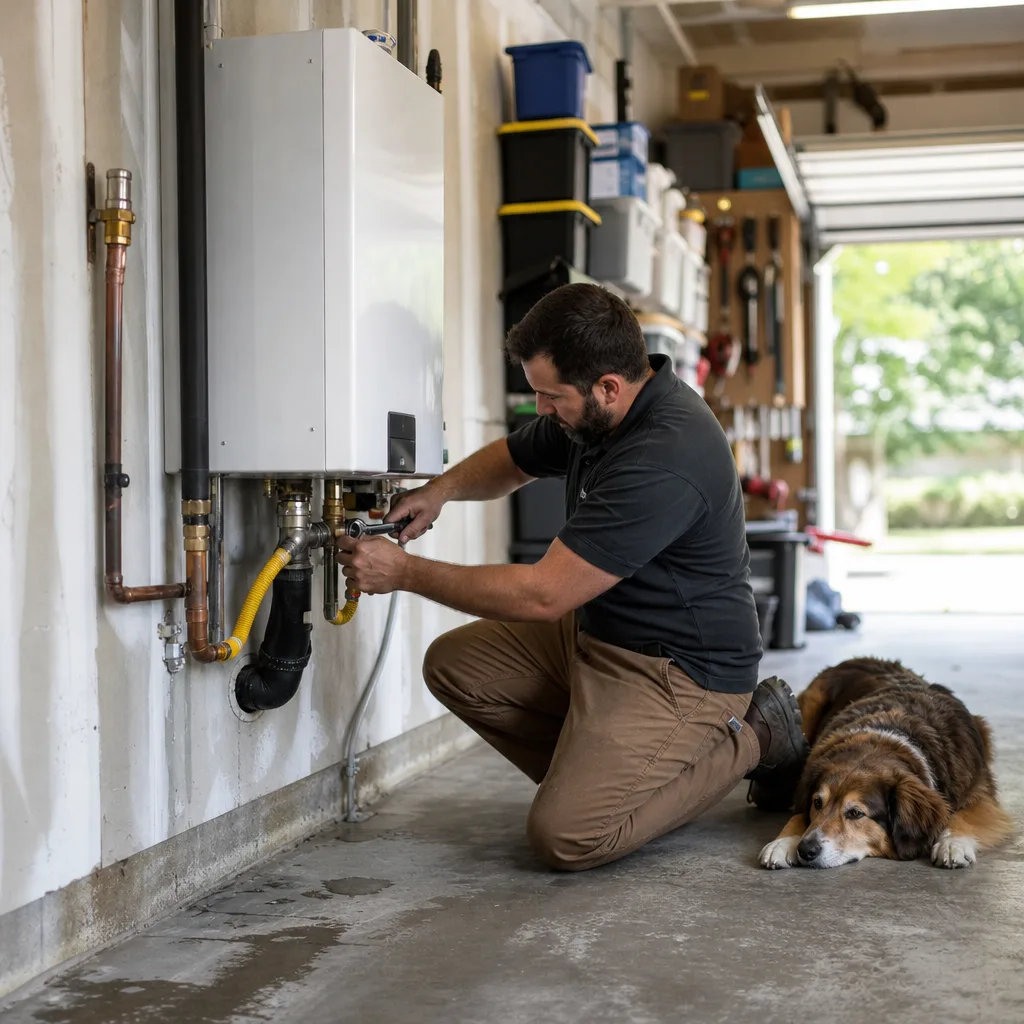
What’s Covered on This Page
- Your Gas Line and Electrical Setup Decide the Scope of the Job
- What a Standard Tankless Installation Includes
- What Drives Installation Cost Higher
- Permits and Licensing Requirements for Plano Installations
- When a Tank Replacement Makes More Sense Than Tankless
- Do I need a plumber or an electrician for a tankless water heater?
- Why do some plumbers avoid tankless water heater jobs?
- What should I expect to pay for a tankless water heater installation?
Your Gas Line and Electrical Setup Decide the Scope of the Job
Here’s what surprises most people. A tankless water heater heats water only when you turn on a tap. To do that fast, it needs a lot of energy all at once. Your old tank heated water slowly and kept it warm all day. The gas pipe or electrical circuit that worked fine for your tank may not keep up with a tankless unit.
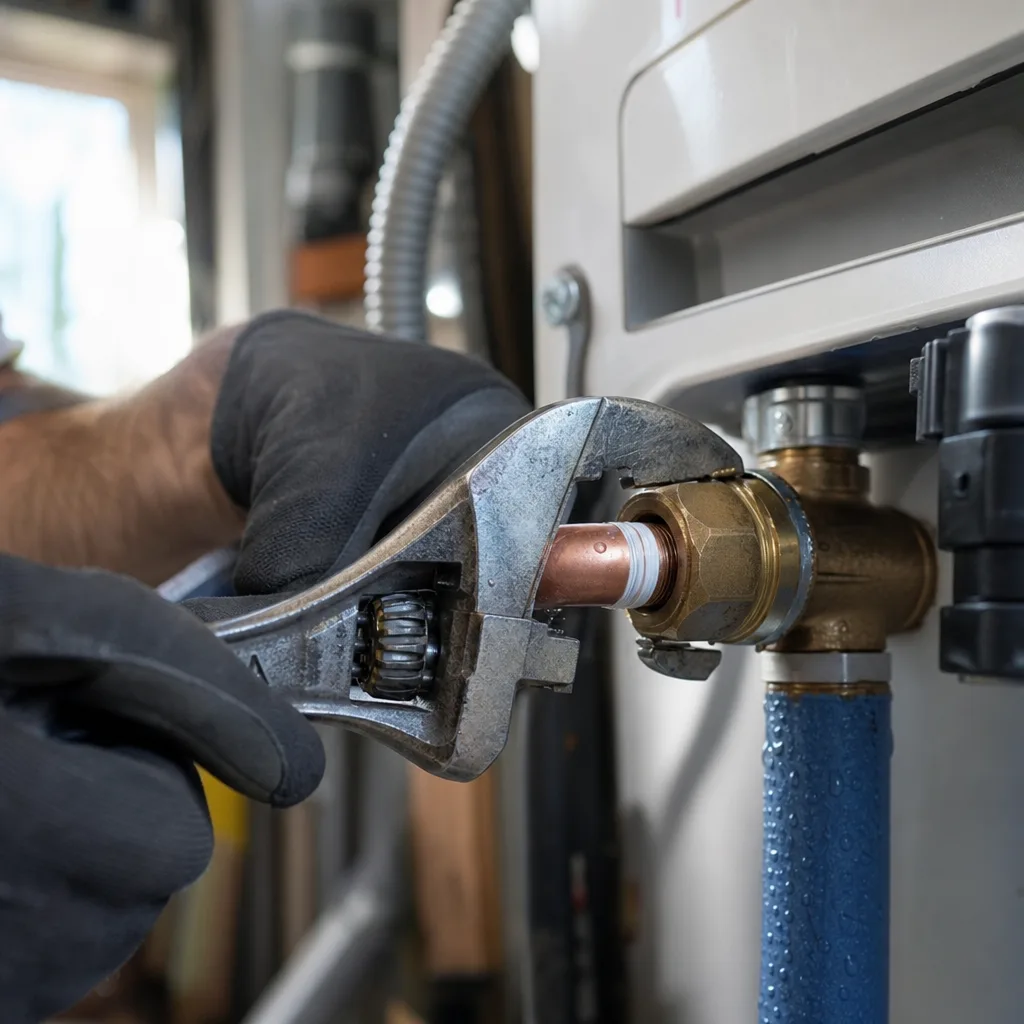
When we look at your home, three things tell us how big the job really is:
- Gas supply. A gas tankless unit burns far more fuel at full blast than a standard tank does. If the pipe feeding your water heater is too small, or your gas meter is already busy running a furnace, range, and dryer, the line may need to be upsized. Without that, you can get lukewarm showers or error codes when two taps run at once.
- Venting. Your old tank most likely vents through a metal flue that relies on hot air rising. A tankless unit needs its own vent made for it, and that often means a new route through a wall or the roof. If your water heater sits in a garage or attic, the vent path decides a lot about how much work is involved.
- Electrical. A gas tankless unit still needs a standard outlet for its controls and fan. An electric tankless unit is different. It can draw a lot of power and may need dedicated heavy circuits. In some homes, the panel doesn’t have room or capacity for that without an upgrade.
Your home’s existing setup decides the scope of the job. Two houses on the same street can get very different quotes for the same tankless model, simply because one already has a large gas line and a good vent path and the other doesn’t.
Our pricing follows that same logic. Our most common job is a standard like-for-like tankless installation that uses your existing connections with no major modifications. It typically runs $3,700-$5,100. That covers equipment and materials, professional installation, standard connections, startup and testing, and hauling away your old unit. For gas tankless, our pricing includes venting. Across all tankless installations, our typical range is $3,000-$6,500.
Some work falls outside that standard job unless your quote says otherwise. That includes electrical or plumbing modifications, code corrections, and permits. Ease of access and the condition of your existing plumbing and wiring can also move the price up or down. That’s why we look at your setup first and give you upfront flat-rate pricing to approve before any work starts. No meter running and no surprise add-ons halfway through.
If your home does need more than a straight swap, you don’t have to coordinate three different contractors. Xtreme Air Services is a licensed and insured HVAC, plumbing, and electrical contractor. The same team can handle gas line installation, dedicated circuit installation, or an electrical panel upgrade. One company is responsible for the whole job, start to finish.
What a Standard Tankless Installation Includes
A standard tankless installation means your old tank comes out and the new unit goes in using the gas, water, and vent connections you already have, with no major changes to your home. Standard doesn’t mean shortcut, though. A good install has several steps that matter long after the installer leaves. Here’s what the work should look like, so you know what to expect and what to ask about.
- Sizing the unit to your home. A tankless heater is sized by how much hot water you use at once, not by gallons stored. Count your showers, sinks, and appliances that might run at the same time. Winter matters here too. Colder water coming into the house in January means the unit has to work harder to reach the same shower temperature.
- Draining and removing the old tank. The old tank gets drained, disconnected, and hauled away.
- Mounting the unit. Tankless heaters hang on a wall, which often frees up floor space in a garage or closet. The unit needs the clearances the manufacturer calls for.
- Connecting the water lines with service valves. These valves let you or a technician flush the unit later without taking pipes apart. Skipping them makes future maintenance much harder.
- Connecting the gas and vent. The gas line gets its own shutoff, and the vent has to be sealed and run the way the manufacturer requires. High-efficiency condensing models also need a drain for the water they produce.
- Installing a pressure relief valve. This is a safety part that lets out pressure if something goes wrong.
- Startup and testing. The installer clears air from the lines, checks for leaks, confirms the unit fires correctly, and runs hot water at more than one tap to make sure it keeps up.
Those service valves matter more in North Texas than in a lot of places. Our water is hard, which means it carries minerals that leave scale behind when it’s heated. In a tankless unit, that scale builds up inside the small passages of the heat exchanger. Over time, that can cut performance and trigger error codes. Regular flushing keeps it under control. Some homeowners also pair a tankless unit with water softener installation to slow scale down at the source.
Winter is the other local issue to plan for. Plano gets hard freezes, and a tankless unit in a garage or on an outside wall can be exposed to them. Many units have built-in freeze protection, but it usually needs power to work. If your power goes out during a cold snap, it helps to know how to drain the unit or protect it until the power comes back.
Before the job wraps up, you should know where your shutoffs are, how often to flush the unit, and what a common error code means. If an installer can’t walk you through those basics, ask. A tankless water heater can give you steady hot water for many years, but only if it’s set up right on day one and you know how to take care of it.
When you compare quotes, ask each company whether service valves, a pressure relief valve, startup, and testing are part of the price. Those details tell you a lot about how carefully the job will be done.
What Drives Installation Cost Higher
You already know the big three: gas line size, the vent path, and electrical capacity. Beyond those, a few other things can move your quote toward the top of the range. If you know them ahead of time, you can tell a fair price from a padded one.
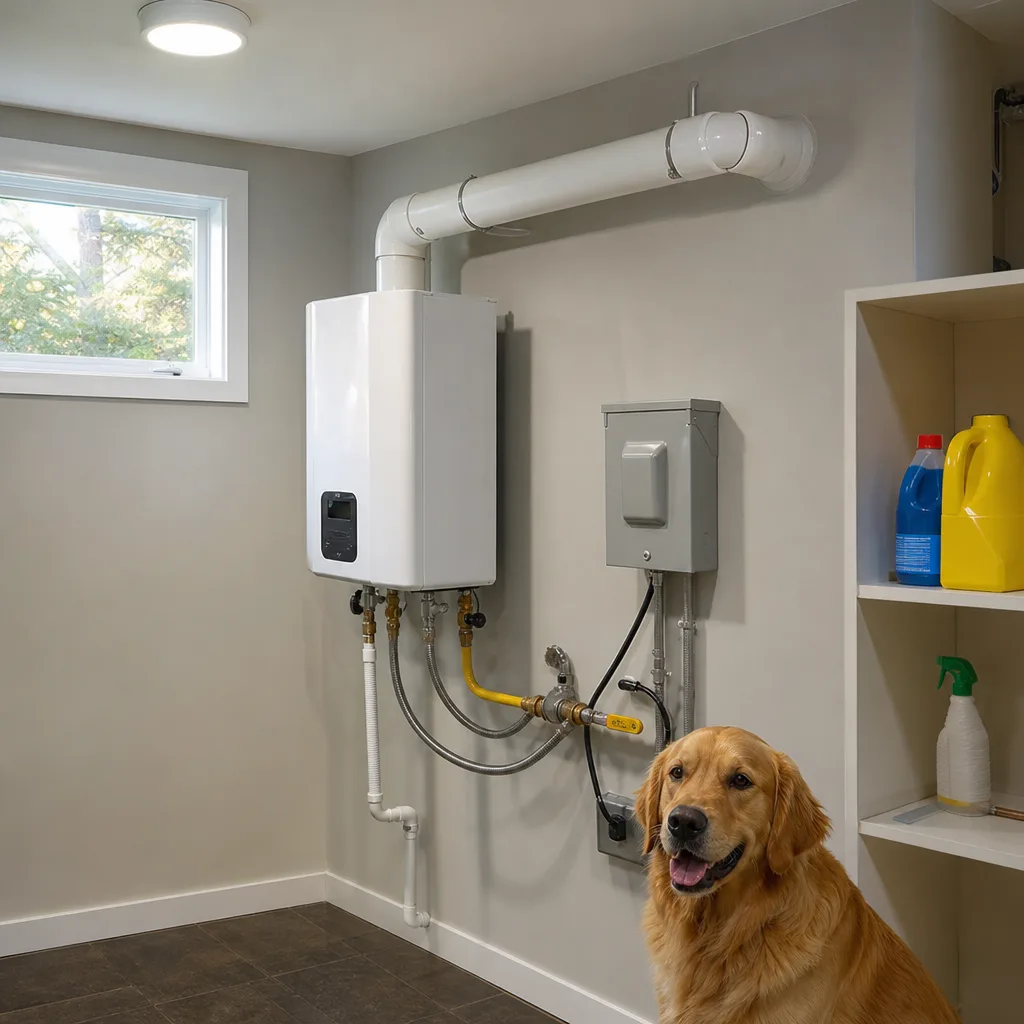
- A bigger unit. If you’ve got three bathrooms and want two showers and the dishwasher running at once, you need a unit that can heat more water at the same time. Bigger capacity costs more. Our colder winter water makes that sizing even more important.
- A higher-efficiency model. Condensing units squeeze more heat out of the gas, so they waste less fuel. They cost more up front, and they need that condensate drain and the right vent material. Over the years, the lower gas use can help make up the difference.
- Brand and model. Features like built-in recirculation, Wi-Fi controls, or a higher flow rating all add to the equipment cost.
- A hard-to-reach spot. Lots of North Texas homes have the water heater in the attic. Carrying an old tank down a pull-down ladder and working in a hot attic in July takes more time and more hands than a garage swap does.
- Moving the unit. If you want the heater moved from an interior closet to a garage or outside wall, that means new water lines, a new gas run, and a new vent. That’s custom work, not a like-for-like swap.
- Tired existing plumbing. In older homes, we sometimes find corroded fittings or old shutoff valves that won’t close all the way. Those have to be fixed so your new unit gets safe, solid connections.
- Code fixes and permits. If something in your current setup doesn’t meet today’s code, it has to be corrected. That gets added on unless your quote says it’s included, and so does the permit.
- Custom fabrication. Some installs need special mounting, a platform, or custom vent pieces to fit your space.
Here’s the honest part. Sometimes everything stacks up at once. You might need a bigger gas line, a brand-new vent route, and a new location, all for a tank that’s still working fine. When that happens, tankless may not pay off for you. A new tank-style water heater could be the smarter way to spend your money, and we’ll tell you so. Our team handles water heater installation either way, so we’re not pushing you toward one answer.
Before you hire anyone, ask a few simple questions. Does the quote list each item separately? Is the permit included? What happens if the installer finds a corroded pipe or a code problem halfway through? A good contractor will answer all three before the work starts.
With Xtreme Air Services, you get upfront flat-rate pricing to approve before any work begins. Our service-call fee is $26-$99, and it’s credited toward the repair if you proceed with Xtreme Air Services. If the full job runs higher than you planned, flexible financing is available on qualifying installations and larger jobs, on approved credit.
Ready when you are – get in touch today.
Call Today, Get Service Today. Xtreme Air Services — North Plano is ready to help.
Permits and Licensing Requirements for Plano Installations
A tankless install isn’t just swapping one box for another. It touches your gas line, your water lines, a vent that carries exhaust out of your home, and sometimes your electrical panel. That’s why a tankless water heater installation in Plano generally needs a permit from the city, and why the work should be done by a licensed plumber.
Some homeowners see a permit as red tape. It’s really a second set of eyes on the parts of the job you can’t easily check yourself. After the install, a city inspector comes out and looks at the work before it’s signed off.
Here’s what an inspection usually focuses on for a tankless unit:
- Venting. The vent has to be the right material, sealed, and routed so exhaust goes outside and stays out of your home.
- Gas connections. The inspector checks for a proper shutoff and safe fittings. If the gas line was upsized, the new pipe may need a pressure test.
- Pressure relief valve. It has to be installed, and its discharge line has to run to a safe spot.
- Clearances. The unit needs the space around it that the manufacturer calls for.
- Electrical work. If an electric tankless needed new circuits, that wiring gets checked too.
Skipping the permit can cost you later. When you sell your home, a buyer’s inspector may spot a new water heater with no permit on file. That can turn into a repair request, a delay, or a lower offer. Unpermitted gas work can also make an insurance claim harder to sort out if something ever goes wrong.
Licensing matters just as much. Texas requires plumbing work, including gas piping for a water heater, to be done by a licensed plumber. An electric tankless unit that needs new circuits or a panel upgrade calls for a licensed electrician. If one person shows up to do all of it with no license for any of it, that’s a red flag, no matter how good the price sounds.
At Xtreme Air Services, our plumbing work is done under Master Plumber Larry Breedlove’s license, and our team is licensed and insured for HVAC, plumbing, and electrical work. So if your install grows into gas line or circuit work, it stays with one licensed company instead of getting handed off.
If you live in a Plano neighborhood with an HOA, check your rules before you pick a spot for the unit. A new vent through an outside wall, or a unit mounted on the outside of the house, may need approval. It’s easier to ask first than to move a vent after the fact.
Before you hire anyone, ask these questions:
- Who pulls the permit, you or the contractor?
- Is the permit in the quote or listed as an extra?
- Will the installer be there for the inspection, or at least fix anything the inspector flags?
- Can they give you their plumbing license number, and their electrical license number if wiring is involved?
A contractor who does this work the right way will answer all four without hesitating. You should never have to guess whether the heater in your garage was put in legally.
Watch Our Video
See How We Handle Tankless water heater installation in Plano
Xtreme Air Services — North Plano
When a Tank Replacement Makes More Sense Than Tankless
Tankless isn’t the right call for every home. Sometimes a new tank is the better buy, and you deserve to hear that before you spend the money. These are the cases where we’d point you toward a tank.
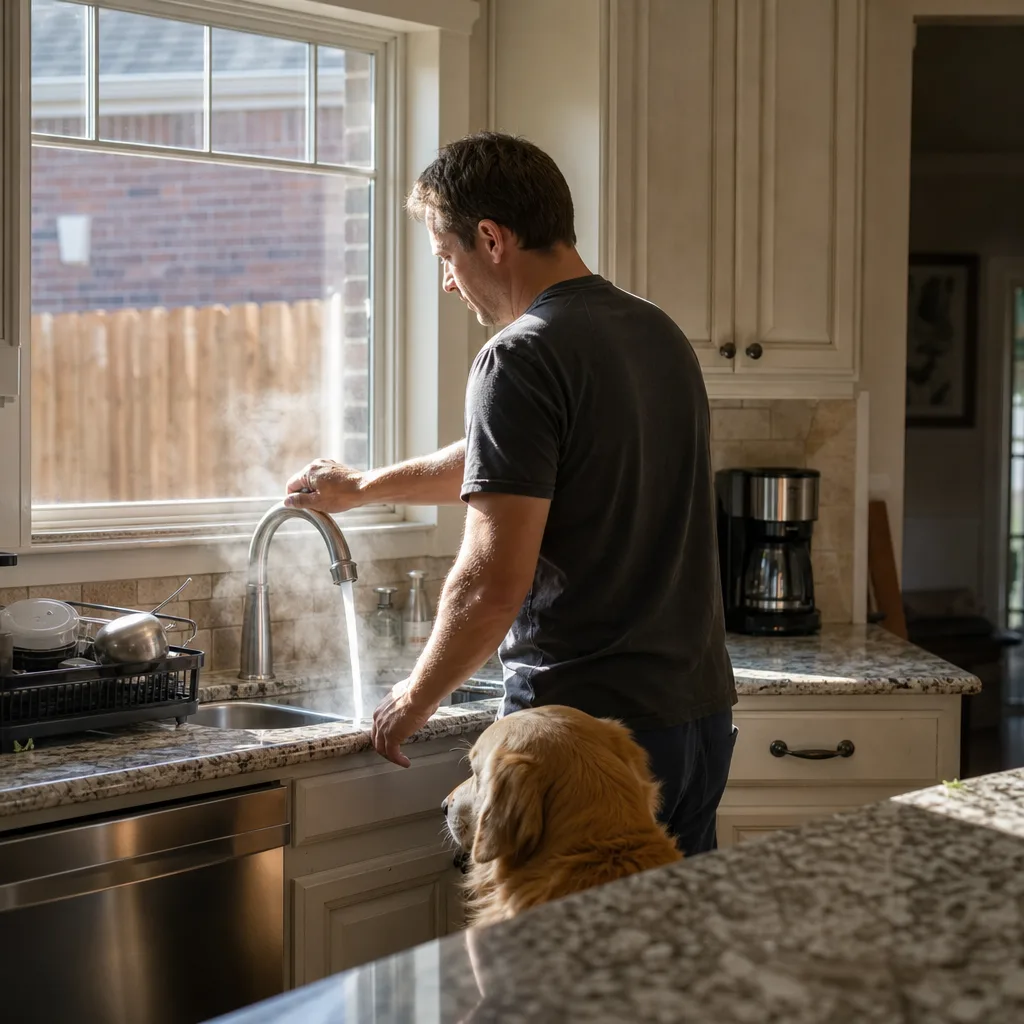
- You don’t use much hot water. Tankless saves energy because it doesn’t keep 40 or 50 gallons hot all day. If it’s just one or two of you and the tank sits idle most of the day, those savings are small. It can take a long time for them to cover the higher upfront cost.
- You plan to move soon. If you expect to sell in a few years, you may not stay long enough for lower gas bills to pay back the extra cost of going tankless.
- Your hot water quit and you need it back now. A like-for-like tank swap is usually a simpler job than a first-time tankless conversion that needs new venting or gas work. If your budget or your week is tight, a tank gets your showers running again without a bigger project. You can look at tankless the next time that tank wears out.
- Your home is all-electric with a smaller panel. As covered above, whole-house electric tankless units can pull a lot of power. If going tankless would mean a panel upgrade, a new electric tank may be the more sensible spend.
- You want hot water when the power’s out. A tankless unit needs electricity to run its controls and fan. Many standard gas tanks with a standing pilot keep heating water during an outage. If storms knock out your power often, that counts for a lot. Some families solve it with a whole-home standby generator instead.
- You know you won’t keep up with flushing. With our hard water, a tankless unit needs regular flushing to stay healthy. A tank does better with a yearly drain too, but it’s usually more forgiving if you skip one.
- Your family uses a lot of hot water at once. If you regularly run several showers plus the washer and dishwasher at the same time, you might need two tankless units linked together. That extra unit can tip the math toward a larger tank.
Picture a couple whose kids have moved out. Their 50-gallon tank still works. They shower at different times of day, and the water heater sits in the garage on an old metal flue. Going tankless would mean a new vent and maybe a bigger gas line, all for a household that barely uses the tank it has. For them, a new tank when the old one gives out is the smart move.
A tank isn’t a step down. It’s simple, it’s familiar, and it does the job well for a lot of homes. The right choice depends on how your family uses hot water, how long you plan to stay, and what your home is already set up for. It doesn’t depend on what’s popular right now.
If you’re still not sure which way to go, start with a few honest questions. How many people live in your home? Do you plan to be there five or more years? Is your current tank still working, or are you shopping because it just failed? Your answers will usually point clearly to one choice or the other.
Frequently Asked Questions
Common questions about Tankless water heater installation
Do I need a plumber or an electrician for a tankless water heater?
For a gas tankless unit, you need a licensed plumber for the gas and water connections. If the install also needs new electrical circuits or a panel upgrade, a licensed electrician has to handle that part. An all-electric tankless unit that draws a lot of power usually needs an electrician involved from the start. Texas requires the gas piping work to be done under a licensed plumber, so always ask for a license number before hiring anyone.
Why do some plumbers avoid tankless water heater jobs?
Some plumbers steer away from tankless jobs because they take more diagnostic work than a simple tank swap. A tankless unit depends on your gas line size, vent path, and sometimes your electrical panel being up to the task, so a plumber has to check all three before quoting a fair price. That extra homework takes time, and not every plumber wants to deal with venting changes or gas line upsizing. A contractor who handles plumbing, electrical, and HVAC under one license can manage all those pieces without handing the job to someone else.
What should I expect to pay for a tankless water heater installation?
Cost depends mostly on whether your home needs a simple swap or bigger changes to your gas line, vent, or electrical setup. A straightforward installation that uses your existing gas, water, and vent connections costs less than one that needs a larger gas pipe, a new vent route, or added electrical circuits. Attic installations, tired old plumbing, and code corrections can all push the price higher too. Getting a flat-rate quote after someone looks at your actual setup is the only way to know your real number before work starts.
Ready to Get Started?
Call (469) 527-5131 Today, Get Service Today.