


Electrical Troubleshooting in Sunnyvale: Find the Fault, Fix It Fast
Intermittent faults, dead circuits, and breakers that trip for no obvious reason traced to the actual cause instead of the easiest part to swap.
What’s Covered on This Page
- Warning Signs That Point to a Wiring Problem
- Older Homesteads and New Subdivisions Near Sunnyvale Face Different Wiring Faults
- How a Troubleshooting Visit Works, Step by Step
- When You Don’t Need a Service Call
- What Drives the Cost of Diagnosing an Electrical Fault
- How fast can you get someone out to look at an electrical problem in Sunnyvale?
- What happens when a technician comes to troubleshoot my electrical problem?
- Why do older homes near Sunnyvale’s town center have more wiring problems than newer ones?
- Do I need to call an electrician if my breaker trips once?
- Is a warm or discolored outlet always a serious electrical problem?
Warning Signs That Point to a Wiring Problem
So how do you know it’s wiring and not just an old lamp? Look at the pattern. If the same breaker trips every time you run the microwave and the dryer together, that’s a load issue worth checking. If it trips at random, with nothing plugged in, that’s different, and it’s the kind of thing we hear about a lot.
- Lights that flicker or dim when another appliance kicks on
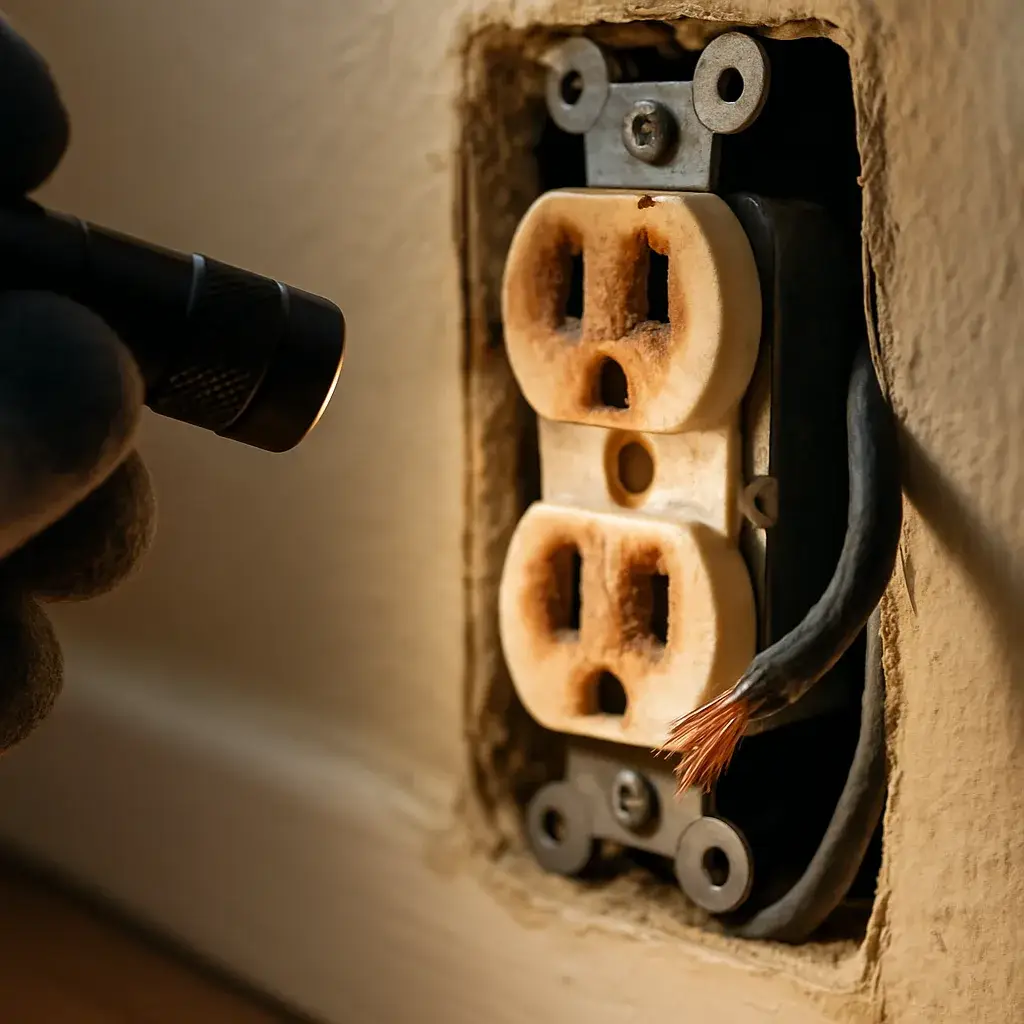
- An outlet or switch plate that feels warm or looks discolored
- A faint burning smell near a panel, switch, or outlet
- A breaker that trips more than once or twice a month
- Buzzing or crackling sounds from a switch or fixture
- Outlets that work sometimes and not other times, with no clear reason
A warm outlet is never normal. Some homeowners tell us they noticed the smell first, a faint burnt-plastic scent near a hallway switch, and figured it was nothing. It usually isn’t nothing.
One tripping breaker on its own probably isn’t an emergency. But a pattern of trips, a smell, or warmth at an outlet means the fault is active right now, and that’s worth a same-day call, not a wait-and-see plan.
Older Homesteads and New Subdivisions Near Sunnyvale Face Different Wiring Faults
Sunnyvale has two kinds of housing stock, and they fail in different ways. The older homes near the original town center were built decades before today’s electrical demands existed, back when a house ran a few lamps and a window unit, not a home theater, two AC systems, and a garage full of chargers. Newer subdivisions built in the last several years have the opposite problem. The wiring is modern, but the panels are often sized tight for what builders expected, not what homeowners plug in once they move furniture, add a hot tub, or wire up a home office.
We walk into both kinds of houses every week, and the fault patterns are almost never the same.
- Older homes: brittle insulation on branch wiring, undersized panels, and outlets that were never grounded to begin with
- Newer subdivisions: overloaded circuits from added devices, loose builder-grade connections that work loose over a year or two, and GFCI outlets that trip from normal humidity swings
- Both: breakers that were the wrong size for the circuit from day one, something a visual inspection alone won’t catch
So when you tell us the house is older or newer, that’s not small talk. It changes where we start looking. An older home with a tripping breaker gets checked for wiring insulation and connection points first. A newer subdivision home with the same complaint gets checked for load and panel capacity first. Guess wrong and you’re paying for a repair that doesn’t fix anything.
How a Troubleshooting Visit Works, Step by Step
So what happens once a technician pulls into your driveway? Nothing mysterious. No meter quietly running while someone pokes around your panel for an hour. It’s a straight line from problem to answer. 80 six days a week.
- We ask what you noticed first. A burning smell, a breaker that trips every time you run the microwave, an outlet that just went dead. That detail matters more than you’d think.
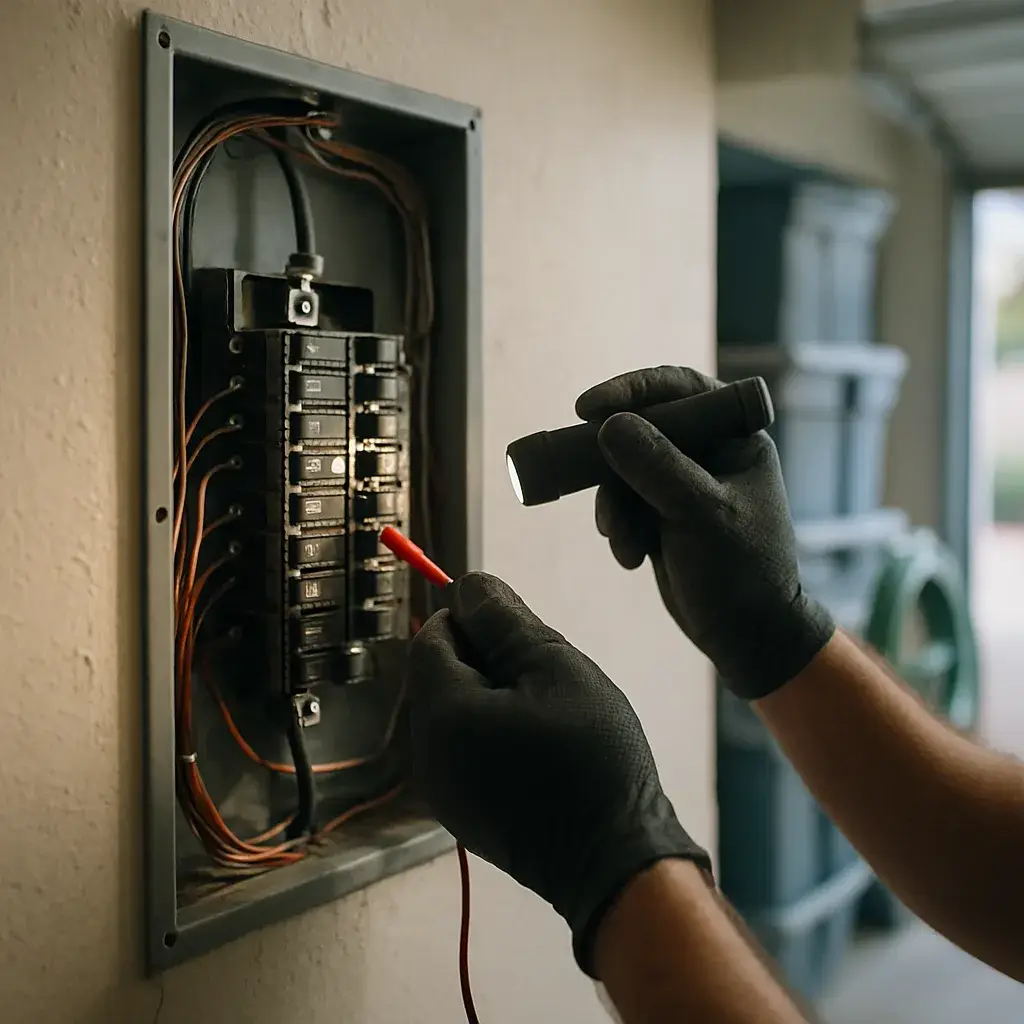
- We do a visual check of the panel, the affected circuit, and any outlets or switches tied to it. Sunnyvale has a mix of older slab homes and newer builds, and panel age changes where we look first.
- We test with a multimeter and circuit tracer. This is where a tripping breaker gets separated from a bad outlet or a loose wire nut way down the line.
- We trace the fault back to its actual source, not just the symptom. Often, the outlet that quit working isn’t where the real problem lives.
- We give you a written summary. What we found, what’s causing it, and what fixing it involves. No verbal promise you have to remember later.
That visit runs $26 to $99 as a service call fee, and it’s credited toward the repair if you move forward with us. The most common job, tracking down a dead outlet or a breaker that keeps tripping, typically lands between $100 and $200 for the diagnosis itself.
The diagnosis and the written report are included. Repairs are not. That’s on purpose, so you decide with real numbers in hand, not a guess.
Not sure what your Electrical troubleshooting project needs? Ask us.
Call Today, Get Service Today. Xtreme Air Services is ready to help.
When You Don’t Need a Service Call
Not every flicker or dead outlet means you need a technician. We get calls some weeks where the fix was already sitting in the customer’s hands.
A single breaker that trips once, after you ran the microwave and a space heater on the same circuit, isn’t a fault. That’s just too much load on one line. Flip it back, spread the appliances out, and you’re done. Same goes for a GFCI outlet in your bathroom or kitchen that trips after a storm rolls through Sunnyvale, those outlets are built to trip on moisture and small surges. Push the reset button. If it holds, you’re fine.
- A lamp that won’t turn on, check the bulb and the lamp’s own switch first
- One outlet dead but everything else works, look for a tripped GFCI upstream, bathrooms and garages often share a circuit
- A breaker that trips once under heavy load and resets clean and stays on
Here’s the line we watch for. If it trips once and stays fixed, that’s normal electrical behavior, not a fault. If it trips again within a day, or you smell something warm near the panel, or the same outlet keeps going dead no matter what’s plugged in, that’s different. That pattern means something’s wearing down behind the wall, and no amount of resetting fixes it.
So try the simple stuff first. It costs you nothing and it’s usually the actual answer.
What Drives the Cost of Diagnosing an Electrical Fault
Here’s the honest answer: it depends on what’s wrong, and how hard it is to get to. A dead outlet in a Sunnyvale kitchen built in the last ten years is usually a quick trace. An older home with a few DIY additions over the years takes longer to sort out.
Typical electrical troubleshooting runs $100 to $350, and the most common calls, a dead outlet, a breaker that keeps tripping, an intermittent fault, land in the $100 to $200 range. We charge a $26 to $99 service call fee to come out and diagnose the problem, and that fee gets credited toward the repair if you have us fix it.
- How tricky the fault is to trace, some hide behind walls or inside old junction boxes
- Home size and circuit count, more circuits mean more places to check
- Access, attic runs and crawl spaces slow things down
- Whether the job needs specialized test equipment beyond a basic meter
That diagnostic fee covers the on-site work and a written summary of what we found, plus what we’d recommend next. It doesn’t cover the actual repair, that gets quoted separately once we know what we’re dealing with. Either way, once you see the written findings, the next step is obvious.
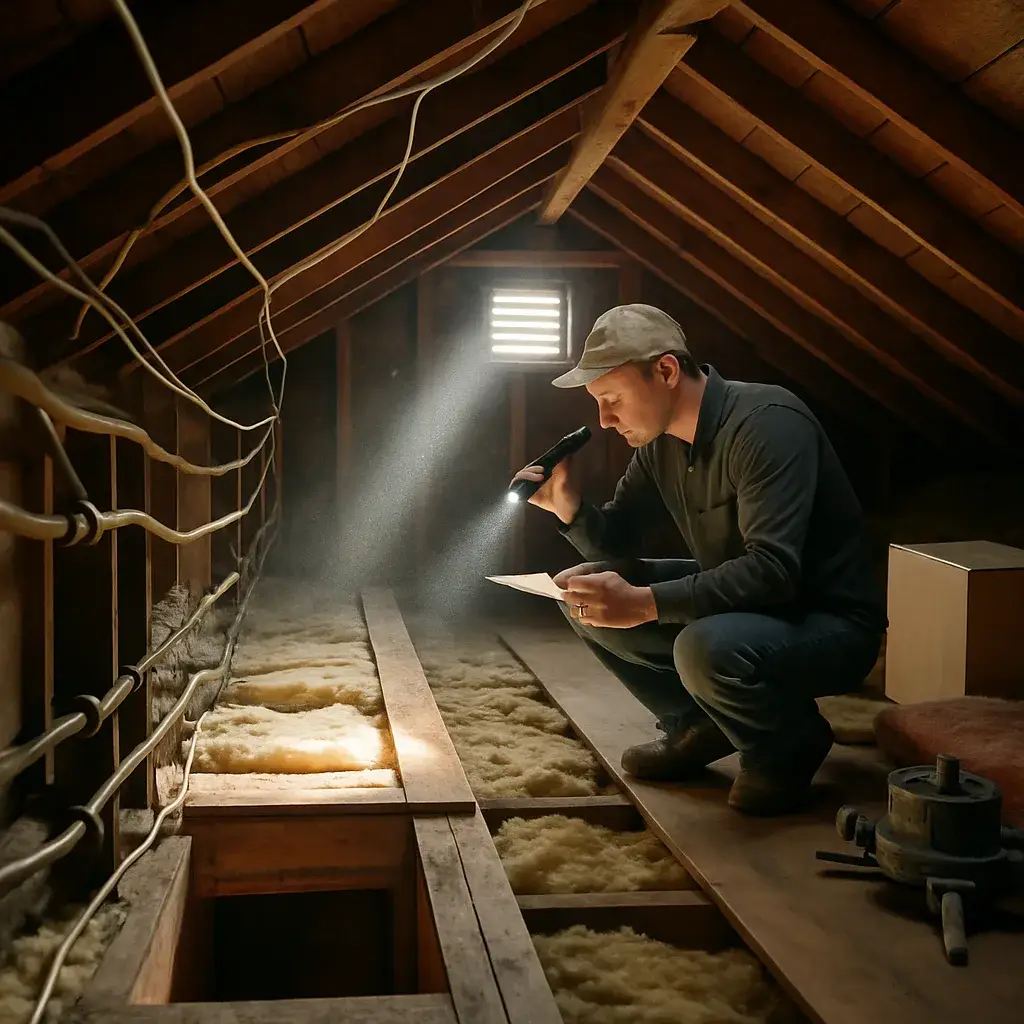
Access is usually what decides how long a Sunnyvale troubleshooting call runs. Older Sunnyvale homes tend to have the panel tucked into a garage corner behind stored boxes, and attic junctions sit under blown-in insulation that has to be moved and put back before a connection can even be read. Clearing a path to the panel and the attic hatch before we arrive is the single thing that most often turns two visits into one. We cover Sunnyvale six days a week, so a fault found on a Saturday does not have to wait until Monday.
Frequently Asked Questions
Common questions about Electrical troubleshooting
How fast can you get someone out to look at an electrical problem in Sunnyvale?
We treat active warning signs like warmth at an outlet, repeated breaker trips, or a burning smell as same-day calls, not wait-and-see situations. A single breaker trip that resets clean usually isn’t urgent, so we can often schedule that within a day or two. But if you’re describing a pattern that keeps happening, we move faster because that means the fault is active right now. Tell us exactly what you noticed first when you call, since that detail helps us decide how quickly to get to your house.
What happens when a technician comes to troubleshoot my electrical problem?
We start by asking what you noticed first, then do a visual check of your panel and the affected circuit before testing with a multimeter and circuit tracer. This lets us separate a tripping breaker from a bad outlet or a loose wire nut hiding further down the line. We trace the fault back to where it starts, not just where the symptom shows up, since the dead outlet you noticed usually isn’t the real source. You get a written summary of what we found and what fixing it involves before any repair work happens.
Why do older homes near Sunnyvale’s town center have more wiring problems than newer ones?
Older homes near the original town center were wired for a few lamps and a window unit, not today’s home theaters, extra AC systems, and garage chargers. That mismatch shows up as brittle insulation on branch wiring, undersized panels, and outlets that were never grounded in the first place. Newer subdivisions built in the last several years have different issues instead, like panels sized tight for what builders expected rather than what homeowners plug in. Knowing your home’s age changes where we start looking first, so it’s the first thing we ask about.
Do I need to call an electrician if my breaker trips once?
Not always. A breaker that trips once after you ran the microwave and a space heater on the same circuit is usually just too much load on one line, not a fault. Flip it back, spread your appliances across different outlets, and you’re likely done. The same goes for a GFCI outlet in your bathroom or kitchen that trips after a storm, since those are built to trip on moisture. If it trips again within a day, or you notice warmth or a smell near the panel, that’s when it’s worth a call.
Is a warm or discolored outlet always a serious electrical problem?
Yes, a warm outlet is never normal and it points to an active fault underneath the surface. Some homeowners tell us they noticed a faint burnt-plastic smell near a hallway switch first and figured it was nothing, but it usually isn’t. Warmth or discoloration at an outlet means heat is building up somewhere it shouldn’t, often from a loose connection or an overloaded circuit. That’s the kind of sign worth a same-day call rather than waiting to see if it happens again.
Ready to Get Started?
Call 972-288-2263 Today, Get Service Today.