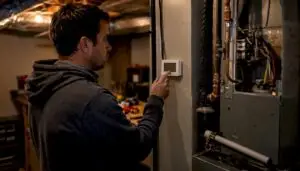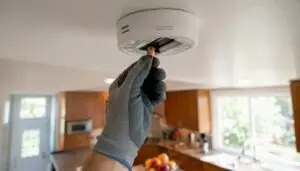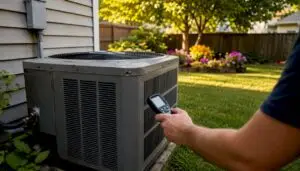


A facility preventive maintenance checklist is a standardized, repeatable process that ensures every critical asset receives scheduled attention before failure occurs. Facilities that integrate these checklists with a Computerized Maintenance Management System (CMMS) reduce equipment downtime by up to 40%. That number reflects a fundamental shift: maintenance stops being reactive and becomes a planned, measurable program. The industry term for this approach is a preventive maintenance plan, and the checklist is its operational backbone. Property managers who build their programs around asset criticality, frequency bands, and documented procedures consistently outperform those relying on memory or spreadsheets.
1. What must a facility preventive maintenance checklist include?
A well-built checklist functions as a standardized process, not a simple reminder. It specifies the exact procedure, required tools, safety steps, acceptance criteria, and documentation requirements. That level of detail removes ambiguity regardless of which technician or shift executes the task.
Every checklist entry should cover these core elements:
- Asset information: Asset ID, physical location, manufacturer, model, criticality tier, and assigned technician. This data connects the task to the right person and the right system.
- Safety requirements: Lockout/tagout (LOTO) procedures, required personal protective equipment (PPE), permit-to-work requirements, and known hazard notes. Safety steps must appear before task instructions, not after.
- Task instructions: Step-by-step inspection, cleaning, lubrication, and calibration procedures with measurable acceptance criteria. “Check belt tension” is not a task instruction. “Measure belt deflection; acceptable range is 3/8 to 1/2 inch under 10 lbs of force” is.
- Completion criteria: Recorded readings, photographs where required, technician sign-off, and any follow-up work orders generated during the inspection.
- Parts and tools list: Every item needed to complete the task, confirmed available before the work order is issued. Missing parts are the single most common reason PM tasks get deferred.
Pro Tip: Add a “defect found” checkbox to every checklist item. When a technician checks that box, it automatically triggers a corrective work order in your CMMS. This closes the loop between inspection and repair without relying on verbal handoffs.
2. How are preventive maintenance tasks organized by frequency?

Frequency bands classify maintenance tasks into daily, weekly, monthly, quarterly, six-monthly, annual, and event-triggered intervals. This structure is the foundation of any realistic facility maintenance schedule because it distributes workload evenly and prevents technician overload during peak periods.
The table below shows typical tasks by frequency band for common facility systems:
| Frequency | HVAC | Electrical | Plumbing |
|---|---|---|---|
| Daily | Check thermostat setpoints, review alarms | Inspect panel indicator lights | Check for visible leaks at fixtures |
| Weekly | Inspect air filters, check condensate drain | Test emergency lighting | Flush floor drains |
| Monthly | Clean coils, check refrigerant sight glass | Thermographic scan of key panels | Inspect water heater anode rod |
| Quarterly | Belt inspection, lubricate fan bearings | Test GFCI outlets, check grounding | Inspect backflow preventers |
| Annually | Full system tune-up, duct inspection | Load bank testing, breaker exercise | Hydrostatic pressure test |
| Event-triggered | Post-storm filter check | After power surge: panel inspection | After freeze event: pipe integrity check |
Manufacturer recommendations give you a starting point, but they are not the final word. OEM intervals should be adjusted for actual operating conditions, including temperature extremes, contamination levels, and usage intensity. A rooftop HVAC unit in Dallas running through a Texas summer needs more frequent filter changes than the manufacturer’s standard interval assumes.
Pro Tip: Set your CMMS to flag any asset that has not had a PM completed within 110% of its scheduled interval. That buffer catches drift before it becomes a missed inspection.
3. What best practices make checklist execution consistent?
Turning a checklist into a reliable program requires more than good documentation. Treating PM as a reliability-driven program rather than a compliance exercise is what separates facilities with low failure rates from those constantly fighting fires.
-
Rank assets by criticality. Divide assets into critical, important, and non-critical tiers. Critical assets get the most detailed checklists, the shortest intervals, and the most experienced technicians. Non-critical assets get simplified procedures and longer intervals. This tiering prevents wasted labor on low-risk equipment.
-
Write measurable task instructions. Every task must have a pass/fail criterion. Vague instructions produce inconsistent results. If two technicians can interpret a task differently, rewrite it.
-
Use work orders, not calendar reminders. Work orders assign ownership, track time, capture parts used, and create an audit trail. Calendar reminders do none of that. Every PM task should generate a work order in your CMMS.
-
Enable mobile access for technicians. Mobile CMMS apps let technicians pull up checklists, record readings, attach photos, and report defects from the equipment location. This eliminates paper transcription errors and speeds up defect reporting.
-
Link parts inventory to PM tasks. Before a work order is issued, the system should confirm that required parts are in stock. If they are not, the procurement process starts automatically. Parts shortages should never be discovered at the equipment.
-
Build automated escalation rules. When a technician marks an inspection item as failed, the system should automatically escalate to a supervisor and generate a corrective work order with a defined response deadline.
-
Review performance data monthly. Track PM compliance rates, mean time between failures (MTBF), and overdue task counts. These three metrics tell you whether your program is working or drifting.
“The most expensive maintenance failures are those that occur unscheduled. A structured preventive maintenance program with clear accountability and real-time tracking is the most direct path to reducing those costs and extending asset life.”
4. What common pitfalls undermine a facility maintenance checklist?
Most PM programs fail not because the checklists are wrong, but because of how they are managed day to day. Lack of asset criticality analysis is the most common root cause. When every asset gets the same attention, high-risk equipment gets under-served and low-risk equipment consumes budget it does not need.
The most damaging pitfalls property managers encounter include:
- Treating all assets equally. Without criticality ranking, technicians spend equal time on a critical air handler and a storage room exhaust fan. That is a budget and labor problem.
- Following OEM intervals without adjustment. Manufacturer schedules assume average conditions. Facilities with heavy use, harsh environments, or aging infrastructure need shorter intervals on critical systems.
- Vague or incomplete task instructions. Missing safety steps, no acceptance criteria, and no follow-up action fields produce inconsistent results across shifts and technicians.
- Relying on paper or spreadsheets. Manual checklists degrade over time. They get lost, skipped, or filled out from memory rather than at the equipment. Compliance rates drop without anyone noticing.
- Ignoring technician feedback. Technicians executing tasks daily know which checklist items are unclear, which intervals are too frequent, and which tools are always missing. Ignoring that input guarantees a stale program.
- No compliance tracking. Without a system that flags overdue tasks and generates reports, managers have no visibility into whether the program is actually running. You cannot manage what you cannot measure.
Addressing these pitfalls does not require a complete program overhaul. Start with criticality ranking, rewrite the five most-used checklists with measurable criteria, and move those tasks into a digital system. That sequence alone produces visible improvement within 60 days.
For a broader look at where facility maintenance oversights tend to cost the most, the pattern is almost always the same: deferred PM tasks that were predictable and preventable.
5. How does CMMS technology transform checklist management?
A CMMS is the operational backbone of any serious preventive maintenance plan. It stores asset records, generates work orders automatically, tracks completion, and produces the compliance reports that justify maintenance budgets to ownership and leadership.
The table below shows what changes when facilities move from manual systems to CMMS-integrated programs:
| Capability | Manual/Spreadsheet | CMMS-Integrated |
|---|---|---|
| Work order generation | Manual, calendar-based | Automatic, time or condition-triggered |
| Checklist access | Paper binder or shared drive | Mobile app, real-time at equipment |
| Defect reporting | Verbal or written note | Digital, triggers corrective work order |
| Parts availability | Checked manually before task | Confirmed automatically at scheduling |
| Compliance tracking | Manual count, often delayed | Real-time dashboard, overdue alerts |
| Maintenance history | Spreadsheet rows | Searchable asset timeline |
Unscheduled maintenance events are predictable outcomes of missed scheduled intervals and paper-based systems. CMMS eliminates both failure modes by automating the schedule and making the checklist impossible to lose.
Condition-based triggers add another layer. Environmental sensors connected to a CMMS can initiate a PM work order when a motor reaches a temperature threshold or a filter reaches a pressure drop limit. This moves the program beyond fixed intervals toward actual equipment condition, which is the most accurate trigger available.
For commercial HVAC systems specifically, CMMS integration means that every filter change, coil cleaning, and refrigerant check is logged against the asset record. That history becomes the evidence base for capital replacement decisions and warranty claims.
Pro Tip: When evaluating CMMS platforms, require a live demo of the mobile technician interface before committing. A system that technicians find difficult to use in the field will have lower adoption rates than paper, which defeats the entire purpose.
Medical and healthcare facilities face an additional layer of complexity. Structured sanitation and maintenance protocols in those environments require the same CMMS discipline applied to clinical-grade cleanliness standards, not just mechanical systems.
Key Takeaways
A facility preventive maintenance checklist works only when it combines asset criticality ranking, measurable task instructions, and CMMS-driven scheduling into a single, accountable program.
| Point | Details |
|---|---|
| CMMS integration cuts downtime | Facilities using CMMS-integrated PM checklists reduce equipment downtime by up to 40%. |
| Criticality ranking focuses resources | Divide assets into critical, important, and non-critical tiers to allocate labor and budget where failure risk is highest. |
| Frequency bands must be adjusted | OEM intervals are a baseline; adjust for actual operating conditions, environment, and usage intensity. |
| Measurable instructions prevent drift | Every checklist task needs a pass/fail criterion to produce consistent results across technicians and shifts. |
| Digital systems replace paper | Mobile CMMS access improves compliance, defect reporting speed, and maintenance history accuracy. |
What I’ve learned from watching PM programs succeed and fail
The facilities I have seen run the tightest PM programs share one habit that most checklists miss: they treat the checklist as a living document, not a finished product. Every completed work order is a data point. Every technician note is a signal. The managers who read those signals and update their procedures quarterly outperform those who set up a program once and walk away.
The other pattern I have noticed is the checkbox mentality. A technician can mark every item complete and still leave a system in poor condition if the checklist items are vague. “Inspect compressor” tells you nothing. “Record suction pressure, discharge pressure, and superheat; flag any reading outside manufacturer spec” tells you everything. The difference between those two instructions is the difference between a PM program that prevents failures and one that just creates paperwork.
Technician training and safety enforcement also matter more than most managers expect. A strong PM program requires role clarity, technician training, and consistent safety protocol enforcement. When technicians understand why each task matters and feel accountable for outcomes rather than just completion, compliance rates improve without additional supervision.
My honest recommendation: start with your five most critical assets, build detailed checklists for those systems first, and get them into a digital work order system before expanding. A narrow, well-executed program beats a broad, poorly followed one every time.
— Xtreme
Professional maintenance support for your facility
Property managers who build strong checklists still need qualified technicians to execute the work on complex systems. Xtremeairservices provides scheduled HVAC maintenance plans and electrical services designed to integrate directly with your existing preventive maintenance program.
Our technicians follow documented procedures, record findings, and flag defects the same way your checklist requires. For property managers in the Dallas, Plano, Irving, and Sunnyvale areas, Xtremeairservices offers the scheduled reliability your facility program depends on. Contact us to align professional service visits with your maintenance schedule and keep your critical systems running without unplanned interruptions.
FAQ
What is a facility preventive maintenance checklist?
A facility preventive maintenance checklist is a standardized document that specifies scheduled inspection, cleaning, lubrication, and calibration tasks for facility assets. It includes safety requirements, measurable acceptance criteria, and documentation fields to ensure consistent execution across all technicians and shifts.
How often should preventive maintenance tasks be performed?
Task frequency depends on asset criticality, manufacturer recommendations, and actual operating conditions. Standard frequency bands include daily, weekly, monthly, quarterly, six-monthly, and annual intervals, with event-triggered tasks added for post-storm or post-outage inspections.
What is the biggest reason PM programs fail?
The most common cause of PM program failure is the absence of asset criticality ranking, which leads to wasted labor on low-priority equipment while high-risk assets receive insufficient attention. Vague task instructions and reliance on paper-based tracking compound the problem.
Does a CMMS replace a preventive maintenance checklist?
A CMMS does not replace the checklist. It stores, schedules, and tracks it. The checklist defines what to do; the CMMS ensures the right technician receives the task at the right time, completes it with a documented record, and triggers corrective action when defects are found.
How do I start building a maintenance checklist for my facility?
Start by listing your five most critical assets and writing detailed task instructions for each, including safety steps, measurable criteria, and required parts. Enter those tasks into a digital work order system and track completion for 60 days before expanding the program to lower-priority assets.