

A proper HVAC filter replacement schedule is straightforward: change standard 1-inch filters every 30–90 days, and change deep pleated 4–5 inch filters every 6–12 months. Your exact timing depends on your filter type, household conditions, and the season.
Most homeowners treat filter changes as an afterthought. That is a costly habit. A clogged filter forces the system to work harder, drives up energy bills, and pushes dirt onto the evaporator coil until the system fails early.
Some homes need to move faster. Households with pets or allergy sufferers may need to replace filters every 20–45 days, which cuts the standard lifespan by 25–50%. Skipping timely changes can cost you $40 to $180 in wasted energy each year.
This guide gives you a clear framework to follow, whether you manage a single home or a commercial facility.
What factors influence how often you should replace your HVAC filter?
Filter type is the single biggest variable in any replacement schedule. A basic fiberglass filter lasts about 30 days. A 1-inch pleated filter runs 30–90 days. A deep pleated 4–5 inch filter can go 6–12 months. The thickness and media density decide how much dust the filter holds before airflow suffers.
Household conditions push that timeline in one direction: shorter. Filter change frequency depends heavily on pet presence, allergies, and local air quality. Two large dogs can clog a 1-inch filter in under three weeks.
A household member with asthma or severe allergies needs cleaner air consistently. That means checking filters more often, no matter what the calendar says.

Your local environment matters just as much as what happens inside your home. Wildfire smoke, construction dust, and high pollen counts all speed up filter loading. During peak pollen season, filters can fill with debris within days rather than weeks.
Homeowners near active construction sites or in wildfire-prone regions should treat filter inspection as a weekly task during those periods.
System runtime also shifts the schedule. A vacation home that runs its HVAC only a few months a year needs far fewer changes than a commercial building running 24 hours a day. Facility managers who oversee large, high-occupancy buildings should plan for shorter intervals than the filter manufacturer suggests.
Here is a quick breakdown of the main factors that shorten your filter’s useful life:
- Pets: One dog or cat can cut filter life by 30–50%. Two or more pets push changes to every 20–30 days for 1-inch filters.
- Allergies or asthma: Households with allergy sufferers need higher MERV ratings and more frequent changes to maintain clean air.
- High system runtime: Systems running year-round in hot or cold climates load filters faster than systems used seasonally.
- Local air quality: Smoke, pollen, and construction dust can require weekly inspections and faster replacement cycles.
- Occupancy: More people in a space means more skin cells, dust, and airborne particles reaching the filter.
Pro Tip: Set a recurring monthly reminder on your phone to check the filter visually. You may not always need to replace it, but the check takes two minutes and prevents a costly oversight.
How to inspect and determine the right HVAC filter replacement schedule
To set the right replacement schedule, judge the filter by its actual condition, not by the calendar. Relying only on a date is the most common mistake homeowners make. A filter in a clean, single-occupant home may still look fine at 60 days. A filter in a home with three dogs may be completely blocked at 15 days.
The simplest inspection method takes seconds. Pull the filter out and hold it up to a light source. If no light passes through, replace the filter immediately. If you can see light clearly through the media, the filter still has useful life. Monthly checks during high-use seasons like summer and winter are the baseline standard.
For facility managers and homeowners who want more precision, pressure differential measurement is the right tool. A magnehelic gauge measures the pressure drop across the filter. As the filter loads with dust, that pressure drop increases.
A magnehelic gauge lets you diagnose dust-loading levels, so you replace the filter at exactly the right time rather than too early or too late. This method prevents both premature waste and delayed changes that strain the system.
Beyond the light test and pressure readings, your HVAC system itself gives clear signals. Watch for these signs that a new filter is overdue:
- Reduced airflow from vents. Weak airflow at registers is one of the first signs of a blocked filter. Check the filter before calling a technician.
- Visible gray or brown buildup on the filter surface. A filter that looks uniformly dark gray has reached capacity. Do not wait for the next scheduled date.
- Increased dust on surfaces near vents. When a filter is overwhelmed, particles bypass it and settle on furniture and floors near supply registers.
- Higher energy bills without a change in usage. A dusty filter reduces airflow, forcing the blower motor to work harder and draw more power.
- Allergy symptoms worsening indoors. If household members notice more sneezing or congestion at home, check the filter before assuming another cause.
Pro Tip: During wildfire season or heavy pollen weeks, check your filter every 7 days regardless of your normal schedule. A filter that looks fine on monday can be fully loaded by friday if outdoor air quality is poor.
Unscheduled replacements are not failures in your system. They are the system working correctly. Adaptive maintenance based on actual filter condition protects your HVAC equipment and keeps indoor air quality at a consistent level.
Step-by-step guide to replacing your HVAC filter safely and correctly
You can replace an HVAC filter in under ten minutes with the right supplies ready. Skipping steps or installing the filter backward are the two most common errors, and both reduce filtration effectiveness immediately.
Supplies you need before starting
Gather these five supplies before you open the filter compartment:
| Item | Purpose |
|---|---|
| Replacement filter (correct size) | The new filter. Check the frame of the old filter for dimensions. |
| Flashlight | Inspect the filter slot and surrounding ductwork for dust buildup. |
| Vacuum with brush attachment | Clean loose debris from the filter slot before installing the new filter. |
| Permanent marker | Write the installation date on the filter frame for future reference. |
| Trash bag | Seal and dispose of the old filter without spreading dust. |
The replacement process
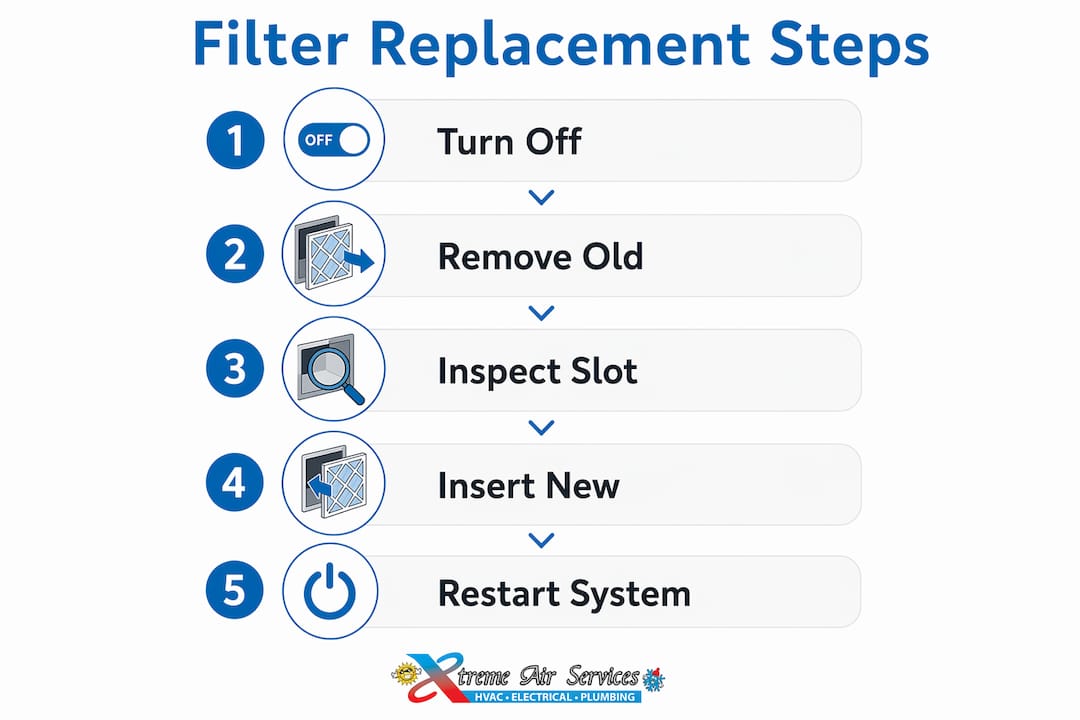
Follow these steps in order to avoid mistakes:
- Turn off the HVAC system first. Running the system during a filter change can pull unfiltered air through the slot and push debris onto the evaporator coil. Turn off the system at the thermostat before opening the filter compartment.
- Locate the filter slot. On most residential systems, the filter sits in the return air duct near the air handler or furnace. Some systems have a slot at the return air grille on the wall or ceiling.
- Remove the old filter carefully. Slide it out slowly to avoid shaking loose dust into the air. Slide it directly into a trash bag and seal it.
- Check the airflow arrow on the new filter. The arrow must point toward the blower motor, away from the return air duct. Installing it backward blocks airflow and reduces filtration. Proper filter installation requires the arrow to face the blower.
- Slide the new filter in snugly. A loose filter allows air to bypass the media entirely, which defeats the purpose of the filter. Press the edges firmly into the slot.
- Write the date on the filter frame. This takes five seconds and eliminates guesswork at the next inspection.
- Turn the system back on and check airflow. Stand near a supply register and confirm airflow feels normal. Weak airflow after a new filter install usually means the filter is installed backward or is the wrong size.
Comparing filter types: cost, lifespan, efficiency, and maintenance
Not all filters perform the same, and the cheapest option often costs the most over time. The right filter type for your home or facility affects air quality, energy costs, and how often you repeat the replacement process.
| Filter type | MERV rating | Typical lifespan | Approx. annual cost | Best for |
|---|---|---|---|---|
| Fiberglass (1-inch) | 1–4 | 30 days | $40–$60 | Basic dust protection, low-budget applications |
| Pleated (1-inch) | 7–12 | 30–90 days | $60–$120 | Most residential homes |
| Deep pleated (4–5 inch) | 13–16 | 6–12 months | $35–$130 | Allergy households, commercial facilities |
| Washable/reusable | 1–4 | 3–5 years (with cleaning) | $20–$40 | Low-dust environments, budget-focused owners |
Thicker 4–5 inch filters with MERV ratings of 13–16 last longer and hold airflow better than 1-inch filters. That means fewer replacements per year and less strain on the blower motor. The upfront cost is higher, but the annual cost often comes out lower than buying 1-inch pleated filters every 30–60 days.
Washable filters look attractive because you never buy replacements, but the reality is more complicated. Washable filters carry low MERV ratings, typically 1–4. They capture large particles but miss the fine dust, pollen, and pet dander that affect air quality most.
They also require thorough drying before reinstallation. A damp filter installed back into the system creates conditions for mold growth inside the ductwork.
A few key points to guide your choice:
- MERV 8–11 covers most residential needs without restricting airflow on standard systems.
- MERV 13–16 is the right choice for households with allergies, asthma, or pets, but confirm your system can handle the added resistance before upgrading.
- Deep pleated filters require a filter cabinet upgrade on many older systems. Xtremeairservices can assess whether your current setup supports a 4–5 inch filter without modification.
- Avoid MERV ratings above 16 on residential systems unless the equipment is specifically rated for it. Overly restrictive filters can damage the blower motor over time.
For more on how filter choices affect your home’s air, the air quality and HVAC connection is worth understanding before you buy.
Best HVAC filter maintenance tips to extend filter life and system performance
Replacing the filter on schedule is the foundation, but a few extra habits make a measurable difference in how long your system runs without problems. These HVAC filter maintenance tips go beyond the basics most guides cover.
Keep the filter slot clean. Dust and debris accumulate in the slot itself over time. When you remove an old filter, use a vacuum with a brush attachment to clean the slot before inserting the new one. Skip this step and the new filter starts its life surrounded by loose debris that immediately begins loading the media.
Upgrade to a 4-inch filter cabinet if your system allows it. Switching from a 1-inch to a 4–5 inch filter cabinet is one of the highest-return upgrades a homeowner can make. You go from replacing filters every 30–60 days to every 6–12 months.
The filter slot upgrade typically costs a few hundred dollars installed. The labor savings and reduced filter purchases usually pay it back within a year or two.
Set calendar reminders tied to seasons, not just months. The best time to change filters aligns with seasonal transitions. Schedule a filter check at the start of summer, the start of winter, and during peak spring pollen season. These are the periods when your system runs hardest and outdoor air quality changes most dramatically.
- Avoid air bypass at all costs. A filter that fits loosely in the slot is worse than no filter in some ways. Unfiltered air bypasses the media and deposits dust directly on the evaporator coil. Dirty filters allow dirt to accumulate on the coil, reducing heat absorption and accelerating system failure.
- Check the filter after any major indoor event. Renovation work, painting, or heavy cleaning generates airborne particles that can load a filter in hours. Check and replace if needed after any activity that stirs up significant dust.
- Schedule annual professional inspections. A technician can identify issues beyond the filter, including coil fouling, duct leaks, and blower motor wear, that a homeowner cannot spot during a routine filter change.
Pro Tip: Buy filters in multi-packs and store them near the air handler. When you check the filter and it needs replacing, you can do it immediately rather than making a store run and forgetting about it for another two weeks.
For a complete walkthrough of what a full maintenance visit covers, the HVAC maintenance steps guide from Xtremeairservices covers the process in detail. If your system is showing signs beyond a dirty filter, check the HVAC replacement indicators to know when maintenance is no longer enough.
Key takeaways
A consistent HVAC filter replacement schedule, adapted to your filter type and household conditions, is the single most effective action you can take to protect your system and maintain clean indoor air.
| Point | Details |
|---|---|
| Standard replacement intervals | Replace 1-inch filters every 30–90 days; replace 4–5 inch deep pleated filters every 6–12 months. |
| Household factors shorten the schedule | Pets, allergies, high occupancy, and poor outdoor air quality all require more frequent filter changes. |
| Inspect by condition, not just calendar | Hold the filter to light monthly. Replace immediately if no light passes through the media. |
| Filter type determines long-term cost | Deep pleated MERV 13–16 filters cost more upfront but reduce annual replacement frequency and system strain. |
| Correct installation is non-negotiable | The airflow arrow must face the blower, and the filter must fit snugly to prevent air bypass and coil fouling. |
What I’ve learned from years of watching homeowners skip this one step
The most expensive HVAC repairs I see at Xtremeairservices trace back to the same root cause: a filter that was ignored for too long. Homeowners set a reminder for every 90 days and follow it religiously, even when they have two dogs, a dusty neighborhood, and a system running 16 hours a day.
The calendar said 90 days, so they waited 90 days. The filter was completely blocked at day 35.
Fixed schedules give you a starting point, not a finish line. The real skill is learning to read your specific home.
A household with no pets, no allergies, and moderate system use in a clean suburban neighborhood might genuinely get 90 days out of a 1-inch pleated filter. That same filter in a home with pets, an allergy sufferer, and a nearby construction site might need replacing in 20 days. Both homes are following the “rules.” Only one is actually maintaining its system.
The combination that works best is simple: set a calendar reminder as a prompt to inspect, not as a replacement date. When you pull the filter and hold it to the light, the filter tells you what it needs. Pair that with a seasonal filter replacement mindset, and you will almost never be caught with a blocked filter.
My honest recommendation for most homeowners is to upgrade to a 4–5 inch deep pleated filter if your system supports it. The reduction in replacement frequency alone is worth it. Add a magnehelic gauge if you manage a commercial facility or a large home with complex HVAC zoning. The data it gives you is far more reliable than any fixed schedule.
Treat filter maintenance as proactive care, not a chore. A $20 filter replaced at the right time protects a $5,000 to $15,000 system. That math is not complicated.
— Xtreme
Professional HVAC maintenance that keeps your filters and system on track
Xtremeairservices offers HVAC maintenance plans designed for homeowners and facility managers who want expert oversight, not guesswork. Each plan includes scheduled filter replacements, system inspections, and early identification of issues that a routine filter change would miss.

A professional maintenance visit covers more than the filter. Technicians check coil condition, refrigerant levels, blower motor performance, and duct integrity in the same appointment. That means one visit addresses the full picture of your system’s health.
If you want cleaner air, lower energy bills, and a system that lasts, a maintenance plan from Xtremeairservices is the most direct path to all three. Contact the team to find the right plan for your home or facility.
FAQ
How often should I replace my HVAC filter?
Standard 1-inch filters need replacement every 30–90 days. Deep pleated 4–5 inch filters last 6–12 months, though households with pets or allergy sufferers should check more frequently.
What are the signs you need a new filter?
The clearest signs are reduced airflow from vents, visible gray buildup on the filter surface, rising energy bills, and worsening allergy symptoms indoors. Hold the filter to a light source: if no light passes through, replace it immediately.
Does filter MERV rating affect how often I replace it?
Higher MERV filters capture more particles and can load faster in dusty conditions, but thicker high-MERV filters (4–5 inches) compensate with greater media volume and typically last longer than thin high-MERV options.
Can a dirty filter damage my HVAC system?
Yes. A clogged filter forces the blower to work harder, increasing energy use and wear. Dirt that bypasses an overloaded filter accumulates on the evaporator coil, reducing heat absorption and leading to premature system failure.
What is the best filter type for a home with pets?
A 1-inch pleated filter rated MERV 8–11 works for most pet owners, with replacement every 20–45 days. Upgrading to a 4–5 inch deep pleated MERV 13 filter reduces replacement frequency while capturing pet dander more effectively.