


Drain Cleaning in Frisco: Know What’s Included Before You Book
Clogs cleared, with what's included in the visit and what drives the price explained before we start.
What’s Covered on This Page
- Signs a Drain Needs Professional Clearing
- When a Clogged Drain Does Not Need a Service Call
- What’s Included in a Standard Drain Cleaning Visit
- What Drives the Cost of a Drain Cleaning Job
- What Happens During the Appointment
- Is it worth paying for professional drain cleaning or should I keep snaking it myself?
- Why do drains in Frisco seem to clog more than homes I’ve lived in elsewhere?
- What’s a fair price range to expect for unclogging a drain?
Signs a Drain Needs Professional Clearing
The biggest clue is where the trouble shows up. A clog close to the fixture only affects that one drain. A clog farther down the line affects everything that drains into it. So start by looking at how many drains in your home are acting up.
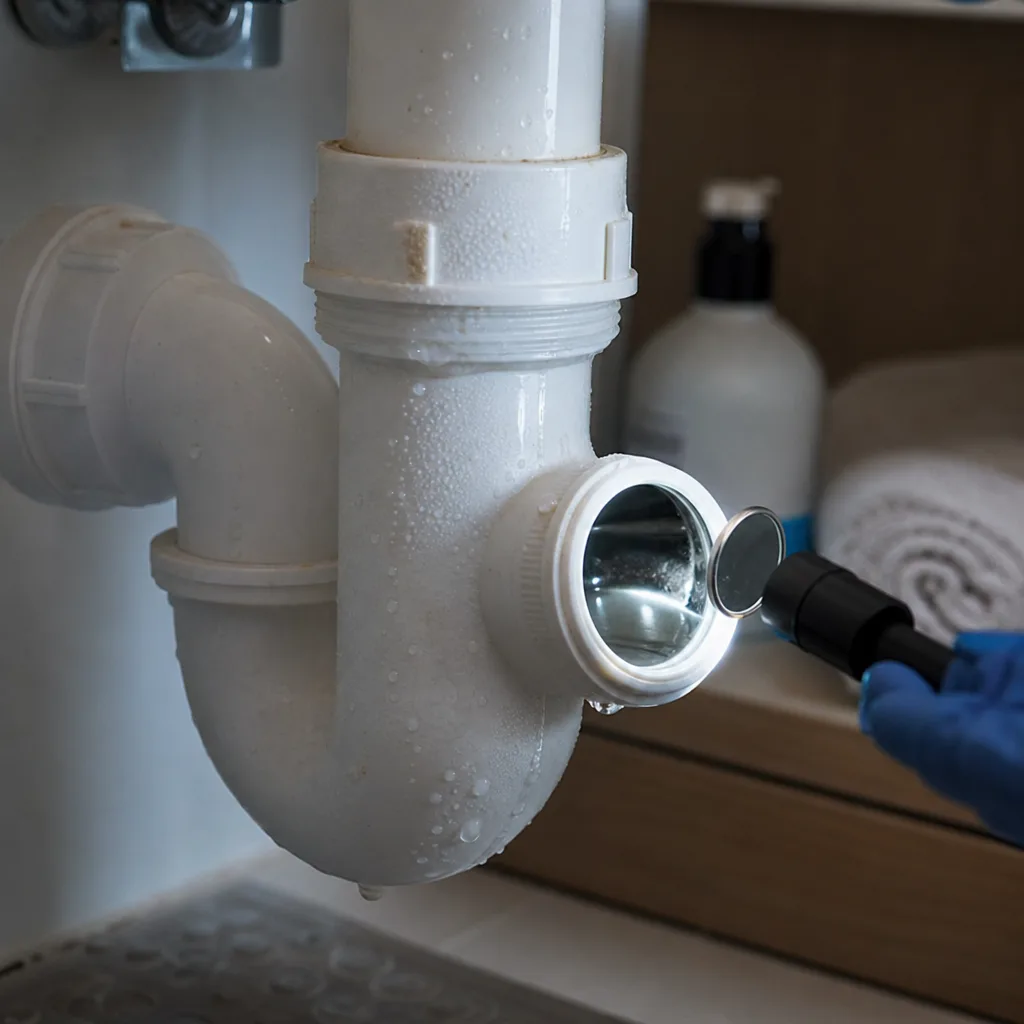
Here’s the honest part first. If one bathroom sink drains slowly and everything else in the house is fine, you can usually handle it. Pull the stopper and clean out the hair and soap gunk. Try a plunger on the sink or tub. Clean the P-trap under the sink if you’re comfortable with a bucket and a wrench. Those steps clear a lot of single-fixture clogs, and you don’t need to pay anyone for that.
It’s time to have a pro clear the line when you notice any of these:
- More than one drain is slow or backed up at the same time, like a tub and a toilet, or every sink on one side of the house.
- Water comes up in the tub or shower when you flush a toilet or run the washing machine.
- Drains or toilets gurgle or bubble after water goes down somewhere else in the house.
- A sewer smell keeps coming from drains even after you’ve cleaned them.
- The same drain clogs again a few days or weeks after you cleared it.
- Water backs up around a floor drain or comes out of the outdoor cleanout cap.
- A plunger or a store-bought snake hasn’t made any difference.
Each of these points past the fixture and into the shared pipe that carries water out of your home. A plunger can’t reach that far, and pushing harder can pack the clog tighter.
Here’s a common one. You start a load of laundry, and a few minutes later there’s gray water sitting in the bottom of the downstairs shower. Nothing’s wrong with the washer or the shower. The water from the washer just has nowhere to go, so it rises at the lowest open drain. That’s a main line problem, not a shower problem.
Homes in Frisco, like most across North Texas, sit on slab foundations, so a lot of your drain piping runs under the concrete where you can’t see it or reach it. The expansive clay soil here swells when it’s wet and shrinks during dry summers, and that movement can shift pipes over time. A clog that keeps coming back in the same spot can be a sign the line itself has a sag or a crack catching debris. Clearing it is the first step, and a sewer camera inspection can show what’s going on inside the pipe if the problem won’t stay fixed.
Skip the harsh chemical drain openers on a deep clog. If they don’t break the blockage loose, you’re left with a pipe full of caustic water, and that’s harder and less safe for anyone to work on.
If you’re not sure which side of the line you’re on, that’s fine. Tell us which drains are slow and what happens when you run water elsewhere, and we can usually help you figure out if it’s a quick fix or a job for our licensed plumbers.
When a Clogged Drain Does Not Need a Service Call
Plenty of drain problems don’t need a plumber at all. Some aren’t clogs. Some are the city’s job or your landlord’s. Some can wait until it’s convenient for you. Here’s how to tell, so you don’t pay for a visit you didn’t need.
These usually aren’t a reason to call us:
- A smell from a drain nobody uses. A guest shower or a basement-style floor drain that sits dry for weeks can let sewer gas in. The U-shaped trap under every drain holds a little water that blocks that gas, and the water slowly dries up. Run the faucet for a minute to refill it. If the smell is gone by the next day, that was the whole problem.
- A toilet that clogged once. Too much paper or a kid’s toy can stop a toilet that’s otherwise fine. If one round with a plunger clears it and it flushes normally for the next few days, you’re done. The warning sign is a toilet that keeps clogging, not one that clogged on a busy morning.
- A tub that drains slowly because the stopper is stuck. Sometimes the pop-up stopper sits partly closed, and water drains slowly through the gap. Open it all the way, or take it out and look. If water rushes down once it’s out of the way, the pipe was never clogged.
- A garbage disposal that hums but won’t spin. That’s usually a jam inside the disposal, not a clogged drain. Many units have a reset button on the bottom and a way to free the blades by hand. Follow the steps in your owner’s manual before you call anyone.
- A drain that’s a little slower than it used to be but still works. If nothing is backing up and no other drain is acting strange, it can wait for a day that works for you.
There are also times when the call should go to someone else first.
If you rent your home, call your landlord or property manager before you book anyone. Drain repairs are often their responsibility, and some leases say you have to report problems to them first.
If your neighbors on the same street are backing up at the same time as you, the problem may be in the public sewer main. The city maintains that pipe, not you. Call the City of Frisco first. A plumber can clear your line from the house out to the street, but nobody you hire can fix a blockage in the city’s main.
We’d rather you save the money on the easy ones. When a problem matches the signs above and won’t stay fixed, that’s when a professional cleaning is worth paying for.
What’s Included in a Standard Drain Cleaning Visit
A standard drain cleaning from Xtreme Air Services covers three things: clearing the clogged drain, testing the flow to confirm water moves the way it should, and cleaning up afterward. Most calls are resolved on the first visit. You get a price before the work starts, so you know what you’re paying before anyone touches a pipe.
Here’s how the visit breaks down.
- Drain clearing. We open the blockage that’s backing up your sink, tub, toilet, or main line.
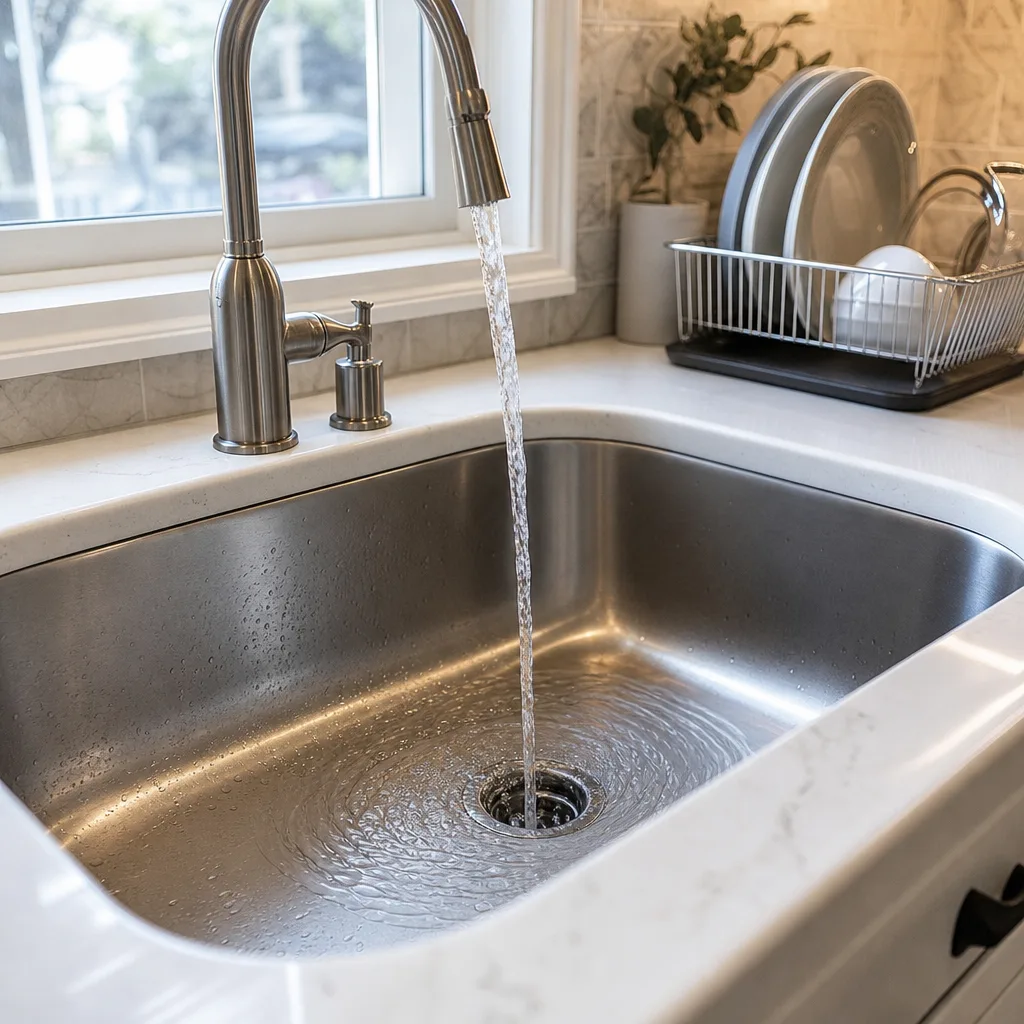
- Flow testing. Clearing a clog isn’t the finish line. We run water to confirm the drain flows properly, so you’re not left guessing whether it’ll back up again tonight.
- Cleanup. Drain work can get messy. Cleanup is part of the job, not an extra.
Some work isn’t part of a standard cleaning. Hydro-jetting, pipe repair, and root removal are quoted separately. If the line needs one of those, you’ll hear it from us before any of it happens, and the choice stays yours.
For most homes, the most common job, clearing the clogged drain and confirming proper flow, runs $150-$300. Our typical price range for drain cleaning is $150-$500. Four things move a job up or down that range:
- How bad the clog is. A soft buildup of hair and soap clears faster than a packed blockage.
- Where the clog sits. A clog near one fixture is a smaller job than one deep in the line that serves the whole house.
- Access to the cleanout. A cleanout is a capped pipe that gives a straight path into your drain line, often outside near the foundation. When it’s easy to find and open, the job goes faster.
- Whether a camera or hydro-jetting is needed. If the clog keeps coming back, looking inside the pipe or scouring it with high-pressure water adds to the cost.
There’s a $26-$99 service-call fee. If you go ahead with the work, that fee is credited toward the repair. So if you book the cleaning, you aren’t paying for the trip on top of the fix.
Financing isn’t typically offered on a smaller job like this one. It is available on larger repairs and replacements. If your line turns out to need pipe repair instead of a cleaning, ask us about it then.
Your price doesn’t climb because the clog happened at a bad hour. There’s no extra charge for nights or weekends, so a Sunday backup costs the same as a Tuesday one. Our pricing is upfront and flat-rate, and you approve it before the work starts, so no meter is running while you watch.
You’ll also want to know who’s coming into your home. Our technicians are licensed, background-checked, and drug-tested. They’ll show you what’s causing the backup in plain English and walk you through your options.
One thing helps keep your cost down. If you know where your outdoor cleanout is, clear the grass, mulch, or storage bins away from it before we arrive. If you’re not sure where it is, that’s fine. Finding it is part of the job.
Ready when you are – get in touch today.
Call Today, Get Service Today. Xtreme Air Services — Frisco is ready to help.
What Drives the Cost of a Drain Cleaning Job
You already know our range and what moves a job within it. The bigger worry for most people is a different one. Will a simple clog turn into a big bill? That depends on two things: how the company charges, and what the drain turns out to need once the clog is open.
Drain companies tend to charge in one of two ways. Some charge by the hour plus parts. Others quote a flat price for the job before they start. Hourly pricing can look lower on the phone, but a stubborn clog takes longer, and the clock is on your dime. A flat price puts that risk on the plumber. If the clog fights back for an extra 40 minutes, your number doesn’t change. That’s why we price drain cleaning up front.
Most clogs end with the cleaning. When one doesn’t, the next step costs more because it takes different equipment and more time. Here’s how a drain job usually grows, from smallest to largest:
- Clearing the clog. A cable cuts through the blockage and the drain flows again. This is the standard job.
- Camera inspection. If the same line keeps clogging, a small camera goes into the pipe to show why. You’re paying for answers here, not another round of guessing.
- Hydro-jetting. High-pressure water scrubs grease and buildup off the inside walls of the pipe. A cable punches a hole through a clog, and jetting cleans the whole pipe.
- Root removal. Tree roots that have grown into a sewer line have to be cut out, and they can grow back.
- Pipe repair. If the camera finds a crack, a sag, or a broken joint, cleaning won’t fix it for long. That’s a repair, not a cleaning.
Each step up should come with a reason you can see, like a camera picture of roots or a low spot holding water. In Frisco, where so much drain line runs under the slab, that picture matters. Opening concrete is a big decision, and you shouldn’t have to make it based on a guess.
Before you hire anyone to clear a drain, these questions will tell you a lot about the quote:
- Is this a flat price for the job, or an hourly rate?
- Is the trip fee credited toward the work if I go ahead?
- Does the price include testing the flow and cleaning up afterward?
- If you find something bigger, will you show me and price it before you start?
- Do you charge more for nights or weekends?
- Is a licensed plumber doing the work?
A good company answers all of these in a minute or two without dodging. If you get a vague answer about price, or a push to approve extra work without seeing the problem, keep calling around.
Call 469-490-3595
Watch Our Video
See How We Handle Drain cleaning in Frisco
Xtreme Air Services — Frisco
What Happens During the Appointment
Most drain appointments are pretty simple. Someone figures out where the clog is, clears it, proves the water flows, and cleans up. Knowing the steps ahead of time means you won’t feel lost when a plumber is kneeling in your bathroom with a machine. It also helps you spot a visit that’s going off track.
A few small things before the technician arrives can save time:
- Jot down which drains are slow or backed up, and when it started. A backup that showed up all at once after a big holiday meal points somewhere different than one that’s been getting worse for a month.
- Note what happens when you run water elsewhere. Does the tub fill when you flush? Does the kitchen sink gurgle when the dishwasher drains? That one detail often tells the plumber where to start.
- Say what you’ve already tried. If you used a plunger, a snake, or a chemical opener, mention it right away. Chemicals left in a pipe change how it’s safe to work on it.
- Empty the cabinet under the problem sink, and keep pets and kids out of the way while the work is going on.
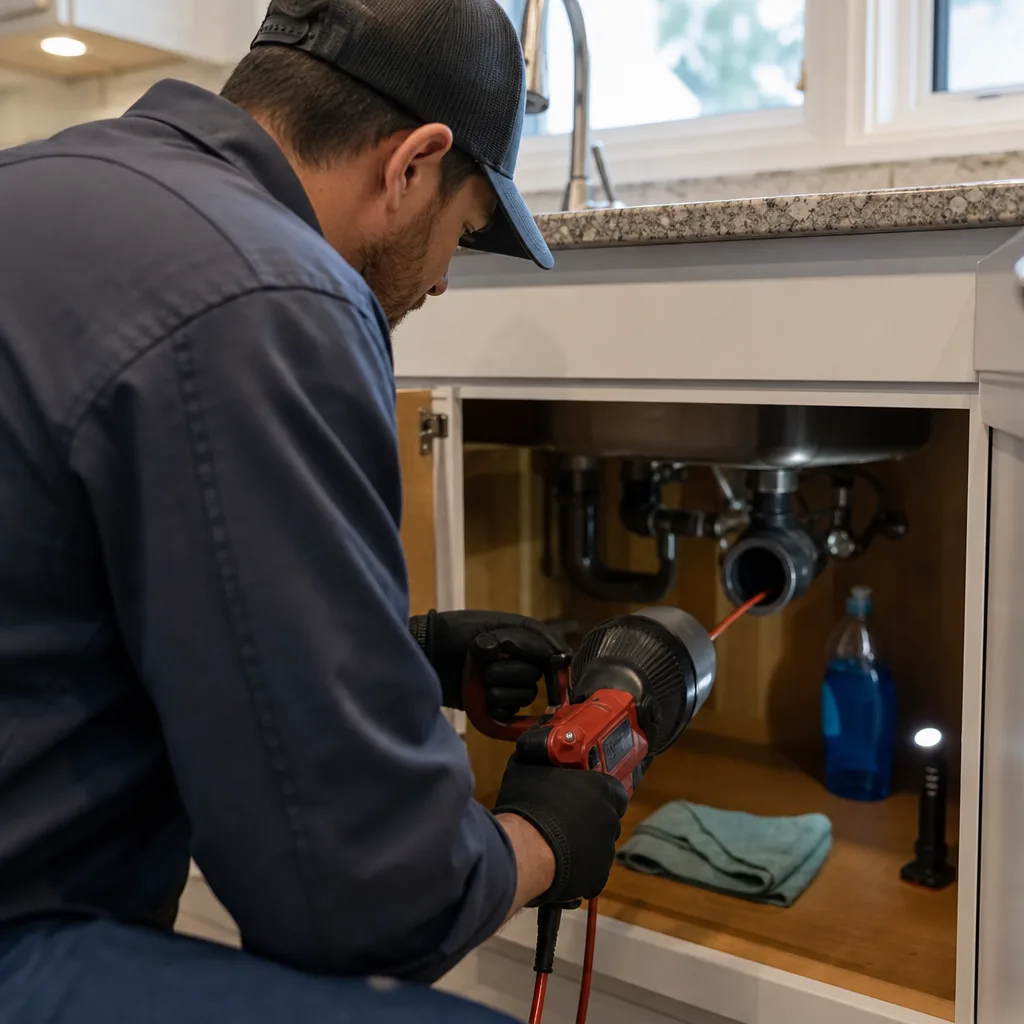
In most drain jobs, the work starts with a short look around. The plumber listens to what you’ve seen, runs water at a couple of fixtures, and picks the best way into the line. That might be the outdoor cleanout, the drain under a sink, or sometimes a toilet that has to be pulled to reach the pipe below it. Then a cable machine goes into the pipe and cuts through the blockage.
With Xtreme Air Services, you’ll know the price before that machine comes out. It’s upfront and flat-rate, and you approve it first. Our licensed, background-checked technicians will tell you in plain English where they think the clog is and why. If you have questions, ask. You should never feel rushed into saying yes.
Clearing the clog isn’t the end of the visit. We test the flow to confirm the drain is moving the way it should. This is a good moment to watch. Water should go down without pooling, and nothing should gurgle in another room when it does. If the backup involved more than one fixture, try a flush and a sink at the same time. Then comes cleanup, so you’re not left wiping up after us.
Most calls are resolved on the first visit. Sometimes, though, the cable comes back with roots on it, or the clog clears and the drain still runs sluggish. That usually means something is going on inside the pipe itself. When that happens, you’ll hear what we found and what the next step would cost before anything else is done. Work like hydro-jetting or a camera look is quoted separately, and you can say no or take time to think it over.
Keep an eye on that drain for the next week or so. If it slows down again within days, the line may have a sag or a crack under the slab that keeps catching debris. That’s useful to know, and you should tell us.
Frequently Asked Questions
Common questions about Drain cleaning
Is it worth paying for professional drain cleaning or should I keep snaking it myself?
It’s worth it once a clog keeps coming back or affects more than one drain. A store-bought snake only reaches the first few feet of pipe, so it can’t touch a blockage sitting deeper in the line. If you’ve already tried a plunger and a cheap snake with no luck, you’re past the point where DIY tools can help, and a cable machine is the next step.
Why do drains in Frisco seem to clog more than homes I’ve lived in elsewhere?
It often comes down to slab foundations and shifting clay soil common across Frisco. Most drain lines here run under the concrete slab, and the expansive clay underneath swells and shrinks with the seasons. That movement can shift a pipe just enough to create a low spot or sag where debris keeps catching, so the same drain clogs again even after it’s cleared.
What’s a fair price range to expect for unclogging a drain?
Expect somewhere between $150 and $500 depending on how bad the clog is and where it sits in the line. A soft clog near one fixture, like a bathroom sink, clears faster and costs less than a blockage deep in a main line serving the whole house. Ask for a flat price before work starts so you know the number won’t change if the clog takes longer to clear.
Ready to Get Started?
Call (469) 490-3595 Today, Get Service Today.