


Slab Leak Repair in Frisco: Reroute or Spot-Repair, Done Right
Leaks under your slab located and fixed with a spot repair or a reroute – whichever is right for your home.
What’s Covered on This Page
- Slab Leaks Explained: What’s Happening Under Your Floor
- Signs You Can Rule Out a Slab Leak
- How Xtreme Air Services Locates and Repairs a Slab Leak
- What Drives the Cost of Your Slab Leak Repair
- Confirming the Repair Worked and Protecting Your Home After
- Who is responsible for a slab leak, me or the city?
- Can a slab leak be fixed without tearing up my whole floor?
- How long does it take to find and fix a slab leak?
Slab Leaks Explained: What’s Happening Under Your Floor
Most homes in Frisco sit right on a concrete slab. There’s no crawl space and no basement. When your house was built, the plumbers laid the water lines in the dirt first. Then the crew poured the concrete over them. Those pipes are still down there, carrying water to your kitchen, bathrooms, and water heater every day.
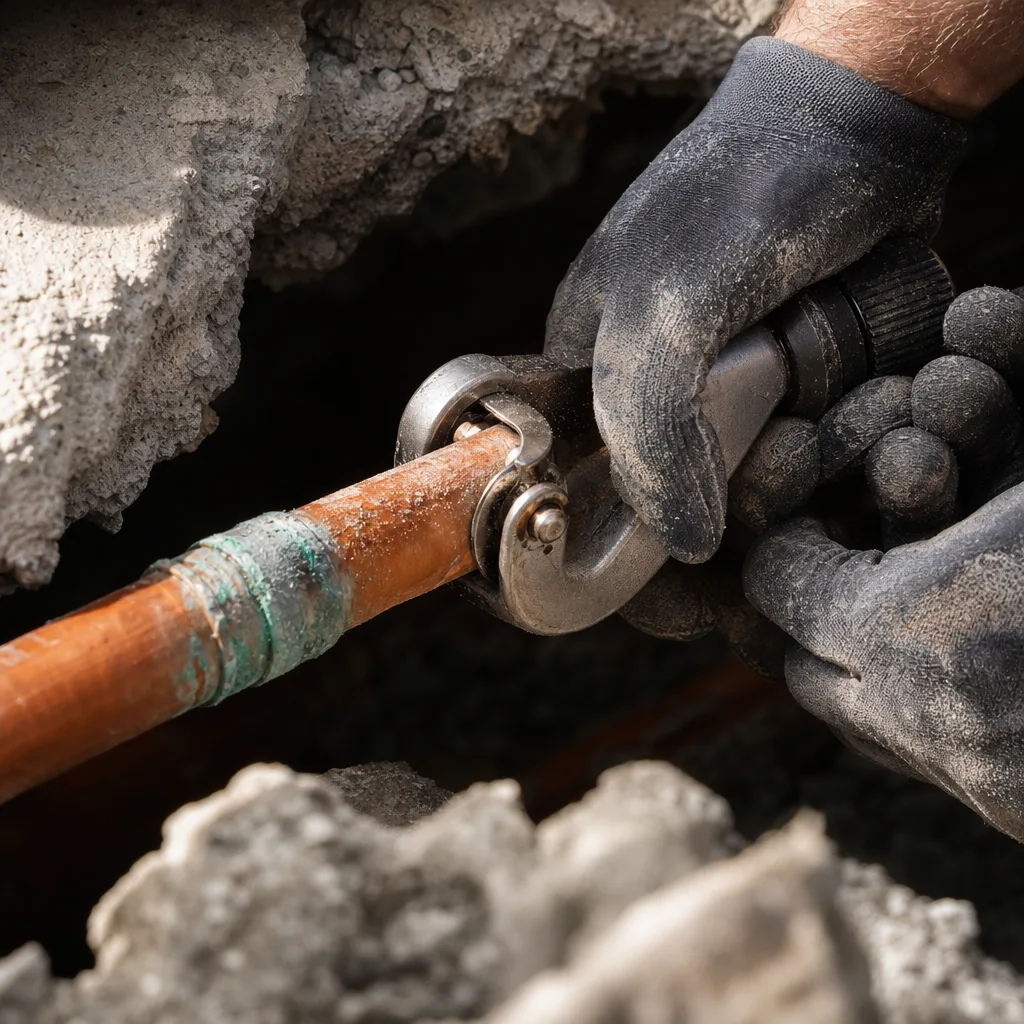
A slab leak happens when one of those buried lines springs a leak. You can’t see it, and you can’t reach it with a wrench. The water has nowhere to go but into the soil and up into the concrete under your floors.
Under-slab pipes usually fail in one of these ways:
- Soil movement. North Texas clay swells when it soaks up water and shrinks when it dries out. After a wet spring and a long, hot summer, your slab can shift enough to bend or pull on the pipes inside it.
- Rubbing. A pipe that touches concrete, rock, or another pipe moves a tiny bit each time water rushes through it. Over the years, that rubbing can wear a pinhole right through the wall of the pipe.
- Corrosion. Older copper lines can thin out from the inside, especially with the hard water common across the area.
- Weak spots from the start. A bad joint or a kinked line from the original build can hold up for years, then finally give out.
It helps to know which kind of line is leaking. A pressurized supply line, the kind that brings fresh water in, leaks all the time, even when every faucet is off. That’s why a hot water line leak can leave a warm spot on your tile or make your water heater run more than it should. A drain line only leaks when water goes down it, so the signs build up more slowly. Damp flooring, a musty smell, or cracks that keep growing are common clues.
Here’s what that can look like. You’re barefoot in the kitchen and notice one patch of floor feels warmer than the rest. Your water bill is higher than last month, but nothing in the house has changed. Neither of those means disaster. Both are worth checking out.
Why does all this matter to you? Because a slab leak isn’t one problem with one fix. A single pinhole in a short stretch of pipe is a very different job from a line that’s worn thin along its whole run. Depth matters too. So does whether the leak sits under open tile or under your kitchen cabinets. Those details decide whether it makes sense to open the slab and repair one spot, or to reroute the line around the trouble area so nobody has to break through your floor at all.
That’s why knowing exactly where the water is escaping comes before anything else. Once you know the spot and the type of line, the right repair, and a fair price for it, become much easier to see.
Signs You Can Rule Out a Slab Leak
A high water bill or a warm patch on the floor doesn’t automatically mean the pipe under your slab has failed. Plenty of everyday problems look the same at first, and most of them cost a lot less to fix. You can check a few of them yourself in about an hour, without tools.
Start with your water meter. It’s usually in a covered box near the curb. Turn off every faucet, the dishwasher, the washing machine, and your sprinklers. Then look at the meter. Most have a small dial or triangle called a leak indicator. If it’s sitting still, write down the numbers and don’t use any water for an hour or two. Check again when the time’s up.
- If the meter didn’t move, water isn’t escaping from your supply lines right now. A pressurized slab leak is very unlikely.
- If the meter moved, something is using water. That still doesn’t prove it’s under the slab, so keep checking the items below.
Before you blame the foundation, rule out the usual suspects:
- A running toilet. Put a few drops of food coloring in the tank and wait 15 minutes without flushing. If color shows up in the bowl, the flapper is leaking. A worn flapper can waste a lot of water quietly, and it’s an inexpensive part you can swap yourself.
- Your sprinkler system. A broken head or a stuck valve in the yard can make the meter spin. Watering more during a hot Texas summer can also push your bill up with no leak at all. Turn the irrigation off at the controller, then run the meter test again.
- An outdoor faucet or hose. A dripping hose bib or a hose left on a slow trickle adds up fast.
- Your water heater. Look for water around the base or a drip from the pipe connected to the relief valve. That needs attention, but it’s a water heater problem, not a slab problem.
- A leak under a sink. Open the cabinets and feel the pipes and the cabinet floor for damp spots.
Some signs can fool you, too. A floor that feels warm in one spot could just be where the afternoon sun hits through a window. Check it again at night. Hairline cracks in drywall or tile can come from the clay soil moving the foundation, even when every pipe is fine. And a musty smell might come from a slow leak under a sink or a damp AC closet, not from under the concrete.
If the meter stays still, the floor is dry, and the higher bill lines up with a toilet you’ve now fixed or a few extra days of watering the lawn, you can stop worrying. You don’t need anyone to come out. Run the meter test again next month and keep an eye on your bill.
How Xtreme Air Services Locates and Repairs a Slab Leak
Every slab leak repair we do follows three steps. First we find the leak. Then we fix it, either by repairing that one spot or by rerouting the line. Last, we test the system to make sure the leak is stopped. All three steps are part of the job. You’re not paying extra just to learn where the water is going.
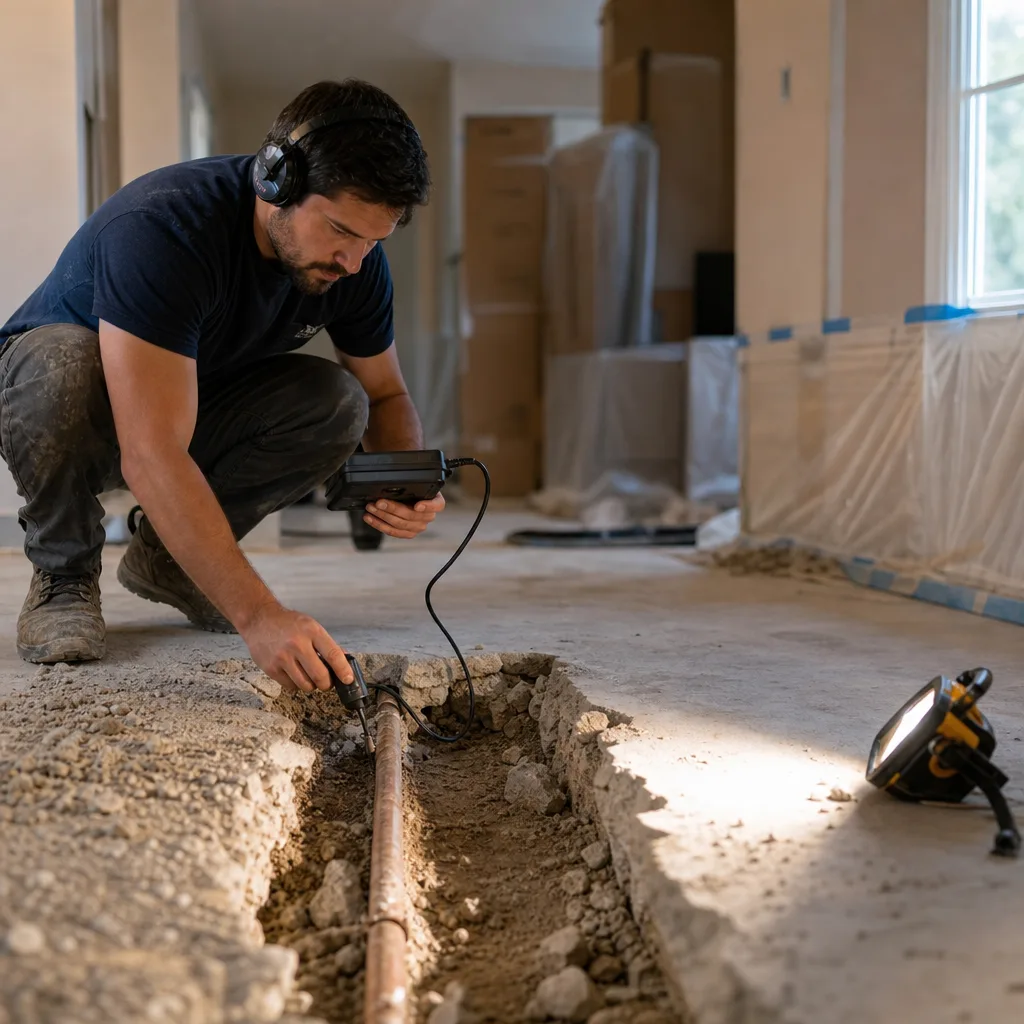
Finding the leak comes first because it decides everything else. Before anyone breaks concrete, the goal is to learn which line is leaking (hot supply, cold supply, or drain) and where along that line the water is escaping. Plumbers usually narrow it down by shutting off parts of the system one at a time and pressure testing them. Then they trace the leak to a spot on your floor. A good locate means a small, planned opening in the right place instead of guessing across your kitchen.
Once the spot is known, there are two ways to fix it:
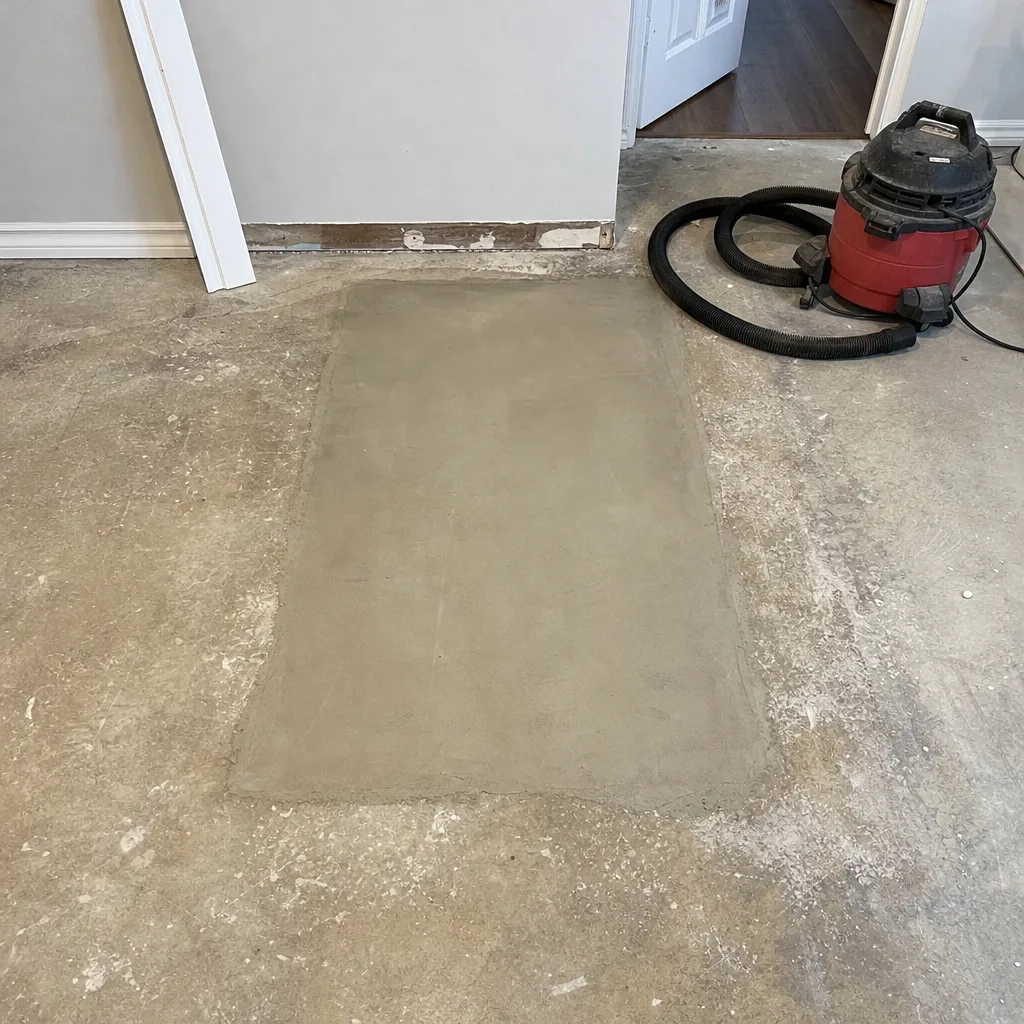
- Spot repair. We open the slab right above the leak, replace the damaged piece of pipe, and close it back up. This often makes sense when it’s a single pinhole in a pipe that’s otherwise in good shape, and the spot is easy to reach.
- Reroute. We leave the old pipe in place and run a new line around the problem, usually through the walls or attic, so nobody has to break through your floor. This often makes sense when the pipe looks worn along its whole run, the leak is deep, or it sits under cabinets, an island, or flooring you’d hate to tear up.
Neither choice is always better. A reroute that goes through a Frisco attic has to handle serious summer heat, so it needs to be planned and protected the right way. A spot repair through the slab is quick and direct, but it only fixes the one spot that failed. We’ll explain which one fits your house and why, in plain English, before any work starts.
You also see the price before work starts. We use upfront flat-rate pricing that you approve before anything gets cut or pulled. If you want to think it over or talk it through with your family, that’s fine. Nobody’s starting a jackhammer while you’re still deciding.
After the repair or reroute, we test the line to confirm it holds pressure and the leak is really gone. That way you’re not left wondering if the problem is truly fixed.
The people doing this work are licensed and insured, background-checked technicians, and same-day service is available. When it’s your foundation and your floors on the line, you should know exactly who’s in your home and what they plan to do before they do it.
Have questions? We’re happy to help.
Call Today, Get Service Today. Xtreme Air Services — Frisco is ready to help.
What Drives the Cost of Your Slab Leak Repair
Most slab leak repairs we do fall in a range of $2,000-$6,000. Our most common job runs $2,000-$3,800. That job means finding the leak under your slab, then repairing or rerouting the line to stop it. Where your job lands in that range comes down to three things.
- Where the leak is and how deep it sits. A leak just under open tile in a hallway is easier to reach than one deep under the slab or under your kitchen island.
- Spot repair or reroute. A spot repair means one small opening and one short piece of new pipe. A reroute means running a new line through your walls or attic. It can take more work, but it skips breaking up your floor and replaces the worn stretch of pipe.
- Access through the slab. How much concrete has to come up, and what’s sitting on top of it, changes how much labor the job takes.
Here’s how that plays out. Picture two Frisco homes with a hot water line leak. In the first house, it’s one pinhole under the laundry room floor, and the rest of the pipe looks fine. In the second, the line is worn thin along a long run under the kitchen. Both are called a slab leak. They’re not the same job, and they shouldn’t have the same price. That’s why an honest price comes after the leak is found, not before.
Our service call fee is $26-$99. If you go ahead with the repair with Xtreme Air Services, that fee is credited toward the repair. So if we find a slab leak and you hire us to fix it, you’re not paying twice to get started.
Leave a little room in your budget for the items the repair doesn’t cover, like flooring restoration, which we covered above. If your floor gets opened, the finish work is a separate cost.
If the number is bigger than you planned for, ask about financing. We offer flexible financing on qualifying installations and larger jobs, on approved credit.
Whoever you call, these questions help you compare quotes fairly:
- Is finding the leak part of the price, or is it billed separately?
- Are you recommending a spot repair or a reroute, and why for my house?
- Will you test the line after the repair to make sure the leak is gone?
- What’s not included, like flooring or permits?
- Will I see and approve the full price before any concrete gets cut?
A plumber who answers those clearly, in plain English, is one you can trust with your foundation.
Call now
Watch Our Video
See How We Handle Slab leak repair in Frisco
Xtreme Air Services — Frisco
Confirming the Repair Worked and Protecting Your Home After
Before we leave, we test the line to make sure it holds pressure. That’s the real proof the leak is stopped. You’ll still want to see it for yourself over the next few weeks. Here’s what a fixed slab leak looks like from your side of the floor.
- Your meter goes quiet. Run the same meter test from earlier with everything turned off. If the leak indicator doesn’t move, your supply lines are holding.
- Your next water bill drops. One bill may still be high because it covers days before the repair. The bill after that should look like normal use again.
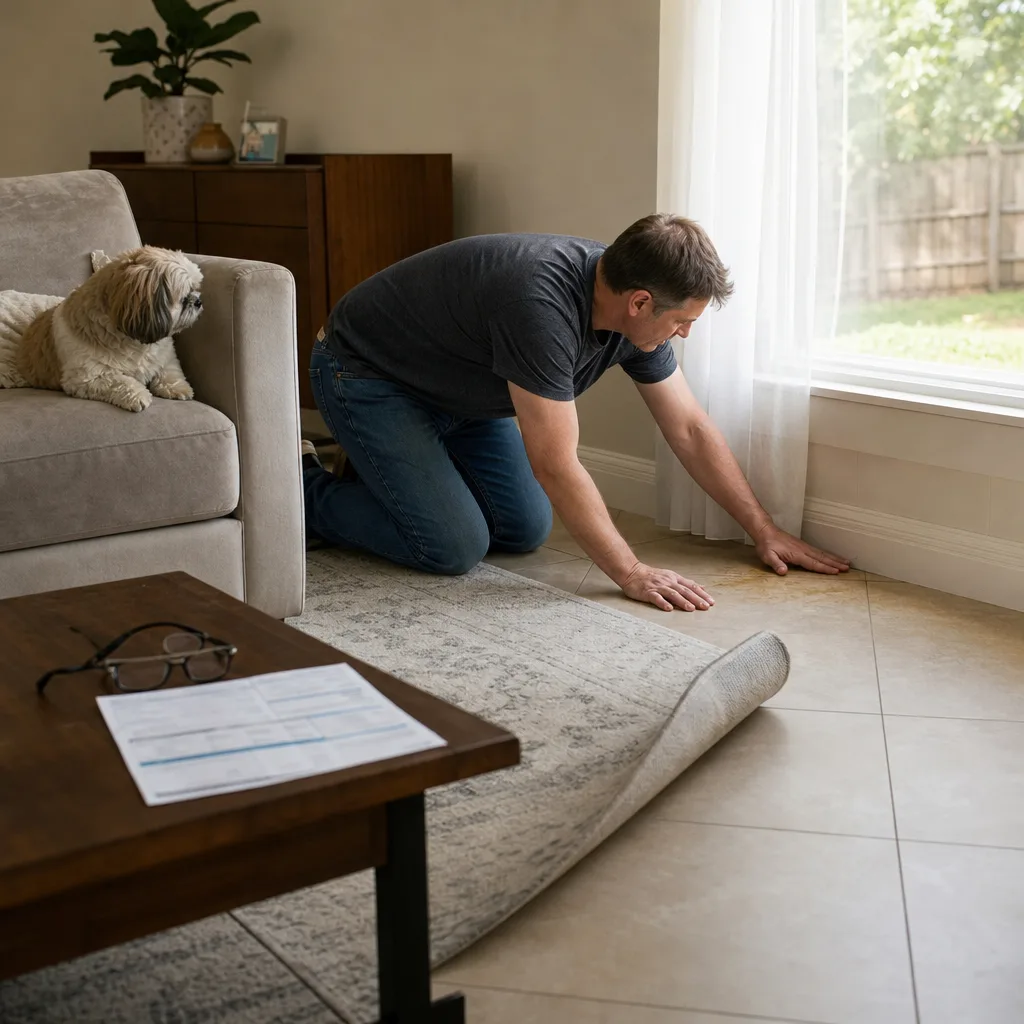
- The warm spot fades. If a hot water line was leaking, that warm patch on your tile should cool down within a few days.
- Damp areas dry out. Wet soil and concrete take time to dry. A musty smell can linger for a while, but it should get weaker, not stronger.
If the meter starts moving again or a new damp spot shows up somewhere else, call us. One honest note: the repair fixes the line that failed. If other pipes under your slab are the same age, one of them can wear out later. That’s part of why a reroute can make sense for a pipe that’s worn along its whole run.
You can’t control everything under your foundation, but a few habits help protect your pipes.
- Keep the soil around your foundation evenly moist. Frisco clay swells when it’s wet and shrinks when it’s dry. Steady moisture means less movement, so your slab, and the pipes inside it, shift less. In a dry stretch of summer, a soaker hose set a little way out from the foundation does more good than an occasional heavy soak.
- Watch your water pressure. Pressure that runs too high puts extra strain on every pipe in your home, including the ones you can’t see. If your faucets blast or your pipes bang when a valve shuts, we can check it, and pressure regulator replacement is a service we offer.
- Think about your hard water. Minerals in hard water are tough on pipes and fixtures over time. If you’re already fighting white crust on faucets, a water softener is worth a conversation.
- Know where your main shutoff is. If water ever shows up where it shouldn’t, turning it off fast keeps a small problem small.
- Check your bill every month. A sudden jump with no change in how you use water is your earliest clue. It costs you nothing to notice.
None of this guarantees a pipe will last forever. It just gives your plumbing a fair shot in soil that likes to move.
Call 469-490-3595
Frequently Asked Questions
Common questions about Slab leak repair
Who is responsible for a slab leak, me or the city?
You’re responsible for any leak on your side of the water meter, which includes every pipe under your slab. The city only owns the line up to the meter near the curb. Once water crosses onto your property, repairs for that line fall on the homeowner.
Can a slab leak be fixed without tearing up my whole floor?
Yes, in many cases a spot repair opens just one small section of concrete right above the leak. We find the exact leak location first using pressure testing, then open only that spot to replace the damaged pipe. A full reroute through the attic or walls is the other option when the pipe is worn along its whole run, and neither approach requires tearing up your whole floor.
How long does it take to find and fix a slab leak?
Locating the leak usually happens in one visit, since pressure testing narrows down the exact spot before any concrete is opened. Same-day service is available, so the find-and-fix process often wraps up faster than homeowners expect once the leak location is confirmed.
Ready to Get Started?
Call (469) 490-3595 Today, Get Service Today.