


Tankless Water Heater Installation in Frisco
Tankless installs by licensed plumbers, with the gas line, venting, permits and inspection covered.
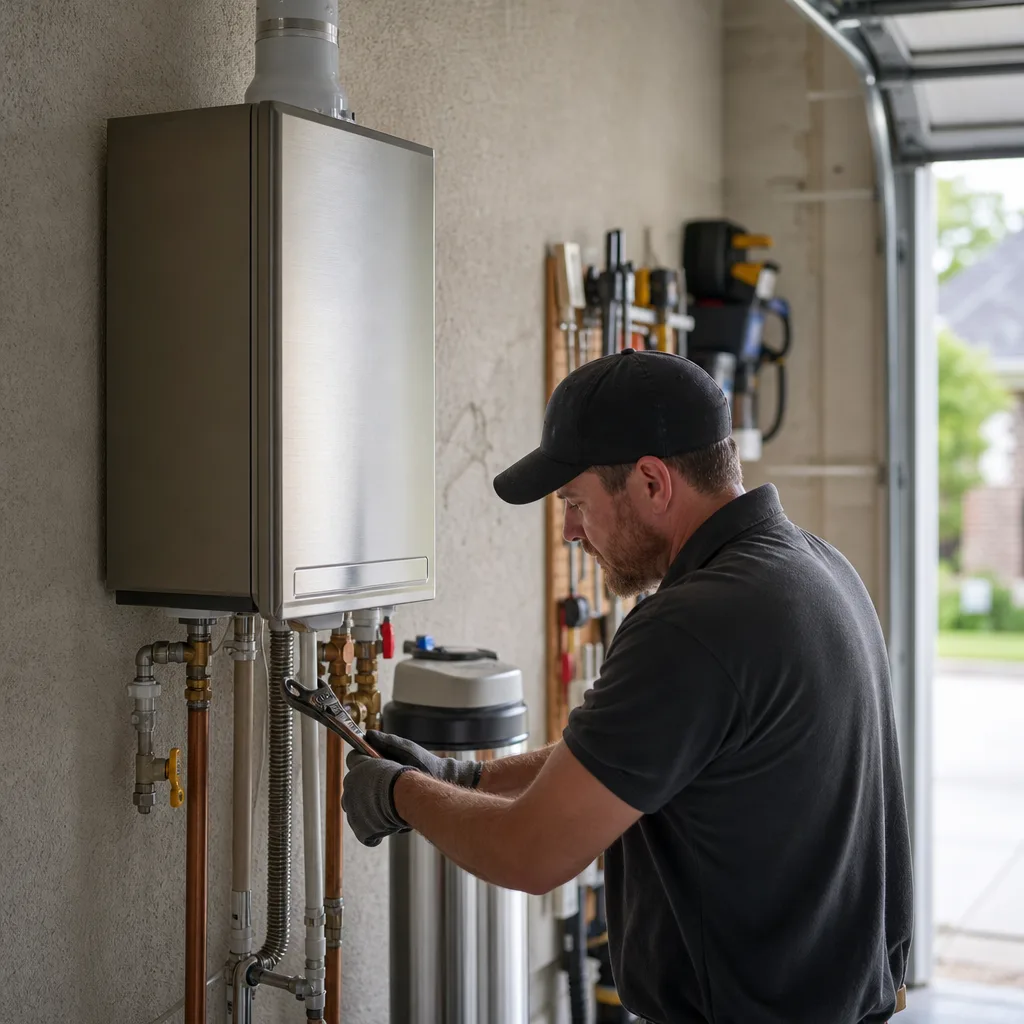
What’s Covered on This Page
- Tankless Water Heater Installation Answers Frisco’s Aging Tank Problem
- A Licensed Plumber Is Required for Gas Line and Venting Work
- What a Standard Tankless Installation Includes and Costs
- Permits and Inspections for Gas Tankless Units in Frisco
- Sizing a Tankless System for Your Household’s Hot Water Demand
- What is the downside of a tankless water heater?
- Do I need a plumber to install a tankless water heater?
- Can I just buy a tankless unit from a store and have it installed cheaply?
Tankless Water Heater Installation Answers Frisco’s Aging Tank Problem
Maybe you’ve noticed it already. The second shower of the morning turns lukewarm halfway through. The tank in your garage or attic makes a popping or rumbling sound when it heats. Maybe there’s a little rust at the base. Most tank water heaters last somewhere around 8 to 12 years. North Texas hard water can shorten that, because minerals settle at the bottom of the tank and the burner has to work through that layer every time it heats.
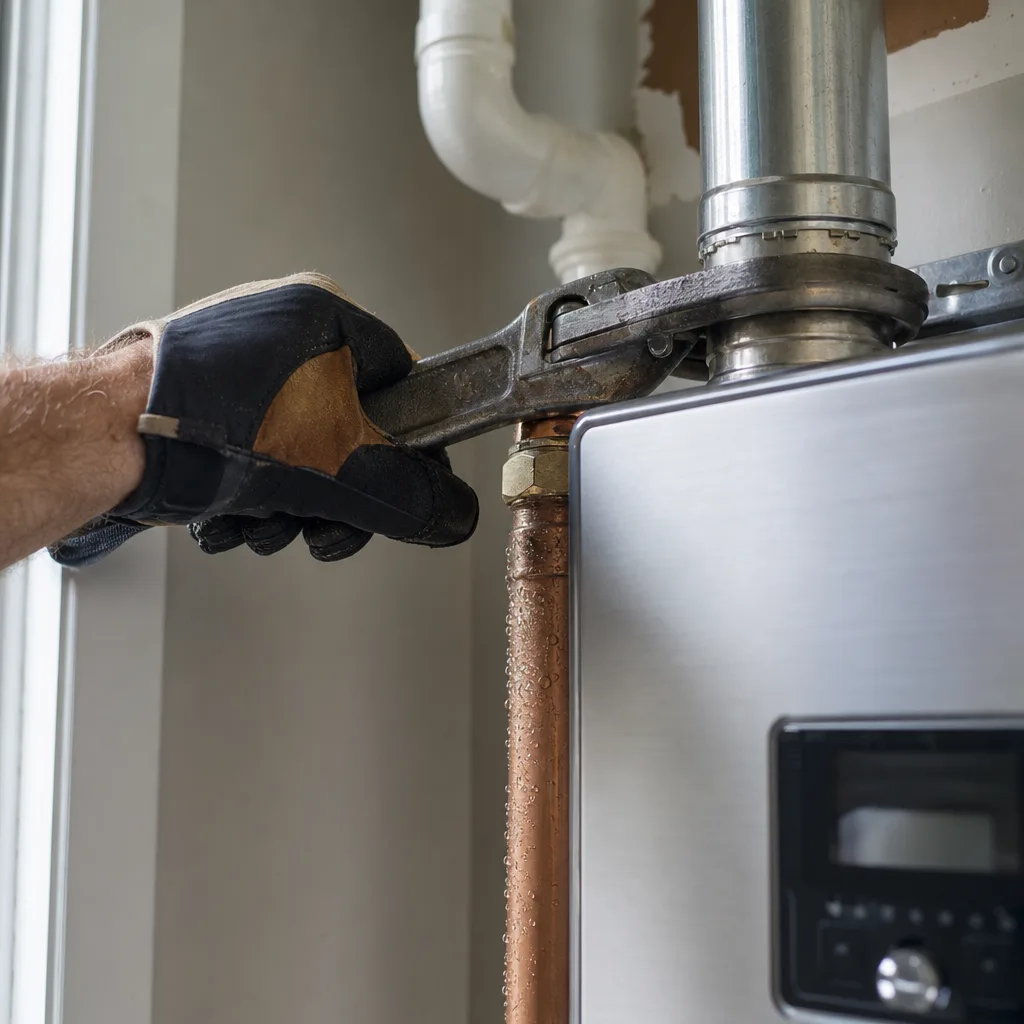
When that tank wears out, you don’t have to buy another one just like it. A tankless heater warms water only when you turn on a tap. You don’t have a 40- or 50-gallon tank keeping water hot all day, and you don’t run out partway through a busy morning. It also mounts on a wall, so you get back the floor space the old tank took up.
Here’s the honest part. Tankless isn’t a simple swap. Whether it’s the right move depends on whether your home can support it, and a good install checks that before anything gets mounted. These are the things that change when you go from a tank to tankless:
- Gas supply: A gas tankless burner often needs more gas at once than your old tank did, so the line feeding it may need to be bigger.
- Venting: Tankless units vent differently than tanks, and the vent has to fit the new unit, not the old one.
- Sizing: Tankless heaters are sized by how much hot water you use at the same time, like two showers and the dishwasher running together. They aren’t sized by gallons stored.
- Water quality: Hard water builds scale inside a tankless unit too, so you should plan for how your water will be handled from day one.
Those details are also what decide your price. At Xtreme Air Services, tankless water heater installation typically runs $3,000 to $6,500. Our most common job is a standard like-for-like install using existing connections with no major changes, and it runs $3,700 to $5,100. That covers the equipment and materials, professional installation, standard connections, startup and testing, and haul-away of your old unit. Gas tankless pricing includes venting. Plumbing or electrical modifications, code corrections, and permits aren’t included unless stated, so you’ll know up front if your home needs any of them.
If you’d rather spread out the cost, flexible financing is available on qualifying installations and larger jobs, on approved credit. Our service-call fee is $26 to $99, and it’s credited toward the job if you move forward with us.
We’re licensed and insured, and we work out of our office at 6160 Warren Pkwy in Frisco. Your neighbors have given us a 4.8-star rating across more than 2,900 reviews on Google, Angi, and HomeAdvisor. You’ll get upfront pricing before any work starts, so you can make the call that’s right for your home without surprises.
A Licensed Plumber Is Required for Gas Line and Venting Work
You can buy a tankless heater online in a few minutes. Hooking it up safely is a different job. In Texas, gas piping and water heater installs are plumbing work, and they need a licensed plumber. That isn’t red tape for its own sake. The two parts most likely to go wrong, the gas line and the vent, are also the two that can hurt someone.
Here’s what that work looks like on a real install:
- Checking the gas line. We figure out how much gas the new burner needs at full fire and compare it to what your current line and meter can deliver. If the line is too small, the heater may starve for gas when two showers run at once. Upsizing the line is the fix.
- Making the gas connection. That means a proper shutoff valve, a sediment trap to catch debris before it reaches the burner, and a pressure test to make sure there are no leaks anywhere in the run.
- Running the vent. Tankless units usually can’t reuse the old tank’s metal flue. The vent material, length, and number of bends have to match the manufacturer’s instructions. The outside end needs safe clearance from windows, doors, and air intakes so exhaust doesn’t drift back into your home.
- Handling condensate. High-efficiency condensing models make acidic water as they run. That water needs a drain path, and sometimes a neutralizer, so it doesn’t eat away at pipes or drip where it shouldn’t.
- Powering the unit. Most gas tankless heaters still need a nearby 120-volt outlet for their controls and fan. If there isn’t one where the heater is going, that’s electrical work too.
A bad vent can push carbon monoxide into a garage or living space. A loose gas fitting can leak slowly for weeks before anyone smells it. Those risks are the reason this work is licensed. They’re also why a permit and inspection give you a second set of eyes on the job. Frisco, like most North Texas cities, generally requires a permit when a water heater is replaced or a gas line is changed. Permits aren’t part of the standard install price unless stated, as noted above, but a licensed plumber knows when one is needed and can pull it for you.
Our plumbing work runs under Master Plumber Larry Breedlove. Because we handle plumbing and electrical under one roof, a new outlet or a gas line upgrade doesn’t mean waiting on a second contractor.
You don’t have to sit on the sidelines, though. A few things are fair game for you before anyone shows up:
- Snap a photo of your current water heater’s label and the vent pipe on top.
- Count how many showers, tubs, and big appliances might run at the same time on a busy morning.
- Clear a path to the garage, closet, or attic where the heater sits.
Whoever you hire, ask three questions. Are you licensed for plumbing in Texas? Will you check my gas line size before installing? Will you pull the permit? A straight yes to all three tells you the job is being done the right way.
What a Standard Tankless Installation Includes and Costs
When we call a job “standard,” we mean something specific. It’s a like-for-like install that uses your existing connections with no major modifications. That’s the $3,700 to $5,100 job from the price breakdown above. In plain terms, the new heater goes in where the old one was. The gas, water, and power it needs are already there and in good shape, and nothing has to be rerouted or replaced to make it work.
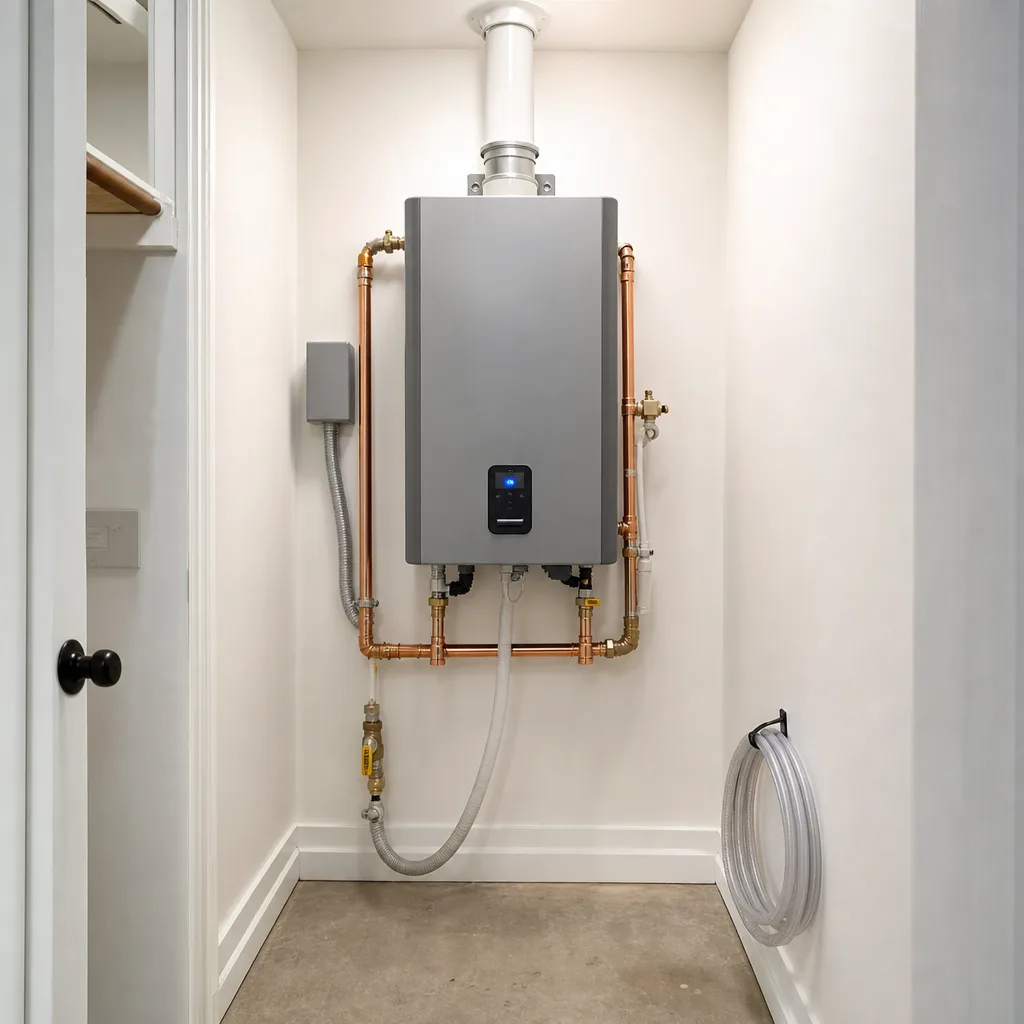
Plenty of homes fit that picture. Some don’t, and that’s not a bad thing. It just means the job needs more than a swap. These are the things that move your price up or down within the $3,000 to $6,500 range:
- Size and capacity: A home that runs several showers and appliances at once needs a bigger unit, and a bigger unit costs more.
- Efficiency: High-efficiency condensing models usually cost more up front than standard models. They also need the condensate drain covered earlier.
- Brand and model: Different heaters come with different features and price tags.
- Ease of access: An open garage wall is quicker to work on than a cramped closet or a hot attic.
- Condition of your existing plumbing and wiring: Worn shutoff valves, old connectors, or no outlet near the heater all add work.
- Code upgrades and permits: If your setup doesn’t meet current code, it has to be brought up to code. Permits are priced separately unless stated.
- Custom fabrication: An unusual vent route or mounting spot can take parts that are made to fit your home.
Here’s how that plays out. Picture two homes. In the first, the gas tank sits in the garage on an outside wall. There’s an outlet a few feet away, and the gas line is already big enough. That’s a standard job. In the second, the tank is up in the attic. The gas line needs upsizing, and the vent has to take a new path out of the house. Both homes can have a great tankless setup. The second one simply takes more work, so it costs more.
You’ll know which home is yours before any work starts. We give you upfront pricing, so any changes your home needs are on the table first, not added later.
If you’re getting more than one quote, compare what each one includes, not just the total. A lower number that leaves out haul-away or venting isn’t really lower. Ask each company these questions:
- Is this a standard install, or does the price include changes to my gas line, vent, or wiring?
- For a gas unit, does the price include the venting?
- Is the permit fee included in this number, or is it separate?
- Does the price cover removing and hauling away my old tank?
- What size unit is this, and how many fixtures can it run at the same time?
Clear answers to those questions let you compare quotes fairly. They also tell you whether the company looked at your home before giving you a number.
Ready when you are – get in touch today.
Call Today, Get Service Today. Xtreme Air Services — Frisco is ready to help.
Permits and Inspections for Gas Tankless Units in Frisco
A permit can feel like one more line on the bill. On a gas tankless install, it’s the step that protects you long after the job is done. The inspector works for the City of Frisco, not for the contractor. Their job is to look at the gas line, the vent, and the connections with fresh eyes and confirm the work is safe.
On a gas tankless heater, an inspector usually focuses on the parts that matter most for safety:
- The gas piping: whether it’s sized for the new burner, has a shutoff valve and sediment trap, and holds pressure with no leaks.
- The vent: the right material for the unit, a proper route out of the house, and safe clearance from windows, doors, and air intakes.
- The pressure relief valve: tankless heaters still need one, piped so the water drains safely if it ever opens.
- The condensate drain on condensing models: where that acidic water goes and how it gets there.
- Water and power connections: a shutoff on the water side and a proper outlet or circuit for the unit’s controls.
If your heater sits in the attic, as it does in a lot of North Texas homes, the inspector will also look at whether there’s safe access to the unit and whether a leak would be caught before it reaches your ceiling. An attic install isn’t a problem. It just has a few more things to get right.
Here’s what the process asks of you. The permit is filed before work starts. After the install, the city sends an inspector out, and someone usually needs to be home to let them into the garage, closet, or attic. If they flag something, it gets fixed and checked again. A failed inspection isn’t a disaster. It’s the system working the way it should, catching a problem while it’s still easy to fix.
The permit pays off in ways you might not think about on install day. When you sell your home, a buyer’s inspector will look at the water heater, and a permitted, inspected install answers their questions before they’re asked. If you ever file an insurance claim involving a leak or a gas problem, a record that the work passed inspection is far better to have than not.
Be careful if any contractor offers to skip the permit to save you money. That shortcut skips the only independent check on your gas line and vent. Those are the two parts of this job where a mistake can hurt someone. A few dollars saved isn’t worth it.
If you’re ready to find out whether your home is set up for tankless, or what it would take to get there, we’ll look at your gas line, vent path, and water heater location and give you upfront pricing before any work starts. You’ll talk to a real person from our licensed and insured team right here in Frisco.
Watch Our Video
See How We Handle Tankless water heater installation in Frisco
Xtreme Air Services — Frisco
Sizing a Tankless System for Your Household’s Hot Water Demand
The biggest worry people have about tankless is simple: will it keep up? It will if it’s sized right. A tankless heater never runs out of hot water, but it can only heat so much water per minute. If you ask for more than that, the water coming out of your tap gets cooler. Sizing is how you make sure that doesn’t happen on your busiest morning.
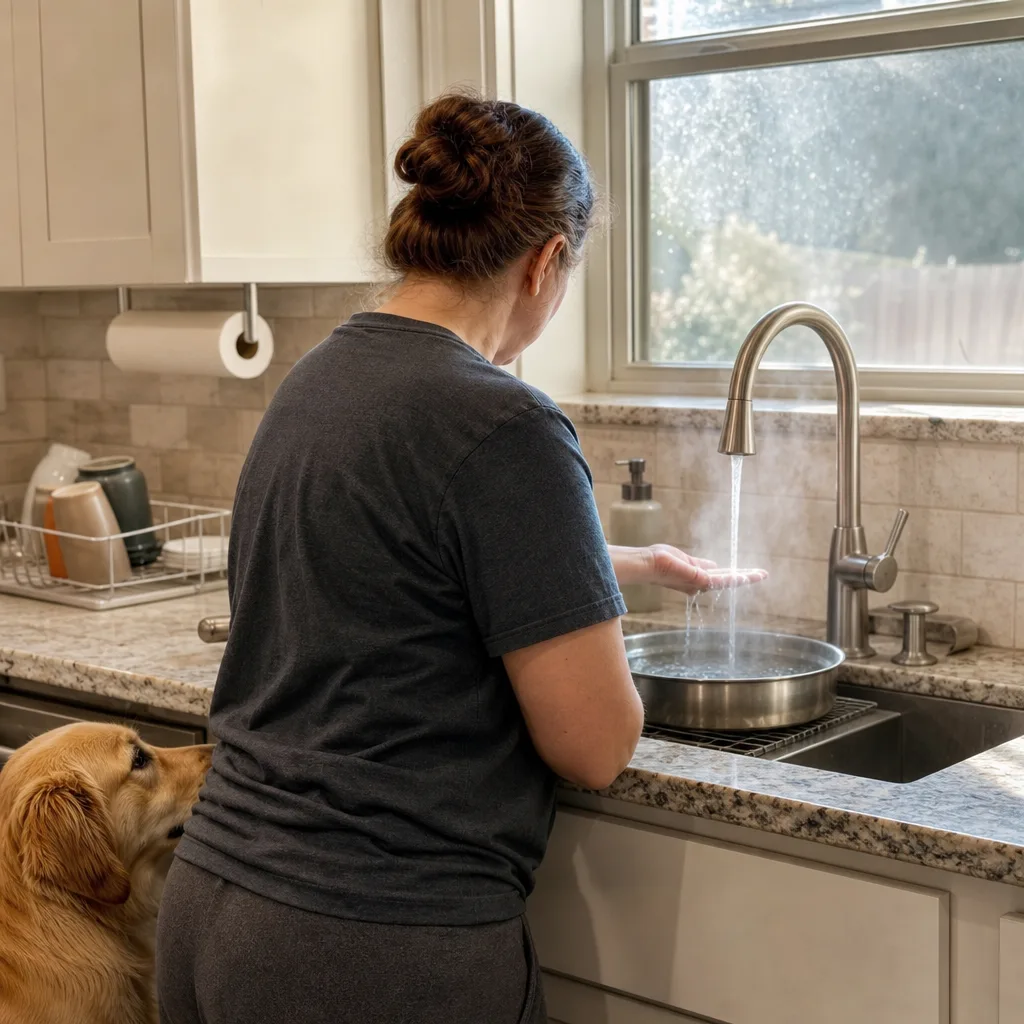
Two numbers decide the size. The first is flow rate, or how many gallons per minute your home pulls at the same time. The second is temperature rise, or how many degrees the heater has to warm the water coming in from the street to reach the temperature you want at the tap.
To get a rough idea of your flow rate, think about the most hot water your family uses at one time. These are typical ballpark numbers:
- A shower: about 2 gallons per minute
- A kitchen or bathroom faucet: about 1 to 1.5 gallons per minute
- A dishwasher: about 1 to 1.5 gallons per minute
- A washing machine on a warm or hot cycle: about 1.5 to 2 gallons per minute
- A large soaking tub: more than a shower, because it fills from a wide-open spout
Picture a family of four on a school morning. Two showers are running, and someone starts the dishwasher. That’s around 5 to 5.5 gallons per minute combined. A unit that can only deliver 4 at your home’s temperature rise will leave somebody with a lukewarm rinse.
Temperature rise is where North Texas makes a difference. The water coming into your home isn’t the same temperature all year. In August it arrives warm, so the heater barely has to work. During a January cold front, that same water comes in much colder, and the heater has to add a lot more heat to every gallon. A unit that feels great in summer can come up short in winter if it was sized for the easy months. That’s why a heater’s rating only means something when you know the temperature rise it was rated at. Ask what flow rate the unit delivers on a cold winter day, not its best-case number.
Gas and electric units size differently, too. Gas tankless heaters usually handle a whole house of simultaneous use more easily, which is why the gas line size covered earlier matters so much. Whole-home electric tankless units can pull a lot of power. In some homes that means a larger electrical service or an electrical panel upgrade before the heater can go in.
Bigger isn’t always better. An oversized unit costs more up front and can have trouble with very small draws, like a quick hand wash at a low trickle. Most tankless heaters need a minimum flow to fire the burner at all. The right size covers your real peak use with a little room to spare, and no more.
A good installer should ask you how many people live in your home, how many bathrooms you have, whether you have a big tub, and when your household uses the most hot water. If nobody asks those questions before quoting a unit, the size was a guess.
Frequently Asked Questions
Common questions about Tankless water heater installation
What is the downside of a tankless water heater?
The main downside is the upfront cost and the chance your home needs extra work to support it. A gas line may need to be upsized, the vent has to be run fresh for the new unit, and hard water in North Texas means you need a plan to manage scale buildup inside the unit. None of these are dealbreakers, but they do add to the job compared to a simple tank swap, so it helps to know about them before you commit.
Do I need a plumber to install a tankless water heater?
Yes, a licensed plumber is required for this work in Texas. Gas piping and water heater installation are both plumbing work, and the gas connection and venting are the two parts most likely to cause a safety problem if they’re done wrong. A licensed plumber checks your gas line size, builds a proper vent path, and handles the pressure test and condensate drain so the unit runs safely.
Can I just buy a tankless unit from a store and have it installed cheaply?
You can buy the unit yourself, but the install is where the real work and cost happen. A tankless heater needs the right gas line size, a new vent path built to the manufacturer’s specs, a nearby outlet for its controls, and often a permit and inspection. Skipping any of that to save money on the install can leave you with a unit that can’t keep up with your home’s hot water demand or, worse, an unsafe gas or vent connection.
Ready to Get Started?
Call (469) 490-3595 Today, Get Service Today.