


Emergency Plumbing in Frisco: Know When to Call
Active leak, backup or no water? Call, tell us what you're seeing, and a licensed plumber heads your way.
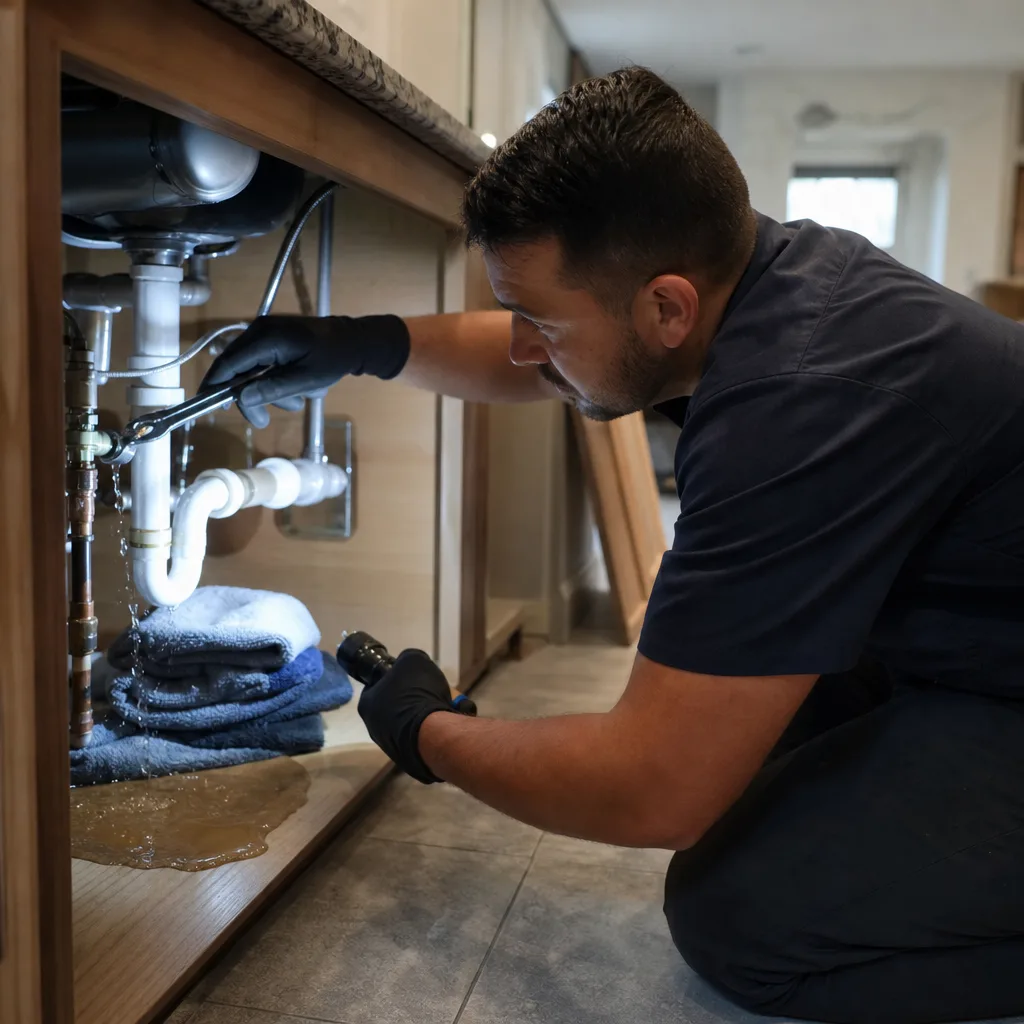
What’s Covered on This Page
- Call Xtreme Air Services Now for Active Leaks, Backups, or No Water
- Tell the Difference Between a True Emergency and Something That Can Wait
- Know Who to Call: City of Frisco Line vs. a Private Plumber
- Stop the Damage Before Help Arrives
- What Happens When Xtreme Air Services Arrives
- Can I shut off my water myself before a plumber gets there?
- What if I can’t tell whether it’s a real plumbing emergency?
- Will I know how much the repair costs before work starts?
- Does it cost more to call for a plumbing emergency at night or on a weekend?
Call Xtreme Air Services Now for Active Leaks, Backups, or No Water
When something’s going wrong with your water, the hard part is deciding what to do next. We’ll make that part easy. Call, tell us what you’re seeing, and we’ll get a licensed plumbing technician headed to your Frisco home or business the same day. Our local office is at 6160 Warren Pkwy, Suite 100, right here in Frisco.
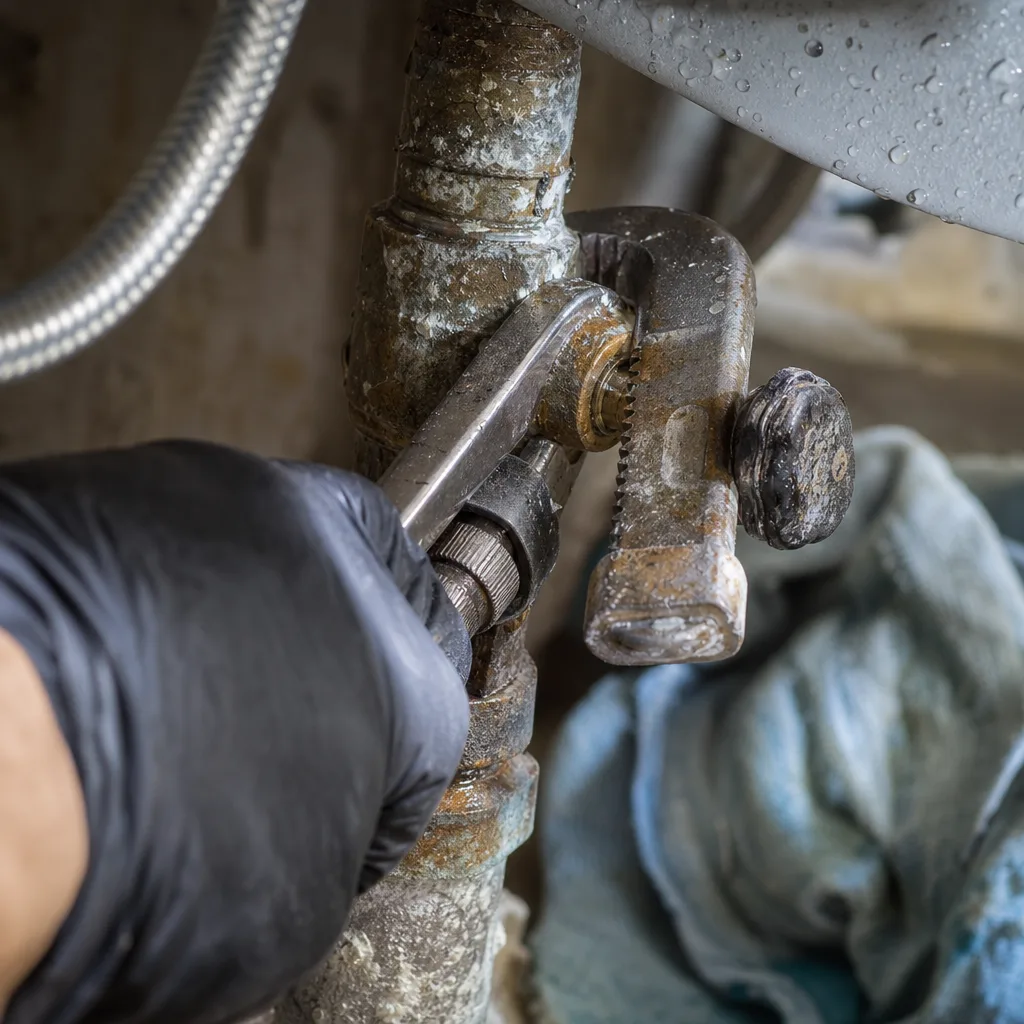
You don’t need to know what’s broken before you call. It helps if you can tell us a few simple things:
- What you see: a drip, a spray, a puddle, a wet ceiling, or sewage coming up a drain
- Where it is: kitchen, bathroom, laundry, garage, yard, or ceiling
- When it started and whether it’s getting worse
- Whether you have water at all, or just in some parts of the house
That’s enough for us to send the right technician with the right parts.
A lot of people wait to call because they’re scared of the bill. We get it. So here’s how pricing works with us. There’s a $26-$99 service-call fee, and it’s credited toward the repair if you go ahead with Xtreme Air Services. Once the technician finds the problem, you get an upfront flat-rate price. You say yes before any work starts. No meter running, no surprises.
Our most common emergency job is finding the problem, stopping the leak or blockage, and making the repair so your water works again. That usually runs $200-$550. Across all emergency plumbing jobs, the typical range is $200-$1,000. What moves the price is how serious the problem is, what type it is, and what parts it takes. Calling at 2 a.m. on a Sunday doesn’t change the price. Nights and weekends cost the same as a weekday.
Your price includes the diagnosis, the labor, and the standard repair, plus testing and cleanup. A few things aren’t in that standard price: major component replacement, code upgrades, and permits. If your job needs any of those, we’ll quote them separately so you can decide. If the fix turns into a bigger repair or replacement, financing is available for that larger work.
You’re letting someone into your home on a bad day, so who shows up matters. Our technicians are licensed and insured. They’re background-checked, and they treat your home like family would. That’s how we’ve earned a 4.8-star reputation across more than 2,900 reviews on Google, Angi, and HomeAdvisor. And because we handle HVAC, plumbing, and electrical under one roof, you’ve got one local team to call if the problem reaches past the pipes.
Tell the Difference Between a True Emergency and Something That Can Wait
Not every plumbing problem is an emergency. Ask yourself two questions. Is water going somewhere it shouldn’t, and can you stop it? Can your household get by without that fixture until a normal weekday? If the water won’t stop, or you’ve lost something you can’t live without, treat it as urgent. If you can stop it and work around it, it can usually wait.
Call the same day if you’re seeing any of these:
- Water spraying or running from a pipe, and closing the nearest valve doesn’t stop it.
- A wet spot spreading across a ceiling, or water dripping from a light fixture. Lots of North Texas homes run water lines through the attic, and some put the water heater up there too, so a ceiling leak can mean a lot of water is sitting overhead.
- Sewage or dirty water coming up into a tub, shower, or floor drain, especially in more than one place at a time. That usually points to the main line, not one drain.
- No water anywhere in the house.
- A warm spot on the floor, or the sound of running water when every tap is off. Frisco homes sit on slab foundations, and those signs can point to a leak under the slab.
- Water pooling around the base of your water heater tank.
- A pipe that split during a hard freeze. It may not leak much until it thaws, and then it can leak fast.
These can usually wait for a regular appointment:
- A dripping faucet. It’s annoying and it wastes water, but it won’t flood anything.
- A toilet that keeps running after you flush.
- One slow drain while every other drain in the house works fine.
- One clogged toilet when you’ve got another one you can use.
- A small leak under a sink that stops when you close the little valve under it.
- Low pressure at just one faucet while the rest of the house is normal.
- Hot water that runs out sooner than it used to, with no leak around the tank.
The valve is often what decides it. Most sinks and toilets have a small shutoff valve on the wall or under the cabinet. If turning it stops the leak, you’ve gone from an emergency to a repair you can schedule. It’s also worth knowing where your home’s main shutoff is before you ever need it. In newer Frisco subdivisions it’s often near the front of the house or in a box by the curb.
Some of the items on the second list you can fix yourself. A plunger clears most single-toilet clogs. A worn flapper inside the tank is the usual cause of a running toilet, and it’s an easy part to swap. A faucet with weak flow often just needs its aerator, the little screen at the tip, unscrewed and rinsed. Hard water leaves mineral buildup there over time.
If you’re stuck in the gray area, go by what’s changing. A problem that’s getting worse by the hour, or one you can’t see the source of, belongs on the first list. A problem that’s been the same for days and stays put when you shut a valve can wait until it fits your schedule.
Know Who to Call: City of Frisco Line vs. a Private Plumber
Sometimes the problem isn’t yours to pay for. In most North Texas cities, the dividing line is your water meter, the box usually set in the ground near the curb or sidewalk. The city’s side is the water main under the street, the meter, and the pipe leading up to it. Your side is everything after the meter: the line running across your yard to the house and every pipe inside your walls, slab, and attic. If you’re not sure where your meter sits or who owns what at your address, the City of Frisco’s utility office can tell you.
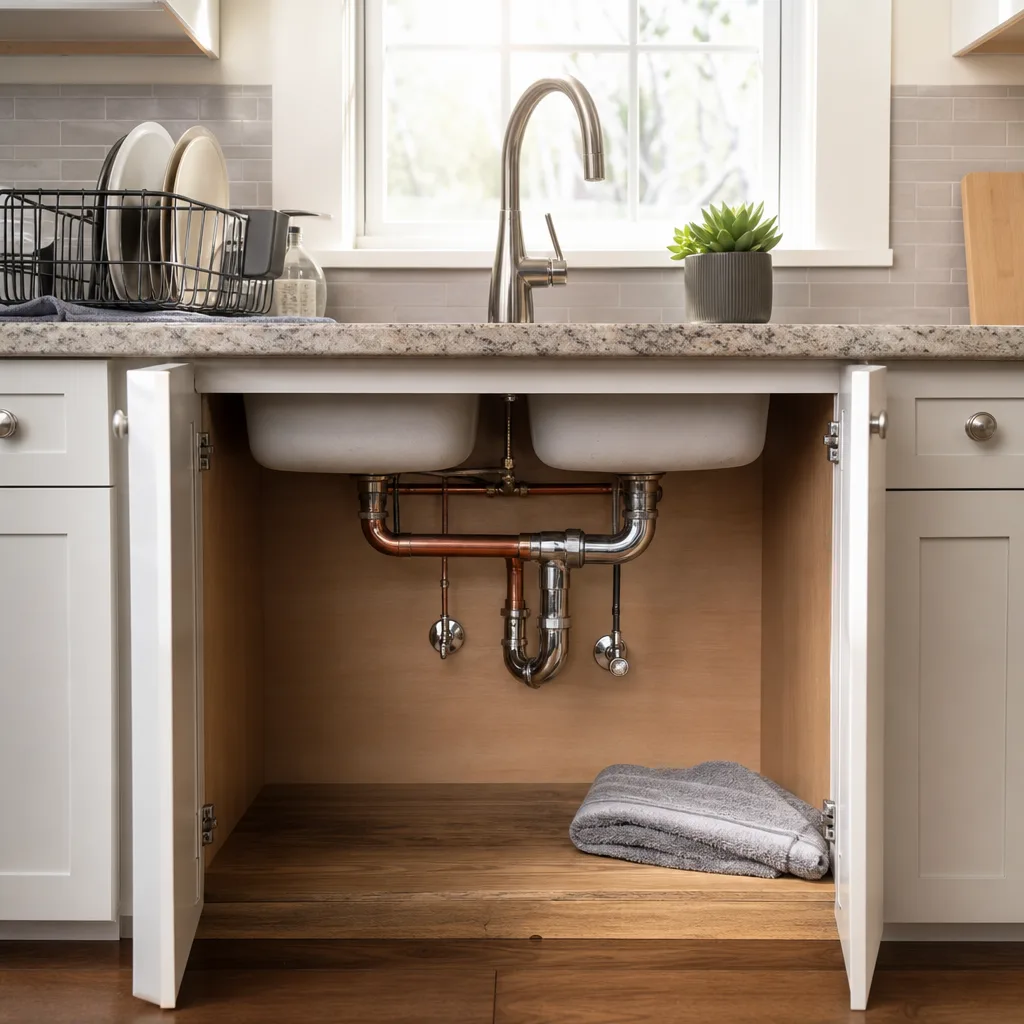
Here’s how to tell which side you’re dealing with.
It’s probably the city’s problem if:
- Water is bubbling up in the street, the gutter, or the strip of grass between the sidewalk and the curb.
- Your neighbors lost water or pressure at the same time you did.
- Water from every tap turned brown or cloudy all at once, and the people next door are seeing it too.
- The leak is coming from the meter itself or from the street side of the meter box.
It’s probably yours if:
- The trouble is only at your house, and the homes on either side are fine.
- There’s a soggy patch or sinkhole in your yard between the meter and your front wall.
- Your water bill jumped and you can’t find a drip anywhere inside.
- The leak, backup, or loss of pressure is inside the house.
A quick check helps a lot. Turn off every faucet, the ice maker, and the sprinklers. Then lift the meter lid and look at the dial. Most meters have a small leak indicator, often a little triangle or star, that spins when water is moving. If it’s still turning with everything off, water is escaping somewhere on your side of the meter. That could be the yard line, a toilet, or a pipe under the slab.
Sewer works much the same way. The city usually owns the big sewer main under the street. The pipe that carries waste from your house out to that main, called the lateral, is usually the homeowner’s job, cleanout and all. If sewage is coming up only in your home, the clog or break is most likely in your lateral. If several houses on your street back up at once, the main may be the problem, and the city should hear about it first.
If the signs point to the city, call the city first. A main break or a bad meter isn’t something you should pay a private plumber to touch, and we’d rather you not spend money on a repair that isn’t yours. While you wait, use your home’s main shutoff if water is coming into the house.
If the signs point to your side, or you just can’t tell, that’s where we come in. Our licensed plumbing technicians can trace a leak with plumbing leak detection, check for a leak under your slab, or run a sewer camera inspection to see exactly where your lateral is clogged or broken. You’ll know whose problem it is before anyone digs, and you’ll get an upfront flat-rate price on your side of the line before any work starts.
Thinking about Emergency plumbing? Let’s talk.
Call Today, Get Service Today. Xtreme Air Services — Frisco is ready to help.
Stop the Damage Before Help Arrives
The first ten minutes after you find water where it shouldn’t be matter more than anything else. You can’t fix the pipe yet, but you can keep a small mess from turning into a big one. Here’s what to do, roughly in this order.
- Shut off the water. If a fixture valve won’t stop it, go to your main shutoff. Turn it clockwise until it stops. If it’s stiff, use steady pressure, not a hammer. A cracked valve makes things worse.
- Keep water and power apart. Don’t walk into standing water near outlets, cords, or appliances that are plugged in. If you can reach your breaker panel from a dry spot, turn off power to the wet area. If you can’t get there without stepping in water, stay out and wait.
- Turn off the water heater once the main is shut. An electric tank has its own breaker. On a gas tank, turn the control knob to Pilot or Off. This keeps the heater safe while no new water is coming in.
- Open a faucet at the lowest point in the house, like a tub or an outdoor spigot. That drains the water still sitting in the pipes so less of it ends up on your floor.
- Move what you can. Pull rugs, boxes, electronics, and furniture away from the water. Put foil or plastic under furniture legs on wet carpet so the wood doesn’t stain.
- Soak up what you can reach. Towels, a mop, or a wet/dry vac all help. The less water that sits on drywall and flooring, the less wicks up into it.
A few problems need their own steps.
If your ceiling is sagging or bulging with water, set a bucket under the lowest spot. Keep people out of the room, and stay away from any light fixture that’s dripping. A ceiling holding water can come down, and with lines running through so many North Texas attics, there may be more up there than you think.
If sewage is backing up, stop using water everywhere in the house. Don’t flush, shower, or run the dishwasher or washing machine. Every gallon you send down has to go somewhere, and right now it’s coming back up. Keep kids and pets away from the dirty water, and wear gloves if you have to touch anything it reached.
If a pipe froze but hasn’t burst, open the faucet it feeds so water can move once it starts to thaw. You can warm the pipe gently with a hair dryer. Never use a torch or any open flame. After a hard freeze, keep an eye on that spot for a few hours, since a split can stay hidden until the ice melts.
You don’t have to do every step perfectly. Getting the water off and keeping yourself safe are the two that count most. Everything else just buys you a cleaner, cheaper fix.
Watch Our Video
See How We Handle Emergency plumbing in Frisco
Xtreme Air Services — Frisco
What Happens When Xtreme Air Services Arrives
When the technician gets to your Frisco home, the job comes in a set order. First we find the problem. Then we stop the leak or blockage. Then we make the repair so your water works again. Here’s what each step looks like from your side, and what to check before anyone packs up.
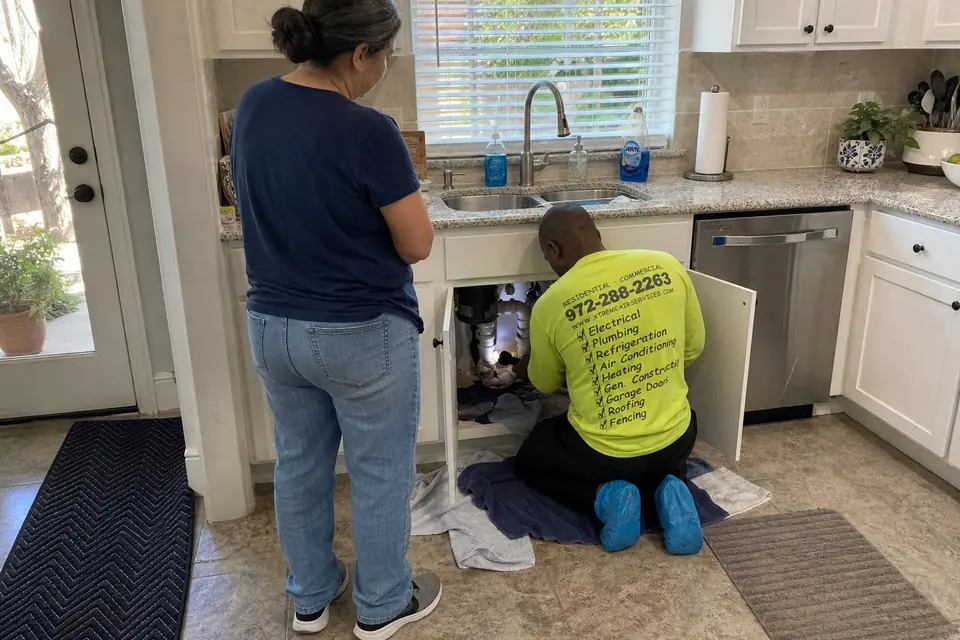
Finding the source comes first. Water travels, so the spot where you see it often isn’t where it starts. A wet ceiling in the living room can start at a fitting several feet away in the attic. A puddle by the back door might come from a line under the slab. You can speed this up by showing the technician where your main shutoff is and walking them through what you noticed. Tell them where you first saw water, any sounds you heard, and the photos you took. If the leak is hidden inside a wall or under the slab, plumbing leak detection or slab leak detection may be needed to find the exact spot before anyone opens a wall or digs. Diagnosis is part of your price, not an add-on.
Before any work starts, you get the flat-rate price we covered up top, and nothing happens until you say yes. This is a good time to ask questions. A clear answer tells you what failed, why it failed, and what the fix is. If the job needs something outside the standard repair, like a major part replacement, a code upgrade, or a permit, you’ll get a separate quote so you can decide.
For most emergencies, the repair means fixing or replacing the damaged pipe section or part, or clearing the blockage, and then getting your water back on. Testing and cleanup are part of the standard price too. You should see the fix working with your own eyes before the technician leaves.
- The main is back on, and water runs at the faucets near the repair.
- After a few minutes of running water, the repaired spot stays dry.
- If you had a clog, nearby drains empty normally and toilets flush all the way.
- If you turned off your water heater, it’s back on. That means the gas control is reset or the breaker is flipped back.
- The work area is cleaned up.
- You know what was fixed and whether there’s anything to keep an eye on.
The plumbing repair stops new water. It doesn’t dry out water that already soaked into drywall, carpet, or attic insulation. Check any ceiling stain again the next day. Wet insulation can keep dripping for a while after the pipe is fixed. If the stain grows, the leak may not be fully stopped, so call us back. If the water reached an outlet, a light fixture, or your AC’s drain line in the attic, tell the technician. We handle HVAC, plumbing, and electrical, so one team can look at everything the leak touched.
Call now
Frequently Asked Questions
Common questions about Emergency plumbing
Can I shut off my water myself before a plumber gets there?
Yes, and you should if water is actively leaking or spraying. Find your main shutoff valve and turn it clockwise until it stops, using steady pressure rather than force. If you’re a new homeowner, it’s worth locating that valve now instead of searching for it during a leak. Once the water’s off, open a low faucet or spigot to drain the standing water out of your pipes.
What if I can’t tell whether it’s a real plumbing emergency?
Ask yourself if water is going somewhere it shouldn’t and whether you can stop it. A pipe spraying water that a valve won’t shut off, sewage backing up in more than one drain, or no water anywhere in the house all count as true emergencies. A dripping faucet, a slow single drain, or a toilet that keeps running can usually wait for a scheduled visit instead.
Will I know how much the repair costs before work starts?
Yes, you get a flat-rate price to approve before any work begins, so there’s no surprise bill later. There’s a $26-$99 service-call fee first, which gets credited toward the repair if you move forward. After that, the technician diagnoses the problem and gives you one upfront number covering labor, the standard repair, testing, and cleanup.
Does it cost more to call for a plumbing emergency at night or on a weekend?
No, nights and weekends cost the same as a weekday visit. Whether you call at 2 a.m. on a Sunday or 2 p.m. on a Tuesday, the flat-rate pricing you approve beforehand doesn’t change based on the hour.
Ready to Get Started?
Call (469) 490-3595 Today, Get Service Today.