


Water Heater Installation in Frisco: What’s Included and Who’s Licensed to Do It
Like-for-like tank swaps by licensed plumbers, with what the price covers and when a permit applies spelled out.
What’s Covered on This Page
- Standard Tank Installation Is the Most Common Job, Not Tankless
- What a Water Heater Installation Price Covers
- Texas Law Requires a Licensed Plumber for This Work
- When a Permit Applies to Your Installation
- Signs You Need Replacement, Not Repair
- Why do some plumbers talk you out of a tankless water heater?
- How long does a standard water heater installation take?
- What should I ask the City of Frisco before replacing my water heater myself?
Standard Tank Installation Is the Most Common Job, Not Tankless
When your water heater quits, you might feel pressure to rethink everything. You don’t have to. Our most common water heater job is a standard like-for-like swap. That means the new tank goes where the old one sat and hooks up to the connections you already have, with no major changes to your plumbing, gas, or wiring.
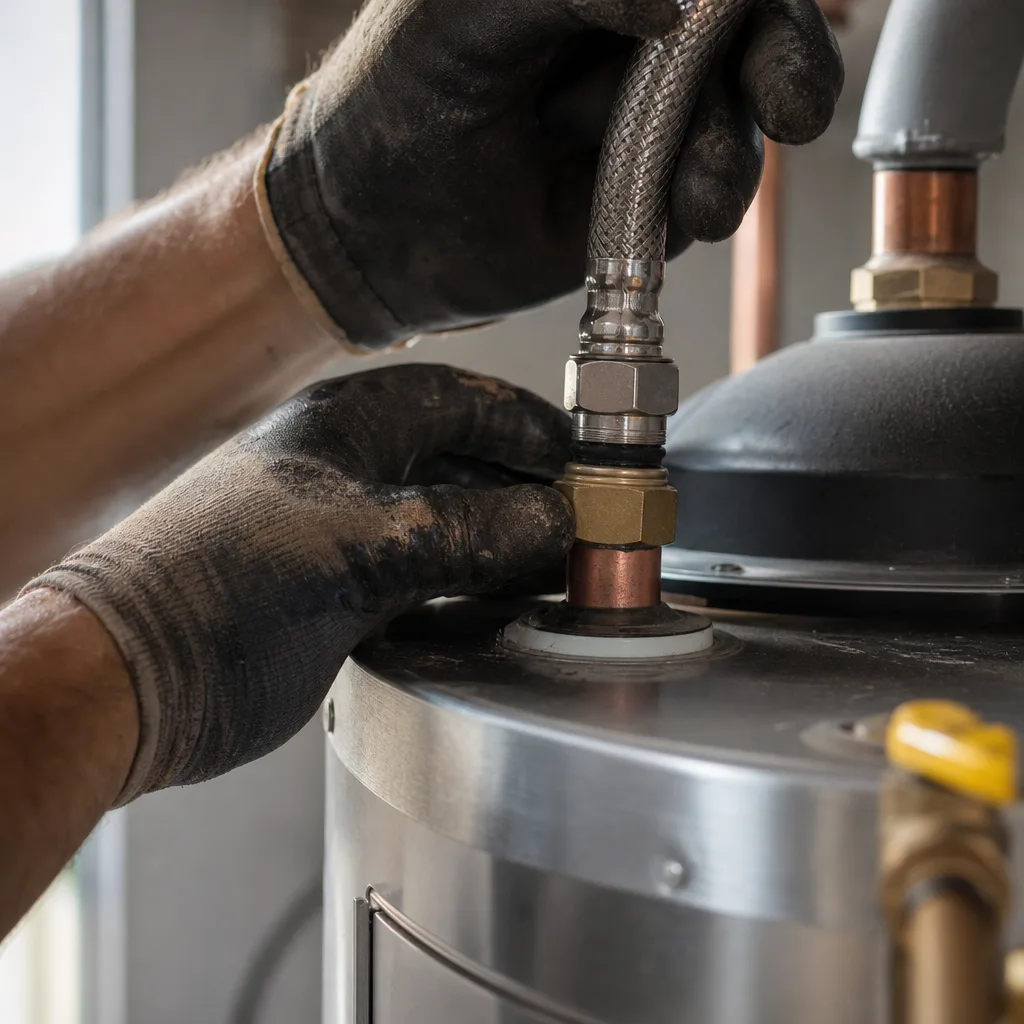
That’s why this job is the easiest to plan around. The space is already set up for a tank, and the lines are already run. Your family can get back to hot showers without turning a broken water heater into a remodel.
Here’s what our standard installation covers:
- The new equipment and materials
- Professional installation with standard connections
- Startup and testing so you know it’s working before we leave
- Haul-away of your old unit
For this common job, the price is typically $1,700 to $2,600. Our full range for water heater installation is $1,200 to $3,500. Where your job lands depends on the size and capacity of the tank, its efficiency, the brand and model, how easy it is to reach, and the condition of the existing plumbing or wiring. Some things aren’t part of the standard price unless we tell you up front: plumbing or electrical modifications, code corrections, and permits. If your setup needs any of those, you’ll hear about it before work starts. You won’t find out on the invoice.
If we come out to look at your system first, there’s a $26 to $99 service-call fee. That fee is credited toward the job if you go ahead with us. Flexible financing is also available on qualifying installations, on approved credit, if a surprise replacement doesn’t fit this month’s budget.
So where does tankless fit? It heats water only when you need it, so you don’t run out halfway through a shower, and it frees up the floor space a tank takes. But switching from a tank to tankless usually isn’t a simple swap. Depending on the home, the change can involve new venting, a bigger gas line, or added electrical capacity. North Texas hard water also matters, because mineral scale builds up inside any water heater and makes regular flushing more important. We do offer tankless water heater installation, and it’s worth a conversation if you’re planning ahead and not dealing with a cold shower today.
If your tank just failed, though, the honest answer is simple. A matching replacement is usually the quickest way back to hot water and the easiest price to predict. You can always look at tankless later, when you’re not making the decision in a hurry.
What a Water Heater Installation Price Covers
A water heater quote is only useful when you know what’s inside the number. Two companies can quote the same tank and still be talking about very different jobs. One price might cover everything from the new tank to hauling off the old one. Another might quietly leave out the parts that cost you later.
Here’s a simple picture. You get two quotes. One is a few hundred dollars lower. Then you read the fine print and find it doesn’t include haul-away, the permit, or startup and testing. Now the old tank is sitting in your garage, and you’re paying for the rest separately. The lower number wasn’t really lower. It was smaller.
Before you compare, check that each quote answers these questions:
- Is it the same size tank you have now, or a bigger one?
- Is it the same fuel type, gas or electric, as your current unit?
- Does it include removing and hauling away the old tank?
- Is the permit included, or will it be billed separately?
- Does the installer start the unit and test it before leaving?
- Does the price assume your existing connections can be reused as they are?
That last question matters most. A like-for-like price assumes the setup you have now is in good shape. If it isn’t, the job changes. Here’s what can push a price up, and why:
- Hard access. A tank in a tight closet or an attic takes more time and care to remove and replace than one sitting in an open garage.
- Worn connections. Corroded fittings, an old gas connector, or a shutoff valve that won’t fully close may need to be replaced so the new tank isn’t tied to old problems.
- Code upgrades. Rules change over the years. An older installation may have been fine when it went in but may not meet what the city requires today.
- A different tank. Going up in size, switching from gas to electric, or picking a higher-efficiency model moves the job beyond a straight swap.
None of these are tricks. They’re real differences between homes. The point is that you should hear about them before anyone picks up a wrench, not after.
That’s how we handle it. We use upfront flat-rate pricing, so you approve the price before work starts. No meter is running while we work. If your setup needs something beyond the standard job, like new fittings or a code fix, we’ll show you what it is and why it’s needed. Then you decide. The number you say yes to is the number you pay.
If you already have a quote from someone else, use the questions above to line it up next to ours. A fair comparison almost always comes down to what’s included, not just the total at the bottom.
Texas Law Requires a Licensed Plumber for This Work
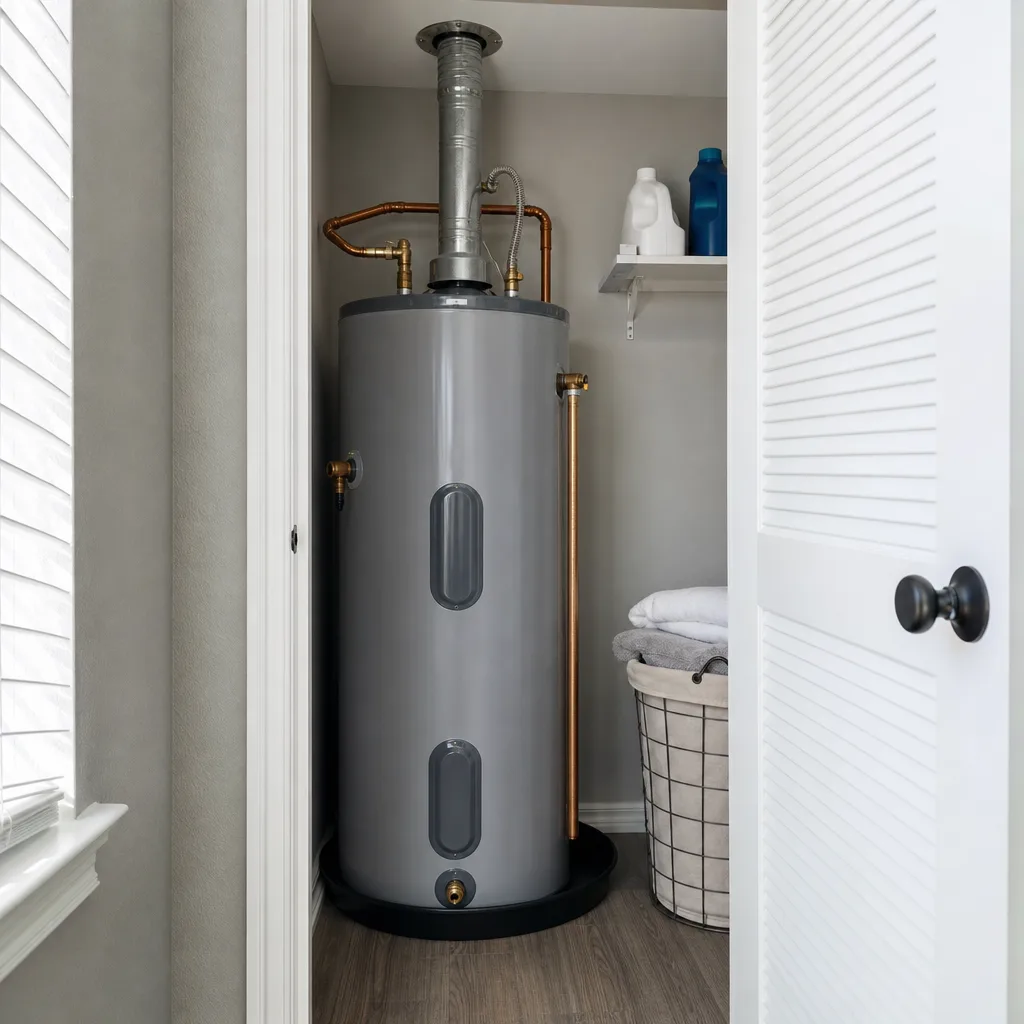
A water heater looks like a big metal can with a couple of pipes on top. Swapping one can seem like a job for a handy neighbor. But in Texas, plumbing work like this is licensed work, and there’s a good reason for that. A water heater connects to your drinking water, often to a gas line, and to a vent that carries exhaust out of your home. If any one of those is done wrong, the problem usually isn’t obvious on day one.
A license means the person doing the job has been trained and tested on how these connections have to be made. It also means someone is accountable if something goes wrong. When you hire a handyman who isn’t licensed, you lose that protection. If the install leaks into your drywall or fails an inspection, you could end up paying twice.
A licensed installer checks the safety parts of a water heater, not just the hookups:
- The temperature and pressure relief valve. This valve lets water out if the tank gets too hot or the pressure climbs too high. It needs a discharge line run to a safe spot, not left hanging or capped off.
- Gas connections. On a gas unit, the connector, shutoff, and fittings have to be sealed and leak-tested before the burner ever lights.
- Venting. A gas water heater pushes out exhaust that has to leave your home the right way. A loose or badly pitched vent can let fumes back into the house.
- Drain pans and placement. A tank in an attic or upstairs closet needs a pan and drain line, so a slow leak doesn’t turn into a stained ceiling.
- Expansion and pressure. Heated water expands. Depending on your home’s plumbing, the setup may need a way to handle that extra pressure so it doesn’t strain the tank and fittings.
None of these parts are fancy. They’re the details that keep a standard tank swap safe for the next ten years, not just the next ten days. They’re also the reason a like-for-like replacement stays simple when it’s done right. The installer reuses what’s sound, fixes what isn’t, and tells you about it before the work starts.
There’s a permit side to this too. Cities like Frisco can require a permit and inspection for water heater replacement. That inspection is a second set of eyes on the safety parts above. A licensed plumber knows what the inspector will look for and sets up the job to pass the first time. That matters if you ever sell your home, since an unpermitted water heater can come up during a buyer’s inspection.
If you’re handy and still want to tackle it yourself, that’s your call. Just check with the City of Frisco about permit and inspection rules before you start. Be honest with yourself about the gas and venting work. That’s where small mistakes carry the biggest risk.
At Xtreme Air Services, our plumbing work runs under Master Plumber Larry Breedlove. We’re licensed and insured, and the technicians who come into your home are background-checked and drug-tested. You shouldn’t have to wonder who’s working in your garage or attic, or whether the job was done right the first time.
Not sure what your Water heater installation project needs? Ask us.
Call Today, Get Service Today. Xtreme Air Services — Frisco is ready to help.
When a Permit Applies to Your Installation
Here’s the short version. Plan on a permit for any water heater replacement in Frisco, and expect the chance of one to go up as the job moves further from a straight swap. The City of Frisco sets the rules for homes inside city limits, so the city is the final word on what your job needs. A good installer should tell you where you stand before work starts. You shouldn’t have to dig through city pages in the middle of a cold-shower week.
A like-for-like tank is the simplest case. It’s the same fuel, the same spot, and the same connections. Even then, the city can still want a permit and an inspection, for the safety reasons covered above. Once the job changes shape, a permit becomes much more likely, and the inspector has more to look at.
These are the changes that usually turn a swap into a bigger permitted job:
- Moving the tank. Relocating it from a garage to a closet, or out of the attic, means new water lines, and often new gas and vent runs too.
- Switching fuel. Going from electric to gas or gas to electric can involve gas line work or a new electrical circuit.
- Going tankless. A conversion can bring new venting, a larger gas line, or added electrical capacity, and each of those is work the city may want to inspect.
- Changing the gas piping. Any new or extended gas line is the kind of work cities look at closely.
- Fixing an older setup. If the old install doesn’t meet today’s rules, the corrections become part of the permitted work.
In most Texas cities, the licensed plumber doing the work is the one who applies for the plumbing permit. That’s part of what you’re hiring a licensed pro for. Ask any installer you’re considering, us included, to tell you plainly whether they’ll pull the permit for your job. If the answer is vague, or if you’re told nobody bothers with permits for water heaters, treat that as a reason to keep looking.
Permits also affect the price, and this is where quotes can get confusing. Our standard water heater price doesn’t include permits unless we say so in your quote. We’ll tell you up front whether your job needs one and what it adds, so it’s part of the number you approve. It won’t show up later as a line you didn’t expect.
Before you say yes to anyone, get clear answers to these questions:
- Does my job need a permit from the City of Frisco?
- Who applies for it, you or me?
- Is the permit cost in the quote, or billed separately?
- How does the inspection get scheduled, and do I need to be home?
- If the inspector asks for a change, who pays to fix it?
That last question tells you a lot. An installer who sets the job up correctly from the start shouldn’t be handing you a bill for their own mistakes. If you live just outside Frisco city limits, your city or county may have different rules, so it’s worth confirming which one covers your address.
Watch Our Video
See How We Handle Water heater installation in Frisco
Xtreme Air Services — Frisco
Signs You Need Replacement, Not Repair
Not every water heater problem means you need a new tank. Plenty of problems come down to one part that can be swapped in an afternoon. The real question is whether the tank itself is failing. Once the tank is the problem, there’s no repair for it. The steel can’t be patched, and money spent on parts only buys a little time.
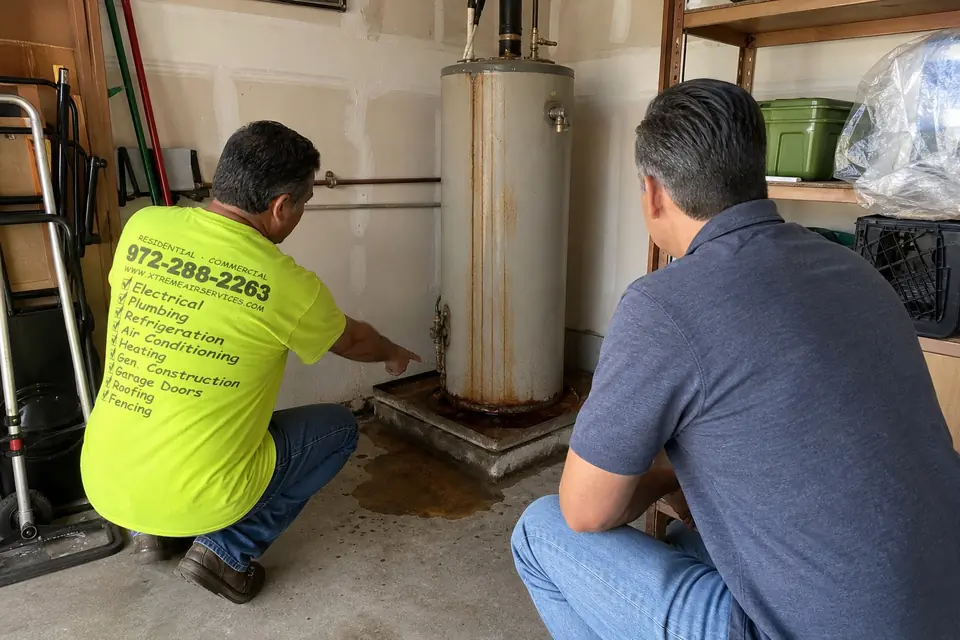
These signs usually point to replacement:
- Water coming from the tank body. A drip from a fitting or valve can often be fixed. Water seeping from the bottom or side of the tank itself usually means the inside has rusted through.
- Rusty or brown hot water. If only your hot water looks discolored, the inside of the tank may be corroding. Check the cold tap too. If the cold water is clear, the tank is the likely source.
- Rumbling, popping, or banging. Mineral scale settles on the bottom of the tank, and North Texas hard water speeds that up. A flush can help early on. Loud noise from a tank that’s been ignored for years often means the scale has hardened, and the tank is working harder every day.
- Running out of hot water sooner than you used to. When showers that used to last now turn cold halfway through, built-up scale may be taking up space the water needs.
- Repair after repair. If you’ve paid for fixes more than once and something new keeps going wrong, the next dollar is usually better spent on a tank that won’t keep calling you back.
- An older tank with any of the problems above. Age alone isn’t a reason to replace a heater that works fine. But an older tank that starts leaking or rumbling is rarely worth a big repair.
Not sure how old yours is? Look at the label on the side of the tank. The manufacture date is often printed there or built into the serial number. If you can’t read it, snap a photo and we’ll help you figure it out.
Now for the other side. Some problems really are worth repairing, and you shouldn’t let anyone talk you out of that. On an electric heater, no hot water or only lukewarm water often traces back to a heating element or thermostat. On a gas unit, a pilot that won’t stay lit can be a sensor or control part. A dripping relief valve or a leaky fitting is usually a part, not a whole tank. If the tank body is dry and clean, and the heater isn’t very old, a repair is often the smart and less expensive move. Our team does water heater repair too, so we don’t have a reason to push a new tank on you when a part will do the job.
Here’s a simple rule. If the problem is a part, repair it. If the problem is the tank, replace it. When it’s hard to tell, a licensed plumber can check the tank, the fittings, and the safety parts and give you a straight answer. If a new tank makes sense, the most common route is the like-for-like swap described above.
Call 469-490-3595
Frequently Asked Questions
Common questions about Water heater installation
Why do some plumbers talk you out of a tankless water heater?
It usually comes down to the extra work involved, not the equipment itself. A tankless unit often needs new venting, a bigger gas line, or more electrical capacity, so it takes more time and planning than a standard tank swap. Some installers would rather do the quicker, more predictable job. We’ll walk you through both options so you can pick what fits your home and timeline.
How long does a standard water heater installation take?
A like-for-like tank swap is usually the fastest option because it reuses your existing water, gas, and vent connections. Since no new plumbing or wiring changes are needed, the job stays simple and predictable compared to a tankless conversion, which adds extra steps like new venting or added gas capacity.
What should I ask the City of Frisco before replacing my water heater myself?
Ask whether your specific job needs a permit and inspection, since Frisco can require both for water heater replacements. Confirm what the inspector checks, such as the relief valve, gas connections, and venting, and ask how to schedule the inspection. Getting these answers upfront helps you avoid problems later if you ever sell the home.
Ready to Get Started?
Call (469) 490-3595 Today, Get Service Today.