


Furnace Installation in Plano: Repair vs. Replace, Pricing, and What a Proper Install Includes
Furnace installs matched to the cooling coil and blower they work with, so your whole system runs as one.
What’s Covered on This Page
- How to Tell Your Furnace Needs Replacing, Not Repair
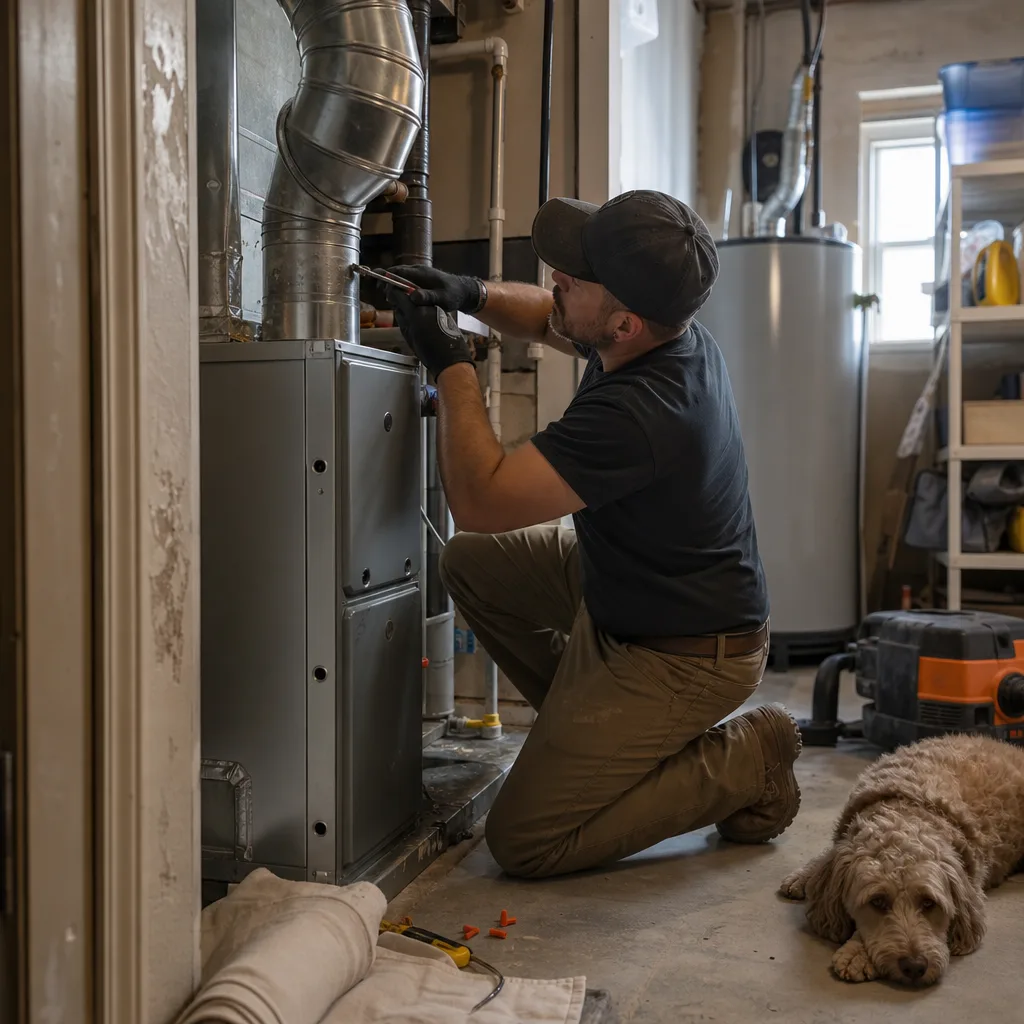
- What Happens During a Furnace Installation
- What’s Included in Your Installation Quote (and What Isn’t)
- Questions to Ask Before You Hire an Installer
- Choosing the Right Size and Efficiency for Your Home
- How long does a furnace installation take?
- Can I keep my furnace running with repairs instead of replacing it now?
- What should I ask for in a furnace quote so I’m not surprised later?
- Does it matter if my furnace is in the attic?
How to Tell Your Furnace Needs Replacing, Not Repair
Let’s start with the good news. Plenty of furnace problems don’t need a new furnace at all. If your system won’t fire on the first cold night, the cause is often a single small part. A dirty flame sensor, a cracked ignitor, a failing blower motor, or a bad control board can stop a furnace cold. Each one is a normal repair. If your furnace is still fairly young and has been reliable, fix it and keep it running. We’d tell you the same thing at your kitchen table.
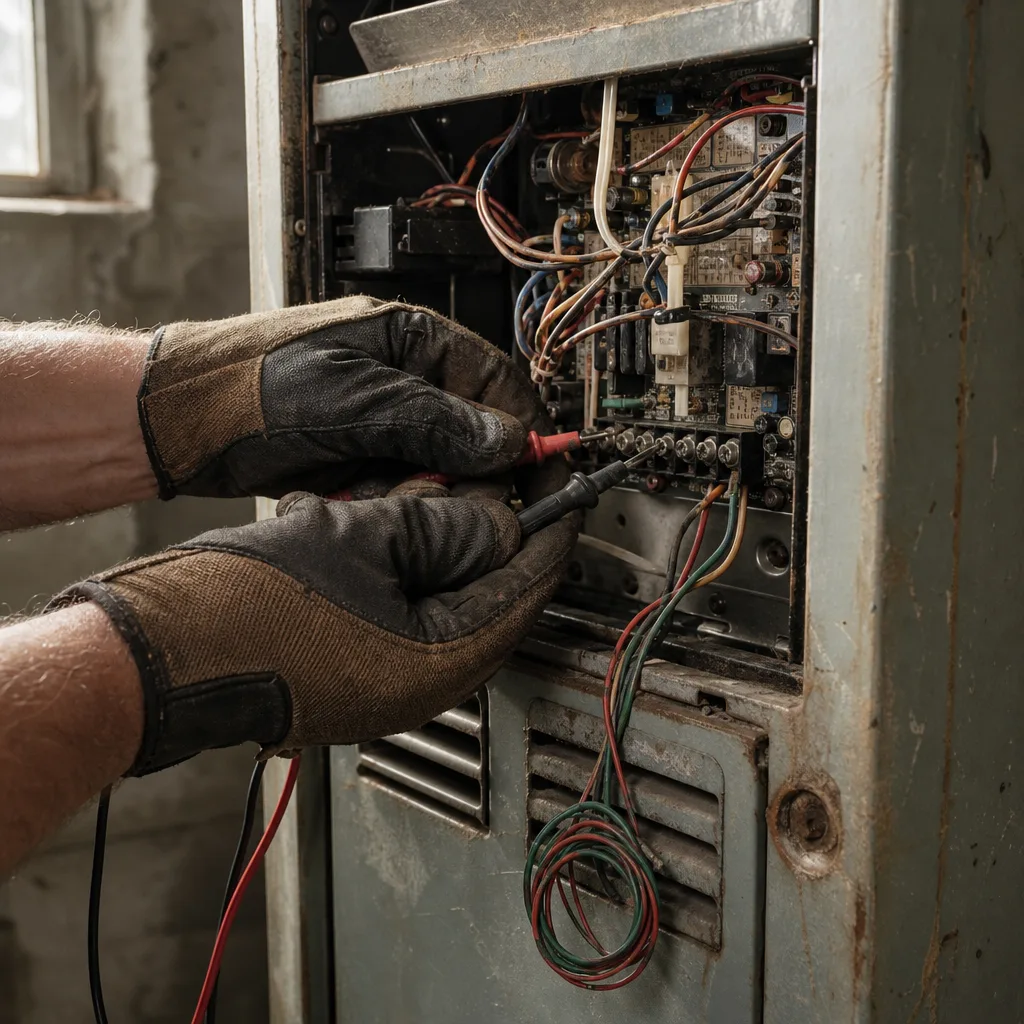
Replacement is a different conversation. These are the signs that point that way:
- Age. Most gas furnaces last somewhere around 15 to 20 years. Once yours is in that range, any repair dollar is going into a system near the end of its life.
- Repairs keep coming back. One service call a season is normal wear. A new part every few months means the whole system is wearing out, not just one piece.
- A big repair on an old unit. If one repair costs a large share of what a new furnace would, that money usually goes further on new equipment.
- Rising gas bills with no change in your habits. Older furnaces lose efficiency over time, so you pay more to get the same heat.
- Rooms that never feel even. One cold bedroom and one stuffy hallway can mean the furnace is wrong-sized or too worn to move air well. Ductwork can also cause this, so it’s worth a check before deciding.
- Heat exchanger damage. A cracked heat exchanger is a safety issue, not a comfort issue. When a technician finds one on an older furnace, replacement is usually the right answer.
- Parts are hard to find. Some older models need parts that are no longer made, which can stretch a simple fix into days without heat.
Here’s a common scene. It’s January, a cold front drops through North Texas overnight, and you notice the furnace running longer than it used to. Nothing seems broken, yet the house never quite warms up. That isn’t an emergency, but it’s a good time to get the furnace looked at before the next cold snap.
Where your furnace sits matters too. In many Plano homes, the furnace lives in the attic, where it bakes through long Texas summers and then works hard during winter freezes. That kind of heat can wear down parts and wiring over the years. If you’re already up there for a third repair on an aging unit, it’s fair to ask whether that money should go toward a new furnace instead.
You don’t have to guess. Our licensed and insured technicians can look over your furnace, tell you plainly whether a repair will hold, and explain what it’ll cost before any work starts. The service call runs $26-$99, and that fee is credited toward the repair if you move forward with Xtreme Air Services. If a repair is the smart move, that’s what we’ll recommend.
What Happens During a Furnace Installation
A good furnace installation is more than pulling the old unit out and setting a new one in its place. Most of what decides how warm, safe, and efficient your home will be for the next 15 years or so happens before the new furnace is even unboxed, and after it first lights.
Here’s how a complete job usually goes.
- Sizing the furnace to your home. Bigger isn’t better. A furnace that’s too big heats fast, shuts off, and starts again over and over, which wears parts and leaves cold spots. One that’s too small runs and runs on the coldest nights. The right size depends on your home’s square footage, insulation, windows, and ductwork, not just the label on the old unit.
- Picking the efficiency level. AFUE tells you how much of the gas you pay for turns into heat in your home. An 80% furnace turns 80 cents of every gas dollar into heat. A high-efficiency furnace in the 90s gets more, but it needs plastic vent pipe and a drain line for the water it makes. That can change the install, so it should be talked through up front.
- Removing the old furnace. Gas and power get shut off, and the old unit gets disconnected and taken out.
- Setting and connecting the new furnace. The new unit goes in place and gets hooked to the gas line, the vent or flue, the electrical supply, the thermostat, and the ductwork. Sheet metal transitions may be needed if the new cabinet doesn’t line up with your existing ducts.
- Startup and testing. The furnace gets fired up and checked: gas connections tested for leaks, safety controls confirmed, airflow and temperature checked at the vents, and the thermostat set to talk to the new system.
If your furnace sits in the attic, like it does in a lot of Plano homes, expect the crew to plan for the tight space and the climb. Getting a new unit through an attic opening and into position takes care, and ease of access is one of the things that can move the price.
A straight like-for-like swap that uses your existing connections often fits into a single day. Changes to the ducts, gas line, venting, or wiring can add time, so ask for a realistic timeline before work starts.
That last part matters. Older furnaces were sometimes put in under rules that have since changed, or with venting and gas lines that won’t work with a new high-efficiency unit. If something needs to be brought up to code or changed to fit the new furnace, you should hear about it and see the price before anything gets done, not after.
Before the installer leaves, ask them to show you how to change the filter, where the gas shutoff is, and how to read the thermostat. A few minutes of that walkthrough makes the next cold front a lot less stressful.
What’s Included in Your Installation Quote (and What Isn’t)
Our most common furnace installation, a standard like-for-like swap, runs $4,300-$5,900. Across all of our furnace installs, the typical range is $3,500-$7,500. Where your home falls depends on a handful of things you should be able to see right on your quote.
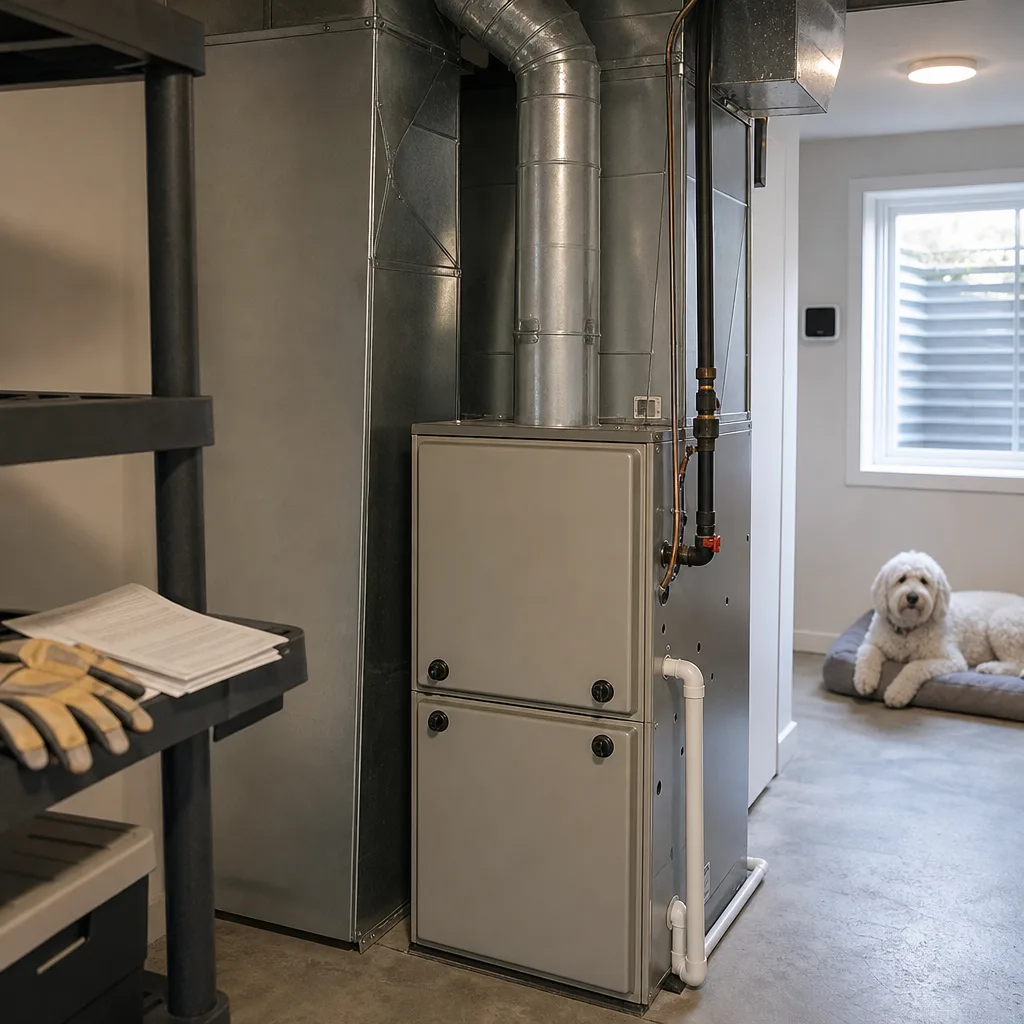
That $4,300-$5,900 job uses your existing connections with no major modifications. It covers the equipment and materials plus professional installation, startup, and testing, along with the rest of the standard scope we walked through above. If your home needs more than a straight swap, the price moves for a clear reason, and you should be able to see that reason.
These are the things that push a quote up or down:
- Size and capacity. A larger home or one that loses heat faster needs more furnace, and more furnace costs more.
- Efficiency. A furnace with a higher AFUE rating costs more up front but uses less gas every winter after that.
- Brand and model. Different lines come with different features, like quieter variable-speed blowers that move air more evenly.
- Ease of access. A furnace in a tight attic takes more time and care to swap than one in a hall closet.
- Condition of your ductwork, wiring, and gas plumbing. If something is worn out or won’t work with the new unit, it has to be fixed or changed.
- Code upgrades and permits. Older installs sometimes need updates to meet current rules.
- Custom fabrication. Sheet metal may need to be built on site when the new cabinet doesn’t line up with your existing ducts.
Here’s how that looks in a real home. Say you have an older 80% furnace in the attic and you want to step up to a high-efficiency model. That new furnace needs plastic vent pipe and a drain line your old one never had. That’s a modification, so it should show up as its own line on your quote with its own price. It shouldn’t turn up as a surprise on the final bill.
Before you sign any furnace quote, from us or anyone else, ask these questions:
- What’s the exact model and AFUE rating of the furnace I’m getting?
- Is this a like-for-like swap, or are there duct, gas, venting, or electrical changes? Is each one priced separately?
- Does this job need a permit, who pulls it, and is it in this price?
- Is haul-away of my old furnace included?
- If the crew finds something unexpected, will I see and approve the price before they do the extra work?
With us, that last answer is easy. We use upfront, flat-rate pricing, so you see the number and approve it before any work starts. There’s no meter running and no surprise add-ons. If the full price is more than you’d like to pay at once, flexible financing is available on qualifying installations and larger jobs, on approved credit.
As a Trane Comfort Specialist with licensed and insured technicians, we’ll size the furnace to your Plano home, explain each line of your quote in plain English, and let you make the call.
Call 469-217-9095
Need help with Furnace installation?
Call Today, Get Service Today. Xtreme Air Services — West Plano is ready to help.
Questions to Ask Before You Hire an Installer
The furnace you pick matters. The people who put it in matter just as much. A good unit installed badly can short-cycle, leak gas, or vent poorly for years. These questions help you tell a careful installer from a rushed one, whoever you end up calling.
- What’s your Texas HVAC license number? Air conditioning and heating contractors in Texas are licensed through the Texas Department of Licensing and Regulation, and you can look the number up yourself. Ours is HVAC License #TACLA29023C.
- Are you insured, and who exactly will be working in my home? A furnace install can mean hours in your attic, hallways, and garage. You deserve to know the crew has been vetted. Our licensed and insured technicians are background-checked and drug-tested team members.
- How will you figure out the right size for my house? If the answer is “we’ll match the old one,” keep asking. As we covered above, size should come from your home, not the old label.
- What do you test before you leave? Listen for specifics: checking gas connections for leaks, confirming the safety controls work, and measuring airflow and temperature at the vents. If you’d like a carbon monoxide check, ask for it by name.
- If the job turns up a gas, electrical, or duct problem, do you handle it or bring in another company? Each handoff adds time and another person to coordinate. Because we’re one team for HVAC, plumbing, and electrical, a gas line repair or a new circuit doesn’t have to stall your install.
- If something isn’t right after install, who do I call, and what will it cost to get someone out on a weekend? A furnace that acts up on a Saturday night during a cold front shouldn’t come with an overtime bill. We charge no extra for nights or weekends, and same-day service is available.
Pay attention to how a company answers, not just what it says. Be careful with a firm price given over the phone before anyone has seen your furnace, your venting, or your attic access. Be careful too with pressure to sign today. A solid installer is happy to walk you through each answer and give you time to think it over.
Reviews help too. Read what your neighbors say about how a company shows up, explains the work, and cleans up. Xtreme Air Services holds a 4.8-star rating across more than 2,900 reviews on Google, Angi, and HomeAdvisor, and we’re glad to answer every question on this list before you decide.
Call 469-217-9095
Watch Our Video
See How We Handle Furnace installation in Plano
Xtreme Air Services — West Plano
Choosing the Right Size and Efficiency for Your Home
The right furnace for your home is sized from your actual house, not from the old unit’s label. Its efficiency and blower should also match how much you really heat and cool in North Texas. In Plano, the highest efficiency rating isn’t always the smartest buy.
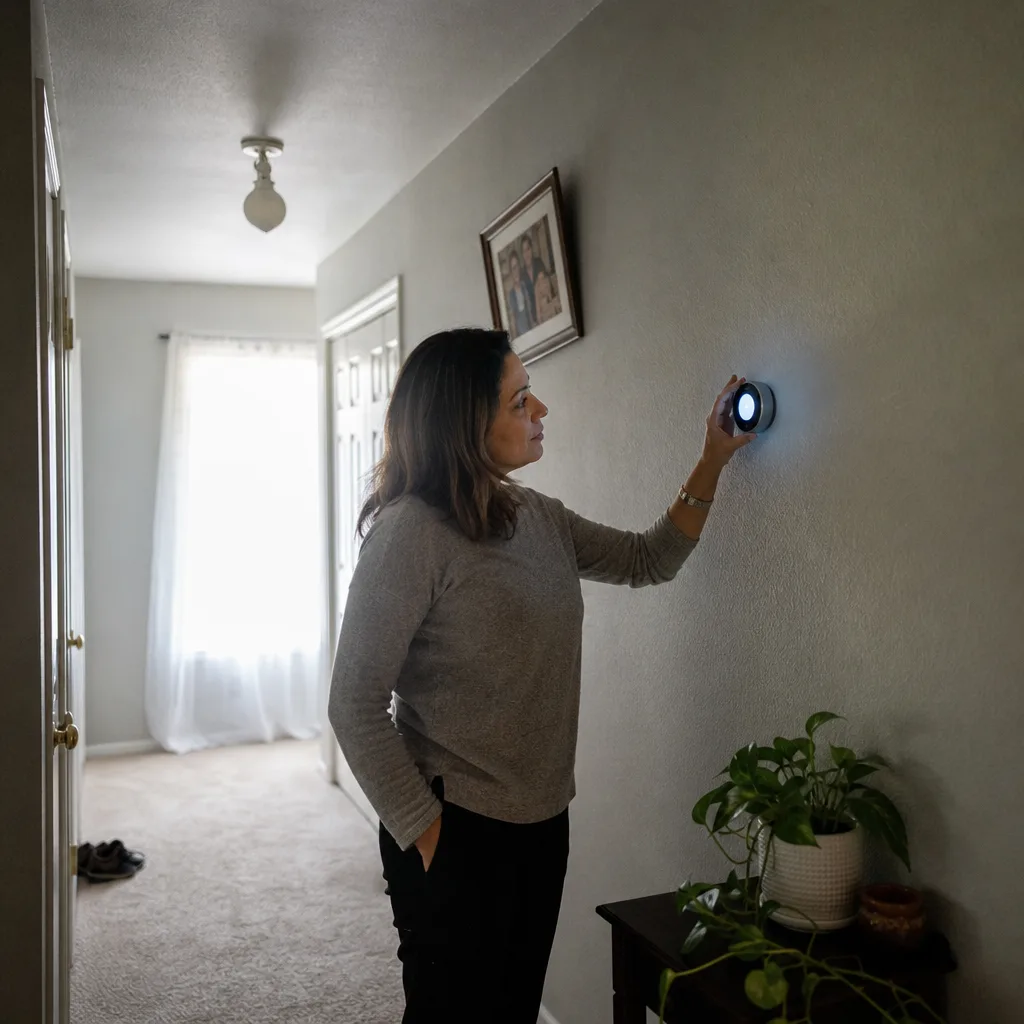
Start with size. We covered why a furnace that’s too big causes trouble. The bigger question is how the right number gets picked. A careful sizing looks at your square footage, insulation, windows, which way the house faces, and how well your ducts hold air. Ask your installer to show you how they got their number. If your home has changed since the old furnace went in, the old size may not fit anymore. New windows, added attic insulation, or a closed-in patio can all change what you need.
Next is efficiency, and this is where North Texas is different. Our winters are fairly short, with a handful of hard freezes and a lot of mild days in between. You run your furnace fewer hours than someone farther north does. So the gas you save with a high-efficiency furnace adds up more slowly. That makes it a fine choice for some homes and a slow payback for others.
A standard 80% furnace often makes sense when:
- Your furnace sits in the attic and the existing metal flue is in good shape.
- You plan to move in the next few years.
- Your gas bills are modest and the house holds heat well.
A high-efficiency furnace is often worth a closer look when:
- You plan to stay in the home for a long time.
- Your winter gas bills are already high.
- The furnace is in a closet or garage where a drain line is easy to run.
- Some rooms always run cold and you want steadier heat.
One attic caution: a high-efficiency furnace makes water while it runs. In an attic, that drain line has to be protected from freezing during a cold snap and needs a safe way to handle overflow. That should be part of the plan from day one, not something figured out later.
The blower matters as much as the AFUE number. A single-stage furnace runs at full blast every time it turns on. A two-stage furnace can run on low through most mild winter days, so it’s quieter and the heat feels more even. A variable-speed blower adjusts its airflow little by little. Here’s the part many people miss: your furnace blower also pushes cool air from your AC all summer long. In Plano, that means a better blower keeps working for you for months after heating season ends. It can help with humidity and even out hot upstairs rooms.
That’s also why your new furnace has to match your air conditioner’s coil and the airflow your cooling system needs. If your AC is near the end of its life too, it’s worth asking whether to replace both together. You could also ask whether a heat pump paired with a gas furnace fits your home. That way the heat pump covers the mild days and the furnace takes over on the hard freezes.
As a Trane Comfort Specialist, we can lay out options at each level side by side. You’ll see what each one costs up front, so you can pick what fits your home and your budget.
Frequently Asked Questions
Common questions about Furnace installation
How long does a furnace installation take?
A straight swap often takes one day. If your new furnace uses your existing gas line, venting, and ductwork, the crew can usually remove the old unit, set the new one, and finish startup testing before they leave. Jobs that need duct changes, a new vent pipe, or electrical work take longer, since each change adds its own time.
Can I keep my furnace running with repairs instead of replacing it now?
Yes, if it’s still fairly young and the problem is one worn part. A dirty flame sensor, bad ignitor, or failing blower motor are normal repairs that don’t mean the whole system is done. Replacement only makes more sense once repairs keep stacking up or a big repair costs a large share of a new furnace.
What should I ask for in a furnace quote so I’m not surprised later?
Ask whether it’s a like-for-like swap or if duct, gas, venting, or electrical changes are included, and get each one priced separately. Also ask if haul-away of your old furnace is covered and whether a permit is needed. A clear quote lists every cost before work starts, not after.
Does it matter if my furnace is in the attic?
Yes, attic furnaces need extra planning because of tight access and the climb crews deal with to get the new unit in place. In many Plano homes, the furnace sits in the attic where it faces long summer heat and hard winter freezes, which wears parts faster over the years. If you’re choosing a high-efficiency furnace for an attic install, the drain line also needs protection from freezing during a cold snap.
Ready to Get Started?
Call (469) 217-9095 Today, Get Service Today.