


Heat Pump Installation in Plano: What a Real Install Includes
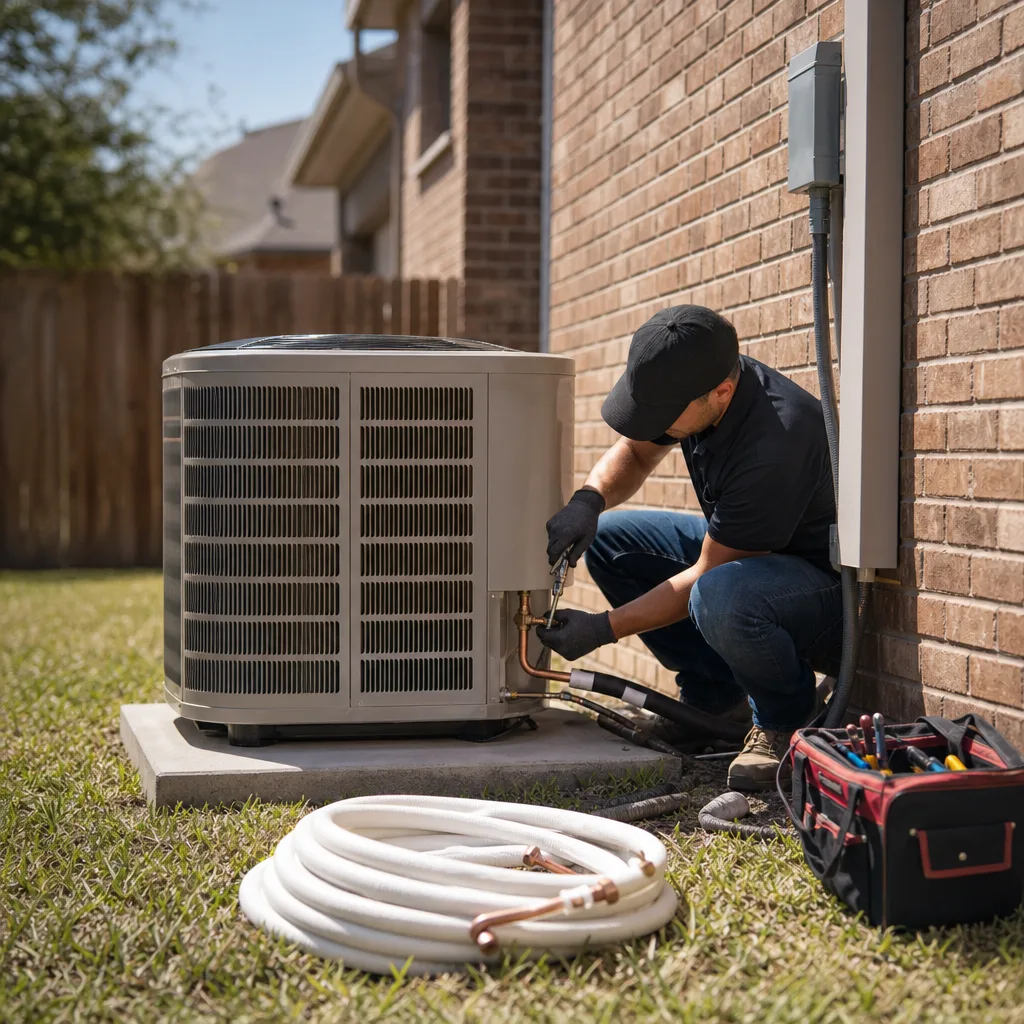
Heat pumps that cool in summer and heat in winter, sized for Plano's mixed climate and installed to spec.
What’s Covered on This Page
- Signs Your Heat Pump Needs Full Installation, Not Repair
- When a Repair Is the Smarter Call Instead
- What’s Included in a Heat Pump Installation Price
- What Drives Your Installation Cost Up or Down
- Is a Heat Pump the Right Fit for North Texas Winters
- How long does a heat pump installation take?
- Do I need a permit to replace my heat pump in Plano?
- Can I just replace my outdoor heat pump unit and keep the old indoor coil?
- What’s the first thing I should do if my heat pump stops working during a Plano cold snap?
Signs Your Heat Pump Needs Full Installation, Not Repair
Let’s start with the honest part. A heat pump that quits on a hot Plano afternoon doesn’t always need replacing. A lot of breakdowns come down to one worn part, and fixing it can get you years more use.
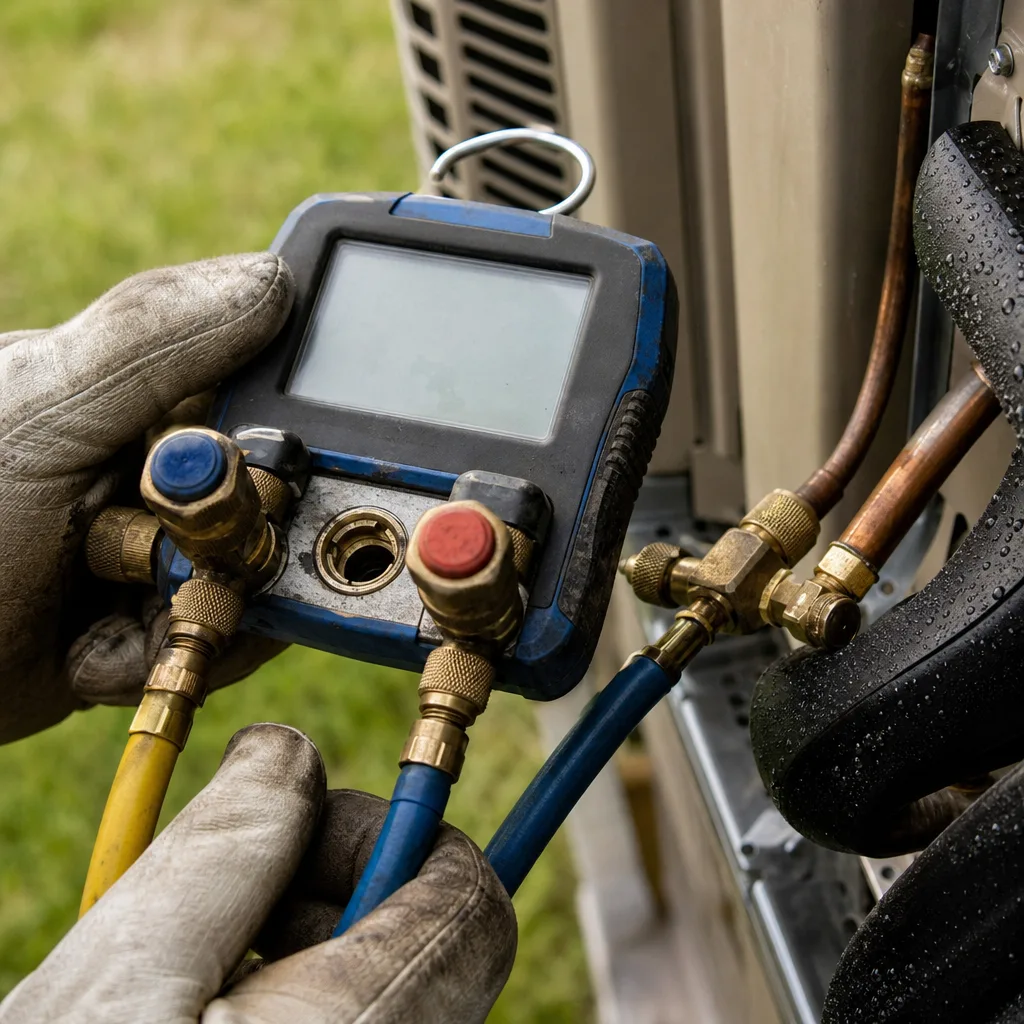
Repair is usually the right call when:
- The system is fairly young and has run well until now.
- The problem is a small part, like a capacitor, contactor, fan motor, or thermostat.
- The coil froze up because a filter got clogged or airflow was blocked.
- This is the first real problem you’ve had in years.
If that sounds like you, a repair is probably the smart move. You don’t need a new system to fix a $20 part.
Some signs point the other way. When you see several of these at once, a new heat pump installation usually saves you money and stress over time:
- Your system is getting up there in age. Many heat pumps last somewhere around 10 to 15 years, and North Texas summers work them hard because they run for both cooling and heating.
- You’ve paid for repairs more than once in the past couple of years, and something new keeps breaking.
- The compressor has failed. It’s the heart of the system, and replacing it on an older unit often costs close to what a new one would.
- Your system runs on R-22 refrigerant. It’s no longer made in the U.S., so a leak or recharge on an older unit gets expensive fast.
- Your energy bills keep climbing even though your habits haven’t changed.
- Rooms stay too warm in July or too cold during a winter freeze, even with the system running nonstop.
- The system struggles to keep up on the hottest and coldest days, which tells you it may be worn out or was never sized right for your home.
A simple rule of thumb can help. Multiply the repair cost by the age of your system in years. If the number comes out higher than the cost of a new system, replacing it usually makes more sense. It’s not a hard law, but it’s a good gut check before you sign off on a big repair.
Here’s a common situation. Your heat pump is 13 years old. Last summer it needed a fan motor. Now it’s blowing lukewarm air, and the quote is for a major part. On its own, that repair might seem worth it. Put it next to the age, the last repair, and the high bills, though, and you’re often paying to keep a tired system going one more season.
The way to know for sure is to have a technician look at it before anyone talks about replacement. Xtreme Air Services charges a $26-$99 service-call fee, and that fee is credited toward the repair if you go ahead with us. You get a real answer about what’s wrong, and if the fix makes sense, the visit doesn’t cost you extra. If replacement is the better choice, you’ll know why, with the facts in front of you to decide.
When a Repair Is the Smarter Call Instead
Sometimes the heat pump isn’t the problem at all. Before you set aside money for a new system, rule out the simple stuff. A few of these checks take you five minutes and cost nothing.
- Check the air filter. A clogged filter chokes airflow, so the system runs and runs but barely cools or heats. Swap in a clean one and give it a few hours.
- Check the thermostat. Make sure it’s on the right mode, heat or cool, and set where you want it. If it runs on batteries and the screen is blank or dim, change them.
- Check the breakers. Your outdoor unit and indoor air handler each have a breaker in your panel. If one has tripped, you can reset it once. If it trips again, stop there. That points to an electrical fault, and a technician needs to find it.
- Check the outdoor unit. Pull away leaves, grass clippings, and anything stacked against it. The unit needs open air around it to do its job.
Winter catches a lot of people off guard. On a cold morning, you might see your outdoor unit go quiet, the fan stop, and a cloud of steam rise off the top. That looks alarming, but it’s normal. Your heat pump is running a defrost cycle to melt frost off its coil, and it’ll go back to heating in a few minutes. A light coat of frost is fine. A unit locked in thick ice that won’t clear for hours is a different story and needs a look.
Uneven rooms and high bills don’t always mean a worn-out heat pump, either. In many North Texas homes, the ductwork runs through the attic, and that attic gets brutally hot in summer. If a duct is leaking, crushed, or has come loose, your cooled air spills into the attic instead of reaching your bedrooms. Duct sealing or a duct repair can fix that for far less than new equipment. And here’s the part people don’t hear enough: a brand-new heat pump hooked to leaky ducts will still struggle. Fix the ducts first, and you may find your current system has plenty of life left.
Then there’s the system that’s simply getting older. If yours is past the 10-year mark but still keeps your home comfortable and your bills are steady, you don’t have to replace it just because of its age. Keep up with a yearly tune-up, change your filters, and start planning. Replacing a heat pump on your own schedule, in a mild spring or fall, is a lot easier than doing it in the middle of a July heat wave. You’ll have time to think it through without pressure.
None of these situations calls for a new system. If one of them turns out to be your problem, fixing it is the honest answer, and it’s the one you should get.
What’s Included in a Heat Pump Installation Price
A heat pump installation with Xtreme Air Services typically runs $5,000-$12,000. Our most common job is a standard like-for-like installation that uses your existing connections with no major modifications. That job runs $6,400-$9,200, and it covers the equipment and materials plus professional installation, startup, and testing.
That range is wide because no two homes are the same. Here’s exactly what’s in the price and what isn’t, so nothing catches you off guard.
- Included: the new equipment and materials
- Included: professional installation
- Included: standard connections to what’s already in your home
- Included: startup and testing to confirm the system runs the way it should
- Included: haul-away of your old unit, so it isn’t left sitting beside the house
- Not included unless stated: changes to your ductwork, electrical, or plumbing
- Not included unless stated: code corrections
- Not included unless stated: permits
The exclusions are where prices drift, so it helps to understand them. A straight swap usually lands near the common-job range. Your total goes up if your old setup has to change to fit the new system. That can happen when attic ducts need work, when your wiring needs updating to handle the new unit, or when the old equipment was installed in a way that doesn’t meet today’s code. It’s better to know that before the job starts than halfway through it.
These are the main things that move your price up or down:
- Size, measured in tons. Tonnage is simply how much heat the system can move in or out of your home. A larger home generally needs more capacity, and bigger equipment costs more.
- Efficiency. SEER2 rates how efficiently the system cools, and HSPF2 rates how efficiently it heats. Higher numbers cost more up front but use less electricity. That matters in North Texas, where a heat pump does double duty through long summers and winter cold snaps.
- Brand and model. Higher-end models, like variable-speed systems that run steadier and handle humidity better, cost more than basic single-speed units.
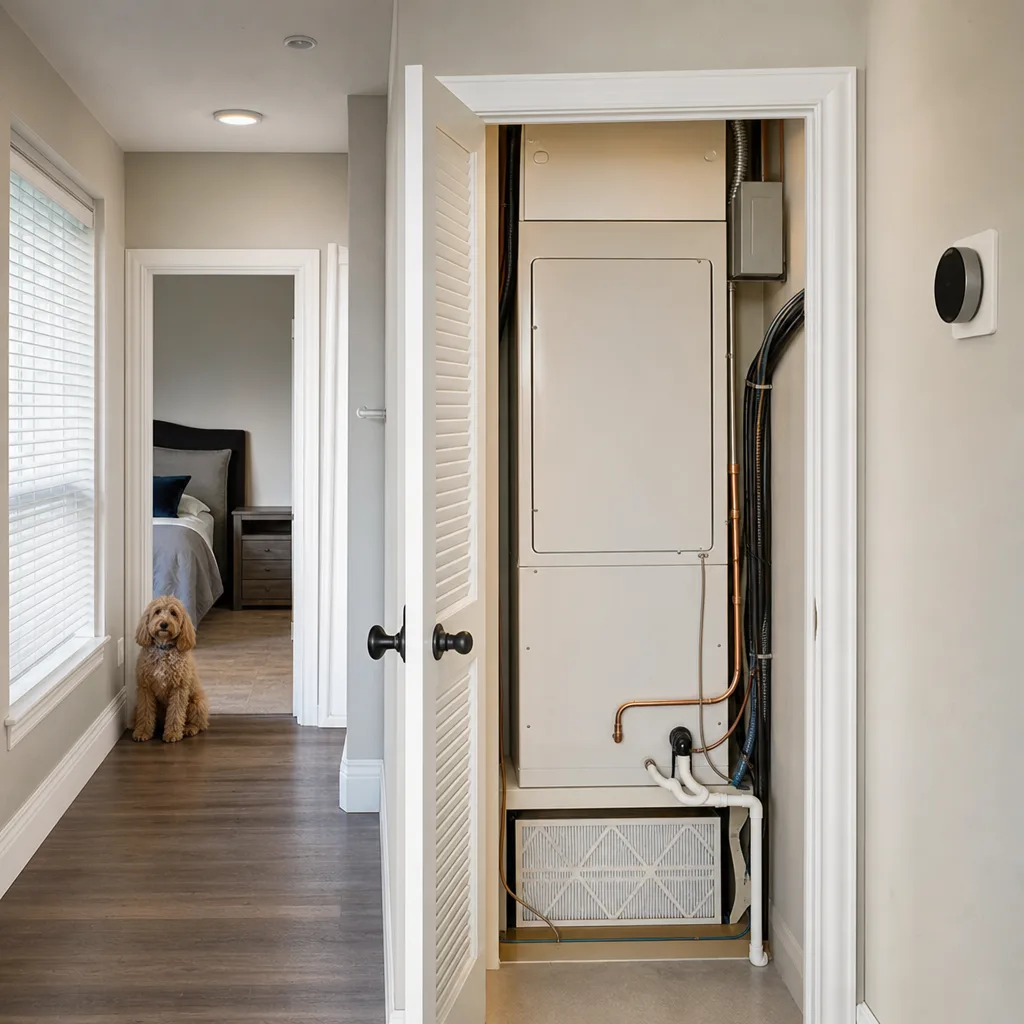
- Ease of access. An air handler in a cramped, hot attic takes more time and care to swap than one in an open closet.
- Condition of your existing ductwork, wiring, and plumbing.
- Code upgrades and permits.
- Custom fabrication. If the new unit doesn’t line up with your existing connections, custom pieces may need to be built to make it fit.
With us, you get upfront flat-rate pricing that you approve before any work starts. There’s no meter running and no surprise line items at the end. If the total is more than you planned for, flexible financing is available on qualifying installations and larger jobs, on approved credit.
Whoever you hire, these questions will help you compare quotes fairly:
- Is this a like-for-like swap, or does my home need modifications?
- Are permits included, or are they extra?
- Is removing the old unit part of the price?
- What size and efficiency are you recommending, and why that size for my home?
- Will I see and approve the full price in writing before work begins?
A good installer answers each of these plainly. If you get vague answers, that’s worth noticing before you sign.
Need help with Heat pump installation?
Call Today, Get Service Today. Xtreme Air Services — West Plano is ready to help.
What Drives Your Installation Cost Up or Down
Some of what you’ll pay depends on your house, like how hard the attic is to reach. Other parts depend on choices you make. Those choices are where you can spend smart, so it helps to know which ones matter.
Right sizing is the one place not to guess. Bigger isn’t better with a heat pump. An oversized system costs more up front, then cools your home too fast and shuts off before it pulls the moisture out of the air. You end up with a cold, clammy house and a unit that wears itself out turning on and off. An undersized one runs nonstop on a 105-degree afternoon and still can’t keep up. Matching the old unit’s size isn’t enough either, because the old unit may have been wrong from day one. A cooling load calculation looks at your square footage, insulation, windows, and which way your home faces, so the size fits the house you have.
Efficiency is a trade between money now and money later. A higher SEER2 and HSPF2 rating costs more today and saves on electricity every month after. In North Texas, a heat pump runs for months of cooling plus winter heating, so those savings add up faster than they would in a mild climate. Still, the top-rated system isn’t right for everyone. If you plan to move in a few years, a solid mid-range system may make more sense. If this is your long-term home, paying more for efficiency and a variable-speed model often pays you back in lower bills and better comfort.
Replacing just the outdoor unit can cost more in the long run. It’s tempting to swap only the part that failed. But the outdoor unit and the indoor coil are built to work as a pair. Mixing a new outdoor unit with an old indoor coil can cut the efficiency you paid for and shorten the system’s life. Ask any installer whether the parts they quote are a matched set.
Your electrical setup may need to change. A new heat pump may call for a different breaker or wire size than the old one. In older homes, the panel itself may be near its limit. That’s often a modest fix, but it’s worth catching on the estimate, not on install day.
- Things you control: the efficiency level, single-speed or variable-speed, and when you schedule the job.
- Things the house decides: the right size, attic access, and the shape your ducts and wiring are in.
- Things to never cut: proper sizing and a matched indoor and outdoor system.
Timing matters more than most people think. When your system dies in July, you have to take whatever’s available, fast. If your heat pump is aging but still working, planning the swap for spring or fall gives you time to compare options, think about efficiency, and pick the system that fits your budget instead of the one that’s on the truck.
Watch Our Video
See How We Handle Heat pump installation in Plano
Xtreme Air Services — West Plano
Is a Heat Pump the Right Fit for North Texas Winters
Yes, for most Plano homes a heat pump is a strong fit. Our winters are mostly mild, with plenty of days in the 40s and 50s. That’s where a heat pump does its best work. The real question isn’t whether it can heat your home. It’s how your system handles the handful of nights each year when a hard cold front drops temperatures well below freezing.
Here’s how it works in plain terms. A heat pump doesn’t burn anything to make heat. It pulls warmth out of the outdoor air and moves it inside, even when it feels cold to you. As the temperature falls, there’s less warmth to grab, so the heat pump has to work harder and moves less heat. On a typical Plano winter day, that’s no problem. On a night like the February 2021 freeze, it needs help.
That help is called backup heat, and choosing the right kind is the decision that matters most for winter comfort. You have two common options:
- Electric heat strips. These sit inside your indoor air handler and switch on when the heat pump can’t keep up. They’re simple and reliable, and they’re the usual choice for all-electric homes. They do use a lot of electricity, so you want them running only when they’re truly needed.
- Dual fuel. Here, a heat pump is paired with a gas furnace. The heat pump handles most of the year, and the furnace takes over on the coldest days. If your home already has gas service, this setup can make a lot of sense.
One thing surprises people the first winter. Air from a heat pump feels warm, but not hot like the blast from a gas furnace. That’s normal. It runs longer at a steadier temperature, so the house stays evenly warm instead of swinging hot and cold.
A few details make the difference when a freeze rolls through:
- Backup heat that’s sized to carry your home on the coldest nights, not just the average ones.
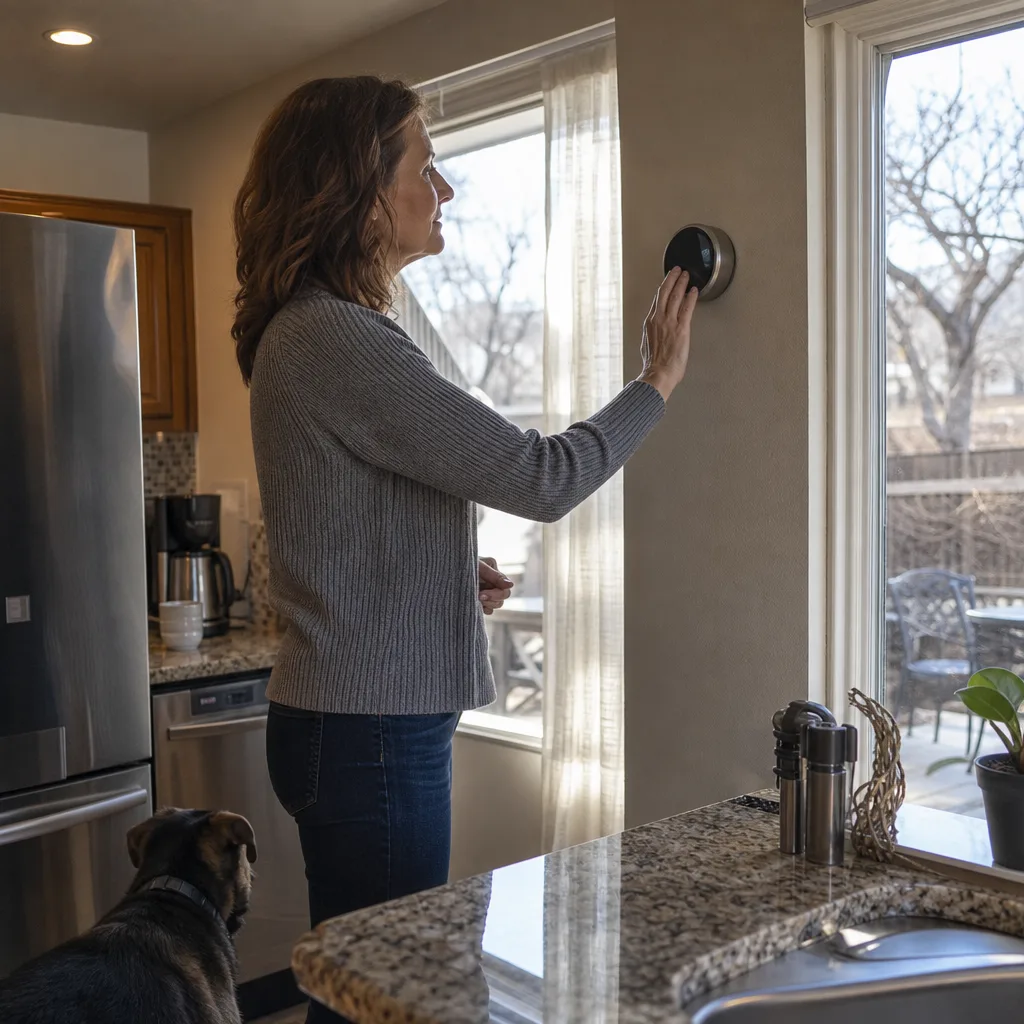
- A thermostat set up to manage backup heat the right way. A good smart thermostat keeps those strips from kicking on every time you bump the temperature up a degree, which protects your electric bill.
- An outdoor unit that sits up off the ground with clear space around it, so melting ice can drain away instead of refreezing around the coil.
So who might choose something else? If you have a gas furnace that’s still young and working well, you don’t have to tear it out. You can replace only the aging AC side with a heat pump and keep the furnace as your backup. That’s dual fuel, and it often lets you get more years out of equipment you’ve already paid for.
As a Trane Comfort Specialist, our licensed and insured team can walk you through which setup fits your home, your fuel source, and your budget. You’ll see upfront flat-rate pricing before any work starts, and flexible financing is available on qualifying installations, on approved credit.
Call 469-217-9095
Frequently Asked Questions
Common questions about Heat pump installation
How long does a heat pump installation take?
Most like-for-like heat pump installations take one day, start to finish. If your job needs duct work, electrical changes, or custom fabrication to fit the new unit, it can stretch into a second day. Your installer should tell you upfront which situation you’re in before work begins.
Do I need a permit to replace my heat pump in Plano?
Yes, most heat pump installations require a permit, and your installer should handle pulling it for you. Permit rules and inspection authority can vary depending on your exact location, so a reputable installer confirms this before starting the job. Ask whether permits are included in your quote or billed separately, since that affects your total cost.
Can I just replace my outdoor heat pump unit and keep the old indoor coil?
You can, but it often costs you more over time. The outdoor unit and indoor coil are built to work together as a matched set. Pairing a new outdoor unit with an old indoor coil can cut your efficiency and shorten the life of your new equipment, so ask any installer whether the parts they’re quoting are matched.
What’s the first thing I should do if my heat pump stops working during a Plano cold snap?
Check your air filter, thermostat settings, and breakers first, since those simple issues cause a lot of no-heat calls. If the outdoor unit is quiet with steam rising off the top, that’s usually just a normal defrost cycle, not a breakdown. Call a technician if the unit stays locked in thick ice for hours or a breaker keeps tripping after you reset it once.
Ready to Get Started?
Call (469) 217-9095 Today, Get Service Today.