


Heating System Repair in Plano: Fast, Transparent Fixes
Furnace and heat pump problems fixed on the first visit, with an honest call on repair versus replace.
What’s Covered on This Page
- Know the Signs Your Furnace Needs a Repair Call
- Check These Before You Call a Technician
- Why Plano Furnaces Often Fail on the First Cold Snap
- What Happens During a Heating System Repair Visit
- What a Heating Repair Costs and What’s Included
- How long does a typical heating repair visit take in Plano?
- Can I still get same-day heating repair if it’s the weekend or late at night?
- What should I have ready when the technician arrives?
Know the Signs Your Furnace Needs a Repair Call
Your furnace usually tells you something’s wrong before it quits completely. The trick is knowing what each sign means. Here’s what to watch for, and what’s usually behind it.
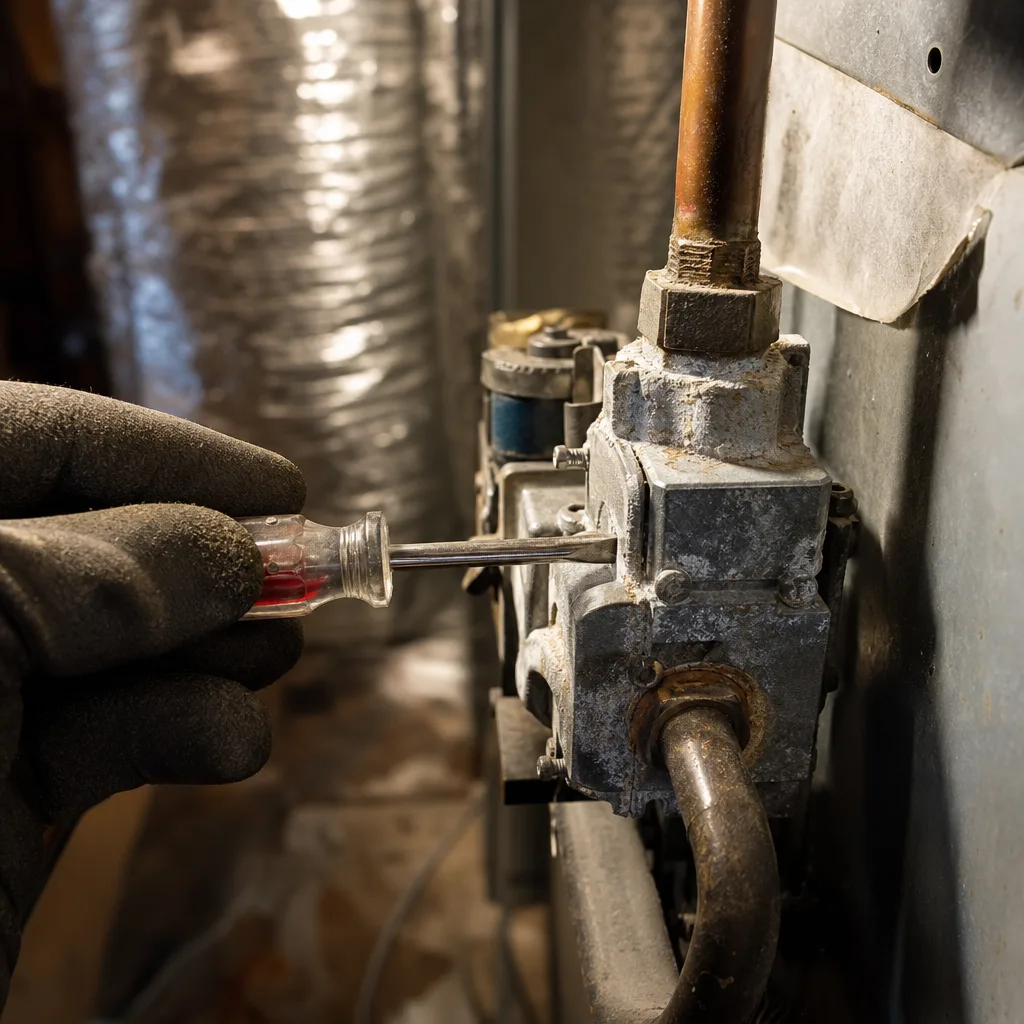
- Cold or lukewarm air from the vents. The fan runs, but the burners aren’t lighting or staying lit. A worn ignitor or a dirty flame sensor is a common cause.
- Clicking with no flame. You hear the furnace try to start, then nothing. That often points to the ignition system.
- Short cycling. The furnace kicks on, runs a few minutes, and shuts off before the house warms up. A flame sensor, an overheating issue, or a thermostat problem can all cause this.
- Running nonstop. The system runs and runs but never reaches the temperature you set. Airflow trouble or a failing part can keep it from catching up.
- New noises. Squealing, grinding, or rattling often comes from the blower motor. A loud bang when the furnace starts means the burners are lighting late.
- Some rooms warm, others cold. Uneven heat can come from a weak blower, duct problems, or a system that’s struggling.
- No power at all. Nothing happens when you turn up the thermostat. This could be the thermostat, a tripped safety switch, or the control board.
- Heating bills climbing for no clear reason. A system that works harder to make the same heat costs you more every month.
Before you call, check three quick things. Make sure the thermostat is set to heat, with fresh batteries if it uses them. Make sure the furnace filter isn’t packed with dust. Make sure the breaker for the furnace hasn’t tripped. If one of those fixes it, you’re done, and you just saved yourself a service call.
If those check out and the problem’s still there, it’s time for a technician. Notice that most of the signs above trace back to a single part. That matches what our pricing reflects: most heating repair calls are one common failure fixed on the first visit. A noise or a short cycle today isn’t usually a sign you need a whole new system. It’s usually a sign one part is wearing out.
Timing matters in North Texas. A lot of furnaces sit unused for months through the long, hot summer. Then the first sudden cold front hits, and the system has to work hard overnight. That’s often when a weak ignitor or a dusty flame sensor finally gives out. In many homes, the furnace sits up in the attic, where you won’t hear early warning sounds until the heat stops. If you noticed something strange last winter and never got it checked, have it looked at before the next cold front rolls through Plano.
Write down what you’re noticing before the technician arrives: the sound, when it happens, and which rooms feel cold. Those details help pinpoint the failed part faster.
Check These Before You Call a Technician
You’ve already looked at the thermostat, the filter, and the breaker. If the heat still isn’t on, there are a few more things you can safely check in about five minutes. None of them need tools, and any one of them could get your heat back tonight.
- The furnace power switch. Most furnaces have a switch on or near the unit that looks just like a light switch. In an attic or hall closet, it’s easy to bump it off while storing boxes or changing a filter. Make sure it’s on.
- The front panel door. Furnaces have a safety switch that keeps the system off if the door isn’t seated all the way. If someone just swapped the filter, press the panel firmly back into place.
- Water in the drain pan. High-efficiency furnaces make water as they run. Attic units often sit over a pan with a float switch that shuts the system down if the pan fills. If you see standing water, that’s likely why the heat stopped. The same drain line often serves your AC, so a clog there can affect both.
- The blinking status light. Many furnaces have a small light you can see through a window in the panel. Count the blinks and match them to the chart on the inside of the door. Even if you can’t fix it, write the code down for the technician.
- Vents and returns. Closed registers or a couch pushed against the big return grille can choke airflow and make the furnace shut itself off to keep from overheating.
- Ice on a heat pump. A light frost on the outdoor unit is normal, and the system clears it on its own. A thick block of ice that won’t go away is not normal.
- The gas valve. If someone recently worked near the furnace, look at the small handle on the gas line going into the unit. A handle running along the pipe means it’s open. A handle sitting crosswise means it’s closed.
If the furnace still won’t run, turning the power switch off and back on once is fine. If it starts up and quits again, stop there. Resetting it over and over won’t fix anything. Those safety switches are doing their job and telling you a part is failing, and getting around them only hides the real problem.
Here’s the honest part. If one of these checks gets your heat going and it stays on, you don’t need a technician. You just saved yourself a service call, and that’s a good thing. But if you’ve worked through the list and the house is still cold, or the same switch keeps tripping, something inside needs a trained set of eyes. That’s when it’s time to call.
Why Plano Furnaces Often Fail on the First Cold Snap
Your furnace doesn’t quit on the first cold night because of bad luck. It quits then because that’s the first time in months anyone has asked it to do real work. Whatever wore down quietly over the summer shows up all at once.
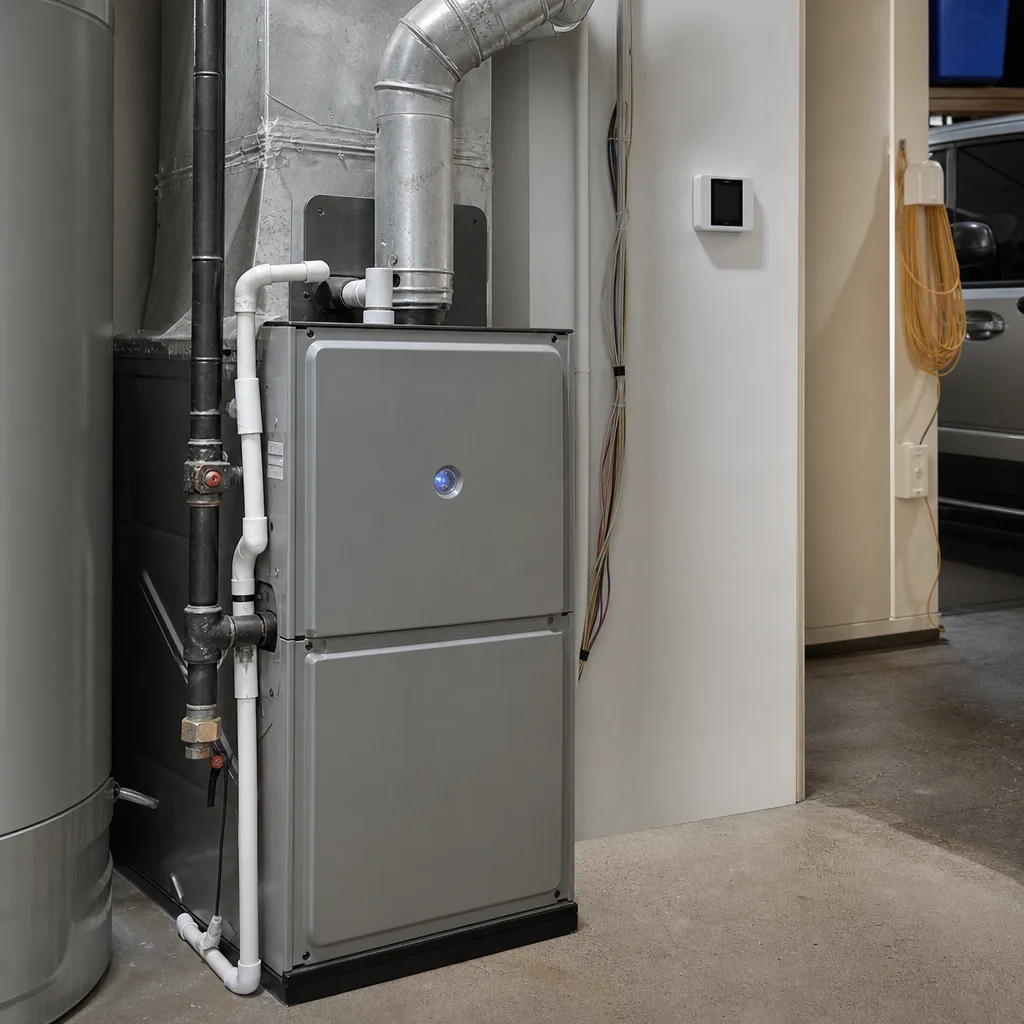
That’s what makes heating in Plano different from heating up north. In colder places, a furnace runs a little every day for months, so a weak part gives you slow warning signs. Here, the heat may barely run until a front pushes through and the temperature drops fast, sometimes within a few hours. Your system goes from resting to running hard overnight, with no easy warm-up.
A few things happen during the off months that set up that failure:
- Summer attic heat. A furnace in the attic spends the summer in one of the hottest spaces in your home. That heat is hard on wiring, capacitors, and control boards, even while the burners sit off.
- The blower never got a break. On most homes with a gas furnace and central AC, the furnace blower is what pushes your cool air all summer. By the time you need heat, that motor and its capacitor have already worked a full season.
- Dust settles in. Months of sitting let a thin film build up on the flame sensor and burners. That’s enough to keep the sensor from confirming the flame, so the furnace lights and shuts right back off.
- Heat pumps lean on backup heat. On a hard freeze, a heat pump calls on electric backup heat strips to keep up. If a strip has burned out or a relay has failed, you won’t find out until the coldest night of the year.
You may notice a dusty, burning smell the first time the heat comes on. That’s usually dust burning off inside the furnace, and it fades. A smell that sticks around, or one that smells electrical, falls under the safety warning above. Treat it that way.
Here’s the part that should ease your mind. Look at that list again. Each item is one part: a dusty flame sensor, a tired ignitor, or a blower capacitor that baked in the attic all summer. None of them means your furnace is finished. A system that ran fine last winter and stopped on the first cold night usually has one worn piece, not a whole system giving out. That’s why most heating repair calls come down to a single common failure fixed on the first visit.
Timing matters for another reason too. The first cold night is when everybody in town turns the heat on at once, and repair calls pile up. If you already noticed a short cycle or a new noise last winter, a fall heating tune-up gives a technician the chance to clean the flame sensor, test the ignitor, and check the blower before the next front arrives. If your heat has already quit, our same-day service is available, with no extra charge for nights or weekends.
Ready when you are – get in touch today.
Call Today, Get Service Today. Xtreme Air Services — West Plano is ready to help.
What Happens During a Heating System Repair Visit
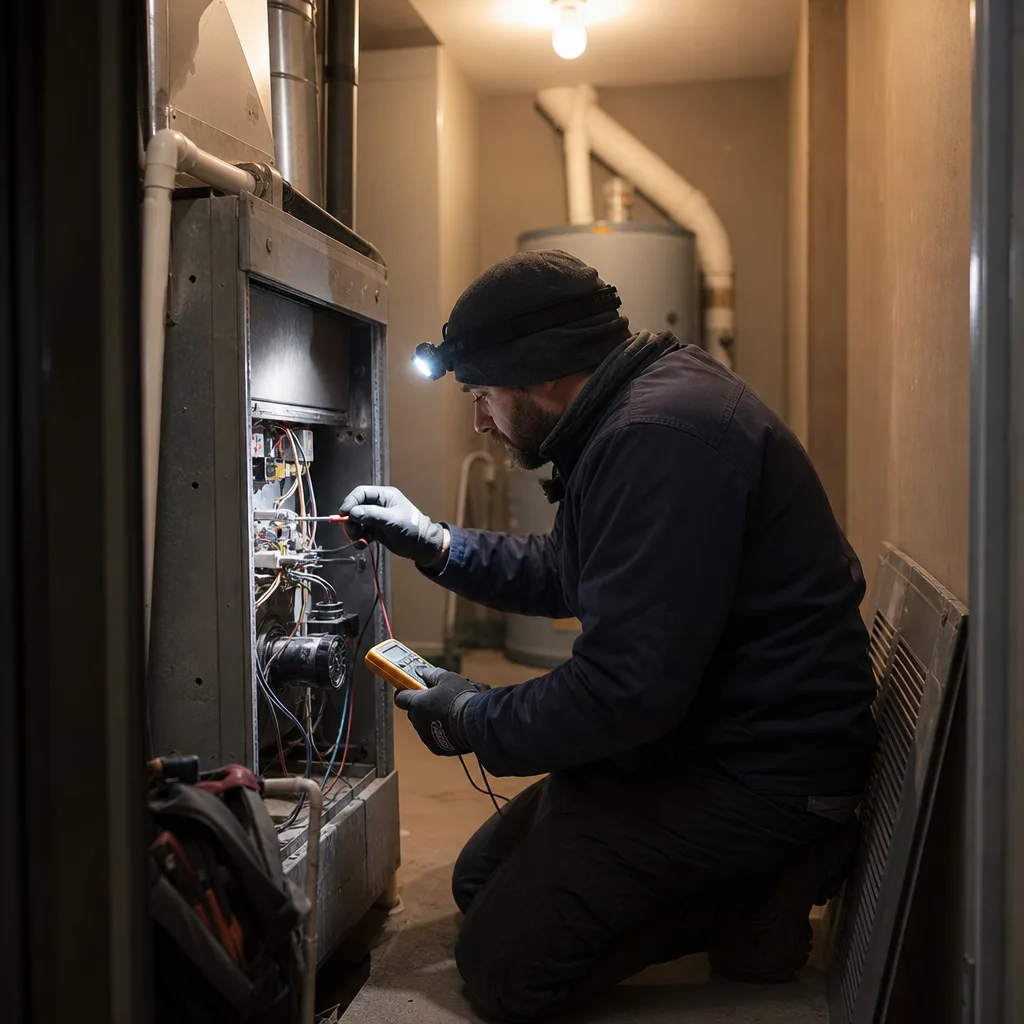
A repair visit has a simple goal. Find the part that failed, fix or replace it, and make sure your heat runs right before anyone leaves. Here’s how that plays out, so nothing about it catches you off guard.
It starts with who comes to your door. Our technicians are licensed and insured, and they’re background-checked and drug-tested. That matters when someone’s walking through your hallway and climbing into your attic, especially if you’ve got kids or you’re home alone.
Next comes the diagnosis. This is where the notes you jotted down help: the noise, when it happens, and the blink code from the status light. A good diagnosis means testing parts, not guessing. That can mean checking whether the ignitor glows hot enough, whether the flame sensor is reading the flame, whether the blower motor and its capacitor are pulling the right power, and whether the safety switches are tripping for a real reason. On a heat pump, it means looking at the outdoor unit and the backup heat strips too.
Once the failed part is found, you get the price before any work starts. We use upfront flat-rate pricing, so you see the number first and you decide. There’s no meter running while the technician works, and no surprise line items at the end.
Here’s what the repair price covers and what it doesn’t:
- Included: the diagnosis, the labor, the standard replacement part, testing, and cleanup.
- Quoted separately: any additional failed parts, major components, code upgrades, or permits.
- The service-call fee: $26 to $99, credited toward the repair if you go ahead with Xtreme Air Services.
That last point is worth knowing. If you move forward with the repair, the trip fee doesn’t come on top of it. It counts toward the job.
Then comes the fix itself. On the common failures covered earlier, like a dusty flame sensor, a worn ignitor, or a baked capacitor, the technician swaps or cleans the part and puts everything back together.
The step that matters most comes after the part goes in. The technician runs your system and confirms it works correctly. In real terms, that means the furnace lights, stays lit, moves warm air through your vents, and shuts off when your home reaches the temperature you set. A furnace that turns on for two minutes isn’t fixed. One that runs a full cycle and does it again is.
Sometimes a technician finds a second problem while they’re in there, like a cracked part or a motor that’s close to failing. If that happens, you’ll hear about it plainly and get a separate price. You decide whether to handle it now or later. If the fix turns into a larger repair or a replacement, financing is available for that bigger job.
By the time the technician packs up, you should know three things: what failed, what was done about it, and that your heat is running the way it should.
Watch Our Video
See How We Handle Heating system repair in Plano
Xtreme Air Services — West Plano
What a Heating Repair Costs and What’s Included
Here’s the straight answer. Most heating repairs with Xtreme Air Services fall between $150 and $700. The most common job is finding one failed part, fixing or replacing it, and making sure the system runs right. That job usually runs $150 to $400.
That lower range is where most calls land, and it ties back to everything above. A dusty flame sensor, a worn ignitor, or a capacitor that baked in the attic all summer is one part. One part means one repair, not a new system. Most calls are a single common failure fixed on the first visit.
So what pushes a repair toward the top of the range? A few things:
- How big the failure is. Cleaning a flame sensor costs less than replacing a control board.
- The part itself. Some parts cost more than others, and some are harder to get, especially when half of Plano needs heat on the same cold night.
- Your equipment’s age and brand. Older systems and some brands use parts that cost more or take longer to find.
- More than one failed part. If a blower motor and its capacitor both gave out, you’re paying for two fixes, not one.
One thing that won’t push your price up is the clock. A lot of heating calls come in after dark, when the temperature drops fast behind a front. With us, there’s no extra charge for nights or weekends. A repair at 9 p.m. on a Saturday costs the same as one at 10 a.m. on a Tuesday.
You already know what the repair price covers and how the service-call fee counts toward the job, so here’s how to use that. Whoever you call, ask these questions before any work starts:
- Will I get the full price before you begin, or is it by the hour?
- Does that price include the part, the labor, and testing the system afterward?
- Is the trip fee credited if I go ahead with the repair?
- Do you charge more for nights or weekends?
- If you find a second problem, will you stop and quote it before fixing it?
Clear answers to those mean you won’t get a surprise bill. Vague answers are worth noticing.
What about financing? On a smaller job like this, it usually isn’t needed, so we don’t typically offer it here. If the fix turns into a bigger repair or a full replacement, financing is available for that larger job. Either way, you see the number first and you make the call.
If your heat is out or acting up, call and talk to a real person today. Our licensed and insured technicians have earned a 4.8-star reputation across 2,900+ reviews. Same-day service is available, with upfront flat-rate pricing and no extra charge for nights or weekends.
Call 469-217-9095
Frequently Asked Questions
Common questions about Heating system repair
How long does a typical heating repair visit take in Plano?
Most heating repairs take a technician one visit to diagnose and fix, since the common failures like a dusty flame sensor or worn ignitor are single-part fixes. After the part is replaced, the technician runs a full heating cycle to confirm your furnace lights, stays lit, and shuts off correctly before leaving. If a second issue turns up, you get a separate price before any extra work starts.
Can I still get same-day heating repair if it’s the weekend or late at night?
Yes, same-day service is available 6 days a week, including nights and weekends, with no extra charge for after-hours calls. This matters in Plano because furnace failures often show up right after the first cold front hits, when everyone’s system is working hard at once. A repair booked for 9 p.m. on a Saturday costs the same as one scheduled on a weekday morning.
What should I have ready when the technician arrives?
Write down what you noticed before the heat stopped, since those details speed up the diagnosis. Note any unusual sound, when the problem started, which rooms felt cold, and any blink code from the furnace’s status light. Sharing that information helps the technician test the right parts first, like the ignitor, flame sensor, or blower motor, instead of starting from scratch.
Ready to Get Started?
Call (469) 217-9095 Today, Get Service Today.