


Portable AC Services in Sunnyvale: Fast, Honest Repairs for DFW Heat
Portable and window AC service for Sunnyvale homes, keeping backup cooling ready for DFW heat.
What’s Covered on This Page
- Common Portable AC Failures and What Causes Them
- Portable AC Repair or Replacement: How to Decide
- When Your Portable AC Doesn’t Need a Repair Call
- Garages, Workshops, and Outbuildings: Portable AC’s Real Job in Sunnyvale
- What Drives Portable AC Repair Cost
- How does scheduling work if my portable AC stops cooling in Sunnyvale?
- What happens when a technician checks out my portable AC?
- Why does my portable AC keep leaking water or shutting off during Sunnyvale summers?
- Should I repair my portable AC or just replace it?
- Can I fix my portable AC myself before calling for a repair?
- Is a portable AC unit good enough to cool my garage or workshop in Sunnyvale?
Common Portable AC Failures and What Causes Them
Your portable AC quits and your first thought is probably the worst one. But most of the time, it’s not the compressor. It’s something smaller.
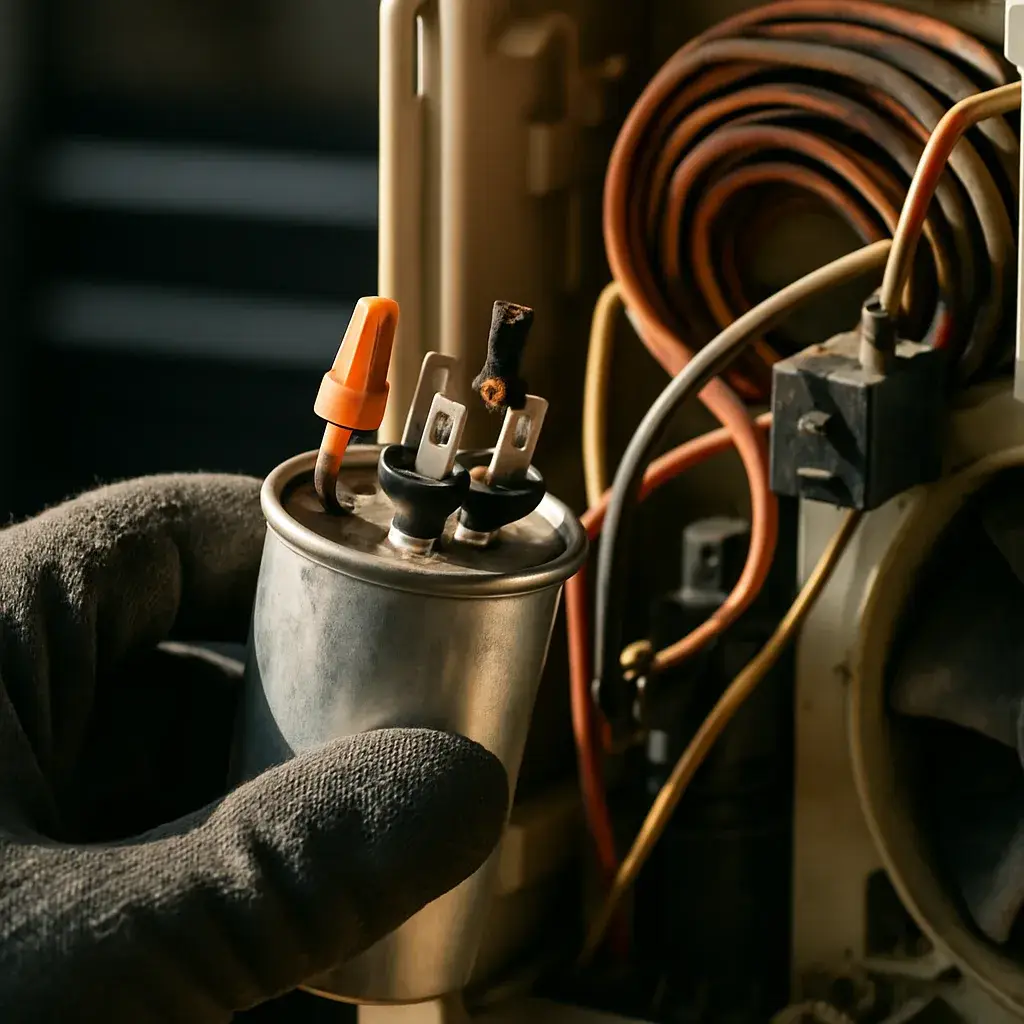
In Sunnyvale, summer humidity runs high enough that condensate drain lines clog faster than folks expect, and that backup is one of the top reasons a unit stops cooling or starts leaking onto the floor. The other usual suspects are electrical, not mechanical.
- A failed capacitor, the small part that gives the compressor its starting jolt
- A clogged or kinked drain line causing water backup or shutdown
- A dirty or misaligned temperature sensor telling the unit the room is already cool
- A dirty condenser coil choking airflow and killing cooling power
- A frozen evaporator coil from low airflow or a refrigerant issue
- A blower motor that’s worn out or wired wrong
Your unit will act the same way for a $100 fix as it will for a bigger one. Warm air, no air, or a unit that won’t turn on at all can mean any of these. That’s why we check the whole system on the first visit instead of guessing at one part and hoping.
Portable AC Repair or Replacement: How to Decide
So your portable AC unit is running but not cooling, or it’s making a noise it never made before. Do you fix it or replace it? We can usually tell within a few minutes on site.
A portable AC unit is usually a smaller, simpler machine than a central system, and that works in your favor. Most failures come down to one part, a fan motor, a capacitor, a sensor, something we can test fast and replace on the spot. If the unit is a few years old and one part quit, repair almost always makes sense.
- One component failed and the rest of the unit still runs fine
- The unit is a common brand with parts that are easy to get
- It’s cooling a bedroom, office, or server closet and you just need it back online
- The compressor itself hasn’t failed
Replacement starts to make more sense when the compressor is gone, when parts for an older or discontinued model are hard to find, or when more than one system has failed at once. We’ll walk you through what we find, in plain English, before we touch anything.
Not sure which bucket you’re in? That’s the most common call we get.
Our technicians are licensed and insured, and we’ll give you a straight answer, not a sales pitch dressed up as a diagnosis.
When Your Portable AC Doesn’t Need a Repair Call
Not every portable AC problem is a repair problem. We get calls all the time where the unit just needs a little attention, not a technician. Before you pick up the phone, check a few things first.
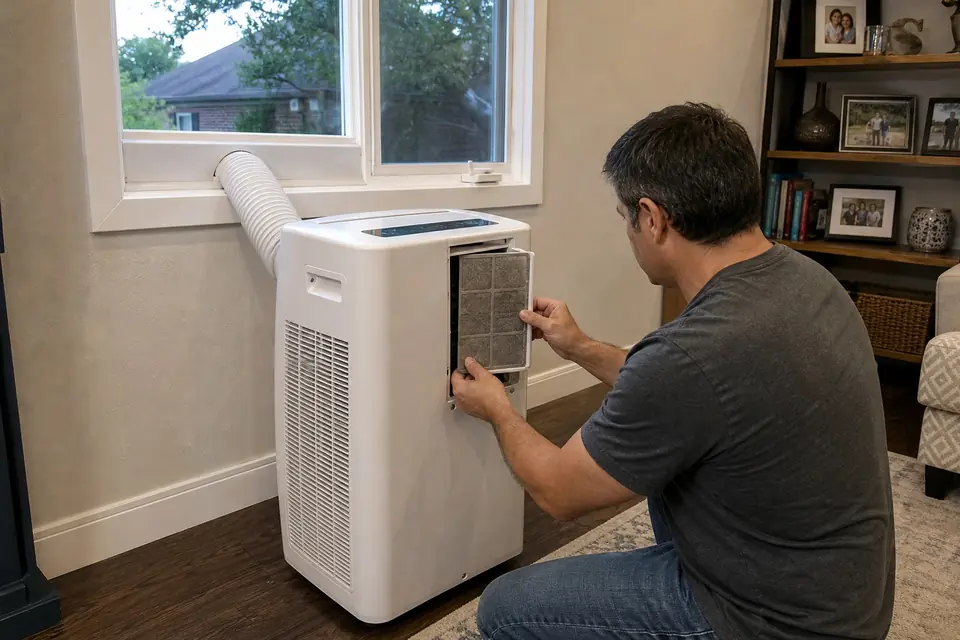
Most of the time, weak airflow or a unit that won’t cool right traces back to something simple. A clogged filter chokes airflow fast, especially with pet hair or dust. The exhaust hose might be kinked behind the unit, or the window kit seal came loose and warm air is sneaking back in. And if the internal drain bucket filled up, most units shut off cooling until you empty it.
- Filter looks gray or matted, not just a little dusty
- The exhaust hose has a sharp bend or fell out of the window bracket
- The room is bigger than the unit’s BTU rating can handle
- A drain light is blinking or water tray needs emptying
- The breaker tripped and just needs a reset
Try those first. Clean the filter, straighten the hose, check the drain tray, reset the breaker. Takes ten minutes.
So when’s it a repair? If the unit runs but blows room-temperature air even after a clean filter and clear hose, something inside has failed, a capacitor, a sensor, a compressor issue. If it won’t power on at all after a breaker reset, or you smell something burning, that’s not a DIY fix. Those are the calls where a tech needs to open it up and test it properly.
Ready when you are – get in touch today.
Call Today, Get Service Today. Xtreme Air Services is ready to help.
Garages, Workshops, and Outbuildings: Portable AC’s Real Job in Sunnyvale
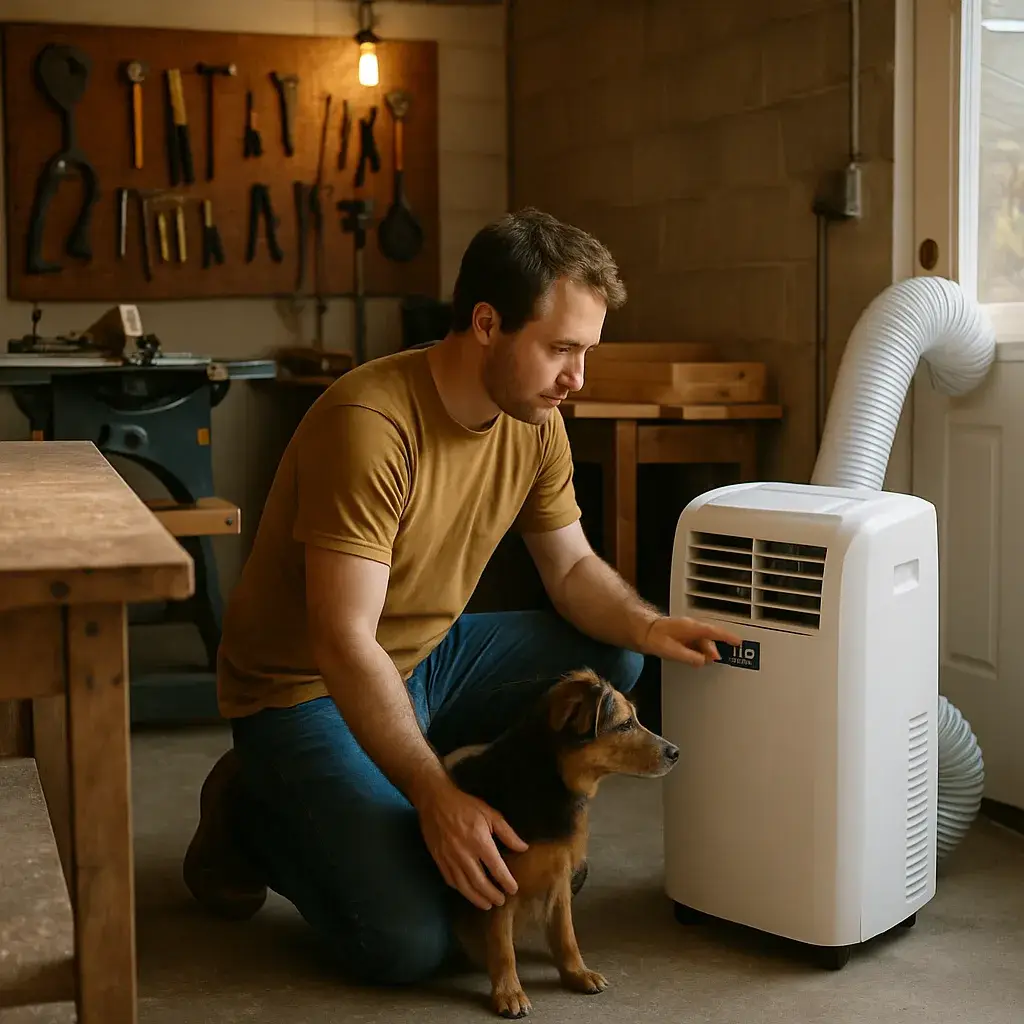
Here’s where portable AC earns its keep. Newer Sunnyvale subdivisions built out garages as extra living space, a home gym, a woodshop, a kid’s playroom, but builders almost never ran supply ductwork out there. The garage sits on the same slab as the house. It just never got connected to the system.
Same story with detached workshops and backyard sheds converted into offices. No ducts to tap into means a portable unit is the fastest way to get cool air into that space without opening walls.
We get calls from folks running table saws or welding gear in a garage that hits 100 plus degrees by early afternoon. A portable unit vented through a window or a wall port can knock that down fast.
But size matters here. A single-car garage and a two-car workshop with a lifted truck inside need different capacity, and undersizing is the number one reason people call us thinking their unit is broken.
One more thing worth saying plainly: if you’re trying to cool a finished bonus room above the garage, or a converted attic space, that’s usually a ductwork or mini-split conversation, not a portable one. We’ll tell you straight if that’s your situation instead of just selling you a box that won’t keep up.
What Drives Portable AC Repair Cost
Most portable AC repairs in Sunnyvale come down to one part that’s given out, a capacitor, a fan motor, a clogged drain line. It’s the same handful of failures, and that’s why most calls get fixed on the first visit. But the final number on your invoice depends on a few real factors, not guesswork.
- How far the failure has spread. A single bad part costs less to fix than a unit where two or three components have already failed.
- Part cost and how easy it is to find. Some units use common parts we carry on the truck. Others need something ordered in.
- The unit’s age and brand. Older units sometimes need parts that cost more or take longer to track down.
- Whether it’s a night or weekend call. It won’t cost extra either way, we don’t charge more for nights or weekends.
Here’s the part most companies don’t explain well. Diagnosis, labor, and the standard replacement part are included in the repair. Additional failed parts, major components, or anything that needs a code upgrade or permit get quoted separately before we touch a thing. You approve it, or you don’t.
There’s also a service call fee, and it runs $26 to $99. If you move forward with the repair, that fee gets credited toward the work. So you’re never paying twice just to get a technician out to look at the unit.
Financing usually isn’t part of this kind of job, it’s a smaller repair. It’s there for bigger jobs like full replacements, so don’t expect a financing conversation for a $100 part swap.
Frequently Asked Questions
Common questions about Portable AC services
How does scheduling work if my portable AC stops cooling in Sunnyvale?
You call, describe what’s happening, and we get a technician out to check the whole system, not just one part. Warm air, no air, or water on the floor can all point to the same handful of causes, so we don’t guess over the phone. We cover homes, garages, and workshops across Sunnyvale, and we’ll ask a few quick questions upfront so we show up with the right parts on the truck.
What happens when a technician checks out my portable AC?
We test the whole unit first instead of jumping straight to one part. That means checking the capacitor, the drain line, the sensor, and the coils, because your unit acts the same whether the fix is small or bigger. You’ll get a plain-English explanation of what we found before any repair starts. Most calls get diagnosed and fixed on that first visit since the common failures are easy to spot once we’re inside the unit.
Why does my portable AC keep leaking water or shutting off during Sunnyvale summers?
It’s almost always a clogged condensate drain line, and Sunnyvale’s high summer humidity makes this happen faster than most people expect. The drain line backs up, the unit either leaks onto the floor or shuts down to protect itself. Before calling for repair, check if the internal drain bucket is full, since many units stop cooling until you empty it. If the tray is clear and it’s still backing up, the line itself likely needs clearing.
Should I repair my portable AC or just replace it?
Repair makes sense when one part has failed and the rest of the unit runs fine, which covers most of the calls we get. A bad capacitor, fan motor, or sensor usually gets tested and swapped out on the spot. Replacement starts to make more sense once the compressor itself has failed, or when the unit is an older or discontinued model where parts are hard to source. We’ll walk you through exactly what we find so you’re deciding with real information, not a guess.
Can I fix my portable AC myself before calling for a repair?
Sometimes, yes. A clogged filter, a kinked exhaust hose, a loose window kit seal, or a full drain tray can all mimic a bigger problem. Clean the filter, straighten the hose, empty the tray, and reset the breaker before you call. If the unit still blows room-temperature air after that, or won’t power on at all, something inside has failed and it’s time for a technician to test it properly.
Is a portable AC unit good enough to cool my garage or workshop in Sunnyvale?
Yes, if the space isn’t connected to your home’s ductwork, which describes most Sunnyvale garages and detached workshops. Builders rarely ran ducts out to these spaces, so a portable unit vented through a window or wall port is often the fastest way to get cool air in without opening walls. The key is sizing it right for the space, since an undersized unit is the most common reason people think their portable AC is broken.
Ready to Get Started?
Call 972-288-2263 Today, Get Service Today.