

AC Replacement in Sunnyvale: Get It Sized, Installed, and Running Right
Full AC replacement for Sunnyvale homes, sized to your house and installed to run right from day one.
What’s Covered on This Page
- Signs Your Air Conditioner Is Nearing the End of Its Life
- When a Repair Makes More Sense Than a Full Replacement
- What Drives AC Replacement Cost Up or Down
- Sizing and Efficiency Standards for a New System
- What Happens During an AC Replacement in Sunnyvale
- How long does an AC replacement take in Sunnyvale?
- Can I replace just the outdoor unit instead of the whole system?
- Will a bigger AC unit cool my house faster?
- Do you haul away the old unit, and is that included?
- Does an AC replacement need a permit?
Signs Your Air Conditioner Is Nearing the End of Its Life
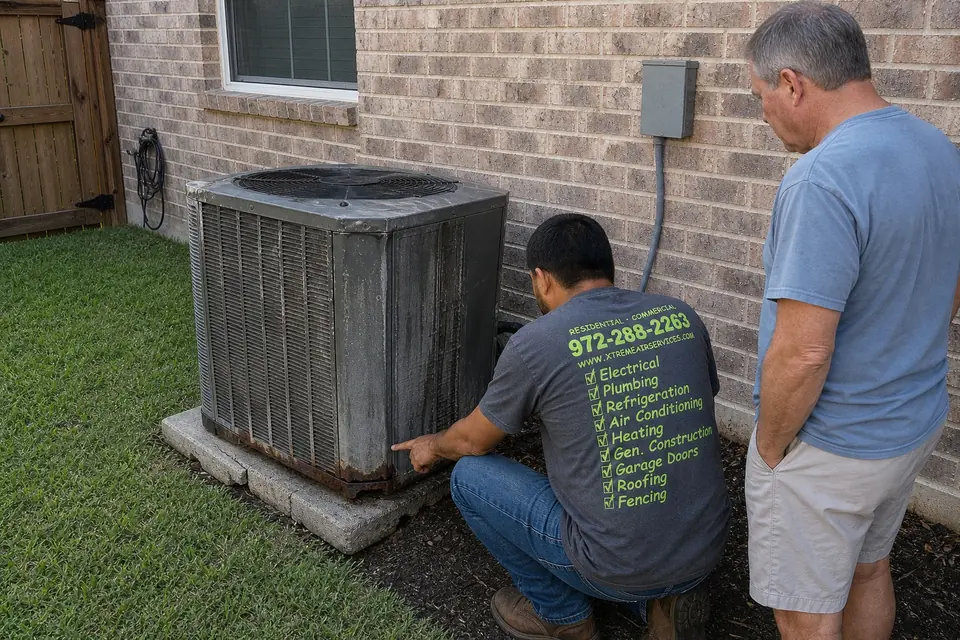
Homeowners often call us thinking they need a small repair, then it turns out the unit is just done. Age is the biggest tell. Many Sunnyvale homes built in the 1990s and early 2000s still run their original attic-mounted systems, units now well past 20 years old that were never built for today’s efficiency standards. That’s rough on the compressor.
So how do you know if your unit fits that pattern? Ask yourself a few questions.
- Your system is 12 years or older and still uses an older refrigerant type that’s harder and pricier to find
- Energy bills have crept up even though you haven’t changed how you use the AC
- You’ve called for repair two or more times in the past year
- Some rooms stay warm no matter what the thermostat says
- The unit makes grinding, rattling, or hissing noises that weren’t there before
- Humidity inside feels sticky even when the AC is running
One or two of these on their own don’t mean much. But stack three or four together, and you’re not looking at a quick fix anymore. You’re looking at a system telling you it’s tired, and in Sunnyvale summers, a tired system means a hot house at the worst possible time.
When a Repair Makes More Sense Than a Full Replacement
Not every AC problem means you need a new system. A five-year-old unit with a bad capacitor doesn’t need to be replaced, it needs a part.
So how do you know which side of the line you’re on? A few things tip the scale toward repair instead of replacement.
- Your system is under eight to ten years old and has a solid maintenance history
- The issue is one part, a capacitor, contactor, or blower motor, not the whole system failing at once
- There’s no widespread rust or corrosion on the coils or cabinet
- The refrigerant leak is small and in an accessible spot, not scattered through old coil lines
- The repair cost is a fraction of what a new system would run
We check all of this before we ever talk replacement. If a repair gets you another two or three good summers, we’ll tell you that. Our service call fee runs twenty six to ninety nine dollars, and it gets credited toward the repair if you move forward with us.
Here’s the flip side. If your technician keeps finding new problems every visit, or the system is pushing fifteen years and eating refrigerant, repair starts costing more than it saves. That’s a different conversation, and we’ll have it with you plainly, no push toward either direction.
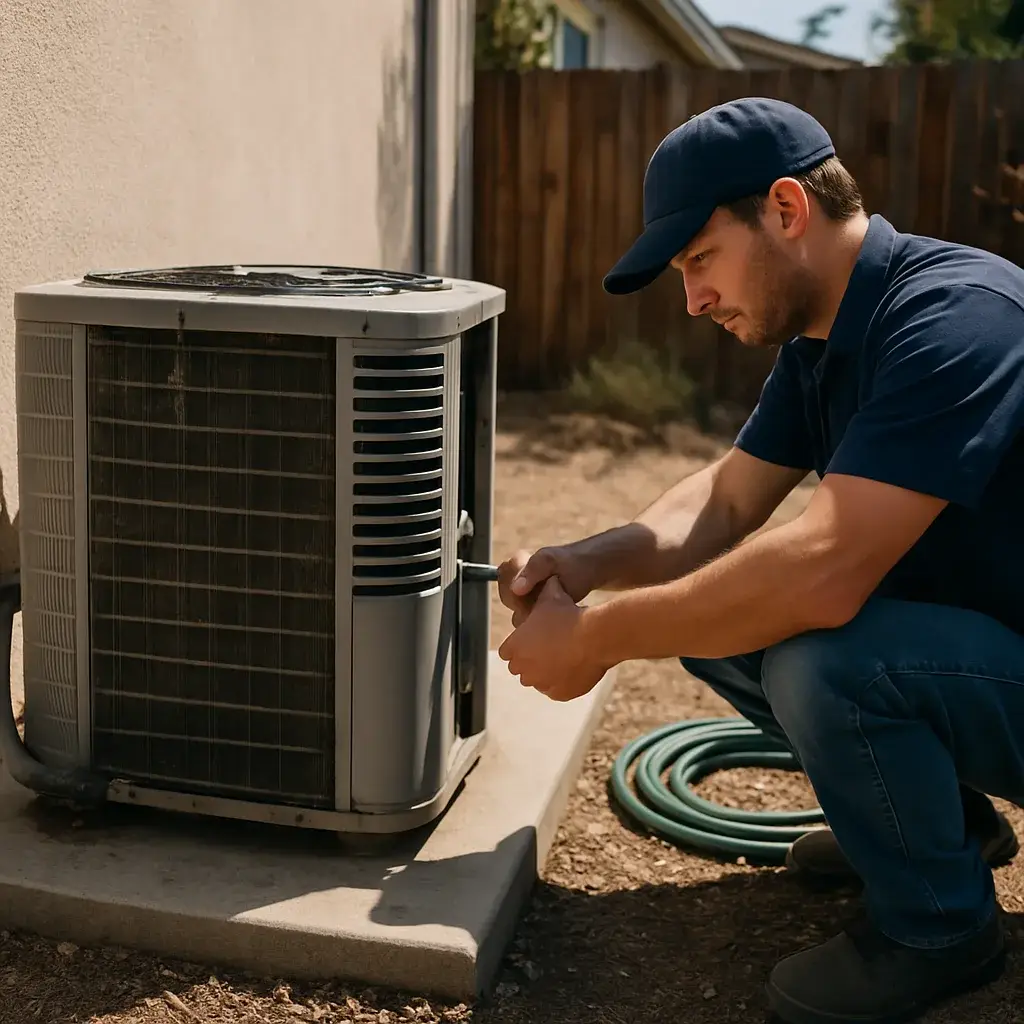
Our licensed technicians walk you through what they find, right there at the unit, before anything gets decided.
What Drives AC Replacement Cost Up or Down
Every home is different, so every quote looks a little different too. That’s not a sales trick. It’s just how this works.
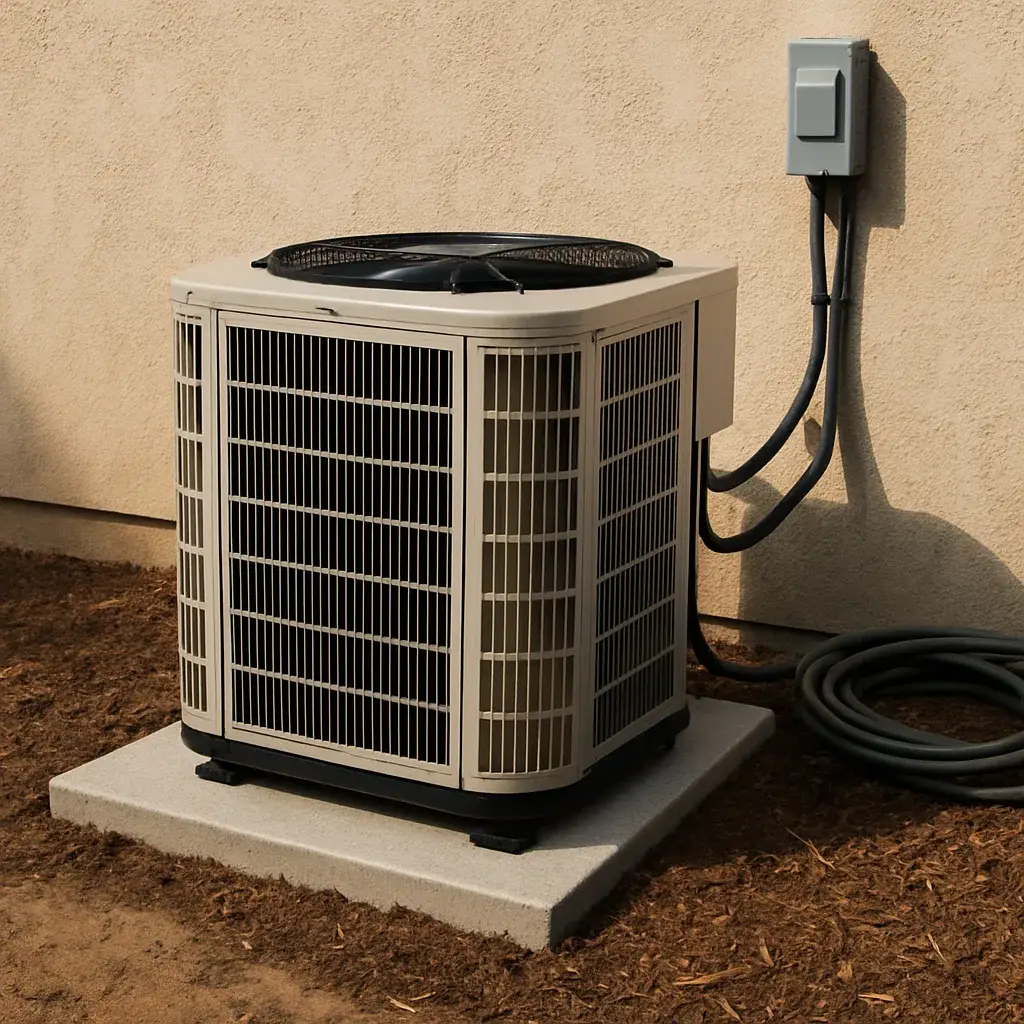
The size and efficiency of the new unit matters most. A bigger house in Sunnyvale needs more tonnage, and a higher SEER2 rating costs more upfront but runs cheaper month to month. Brand and model play in too, some equipment lines cost more to buy but last longer or run quieter.
- Equipment size and efficiency rating, tonnage and SEER2 both move the number
- Brand and model, higher-end units cost more but often use less power
- Access to the equipment, an attic unit in an older Sunnyvale home takes longer than a ground-level unit in a newer subdivision
- Condition of existing ductwork and wiring, if it needs work beyond a straight swap
- Code upgrades or permits required for your specific job
- Any custom fabrication needed to fit the new system into your space
We see this every week. A homeowner gets two quotes that are thousands apart and can’t figure out why. It’s because one contractor priced a like-for-like swap and the other found a duct problem the first guy missed.
Before you hire anyone, ask what’s included and what’s not. Ask if the quote covers startup and testing. Ask if haul-away of your old unit is part of the deal. A contractor who answers those questions straight, before you sign anything, is one you can trust with the rest of the job.
Thinking about AC replacement? Let’s talk.
Call Today, Get Service Today. Xtreme Air Services is ready to help.
Sizing and Efficiency Standards for a New System
Bigger isn’t better. That’s the first thing we tell folks who assume a bigger unit will cool their house faster. A system that’s too big for your home will short cycle, turning on and off way more than it should, leaving your house cold and clammy instead of cool and dry.
The right size comes from a cooling load calculation, not a guess based on square footage. We look at your home’s layout, insulation, window count, and how much sun hits your roof through a Texas summer afternoon. Older homes in Sunnyvale with original ductwork often need a different tonnage than a newer build down the street, even if the square footage matches.
Efficiency is the other half of the equation. SEER2 is the rating that tells you how much cooling you get for the energy you put in. Higher SEER2 usually means lower monthly bills, but it also means a bigger equipment investment up front.
- Tonnage, the cooling capacity matched to your home’s actual load, not just its square footage
- SEER2 rating, which affects both equipment cost and your monthly energy bill
- Ductwork condition, since leaky or undersized ducts can undercut even a well-sized system
- Access and installation complexity, attic units versus ground-level pads
We walk you through the sizing and efficiency options before we quote anything, so you know exactly what you’re paying for and why.
What Happens During an AC Replacement in Sunnyvale
Most folks picture a chaotic mess. It’s not. A real AC replacement follows a set order, every time, and that’s what keeps the day from turning into a headache.
A lot of the older homes near FM 1389 in Sunnyvale run their air handler in the attic, meaning part of the job happens up there in tight, hot space, not just in your side yard. That affects how long the indoor half takes, especially in July.
- We shut off power to the system and safely recover any leftover refrigerant.
- The old condenser, coil, and sometimes the line set come out.
- New equipment goes in, condenser on the pad outside, coil and air handler inside.
- Refrigerant lines and electrical connections get made, then tested for leaks.
- We start the system up, check airflow at the vents, and check the temperature split.
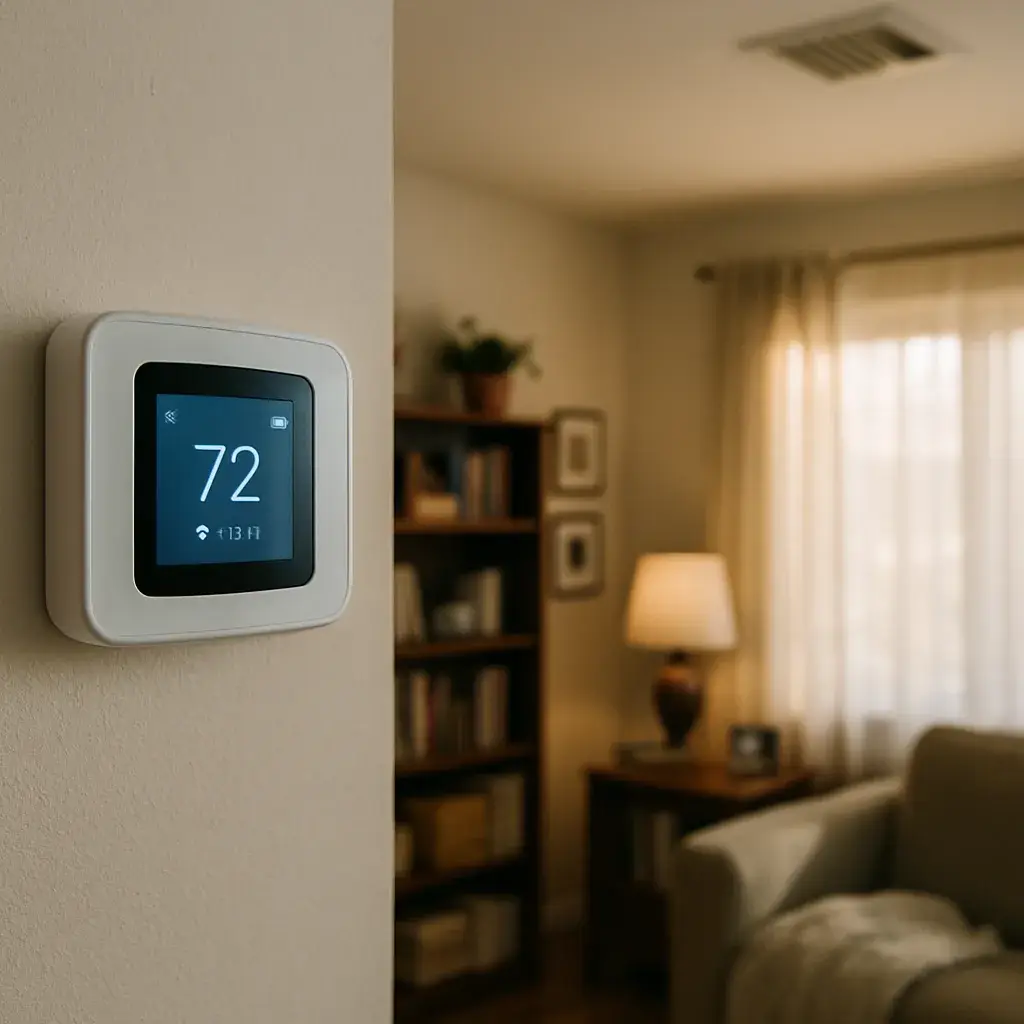
- Old unit gets hauled away, work area gets cleaned, and we walk you through the new thermostat.
Startup and testing isn’t a formality. It’s where we catch a bad connection before it becomes a service call in August.
One thing worth knowing up front: our team is background-checked and licensed, so the people in your attic or your side yard are the same people who showed up on the estimate. A straightforward like-for-like replacement wraps in a single day. But if your ductwork needs work too, that’s a different conversation, and we’ll tell you before we start, not after.
Frequently Asked Questions
Common questions about AC replacement
How long does an AC replacement take in Sunnyvale?
A straightforward like-for-like swap usually wraps up in a single day. If your air handler sits in the attic, which is common in older Sunnyvale homes, the indoor half of the job takes longer, especially in July heat. Jobs that also need duct repairs, electrical work, or custom fabrication can run into a second day. We tell you which one you are looking at before we start, not partway through.
Can I replace just the outdoor unit instead of the whole system?
Sometimes, but it is often a false savings. The outdoor condenser and the indoor coil are matched to work as a pair, and putting a new condenser on an old coil often means you never get the efficiency rating you paid for. Mismatched equipment can also shorten the life of the new part. We will tell you honestly when a single-component replacement makes sense for your setup, and just as honestly when it does not.
Will a bigger AC unit cool my house faster?
No, and it is the most common assumption we correct. An oversized system short cycles, turning on and off far more than it should, which leaves a house cold and clammy instead of cool and dry. It also wears out the compressor faster. The right size comes from a cooling load calculation that accounts for your layout, insulation, window count, and how much afternoon sun your roof takes.
Do you haul away the old unit, and is that included?
Yes, hauling away the old equipment is part of the job. We remove the old condenser, coil, and any line set we have replaced, then clean up the work area before we leave. It is worth asking any contractor about this before you sign, because not every quote includes it. If a price looks unusually low, disposal is one of the first places to check.
Does an AC replacement need a permit?
Most full system replacements do, and pulling it is our responsibility rather than yours. Requirements vary with what the job touches, so electrical changes or ductwork modifications can add steps. We factor any permit or code upgrade into the quote up front so it is not a surprise later. Our licensed technicians handle the paperwork and the inspection alongside the install.
Ready to Get Started?
Call 972-288-2263 Today, Get Service Today.