


Slab Leak Repair in Sunnyvale: Find the Leak, Fix It, Skip the Jackhammer
Leaks under the foundation found by pressure and acoustic testing, then repaired by the least destructive route your slab allows.
What’s Covered on This Page
- Signs Your Sunnyvale Home Has a Slab Leak
- Why Under-Slab Pipes Fail in North Texas
- Repair Methods: Spot-Repair vs. Reroute
- When It’s Not a Slab Leak
- What to Expect: Process, Testing, and Cost Factors
- How fast can you get someone out to check a possible slab leak in Sunnyvale?
- What happens when a technician arrives to check for a slab leak?
- Why do slab leaks happen so often in Sunnyvale homes?
- How do you decide between a spot-repair and a full reroute?
- Can a hard freeze cause a slab leak even in an older Sunnyvale home?
Signs Your Sunnyvale Home Has a Slab Leak
The clay-heavy soil common throughout Sunnyvale and greater Dallas County does not stay still. It swells when saturated after rain and shrinks during dry Texas summers. That constant movement puts pressure on the copper and PVC lines beneath a home’s foundation slab. Over the years, shifting soil can crack pipe joints or wear through pipe walls. Escaping water then enters the slab, the soil, or the flooring above. Because the damage happens out of sight, homeowners usually notice the side effects long before they see the leak.
- A water bill that jumps 20 to 50 percent or more with no change in household usage
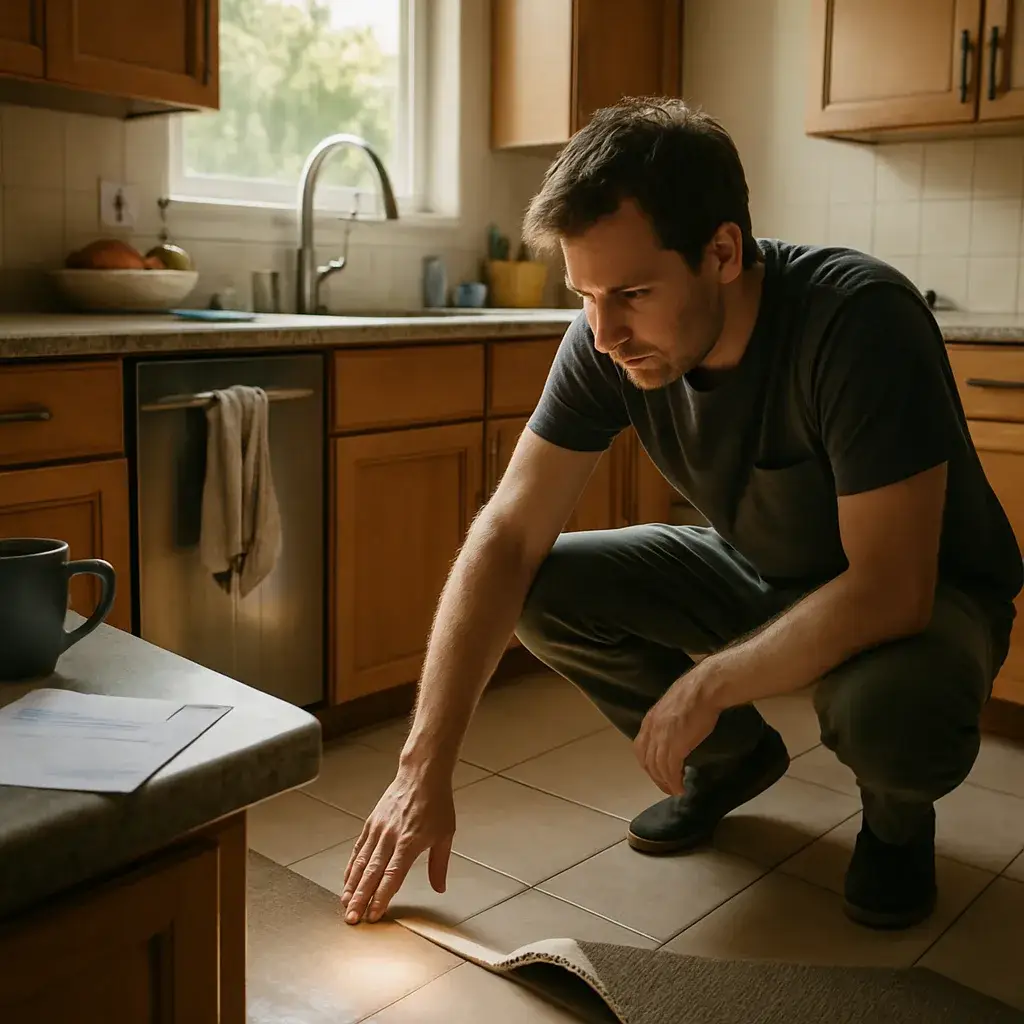
- A warm patch on the floor, often over a hot water line, that feels different underfoot
- A damp, spongy, or discolored spot on carpet, tile, or wood flooring without visible standing water
- A hissing or running water sound from the floor or walls when every fixture in the house is off
- New or widening cracks in walls, baseboards, or the slab itself as moisture undermines the foundation
- A musty or mildew smell that persists after cleaning and signals trapped moisture under flooring
- Unexplained low water pressure in one part of the home while other fixtures work normally
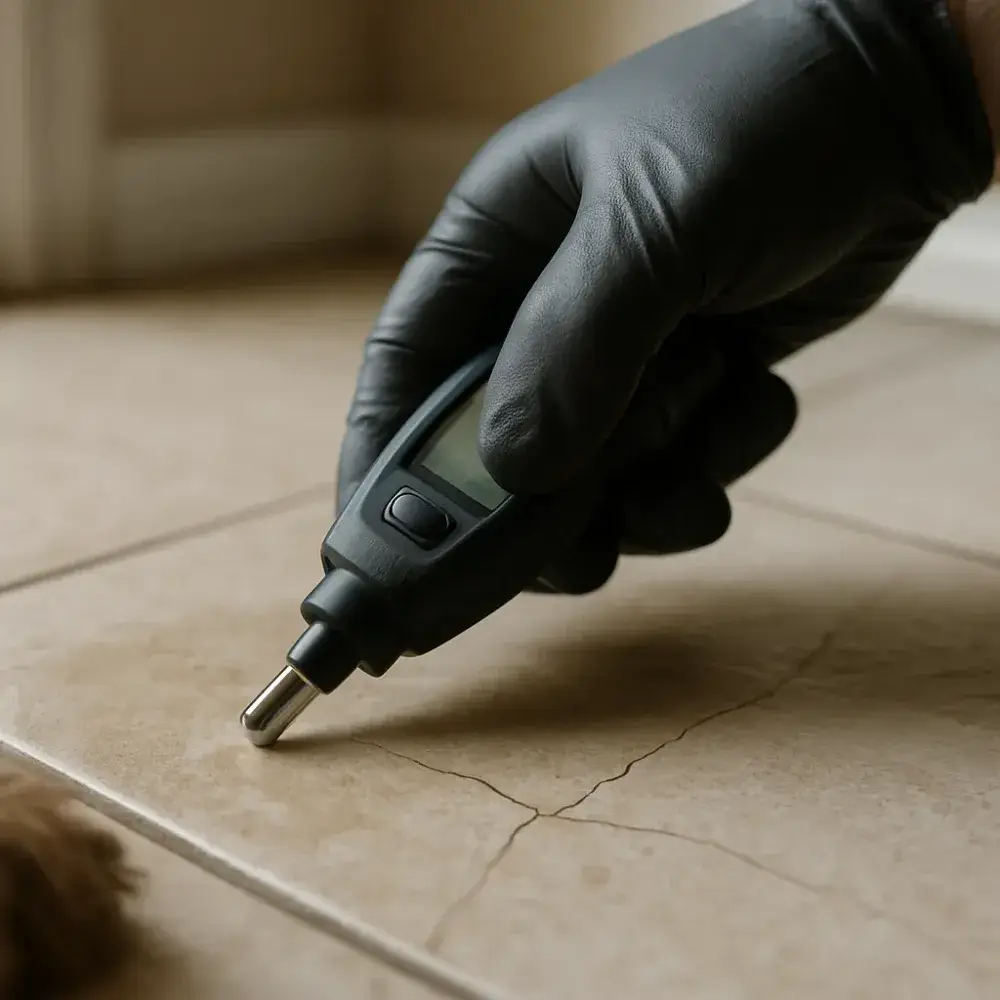
Any one of these signs can have another explanation. Two or more appearing together strongly suggest water is escaping somewhere beneath the slab. Sunnyvale’s clay soil makes these symptoms more common and can mimic foundation settling. Guessing at the source or cutting concrete based on a hunch often causes needless damage and expense. A licensed technician uses acoustic listening equipment, thermal imaging, and testing to find exactly where the pipe failed. The slab or flooring is opened only after the leak is confirmed, keeping repair costs and disruption down.
Why Under-Slab Pipes Fail in North Texas
Most homeowners assume a slab leak means their pipes got old and wore out. In North Texas, the ground itself is often the bigger culprit. According to USDA NRCS soil surveys for Dallas County, much of the region sits on expansive clay soils. These soils swell sharply when saturated with water and shrink during dry spells. This shrink-swell cycle repeats every year and sometimes several times per season. Rainfall patterns can shift quickly from soaking downpours to prolonged summer drought.
Every time the clay expands, it pushes upward and sideways against the concrete slab and the copper or PEX lines beneath it. When the clay dries and contracts, it pulls away. Pipes are left unsupported and prone to sagging or bending. Neither motion is dramatic by itself. Repeated over ten, twenty, or thirty years, the flexing fatigues metal joints and stresses fittings. Hairline cracks can eventually grow into full leaks. A home built in the 1990s can suddenly develop a slab leak without warning. The pipe may have lasted much longer under stable conditions.
Freeze-thaw events add another layer of stress to the clay movement. During rare but severe cold snaps, exposed and shallow-buried lines can freeze. The surrounding soil contracts sharply in the cold, then rebounds as it warms. Winter Storm Uri in February 2021 is the clearest example of this risk. Texas Department of Insurance winter-storm claims data recorded a large surge in plumbing-related property claims across North Texas during that event. Many claims involved frozen and burst lines, including under-slab plumbing weakened by years of clay movement.
- Expansive clay soil swells after heavy rain and shrinks during dry months, repeatedly stressing pipe joints
- Homes on shallow foundations near creeks or clay-heavy lots see faster shrink-swell cycling
- Hard freezes like Winter Storm Uri add sudden contraction stress on top of existing soil movement
- Older copper pipe fittings are especially vulnerable to fatigue from this repeated flexing
- Pipe age alone rarely explains a slab leak without this underlying soil and weather stress
This combination of factors changes how repairs should be approached. A leak caused by soil movement may recur nearby unless the surrounding conditions are addressed. Experienced slab leak technicians look beyond the immediate crack before recommending a fix. They check drainage, foundation grading, and past freeze exposure.
Repair Methods: Spot-Repair vs. Reroute
Once we know where the leak is, there are two real options: spot-repair or reroute. The choice is not random. It comes down to where the pipe sits and how bad the damage is.
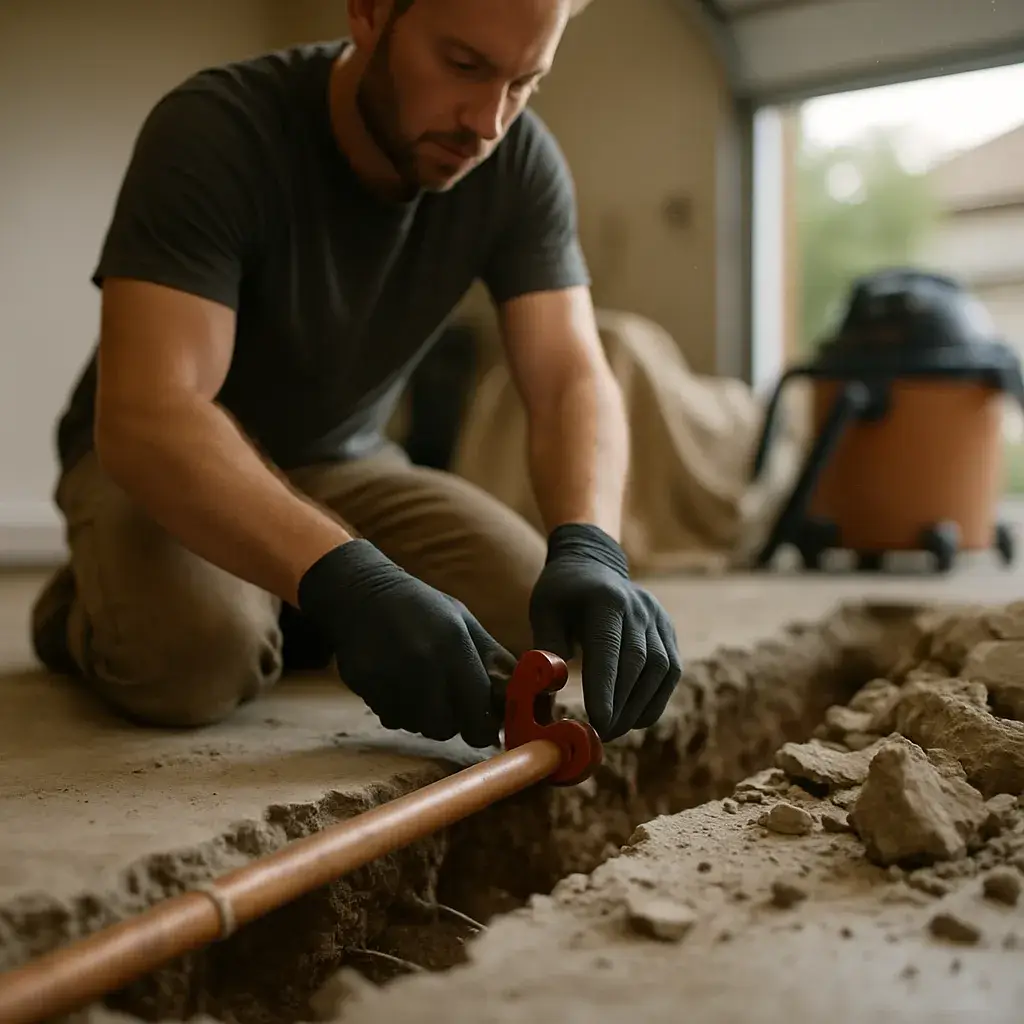
A spot-repair means going straight down to the leak, cutting out the bad section, and fixing it in place. It is direct and requires less concrete to be opened. This works well when the leak is isolated and the surrounding pipe is still in decent shape.
- Spot-repair: targets one section of pipe, needs less slab access, and works well for a single isolated leak
- Reroute: abandons the damaged line and runs new pipe through the attic or walls instead of beneath the slab
- Reroute often makes sense in older Sunnyvale homes when the original copper line has weak spots along its full run
- Pipe depth and anything above it, such as tile, a fireplace hearth, or a load-bearing wall, affect the method we recommend
One detail can be easy to miss: rerouting may save you money on slab work, even if the plumbing takes longer. That is because it can avoid cutting concrete altogether.
We have worked in Sunnyvale homes where the copper piping is original to the slab. In those homes, one leak can signal that more are coming. We will tell you plainly when a reroute is the smarter choice, even though it requires more work up front.
Leak location and depth drive the decision. So does the amount of slab access available. Nothing about it is a coin flip.
Have questions? We’re happy to help.
Call Today, Get Service Today. Xtreme Air Services is ready to help.
When It’s Not a Slab Leak
Not every unexplained water bill spike or damp patch in a Sunnyvale home points to a slab leak. Older properties may still have original galvanized or early copper supply lines feeding fixtures. Those lines may simply be worn out rather than cracked beneath the foundation. Before using slab leak detection equipment, a thorough plumber should rule out the more common and less invasive causes.
A running toilet is one of the biggest hidden water wasters in Sunnyvale homes. A worn flapper valve or a fill valve that never shuts off fully can silently waste hundreds of gallons a day. That can mimic the water-loss pattern of a slab leak on your utility bill. The fix is usually a fifteen-minute flapper or fill valve replacement, not foundation work.
- Dripping or leaking faucets, including indoor fixtures and outdoor hose bibs, waste water without touching the slab
- Water heater tank leaks or loose fittings, common in units installed 8 to 12 years ago and nearing the end of life
- Dishwasher or washing machine supply line leaks, often caused by a cracked hose or loose connector
- Irrigation and sprinkler line leaks in the yard can pool water near the foundation and look like a slab leak
- Leaking angle stops or shutoff valves under sinks and toilets
None of these issues require electronic listening devices, thermal imaging, or tracer gas testing. They do not require cutting into concrete, either. A visual inspection, water meter test, and basic checks at each fixture are usually enough. The plumber can often confirm the source and complete the repair the same day.
The distinction matters financially. Fixture repairs typically cost a fraction of slab leak detection and excavation. They solve the problem completely when the leak is at the fixture level. Sunnyvale homeowners who call a professional for an accurate diagnosis can avoid paying for concrete cutting that was never needed.
What to Expect: Process, Testing, and Cost Factors
Once we have found the leak, the repair usually follows these steps.
- We confirm the exact spot and depth of the leak under your slab.
- We decide between a spot repair or a reroute based on access and pipe condition.
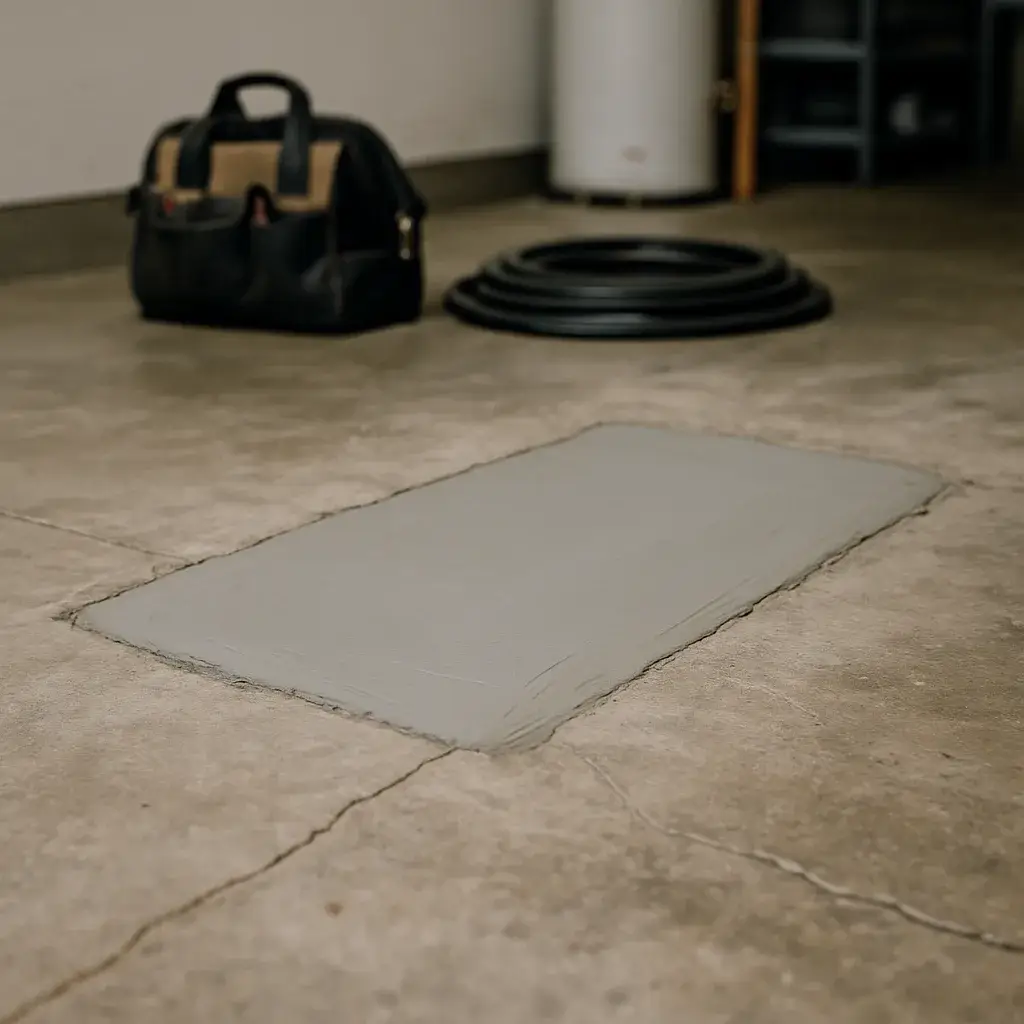
- We open the smallest area needed to reach the line, either through the slab or through a wall.
- We repair or reroute the pipe and test it before closing anything.
- We test the whole system again to confirm the leak is gone.
That final test matters. We check pressure and flow before calling the job done.
Slab leak repair costs between $2,000 and $6,000. The most common job includes locating the leak and repairing or rerouting the line. It typically costs between $2,000 and $3,800. Three factors move that number: the leak’s depth, whether it needs a spot-repair or full reroute, and the required slab access. A shallow leak near an exterior wall is different from one beneath a load-bearing interior wall.
The repair includes locating the leak, completing the repair or reroute, and testing the work. Slab or flooring restoration, additional lines beyond the leak, and permits are not included unless stated ahead of time.
Our service call fee runs $26 to $99. It is credited toward your repair if you move forward with us. We also offer financing on qualifying jobs, so a larger repair does not have to disrupt your monthly budget.
Frequently Asked Questions
Common questions about Slab leak repair
How fast can you get someone out to check a possible slab leak in Sunnyvale?
We aim to schedule a visit within a day of your call, especially if you describe a warm floor spot or a jump in your water bill. Fast scheduling matters because Sunnyvale’s clay soil keeps shifting, and a small leak can grow while you wait. When you call, tell us which signs you noticed and where. That helps us bring the right listening and thermal equipment on the first visit instead of a second trip.
What happens when a technician arrives to check for a slab leak?
A licensed technician starts by walking through your home and asking about the signs you noticed, like sounds or damp spots. Next, we use acoustic listening equipment and thermal imaging to trace the leak’s path under the slab. We do not cut concrete until we confirm the exact location. This step-by-step approach protects your floors and keeps the repair focused on the real problem area, not a guess.
Why do slab leaks happen so often in Sunnyvale homes?
Slab leaks are common here because Sunnyvale sits on expansive clay soil that swells after rain and shrinks in dry months. That constant movement pushes and pulls on copper and PVC lines buried under your foundation. Over ten or twenty years, this flexing fatigues pipe joints until they crack. Even a home built in the 1990s can develop a sudden leak once the soil stress catches up with an older fitting.
How do you decide between a spot-repair and a full reroute?
We choose based on where the leak sits and how much of the pipe is worn. A spot-repair fixes one damaged section with minimal slab access, which works well for an isolated leak. A reroute runs new pipe through the attic or walls instead, which we often recommend for older Sunnyvale homes with copper lines showing weak spots along their full run. Pipe depth and what sits above it, like tile or a hearth, also guide our recommendation.
Can a hard freeze cause a slab leak even in an older Sunnyvale home?
Yes, a hard freeze can trigger a slab leak in a home that already has soil-stressed pipes. Events like Winter Storm Uri in 2021 caused a sharp jump in plumbing claims across North Texas, including frozen and burst under-slab lines. Years of clay shrink-swell cycling can weaken pipe joints long before a freeze hits. When cold weather adds sudden contraction on top of that stress, a slow-forming crack can finally give way.
Ready to Get Started?
Call 972-288-2263 Today, Get Service Today.