That musty, damp basement smell coming from your vents almost always means moisture has let mold or bacteria colonize somewhere inside the system, usually the evaporator coil or condensate drain pan. Check your air filter and drain pan first. If the odor is strong, shut the system off, and call a technician if it doesn’t clear up after basic cleaning or if anyone in the house has breathing trouble.
TL;DR:
- The most common cause of musty odors is mold or biofilm on the evaporator coil, which stays damp longer than other components and releases musty smells into the air.
- Clogged condensate drain lines or full drain pans often stagnate water, creating an environment conducive to microbial growth and odor development.
- Regular maintenance like replacing filters, flushing drain lines with vinegar, and controlling humidity levels can prevent odors from recurring over the long term.
- Persistent strong smells that don’t improve after basic cleaning may indicate deeper microbial growth, requiring professional inspection and coil cleaning.
- Odors with a chemical or burning smell could signal refrigerant leaks or electrical issues, necessitating immediate professional service.
Table of Contents
- Why Does AC Smell Musty in the First Place?
- How Do I Get Rid of a Musty Smell in My AC Right Now?
- Window Units and Car AC: What’s Different
- How Do You Prevent Musty Odor in an Air Conditioner Long-Term?
- When Should You Call an HVAC Technician?
- Xtreme Air Services Perspective: How Professionals Diagnose Musty AC Smells
- A 24 to 48 Hour Plan to Kill the Smell
- Schedule a Professional AC Inspection With Xtreme Air Services
- Sources
- FAQ
Why Does AC Smell Musty in the First Place?
A musty smell from your AC vents almost always traces back to one thing: standing moisture somewhere it shouldn’t be. Your evaporator coil gets cold and wet every time the system runs, which is normal, but it’s also the perfect breeding ground for mold and biofilm if it doesn’t dry out between cycles. That thin layer of slime on a coil doesn’t take much time to build, and once it’s there, every cubic foot of air blowing across it picks up a little bit of that smell.
The usual suspects, roughly in order of how often they turn out to be the culprit:
- Mold or biofilm on the evaporator coil — the coil stays damp longer than any other component, making it the most common source of musty air conditioning odor.
- A clogged condensate drain line or full drain pan — when water can’t drain properly, it sits and stagnates, and clogged drain lines rank among the most frequent causes technicians find.
- A dirty or soaked air filter — a filter loaded with dust holds moisture and actively spreads spores through the ductwork instead of blocking them.
- Contaminated ductwork — if the smell hits you from every single vent in the house at similar strength, the problem has likely spread beyond the unit itself.
There’s also the seasonal “first turn-on” smell, that brief musty burst you get the first hot day you fire up the AC after months of disuse. That usually fades within an hour and isn’t cause for alarm. A smell that lingers for days, though, points to active microbial growth rather than dust burning off. And if what you’re smelling is more chemical, sweet, or electrical than earthy or damp, stop troubleshooting for mold. That could mean a refrigerant leak or an electrical short, and both call for a technician immediately.
How Do I Get Rid of a Musty Smell in My AC Right Now?
Most mild cases clear up with an afternoon of basic maintenance. Here’s the order that actually works:
- Turn off the system if the smell is strong or you see any standing water near the unit. No sense circulating contaminated air while you work.
- Pull the air filter and inspect it. If it’s gray, damp, or you can’t remember the last time you changed it, replace it. A cheap fiberglass filter should be swapped monthly during heavy use; pleated filters can often stretch to 90 days.
- Check your supply and return vent covers. Wipe them down with a damp cloth and mild detergent. Dust buildup on the grille itself can carry the same smell the coil does.
- Flush the condensate drain line. Mixing distilled white vinegar with water in equal parts and pouring it into the drain access port (usually a T-shaped PVC fitting near the indoor unit) breaks up algae and light buildup. Let it sit for 30 minutes, then flush with water.
- Dry or vacuum the drain pan if you can reach it without disassembling the unit. Standing water here is often the actual odor source, not the coil.
- Wait and reassess. If the smell returns within a day or two, you’re dealing with something beyond surface grime.
Pro Tip: Never spray disinfectant, bleach, or air freshener directly into your vents. It masks the smell temporarily while doing nothing about the moisture causing it, and some sprays can damage electronics or aggravate breathing issues once the blower kicks on.
Stop the DIY approach the moment you’d need to remove panels, access the coil itself, or you see mold that looks fuzzy or colored rather than a thin gray film. That’s a job for someone with the right tools.
Window Units and Car AC: What’s Different
Central systems, window units, and car AC all get musty for the same basic reason, but where you look and what you can safely do about it differs.
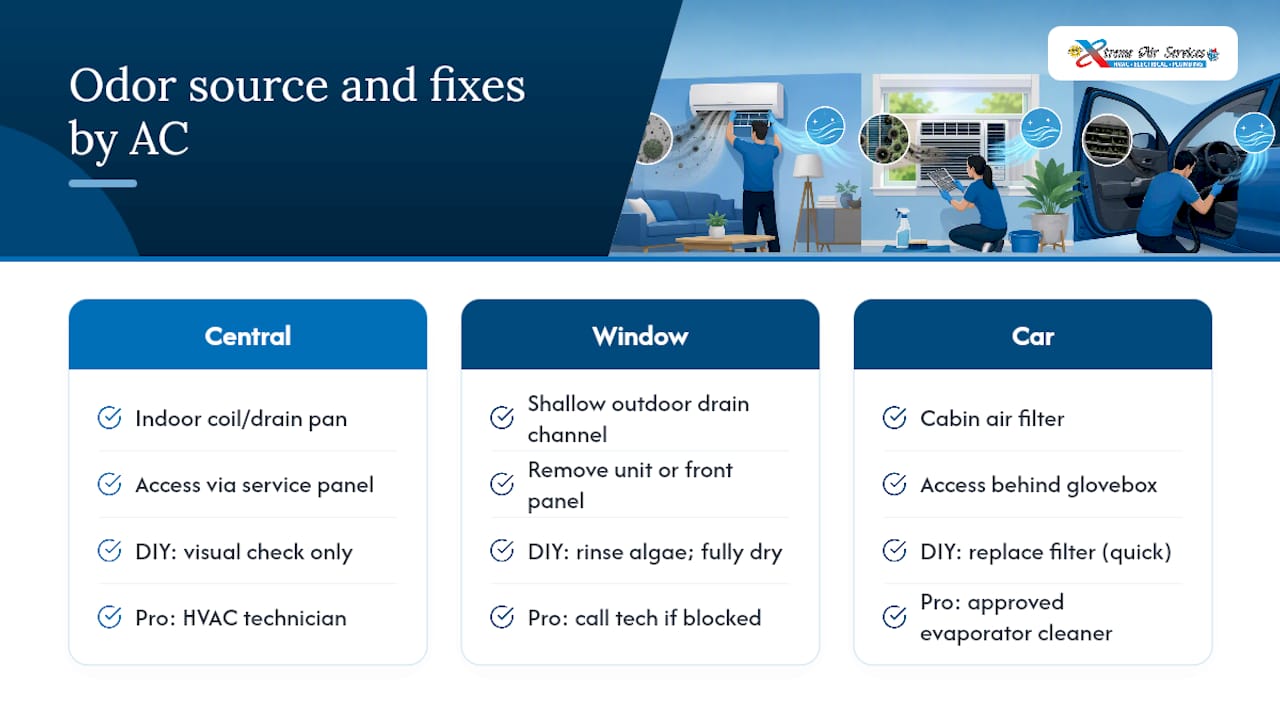
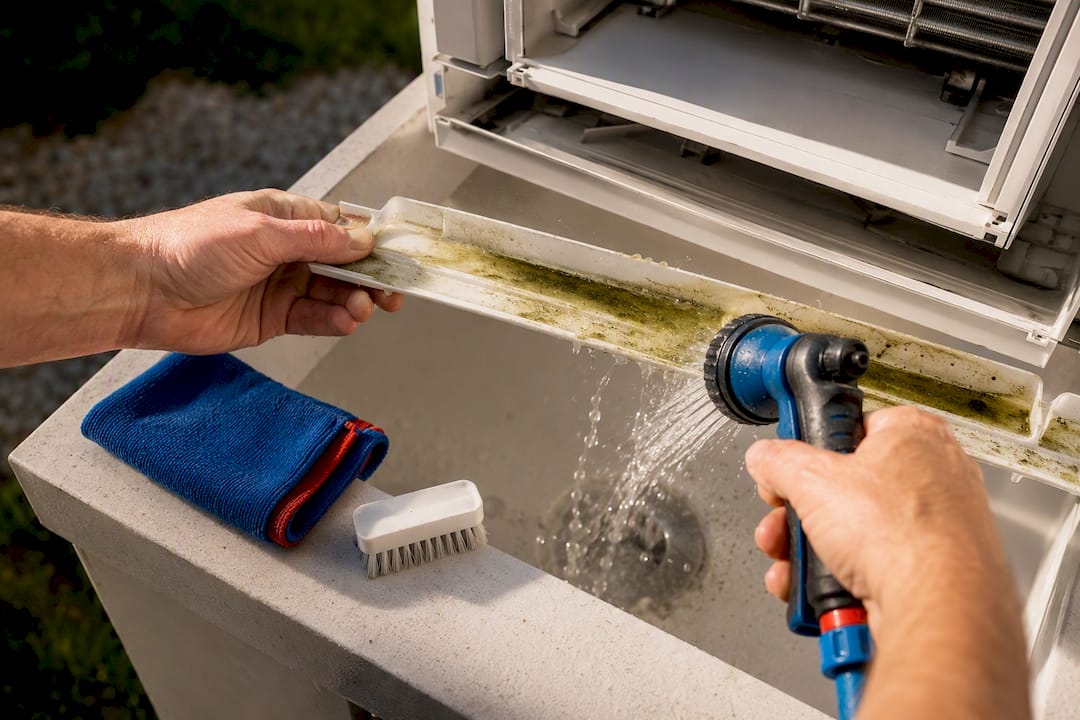
Window units trap water in a shallow drain channel that’s exposed to outdoor air, dust, and pollen constantly. Pull the unit out (or at minimum, remove the front panel) once a season and check that channel for algae buildup, a greenish, slimy film that’s easy to see and easy to rinse out with a garden hose. Let it dry completely before reinstalling, and never store a window unit wet over the winter. That’s the single biggest reason the same unit smells worse every spring.
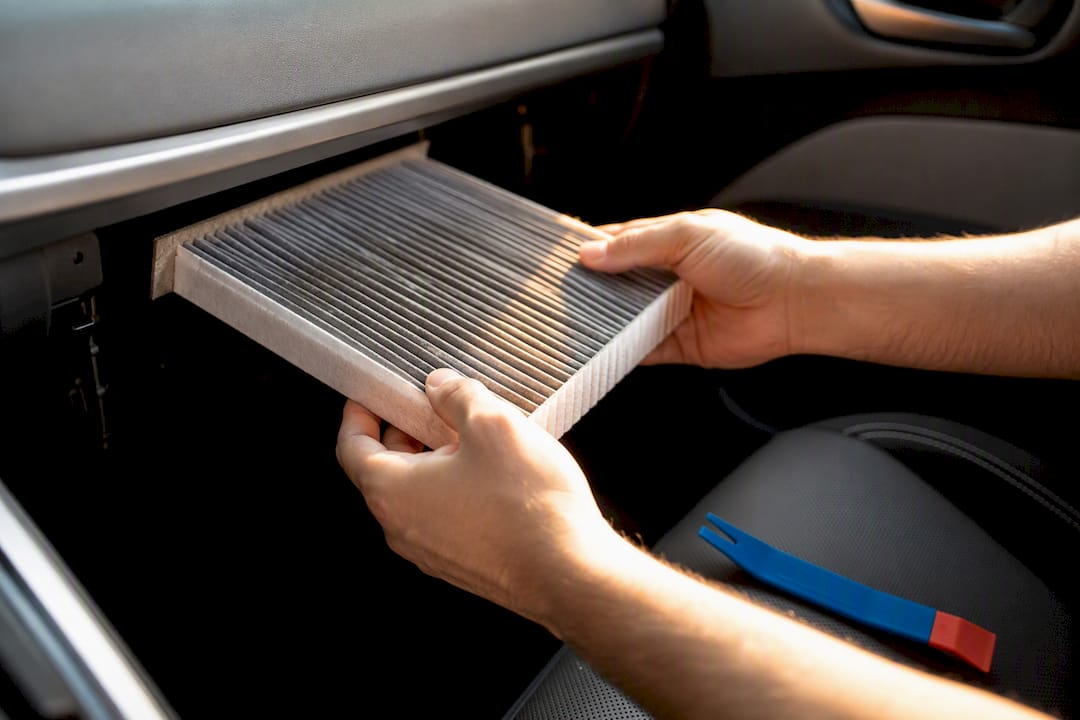
Car AC odor usually starts at the cabin air filter, which is far cheaper and easier to swap than most drivers realize, often a five-minute job behind the glovebox. If a fresh filter doesn’t fix it, an approved evaporator cleaner or foaming kit designed for automotive AC systems can treat the evaporator itself. Skip anything not labeled for that use; automotive AC systems are compact and sensitive to the wrong chemicals.
How Do You Prevent Musty Odor in an Air Conditioner Long-Term?
Fixing the smell once is easy. Keeping it from coming back is the part most homeowners skip.
Humidity is the single biggest lever you control. The EPA recommends keeping indoor relative humidity below 60%, ideally between 30% and 50%, since mold and bacteria need moisture to establish themselves in the first place. A standalone dehumidifier in a damp basement or crawl space near the ductwork often does more for odor prevention than any filter upgrade.
A few habits worth building into your routine:
- Check your filter monthly, replace it every 1 to 3 months depending on usage and whether you have pets.
- Set your thermostat fan to AUTO, not ON. Running the fan continuously keeps the coil wet longer instead of letting it dry between cycles, which is exactly backward from what you want.
- Book professional maintenance twice a year, once before cooling season and once before heating season, to catch coil buildup and drain issues before they turn into odor problems.
- Consider UV germicidal lights or air-scrubbing add-ons only after a coil cleaning, since installing one over an already-dirty coil just irradiates existing buildup instead of preventing new growth.
Technicians and mold researchers agree on this point specifically: drying the coil between cycles and controlling ambient humidity does more long-term prevention work than any filter, spray, or gadget on the market.
When Should You Call an HVAC Technician?
Some signs mean it’s time to stop troubleshooting and pick up the phone:
- The smell persists after a filter change and drain flush.
- You can see visible mold, not just a thin film, but fuzzy or colored growth.
- There’s standing water anywhere near the indoor unit.
- The evaporator coil is frozen or covered in ice.
- The odor smells chemical or like burning wiring rather than damp and earthy.
- Anyone in the home develops coughing, headaches, or allergy symptoms that ease when they leave the house.
A technician’s visit typically covers the filter, evaporator coil condition, condensate drain and pan, ductwork, refrigerant charge, and overall airflow measurements. Catching a clogged drain or early coil buildup during that visit is far cheaper than waiting for it to spread into the ducts. Before you call, jot down when the smell started, whether it’s constant or only on startup, and snap a few photos of any visible moisture or growth. That timeline speeds up diagnosis considerably.
Xtreme Air Services Perspective: How Professionals Diagnose Musty AC Smells
A proper inspection starts with the filter and airflow, moves to a drain line test, then a visual coil check and duct inspection, sometimes paired with air quality testing when odors persist. Professionals generally recommend homeowners try the basic filter and drain flush first; if the smell returns within 48 hours, that’s usually biofilm or standing water beyond DIY reach. Regular HVAC maintenance plans and periodic air quality checks catch most of this before it becomes a repeat problem.
A 24 to 48 Hour Plan to Kill the Smell
Here’s the honest sequence: power down if the smell is strong, swap the filter, run the vinegar flush through the drain line, wipe down the vents, and dry out the pan if you can reach it. Then wait. If the smell is gone in a day or two, you handled it. If it comes back, that’s your signal, not a coincidence, that something is colonizing deeper in the system. Write down when it started and whether it’s constant. Don’t reach for air freshener to buy time; that just delays the real fix.
— Xtreme
Schedule a Professional AC Inspection With Xtreme Air Services
If the vinegar flush and filter swap didn’t fully clear the smell, or you’d rather skip the guesswork and have someone check the coil, drain line, and ductwork properly, that’s exactly where a licensed technician earns their visit.

Xtreme Air Services offers HVAC inspections that cover the filter, condensate drain and pan, evaporator coil, and airflow, plus air quality testing when you want to know what’s actually circulating through your home. If the drain line is the repeat offender, professional drain line cleaning clears buildup that a vinegar flush can’t fully reach. For homeowners who’d rather never deal with this again, an HVAC maintenance plan covers the biannual coil and duct checks that catch moisture problems before they turn into an odor. Request a quote or book an inspection through a local service provider to get a technician out and diagnose the source directly.
Sources
For more detail on humidity control, see the EPA’s mold prevention guidance, and for a broader rundown of causes, check BobVila’s AC odor guide.
- If Your Air Conditioner Smells Musty, Do This First
- EPA — Mold course, chapter 9 (humidity guidance)
- Why Does My AC Smell Musty? – BobVila
FAQ
Should I Turn Off My AC If It Smells Musty?
Yes, if the smell is strong or you notice standing water nearby. Running the system keeps circulating contaminated air and can spread spores further into your ductwork.
How Do You Deodorize an Air Conditioner?
Replace the air filter, flush the condensate drain line with a 1:1 mix of distilled white vinegar and water, and clean the vent covers. Avoid disinfectant sprays, which mask the smell without treating the moisture causing it.
How Do You Get Rid of a Musty Smell in the Air From AC Vents?
Start with the filter and drain pan, the two most common sources, then check whether the smell comes from every vent equally, which points to ductwork rather than the unit itself. Persistent odor after these steps usually means it’s time for a professional coil or duct inspection.
Is a Musty AC Smell Dangerous to Breathe?
Mold spores and microbial volatile organic compounds (MVOCs) from a contaminated system can trigger allergy symptoms, headaches, or breathing irritation in sensitive people, though not everyone reacts the same way. Anyone with asthma or respiratory conditions should treat a persistent musty smell as a reason to call a technician sooner rather than later.
Why Does My AC Smell Musty Only When I First Turn It On?
That’s usually dust and light moisture burning off after months of disuse, and it typically clears within an hour. If it lingers for days instead of fading, you’re likely dealing with mold growth rather than a one-time dust burn.