


HVAC Duct & Vent Repair in Sunnyvale: Repair or Replace?
Torn, crushed or disconnected ducts found and repaired – with an honest call on whether you need a repair, a cleaning, or a full replacement.
What’s Covered on This Page
- Signs Your Ducts or Vents Need Repair, Not Just Cleaning
- When a Vent Problem Does Not Need a Repair Visit
- What Happens During a Duct & Vent Repair Visit
- What a Duct & Vent Repair Costs and What’s Included
- Duct Repair vs. Full Duct Replacement
- Is it safe to just get my ducts cleaned instead of repaired?
- Can duct cleaning companies damage my ductwork?
- Why is one room in my house always hotter than the rest?
- Do I need a permit to repair or replace ductwork in Sunnyvale?
Signs Your Ducts or Vents Need Repair, Not Just Cleaning
Here’s a simple way to think about it. Dirty ducts still move air. They just move dusty air. Damaged ducts lose air before it gets to you. In most Sunnyvale homes, whether it’s an older slab ranch house or a newer subdivision build, the ductwork runs through the attic. On a July afternoon in North Texas, that attic gets far hotter than outside. When a duct up there has a gap or a tear, your cooled air leaks into that heat, and hot, dusty attic air can get pulled back into your system.
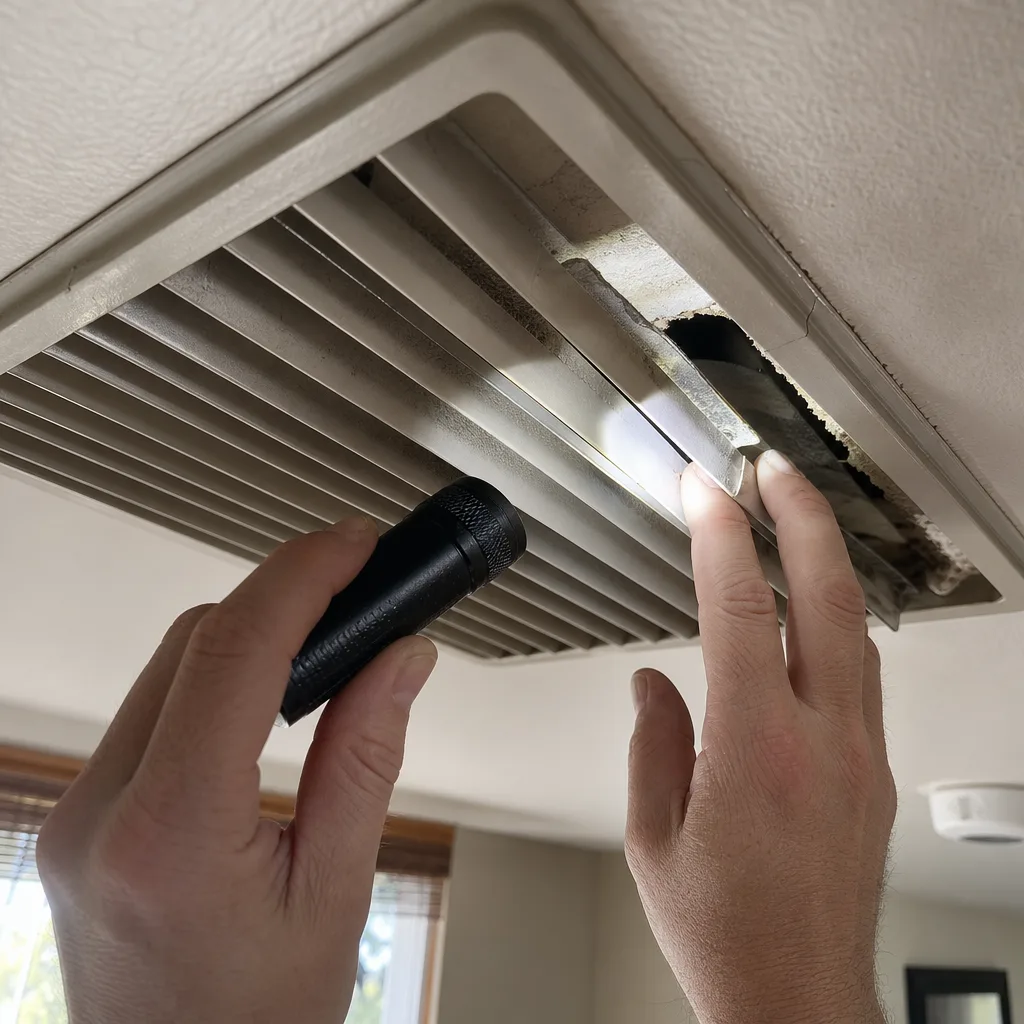
These signs point to a repair:
- One room or one end of the house stays warm while the rest feels fine, even with the vents wide open.
- Airflow is strong at some vents and barely a whisper at others.
- Your energy bill went up, but your thermostat setting and your habits didn’t change.
- You hear whistling, rattling, or a loose flapping sound in the walls or ceiling when the system kicks on.
- Fine, gritty dust or dark streaks show up around a ceiling register soon after you wipe it down. That often means air is leaking at the connection.
- A water stain or wet spot appears on the ceiling near a vent. A duct that’s lost its insulation can sweat in the attic heat and drip.
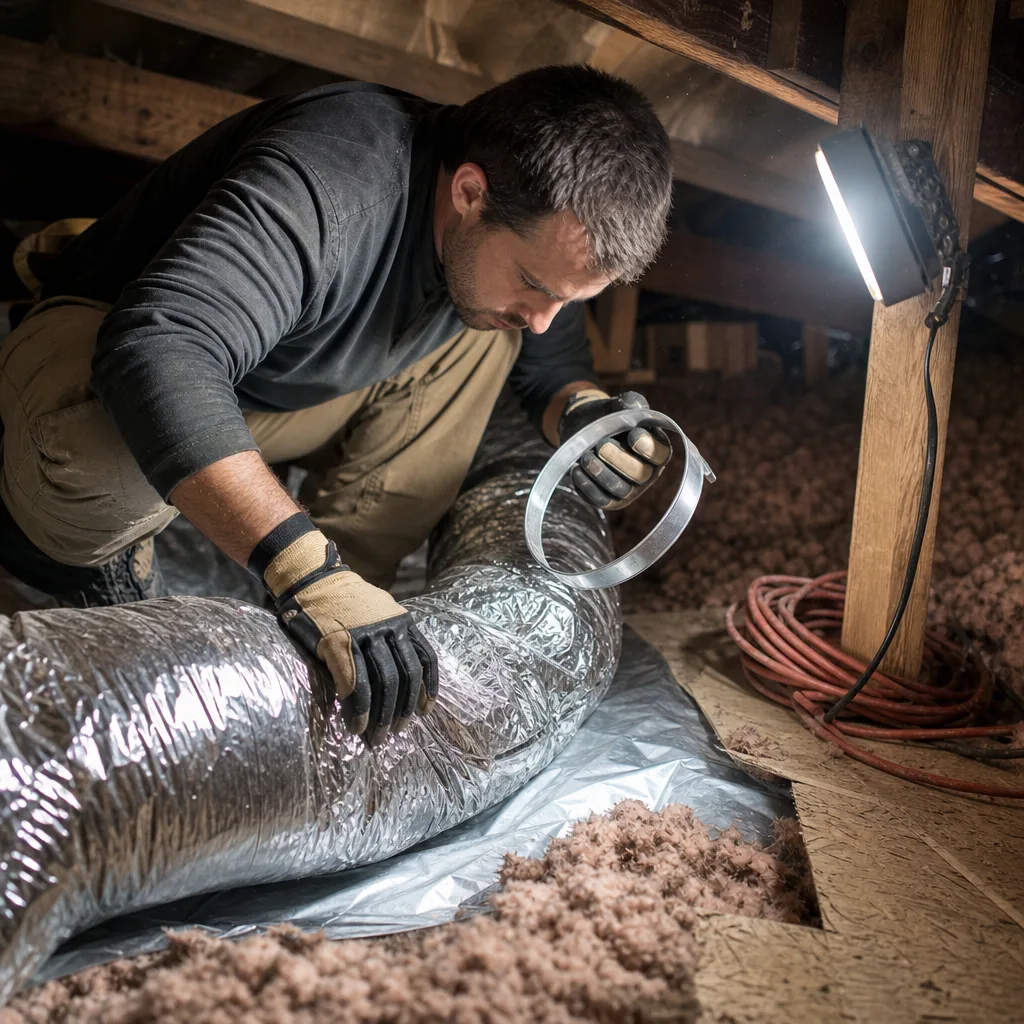
- In the attic, you can see flex duct that’s crushed, kinked, sagging, torn, or pulled loose from its fitting.
- A register is loose, bent, or no longer sits flush against the ceiling or wall.
Cleaning is the better fit when the air still moves fine everywhere but you see heavy dust built up on the grilles, you just finished a remodel, or pet hair keeps collecting at the vents. Cleaning won’t close a gap, though. If your ducts are both dirty and leaking, it makes sense to fix the leak first so you aren’t pulling fresh attic dust right back in. We offer duct cleaning and duct sealing too, and each one has its own page if that’s what you need.
Before you call anyone, take two minutes to check the easy stuff yourself. You don’t need a pro for these:
- Pull your air filter. If it’s gray and packed with dust, swap it out and give the system a day to catch up.
- Make sure the register in the weak room is open. Those little levers get bumped shut more often than you’d think.
- Look for a couch, bed, rug, or curtain sitting on top of the vent or blocking the return grille.
If you’ve checked all three and that room is still hot, or you’re seeing stains, hearing noises, or watching your bill go up, the problem is likely in the ductwork itself. That’s a repair, and it’s worth getting it found and fixed before another Texas summer runs up the cost.
When a Vent Problem Does Not Need a Repair Visit
Not every odd sound or warm spot means your ductwork is broken. Some of what you notice at a vent is normal, some of it is cosmetic, and some of it you can fix in five minutes with a screwdriver. Here’s the straight answer on when you can skip the repair visit.
A grille that rattles but still blows strong air usually just has a loose screw. Tighten the screws that hold the register to the ceiling or wall. If a screw spins and won’t bite, a slightly longer one or a drywall anchor will usually hold it. If the rattle stops and the airflow feels the same as other rooms, you’re done.
A few pops or ticks right when the system starts or shuts off are usually normal too. Metal duct and trunk lines grow and shrink a little as hot or cold air rushes through them. That’s different from the steady whistling or flapping we covered above. A quick tick that fades in a few seconds isn’t a leak.
Some rooms run a degree or two warmer by design. A bedroom over the garage or a room with big west-facing windows can lag behind the rest of the house on a late July afternoon in Sunnyvale. If that room evens out by evening and the vent still blows strong, cool air, the ducts are probably doing their job. Closing the blinds during the hottest part of the day often helps more than any repair would.
On a muggy day, you might see a few beads of water on a metal supply grille. If the drops stay small, dry up on their own, and never leave a mark on the ceiling, that’s just cold metal meeting humid air. A stain or a drip on the drywall is a different story, and that one does need a look.
A yellowed, bent, or ugly register you just want to replace is a project you can do yourself. Most residential registers come in standard sizes. Measure the duct opening, not the old faceplate, and buy a matching one at any hardware store.
If every vent in the house is weak or blowing warm air, the ducts usually aren’t the problem. That points to the equipment, like a frozen coil or an AC that isn’t cooling. That’s a job for an HVAC contractor checking the system itself, not a duct repair. Calling for the right problem saves you a second trip and a second fee.
- Loose rattling grille, strong airflow: tighten the screws yourself.
- Brief ticks or pops at startup: normal metal movement, no action needed.
- Sunny room a degree or two warmer in late afternoon: try blinds first.
- Small beads on the grille that dry with no stain: normal on humid days.
- Worn-looking register: swap it yourself with a standard size.
- Whole house warm, all vents weak: likely the AC system, not the ducts.
If you’re not sure, give it a few days and keep notes. Write down which room, what time of day, and what you heard or felt. If the problem stays the same or gets worse, you’ll know it’s real, and whoever comes out will find it faster.
That same focus carries through the practical hvac contractor guidance our team provides to local families.
What Happens During a Duct & Vent Repair Visit
A duct and vent repair visit has three jobs. Find the failed part. Repair or replace it. Then make sure your system runs right and the air reaches the room. Most calls are a single common failure fixed on the first visit, so you’re usually not looking at a long, drawn-out project.
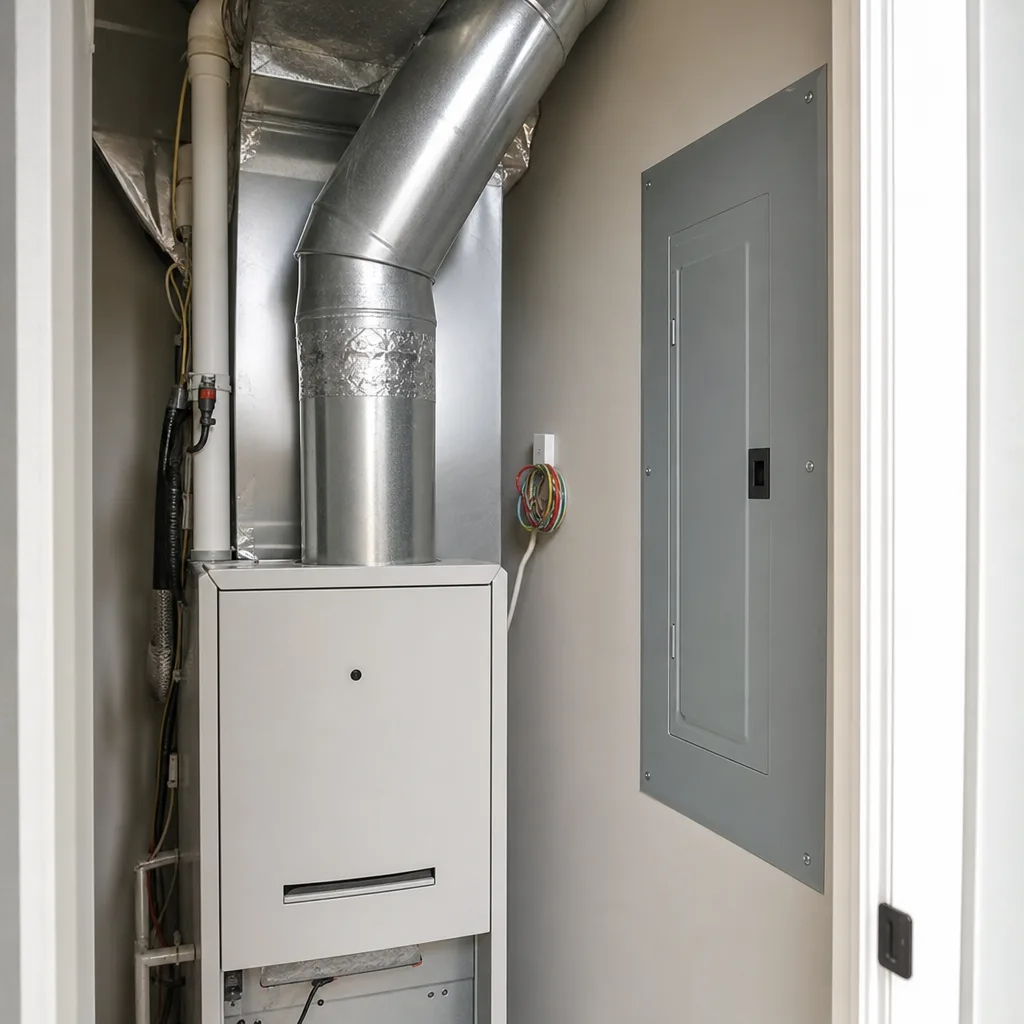
A little prep on your end helps the visit go faster:
- Clear a path to your attic hatch or pull-down stairs. In a lot of Sunnyvale homes, that’s in a hallway ceiling or the garage.
- Move furniture or boxes away from the vents in the problem rooms.
- Have your notes handy: which room, what time of day, and what you heard or felt.
- Put pets in another room so the door can stay open.
Your technician is licensed and insured, background-checked, and drug-tested. The search starts with the room you’re worried about. From there, the job is to follow that run back through the attic until the problem shows up. In an older slab ranch home, that might be flex duct that’s sagged between the rafters after years of Texas attic heat. In a newer subdivision build, it can be a connection that was never fastened tight to begin with.
Once the problem is found, you get upfront flat-rate pricing, and you approve it before any work starts. No meter running while someone’s up in a hot attic. The $26-$99 service-call fee is credited toward the repair if you go ahead with Xtreme Air Services.
Sometimes more turns up than one bad spot. Extra failed parts, major components, code upgrades, or permits aren’t part of the standard repair. If any of those come up, they’re quoted separately so you can decide. Sunnyvale sits on both sides of the Dallas County and Kaufman County line, so permit rules can depend on which side your home falls on.
Depending on what’s found, duct and vent repair usually means one of these:
- Reattaching a flex duct that’s pulled loose from its fitting, then fastening and sealing the joint so it won’t leak.
- Cutting out a crushed, kinked, or torn section and putting in a new piece of duct.
- Sealing leaks at seams and connections so your cool air stops escaping into the attic.
- Hanging a sagging run back up so it doesn’t pinch or kink again.
- Securing or replacing a loose or bent register so it sits flush.
After the fix, the system gets turned on and tested. The room that started all this should finally have strong airflow, like the rest of the house. Diagnosis, labor, the standard replacement part, testing, and cleanup are all included in the repair. So you aren’t left sweeping up attic dust after the truck pulls away.
Timing matters too. If that back bedroom is still hot at 9 on a Saturday night, you won’t pay more for it. There’s no extra charge for nights or weekends, and same-day service is available. That means your problem gets handled today, not next week.
Thinking about HVAC duct & vent repair? Let’s talk.
Call Today, Get Service Today. Xtreme Air Services is ready to help.
What a Duct & Vent Repair Costs and What’s Included
Most duct and vent repairs at Xtreme Air Services fall between $200-$1,000. The most common job, finding the one failed spot, fixing or replacing it, and checking that air reaches the room again, runs $200-$550. If your problem is a single loose or crushed section, you’re likely looking at the lower range, not a big project.
You won’t have to guess where you land. Your price is set upfront and you approve it before any work starts, and the service-call fee is credited toward the repair if you go ahead, as covered above.
So what pushes a repair toward the higher end? It comes down to a few plain things:
- How much is damaged. Reattaching one flex duct that slipped off its fitting costs less than replacing a long run that’s torn or crushed across the attic.
- Leak sealing. Sealing one bad joint is a small job. Sealing several leaky seams and connections takes more time and material.
- More than one failure. If two or three spots have failed, each one adds to the job. Extra failed parts are quoted separately so you decide on each.
- Part cost and availability. A standard piece of duct or a common register is easy to get. Odd sizes or harder-to-find parts can cost more.
- Your system’s age and brand. Older equipment and some brands use fittings that take more work to match up.
One thing that doesn’t change your price is when you call. There’s no extra charge for nights or weekends. A hot back bedroom on a Sunday costs the same to fix as it would on a Tuesday morning.
Here’s why it pays to fix a damaged duct sooner rather than later. In a Sunnyvale attic, a torn or loose duct sits in some of the hottest air on your property every summer afternoon. Your AC keeps paying to cool air that never reaches you. A small repair now stops that waste before it shows up on another season of bills.
Financing usually isn’t offered for a smaller job like this one. If the repair turns into something larger, like a major component or a replacement, financing is available for those.
Whoever you call, it’s fair to ask a few questions before anyone climbs into your attic:
- Is the price flat-rate, or does it go up the longer the job takes?
- Is the service-call fee applied to the repair if I go ahead?
- What’s included in the price, and what would be quoted separately?
- Do you charge more for nights or weekends?
- Will you test the system and show me the airflow is fixed before you leave?
Clear answers to those tell you a lot about who you’re letting into your home. Our licensed and insured technicians are background-checked and drug-tested, and your neighbors have given us a 4.8-star rating across more than 2,900 reviews on Google, Angi, and HomeAdvisor.
Watch Our Video
See How We Handle HVAC duct & vent repair in Sunnyvale
Xtreme Air Services
Duct Repair vs. Full Duct Replacement
A hot room doesn’t mean you need all new ductwork. In most cases, the problem is one spot: a joint that slipped apart, a section that got stepped on, or a run that sagged and kinked. Fix that spot and the rest of the system keeps doing its job. Replacement only makes sense when the damage isn’t in one place anymore and the whole system is wearing out at once.
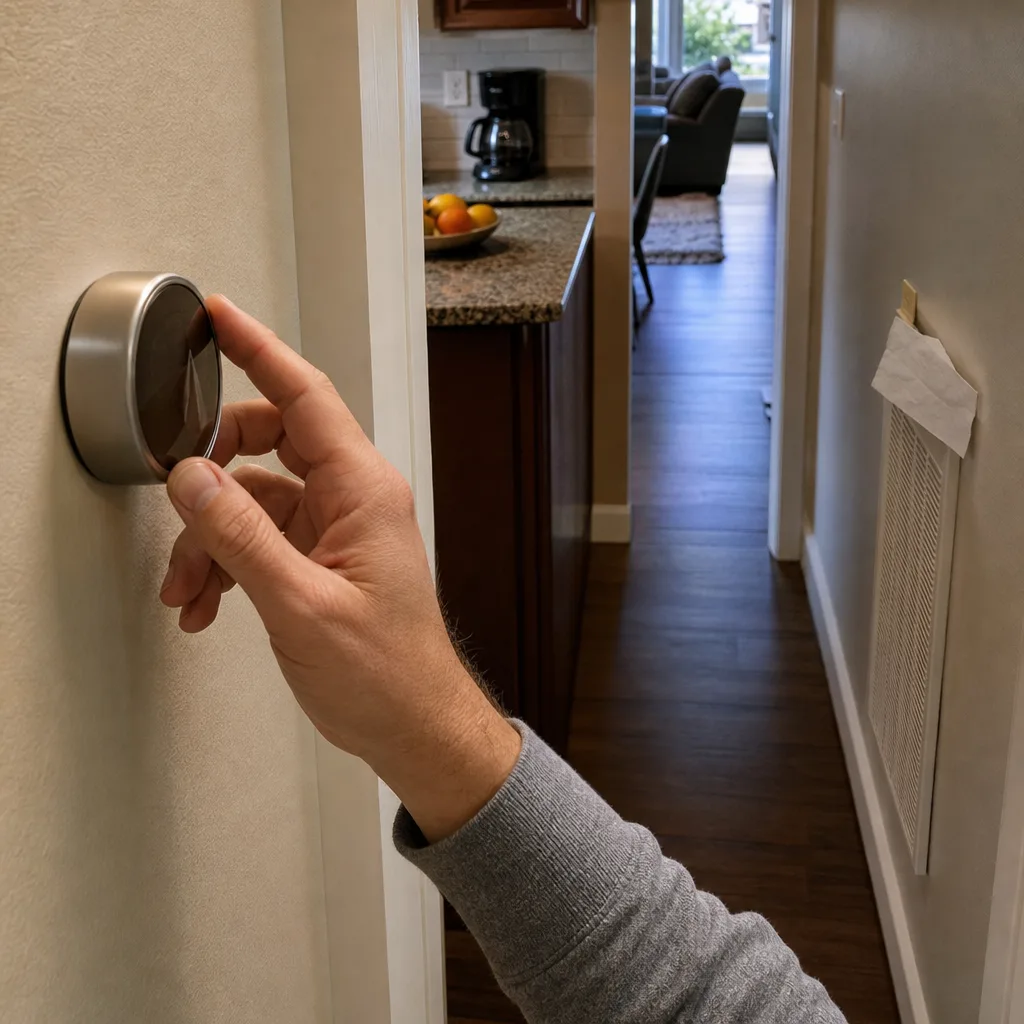
Repair is usually the right call when:
- The trouble is in one or two rooms, and the rest of the house cools fine.
- The damage is easy to point to, like one crushed section, one loose connection, or one torn piece of flex duct.
- The rest of the duct still feels firm, and the outer jacket isn’t cracking or falling apart.
- Your system was put in fairly recently and the layout has worked well until now.
Replacement starts to make more sense when:
- Problems keep showing up in different rooms, one after another.
- The flex duct’s outer plastic jacket crumbles when you touch it, or the insulation inside has flattened, torn, or fallen away.
- Leaks show up at many seams across the attic, not just at one joint.
- Some rooms have never cooled right, even when the ducts were new. That can mean the duct runs were too small or poorly laid out from day one, and patching won’t change the design.
- You’re replacing your AC or furnace anyway, or adding onto your home, and the old ducts don’t match the new setup.
Attic heat matters here. Every summer, ducts in a Sunnyvale attic sit in air far hotter than outside, and years of that wear on flex duct. In an older slab ranch home built decades ago, the original ducts may be brittle all the way through, not in just one spot. In a newer subdivision build, the ducts themselves are often in decent shape, and the problem is more likely one bad connection. Age alone doesn’t decide it, though. What decides it is how much of the system has failed.
Here’s an honest rule of thumb. If you’d be patching the same attic every summer, chasing a new leak each time, replacement saves you money and hassle in the long run. If it’s one clear failure in otherwise solid duct, a repair is the smarter spend, and you shouldn’t let anyone talk you into more.
Full replacement is a much bigger job than a repair. It falls outside the standard repair price and gets quoted on its own, along with any permit it needs (see the county line note above). Unlike a smaller repair, a replacement can be paid for with financing, so a bigger job doesn’t have to come out of your pocket all at once. We also handle HVAC duct and vent installation, so if replacement does turn out to be the right answer, the same team that found the problem can do the new work.
If you’re not sure which side you’re on, that’s what the inspection is for. Once the attic has been checked, you’ll know whether you’re looking at one fix or a bigger plan. You’ll see the price for either one before any work starts, and the choice is yours.
Frequently Asked Questions
Common questions about HVAC duct & vent repair
Is it safe to just get my ducts cleaned instead of repaired?
Only if your airflow is fine everywhere and you’re just dealing with dust buildup. Cleaning clears dirt out of ducts that still move air normally, but it won’t close a tear, reattach a loose connection, or stop a leak. If a room still runs hot or you hear whistling after a cleaning, the real problem is damage, not dirt, and that needs a repair instead.
Can duct cleaning companies damage my ductwork?
It’s possible if the work is done roughly, especially on older flex duct that’s already brittle from years of attic heat. If you notice new dust streaks, a sagging section, or weaker airflow right after a cleaning service, have the ducts checked for damage. Reattaching a loosened connection or patching a crushed spot is a straightforward repair once it’s found.
Why is one room in my house always hotter than the rest?
The most common cause is a duct problem specific to that room’s supply line, like a disconnected joint, a crushed section, or a leak letting cool air escape into the attic before it reaches the vent. It’s not usually your AC unit itself, since the rest of the house cools fine. Checking the filter and making sure the register is open first can rule out the easy fixes before assuming it’s the ductwork.
Do I need a permit to repair or replace ductwork in Sunnyvale?
It depends on the scope of the work and which side of the Dallas County or Kaufman County line your home sits on. A straightforward repair, like fixing a loose connection or replacing a damaged section, typically doesn’t require a permit, but a full duct replacement often does. Checking with the Town of Sunnyvale permit portal before a larger project starts can save you a headache later.
Ready to Get Started?
Call 972-288-2263 Today, Get Service Today.