


Boiler Replacement in Carrollton: Know Who’s Qualified Before You Hire
Boiler replacements for hot-water heating systems, with what's included and when a failing boiler becomes an emergency.
What’s Covered on This Page
- Boiler or Furnace: Confirm What You Have
- Signs Your Boiler Needs Replacement, Not Repair
- When Repair or Maintenance Makes More Sense Than Replacement
- Texas Permit Law and Why Licensing Matters for Boiler Work
- What Happens During a Boiler Replacement
- Who installs boilers, plumbers or HVAC techs?
- Who should I call if my boiler stops working?
- Is it expensive to fix a boiler?
Boiler or Furnace: Confirm What You Have
A lot of folks call any big metal box in the closet or garage “the boiler.” That’s an easy mix-up. Before you start pricing a replacement, take two minutes to confirm what’s heating your home or building. It saves you from paying for the wrong quote.
Most houses around North Texas heat with ductwork and a furnace or heat pump. Boilers are less common in homes here, but you’ll still find them in some houses, in buildings with radiant floor heat, and in many commercial properties. So it’s worth checking, not guessing.
You likely have a boiler if you notice:
- Radiators, or long, low metal baseboard units along the walls, that get hot when the heat runs.
- Floors that feel warm with no vents blowing air. That points to radiant tubing under the floor.
- A pressure or temperature gauge on the front of the unit, usually marked in PSI and degrees.
- A small tank (the expansion tank) and a pump mounted on the pipes near the unit.
- Water pipes, not big sheet metal ducts, running out the top of the unit to the rest of the building.
You likely have a furnace or heat pump if warm air blows out of vents when the heat is on. Look for a filter slot you change every few months and large rectangular ducts connected to the unit. In many North Texas homes, that unit sits in the attic, a hall closet, or the garage. If that’s your setup, what you want is furnace replacement or heat pump installation. Those are different jobs, with different equipment and different pricing.
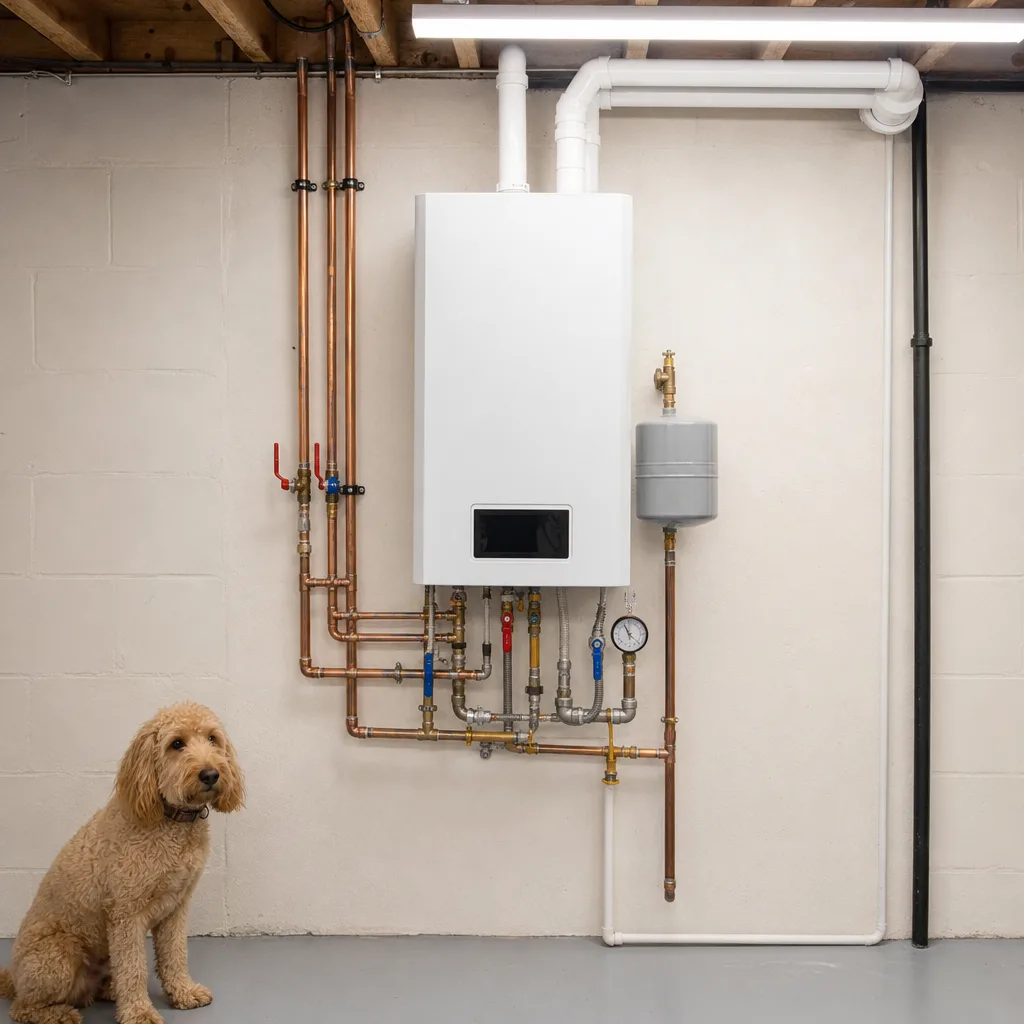
There’s one more common mix-up. A regular water heater is a tall, round tank that makes hot water for your showers and sinks. It doesn’t heat your rooms. If the tank is leaking or your showers have gone cold, you need water heater repair or replacement, not a boiler. The exception is a combi boiler, a compact wall-hung unit that heats your rooms and your tap water too. If you have one of those, it belongs on this page.
Still not sure? Snap a photo of the unit, its label, and the pipes or ducts coming off it. The model number on the data plate tells a technician exactly what you have. It also tells them roughly how old it is, which matters when you’re deciding whether to repair or replace.
If you run a business in Carrollton, the question looks a little different. Office buildings, schools, and multi-unit properties often use boilers for hydronic heat. In that case, the real question isn’t which system you have. It’s whether your current boiler still makes sense for the building. That’s what the rest of this page helps you decide.
Signs Your Boiler Needs Replacement, Not Repair
One bad part doesn’t mean you have a bad boiler. A failed circulator pump, a sticky pressure relief valve, or a worn igniter can usually be swapped out, and the boiler keeps going for years. Replacement makes sense when the trouble is in the heart of the unit. That means the heat exchanger or the sections that hold the water, or a long string of failures that keeps getting worse.
Here are the signs that point to replacement:
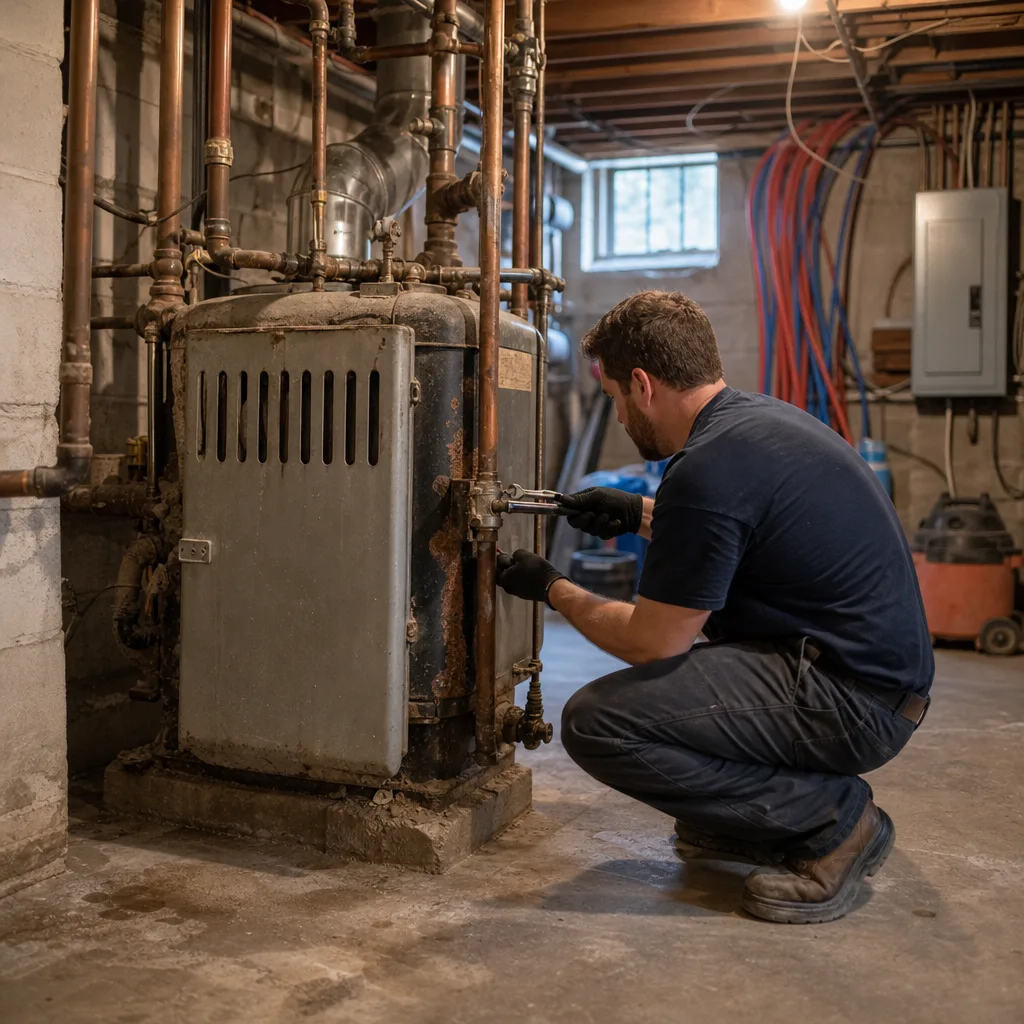
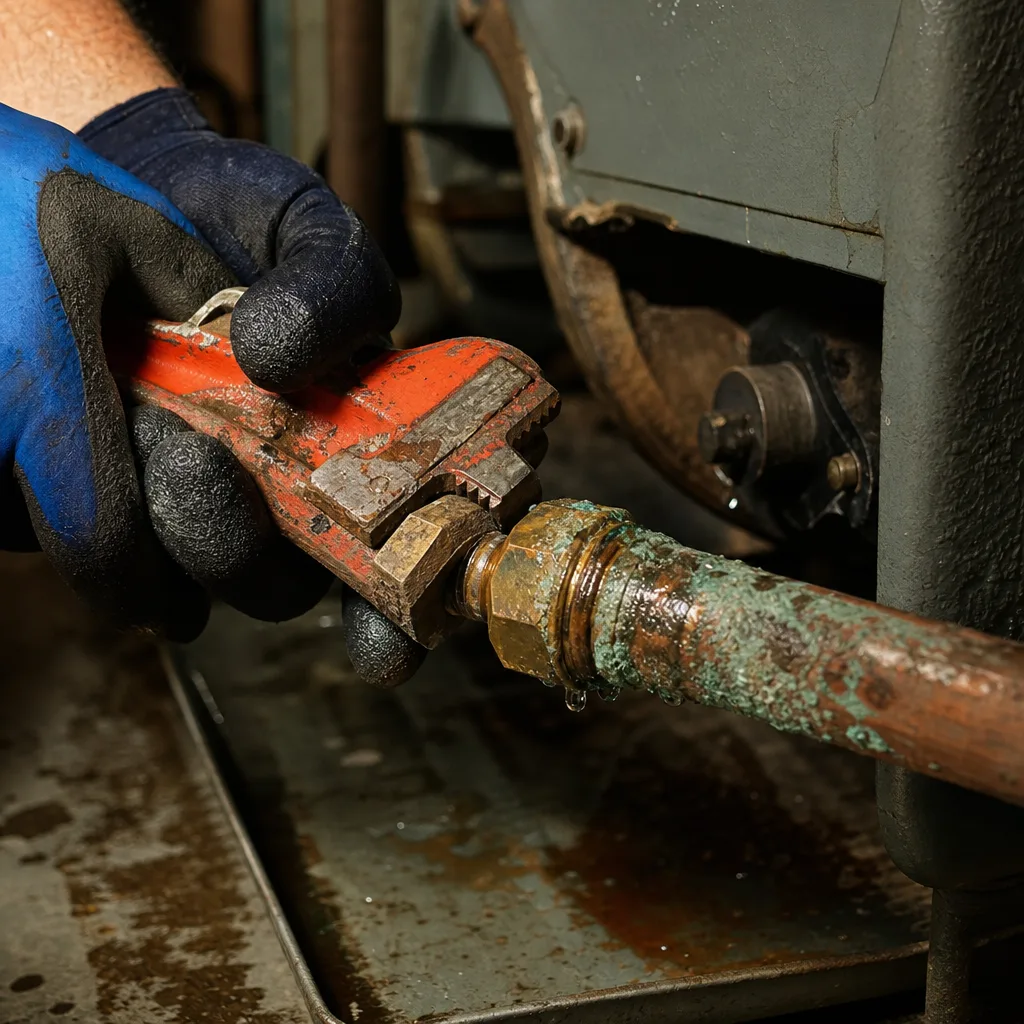
- Water seeping from the boiler body itself. A drip at a fitting or valve is a repair. Rust, weeping, or crusty stains on the cast iron sections or heat exchanger usually mean the metal is failing, and that part often isn’t worth replacing on an older unit.
- A cracked heat exchanger. This is the part that moves heat from the flame into the water. Once it cracks, the repair cost often comes close to the cost of a new boiler.
- You keep adding water. If the pressure gauge keeps dropping and you’re refilling the system again and again, water is escaping somewhere. Sometimes it’s a fixable pipe. Sometimes it’s the boiler.
- Repair calls stack up. One service call in a few years is normal. Several in a single heating season tells you the whole unit is wearing out, not just one part.
- Parts are hard to find. On older boilers, some parts get discontinued. When a tech has to hunt for a part or rig a workaround, the next breakdown may leave you without heat for a while.
- Gas bills climb but your habits don’t. An aging boiler burns more fuel to make the same heat.
- Banging, rumbling, or a kettle-like sound that comes back after the system is flushed. That noise often comes from mineral scale inside the boiler.
That last one matters around here. North Texas has hard water, and the minerals in it settle inside boilers as scale. Scale acts like a blanket between the flame and the water. The boiler works harder, runs hotter, and wears out faster. A good flush can help. But if the scale has already damaged the heat exchanger, flushing won’t bring it back.
Age plays a part too. The data plate you found earlier tells you roughly how old the boiler is. A common rule of thumb works well here. If one repair costs about half of what a new boiler would, and the unit is already near the end of its life, replacement is usually the better use of your money. If the boiler is fairly young and the problem is a single part, fix it.
To be fair, some problems sound scary but are usually repairs. No heat because the pilot or igniter won’t light. A pump that hums but doesn’t move water. A thermostat or control that stopped talking to the boiler. Low pressure from a small leak at a valve. None of these on their own mean you need a new boiler.
If you own or manage a building in Carrollton, add one more question: what does downtime cost you? A boiler that fails during a sudden winter cold front leaves your tenants, staff, or students cold until it’s fixed. If your boiler has needed emergency repairs more than once, planning a replacement on your schedule usually beats waiting for the next breakdown to make the choice for you.
Whoever looks at your boiler should be able to show you the problem. Ask them to point to the leak, the crack, or the worn part, and to explain why it’s a repair or a replacement. A straight answer you can see with your own eyes is the one to trust.
When Repair or Maintenance Makes More Sense Than Replacement
Plenty of boilers that seem done really just need some care. Before you spend money on a new one, rule out the cheap fixes. Some of them you can check yourself in five minutes.
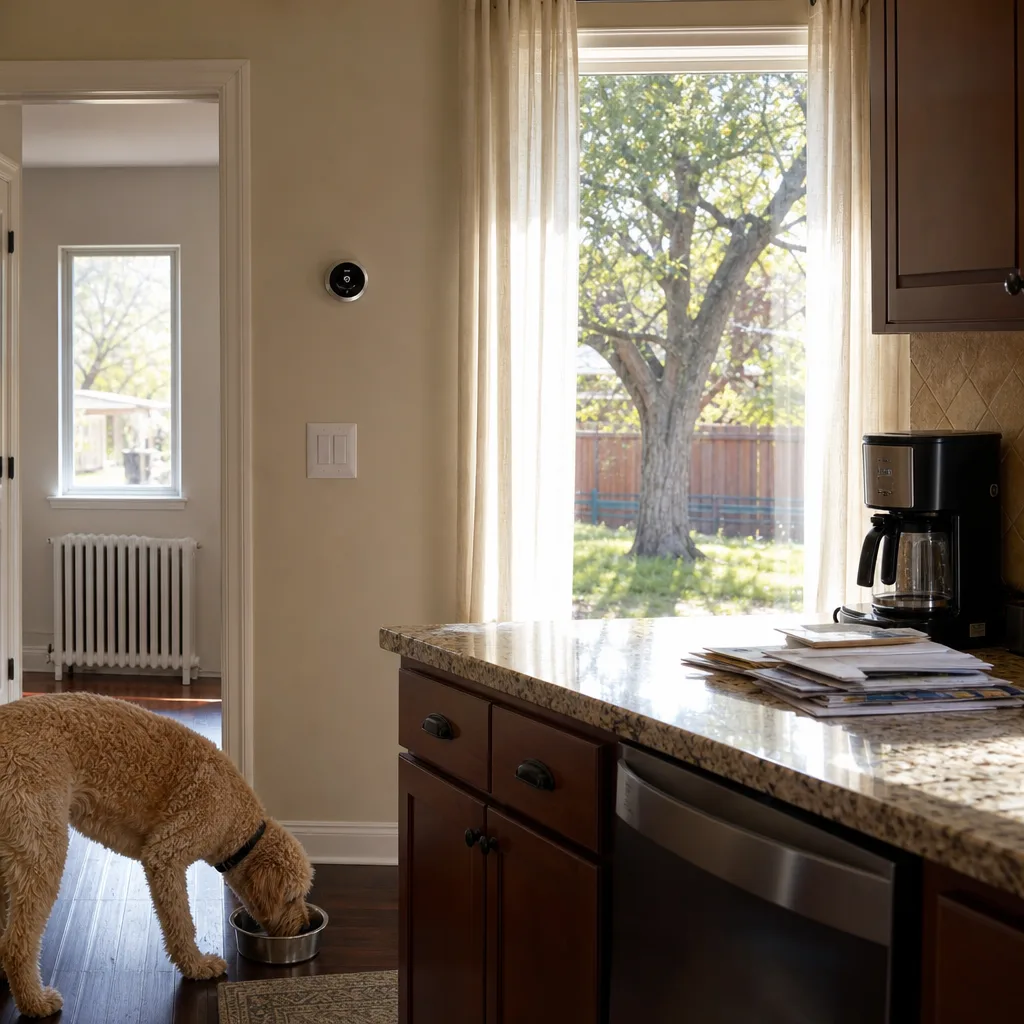
Start with the basics. Make sure the thermostat is set to heat and set a few degrees above room temperature. If it runs on batteries, swap them. Then find the boiler’s power switch. It often looks like a regular light switch on the wall near the unit, and it’s easy to bump off by accident. Check the breaker too. Last, read the pressure gauge and write the number down. You don’t need to fix anything. That one number helps a technician figure out what’s going on much faster.
Some problems look like a dying boiler but usually come down to upkeep:
- Some radiators get hot while others stay cold, or they’re cool at the top. Trapped air in the pipes is a common cause, and it can be bled out.
- The boiler turns on and off every few minutes. A waterlogged expansion tank or a control that’s set wrong can cause this, and neither one means the boiler is worn out.
- Gas bills crept up over a few winters. A burner that hasn’t been cleaned or adjusted in years wastes fuel. A tune-up can bring a lot of that back.
- The pressure relief valve drips now and then. Sometimes the system pressure is just set too high, and that’s a quick adjustment.
If your boiler is fairly young and hasn’t been serviced in a while, start with regular boiler maintenance and see how it runs. Hard water makes this matter even more around here, since the scale we talked about earlier builds up slowly. Catching it early is how you keep the heat exchanger healthy.
There are also good reasons to wait, even on an older boiler that’s starting to show its age:
- It still runs safely and only needs small repairs. North Texas winters are short, so an older boiler doesn’t log as many hours as one up north. If it gets you through the season without trouble, you have time to plan.
- You’re selling soon. If the boiler is safe and working, a repair may be the smarter spend. The next owner may have their own plans for the heat.
- You’re planning a remodel or building changes. If you’re adding rooms, closing off space, or renovating floors, wait. A new boiler should be sized for the building you’ll have, not the one you have today.
- It’s late in the heating season. If a repair gets you to spring, you can replace it in the warm months. You’ll have time to compare options, and you won’t be rushed by a cold house.
Here’s the honest bottom line. If your boiler is safe, the heat exchanger is sound, and the repairs are small and spread out, keep it running. A new boiler is a big purchase. Make it because the old one is truly failing, not because someone told you it’s old. If a contractor pushes you toward replacement on a boiler that only needed bleeding or a tune-up, get a second look.
Ready when you are – get in touch today.
Call Today, Get Service Today. Xtreme Air Services — Carrollton is ready to help.
Texas Permit Law and Why Licensing Matters for Boiler Work
A boiler replacement is permitted, inspected work. It’s not a simple swap. You’re dealing with a gas line, a flue that carries exhaust out of the building, and a sealed water system that runs under pressure. Each of these has to be set up right, and a permit is how someone outside the job checks that it was.
In Carrollton, the city’s building inspection office handles permits for mechanical and gas work. Rules change over time, so check with the city or ask your contractor which permits your job needs. A good contractor answers that without hesitating. An inspector usually looks at:
- Venting. The exhaust has to leave the building safely, with the right pipe size, pitch, and clearance. A bad vent can let carbon monoxide back into your home.
- Gas connections. The line, shutoff valve, and fittings need to be tight and sized for the new boiler.
- The pressure relief valve. This valve lets water out if pressure gets too high. It has to be the right rating and drain to a safe spot.
- Combustion air. The boiler needs enough fresh air to burn cleanly, especially when it sits in a closet or small room.
Skipping the permit can come back to bite you. Unpermitted work can cause trouble when you sell, and it can raise questions with your insurance if something goes wrong later. On a gas appliance, that second set of eyes is worth having.
Commercial properties have an extra layer. In Texas, many boilers in businesses, schools, and apartment buildings fall under the state boiler program run by the Texas Department of Licensing and Regulation. That program can require inspections and an operating certificate on top of the city permit. If you manage a building, ask about both before work starts so a new boiler doesn’t sit unused while it waits on paperwork.
Licensing matters for the same reason. In Texas, heating work falls under state HVAC licensing, and gas piping falls under plumbing licensing. A boiler job often touches both. Xtreme Air Services is a licensed and insured HVAC, plumbing, and electrical contractor, and our HVAC license is #TACLA29023C. That means one team can handle the boiler, the gas connection, and the wiring, with no handoff between companies.
Before you hire anyone, ask these questions:
- What’s your Texas license number, and can I look it up?
- Who pulls the permit, and is the permit fee in this quote?
- Will the job be inspected, and will you be here for the inspection?
- If the venting or gas line doesn’t meet current code, what will it take to fix it, and what will it cost?
That last question is about money as much as safety. In our pricing, permits and code corrections are not included unless the quote says so. On an older boiler, the flue or gas line may need updates to pass inspection. You should know that up front, in writing, before you say yes. If a contractor says a permit isn’t needed, ask why. If the answer is vague, keep looking.
Watch Our Video
See How We Handle Boiler replacement in Carrollton
Xtreme Air Services — Carrollton
What Happens During a Boiler Replacement
A boiler replacement isn’t just pulling one box out and setting another in its place. Most of the work that decides how well your new boiler runs happens before it’s installed and right after it’s turned on. Here’s what a well-run job looks like, step by step.
First comes sizing. A new boiler should match how much heat your home or building loses on a cold day. That isn’t the same as copying the number off the old data plate. Your old boiler may have been oversized from the start, or your building may have changed since then. New windows, added insulation, or a closed-off wing all change what you need. An oversized boiler turns on and off too often, wastes gas, and wears out sooner. A good installer looks at square footage, windows, insulation, and how many radiators or zones you have before recommending a size.
Next, you should get a written quote that spells out what’s included. For a standard like-for-like job, our quotes cover the equipment and materials, professional installation, standard connections, startup and testing, and haul-away of the old unit. If your venting or gas line needs updates to pass inspection, that should show up on paper as a separate item before work starts, as we covered in the permit section.
On install day, the work usually follows this order:
- Shut down and drain. The gas and power to the old boiler get turned off, and the water is drained from the system.
- Remove the old boiler. It’s disconnected from the pipes, gas line, flue, and wiring, then carried out. Cast iron boilers are heavy, so clear a path from the boiler to the door if you can.
- Set the new boiler. It goes in place, level and with the right clearances around it for service and airflow.
- Connect everything. The water piping, gas line, vent, and controls are hooked up to the new unit.
- Fill and purge. The system is refilled with water and the air is bled out of the pipes so every radiator or floor loop heats evenly.
- Start up and test. The boiler is fired, checked for gas and water leaks, and adjusted so it burns cleanly and holds the right pressure and temperature.
That fill step matters more here than in a lot of places. Because North Texas water is hard, ask what’s going into your system when it’s refilled. A new heat exchanger is the cleanest it will ever be, and keeping scale off it from day one is how you protect what you just paid for.
Before the installer leaves, you should get a short walkthrough. They should show you where the shutoffs are, what normal pressure looks like on the gauge, and how the thermostat or controls work. Write that pressure number down next to the one you noted on the old boiler. Then the city inspection takes place on the permitted work.
If you manage a building in Carrollton, plan the timing with your tenants or staff. Your heat will be off while the old boiler is out and the new one is being connected and tested. Scheduling the swap in the warmer months, or during a mild stretch, keeps that downtime from turning into a cold-weather problem.
Frequently Asked Questions
Common questions about Boiler replacement
Who installs boilers, plumbers or HVAC techs?
Boiler work touches both trades, since the job involves heating equipment and gas piping. In Texas, heating falls under state HVAC licensing while gas line work falls under plumbing licensing. That’s why it helps to hire a contractor licensed for both, so one team handles the boiler, the gas connection, and the wiring without passing you between two companies.
Who should I call if my boiler stops working?
Call a licensed contractor who can diagnose whether it’s a simple repair or a sign you need replacement. Before you call, check a few easy things yourself: make sure the thermostat is set to heat, check the power switch near the unit, and look at the breaker. Write down the pressure gauge reading too, since that number helps a technician figure out the problem faster over the phone or on the first visit.
Is it expensive to fix a boiler?
It depends on what’s broken. A bad circulator pump, a sticky pressure relief valve, or a worn igniter are normal repairs that don’t cost much compared to a new boiler. But a cracked heat exchanger or rusted-through cast iron sections often cost close to the price of replacement, since those are the core parts of the unit. A good rule of thumb: if one repair runs about half the cost of a new boiler on an aging unit, replacement is usually the smarter spend.
Ready to Get Started?
Call (469) 269-6099 Today, Get Service Today.