


One-Stop Commercial Service in Fort Worth: One Team for HVAC, Refrigeration, Plumbing, and Electrical
One licensed team for your building's HVAC, refrigeration, plumbing and electrical, instead of juggling four contractors.
What’s Covered on This Page
- What One-Stop Commercial Service Covers
- Why Multi-System Buildings Need One Accountable Team
- How Pricing and Scope Are Set for Commercial Buildings
- Licensing That Covers Every Trade Involved
- When a Single-Trade Specialist Is the Better Call
- Do you handle commercial refrigeration emergencies, or only HVAC and plumbing?
- What if my building only has one or two systems that ever give me trouble?
- Can I keep my current refrigeration or electrical contractor and only add you for the rest?
- Who handles grease trap pumping or hood cleaning if that’s not part of your service?
What One-Stop Commercial Service Covers
Most businesses don’t run on just one system. A restaurant needs cold walk-ins, working hoods, hot water, and enough power to run it all at once. An office needs steady cooling, working restrooms, and lights that stay on. When each of those has its own contractor, you end up as the go-between. One-stop service hands that job back to us.
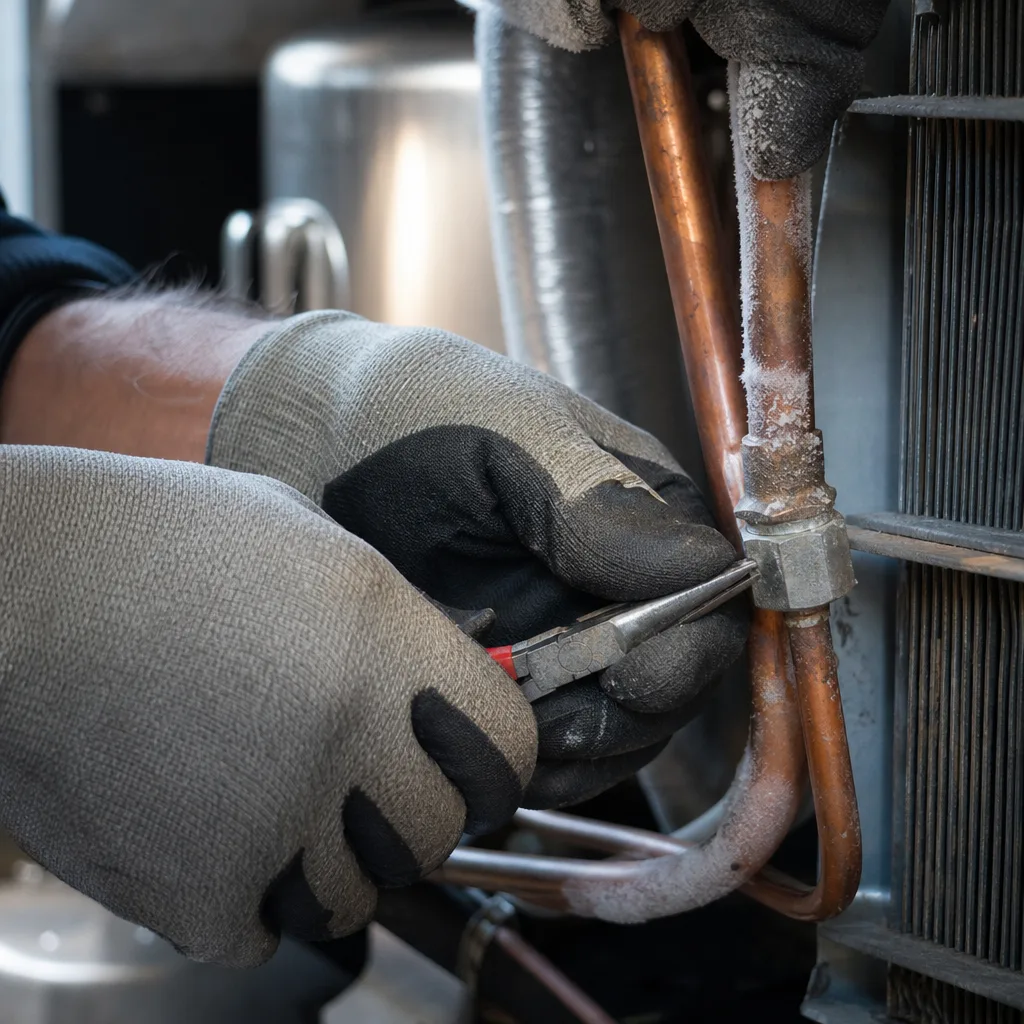
Here’s what can fall under one agreement, depending on what your building has:
- Heating and cooling: commercial HVAC repair and maintenance, rooftop unit (RTU) service, boiler service, building automation and controls, and commercial ductwork.
- Refrigeration: walk-in cooler repair, walk-in freezer repair, ice machine repair, and refrigeration leak detection.
- Kitchen air: commercial kitchen ventilation, exhaust hoods, and make-up air systems, which bring in fresh air to replace what the hood pulls out.
- Plumbing: commercial plumbing, commercial water heaters, drain cleaning, and backflow testing.
- Electrical: commercial electrical work, electrical troubleshooting, panel repair, and dedicated circuits for new equipment.
- Backup power and air quality: commercial generator installation and commercial duct cleaning.
You don’t need every item on that list to make this worth it. A small retail shop might only need HVAC, plumbing, and electrical. A grocery or restaurant might lean hard on refrigeration. We set the scope per building, so the plan matches what’s on your roof, in your kitchen, and behind your walls.
The real value shows up when problems cross trades. Say your walk-in cooler stops holding temperature on a Friday afternoon. Is it the refrigeration system, a tripped circuit, or a clogged drain line backing up? With separate vendors, the refrigeration tech may tell you it’s electrical, and then you’re waiting on a second call. With one team covering all of it, there’s no handoff and no finger-pointing. The people looking at the problem can follow it wherever it leads.
That matters in Fort Worth, where long, hot summers put rooftop units and condensers under heavy load for months at a time. Cooling equipment working that hard pulls more power and adds strain to your electrical system. When one team knows both, it’s easier to spot how one system is affecting another.
To be clear about the edges: what’s included is coordinated multi-trade service under one vendor. Exclusions are itemized in the scope you agree to, so you’ll know up front what isn’t covered. Large installs, like a full rooftop unit replacement or a new walk-in, are quoted separately. Financing is available on qualifying installations and larger jobs, on approved credit.
Pricing is a custom quote. It depends on your building size, the number of systems, how often you want service, and the mix of trades covered. That’s why we look at your building before we put a number on it.
Why Multi-System Buildings Need One Accountable Team
When you hire a separate contractor for each trade, someone has to run the project. That someone is usually you. You keep three phone numbers, line up three schedules, and read three invoices. When the fix doesn’t hold, you’re the one stuck asking who’s responsible.
One accountable team changes that. If we work on your HVAC and it affects your electrical, that’s still ours to sort out. You don’t have to referee between vendors or pass notes from one tech to the next. You make one call, and one company owns the result.
Here’s where that pays off. A hard winter freeze in North Texas can hit several systems in the same morning. Your heat struggles to keep up, a pipe in an exterior wall splits, and a breaker trips as space heaters come on across the building. With separate vendors, you’re calling around and waiting in three lines while your doors stay closed. With one team, you call once, and we decide what to tackle first so your business can open again.
Separate vendors also tend to mean separate trip charges. Each contractor who comes out usually bills for showing up. Our service-call fee is $26 to $99, and it’s credited toward the repair if you go ahead with Xtreme Air Services. Our pricing is upfront, so you see the number and approve it before any work starts. There’s no extra charge for nights or weekends, either.
Trust matters more when one company is working on everything in your building. Here’s what you can check before you decide:
- Licensed and insured for HVAC, plumbing, and electrical work, including HVAC License #TACLA29023C
- Background-checked technicians working in your space and around your staff
- A real person who answers the phone around the clock, with same-day service available
- Trane Comfort Specialist, which matters when your rooftop units or air handlers need repair or replacement
- A 4.8-star reputation across more than 2,900 reviews on Google, Angi, and HomeAdvisor
In Texas, HVAC, plumbing, and electrical work each need their own license. Whoever you hire, ask to see the license for every trade they’ll touch. A one-stop provider should be able to show you all of them.
Now the honest part. One-stop service isn’t the right move for every building. If you only have one system that ever needs attention, like a single rooftop unit with nothing else going on, a regular HVAC maintenance plan may be all you need. If you already have an in-house maintenance crew that handles plumbing and electrical, you might only want outside help for refrigeration or HVAC. And if you lease your space and the landlord covers mechanical systems, read your lease first. You may not be the one who should be hiring anyone.
Where one accountable team pays off is in buildings where the systems lean on each other and you can’t afford a long back-and-forth between contractors. Restaurants, grocery stores, medical offices, and multi-tenant buildings fit that picture. When downtime costs you customers, inventory, or tenants, having one team own the whole problem is what gets you running again faster.
How Pricing and Scope Are Set for Commercial Buildings
You already know your quote depends on your building. The next question is how to tell whether a number is fair and easy to compare with other offers. That starts with knowing how commercial service is usually priced.
- Pay per call: You call when something breaks and pay for that visit and repair. This works for a building with little equipment, but your costs jump around and are hard to plan.
- Scheduled maintenance agreement: Set systems get set visits on a set schedule. It’s easier to budget, and small problems can get caught before they shut you down.
- A mix of both: Scheduled care covers the systems you can’t afford to lose, and other repairs get handled as they come up.
Our one-stop commercial service is quote-based and set per building. The right model depends on what you run and how much risk you’re willing to carry.
How often you want service is the choice you control most. A restaurant running walk-ins, hoods, and rooftop units seven days a week has very different needs from an office running a few units on weekday hours. Fewer visits bring the quote down, but they also leave more to chance during a Fort Worth summer or a sudden freeze. It’s fine to start lean and add visits later if a system keeps giving you trouble.
You’ll get a more accurate quote faster if you have a few things ready when we look at your building:
- A rough list of your equipment, such as rooftop units, walk-in coolers and freezers, ice machines, water heaters, boilers, and generators
- The approximate age of each system and when it was last serviced
- Any repair records, or the problems that keep coming back
- Your business hours, plus the times work can’t happen, like a lunch rush or patient hours
- Your lease, if you rent, so it’s clear which systems are yours to maintain
Before you sign with any provider, us included, ask these questions:
- What’s in scope, and what’s listed as excluded?
- What kind of job triggers a separate quote?
- How are night and weekend calls billed?
- Who do I call when something breaks, and will a real person answer?
- Can you show me a license for every trade you’ll work on?
A good quote reads plainly. You should be able to point to any system in your building and know whether it’s covered. If you can’t tell, keep asking until you can. You’ll get straight answers from us, and you’ll approve the price before any work starts.
Call 817-677-1907
Not sure what your One-stop commercial service project needs? Ask us.
Call Today, Get Service Today. Xtreme Air Services — Fort Worth is ready to help.
Licensing That Covers Every Trade Involved
Licensing gets real when one job crosses trades. Picture adding a new walk-in cooler to your kitchen. The box needs refrigeration work. It also needs a dedicated electrical circuit, and the condensate drain has to tie into your plumbing. That’s three licensed trades on a single project. If the company you hired only holds one of those licenses, part of the work is either handed off to someone you’ve never met or done by someone who isn’t licensed for it.
That gap matters for a few reasons a business owner can’t ignore:
- Permits. Bigger commercial jobs in Fort Worth, like replacing a rooftop unit or upgrading an electrical panel, generally need a city permit. Permits are pulled under the licensed trade doing the work. No license for that trade means no permit, or a permit pulled by someone else.
- Inspections. If an inspector, landlord, or insurance adjuster asks who did the work, you want a clear answer backed by a license, not a shrug.
- Insurance claims. If a water leak or electrical problem damages your space or a tenant’s, unlicensed work can make the claim harder to settle.
- Refrigerant. Handling refrigerant takes federal certification, separate from the state HVAC license. Any tech working on your walk-ins, ice machines, or rooftop units should have it.
Here’s what you can check on us. Xtreme Air Services is licensed and insured for HVAC, plumbing, and electrical work. Our HVAC work is done under HVAC License #TACLA29023C, and our plumbing work falls under Master Plumber Larry Breedlove. When we take on a job that runs from your roof to your breaker panel to your floor drains, the licenses for each piece sit with the same company that’s accountable for the result.
You don’t have to take our word for it, and you shouldn’t take anyone’s. HVAC and electrical licenses in Texas can be checked on the Texas Department of Licensing and Regulation’s online license search. It takes a couple of minutes. Look for three things: the license is active, the name matches the company on your quote, and the license type fits the work being done.
A few more questions are worth asking any one-stop provider before you sign:
- Will any trade on my building be subcontracted? If so, to whom, and are they licensed and insured too?
- Whose license will the permit be pulled under for larger jobs?
- Can you send a certificate of insurance before work starts?
- Are the technicians coming into my building background-checked?
That last one matters more in commercial spaces than people expect. Techs may be working near your cash room, your stockroom, patient areas, or after hours with a key to your door. Our technicians are background-checked, so you know who’s in your building.
One vendor only makes your life easier if that vendor is licensed for everything it touches. Otherwise you’ve traded three phone numbers for one phone number with hidden handoffs behind it. Check the licenses, ask about subcontractors, and get clear answers in writing. Then you’ll know the team owning your building’s problems can legally fix every one of them.
Watch Our Video
See How We Handle One-stop commercial service in Fort Worth
Xtreme Air Services — Fort Worth
When a Single-Trade Specialist Is the Better Call
One-stop service fits a lot of buildings, but not every job. Some work belongs with a specialist who does nothing else. Some of it isn’t our trade at all. Here’s when calling someone else is the smarter move.
- Fire protection systems. Fire sprinklers, fire alarms, and the fire suppression system above your kitchen hood are their own specialty, with their own licensing and inspection schedules. We work on commercial kitchen ventilation and exhaust hoods, but the suppression system inside that hood needs a fire protection company.
- Grease trap pumping and hood cleaning. Pumping your grease trap and scraping built-up grease out of your hood ducts on a regular schedule is a job for companies set up for that work. A plumber is the right call when a line backs up, not for routine pumping.
- Leased or vendor-owned equipment. Many restaurants and stores don’t own their ice machine, beverage cooler, or soda system. If the supplier owns it and services it under your agreement, call them first. Having an outside tech work on it could cause trouble with that agreement.
- Equipment made to be serviced by its maker. Refrigeration built into medical or lab equipment is often meant to be serviced only by the manufacturer’s own techs. Check your paperwork before you call anyone.
- Roof leaks around a rooftop unit. After a North Texas hailstorm, water coming in where a rooftop unit sits could be a clogged unit drain or damaged roof flashing around the curb. An HVAC tech can check the unit itself. If it’s the roof seal that failed, that’s a roofer’s job.
A one-time job doesn’t need a multi-trade plan, either. If you just need one electrical panel upgraded or one commercial water heater replaced, and nothing else in your building gives you trouble, hire for that one job from whoever you trust in that trade. A regular service call handles it fine. You don’t need an agreement covering systems that are running well.
And if a specialist already knows your equipment and does good work, keep them. A refrigeration tech who has serviced your walk-ins for years knows how they act on a 105-degree afternoon and which door gasket always goes first. That knowledge is worth a lot. Don’t break up a relationship that works just to have one less phone number.
Here’s a simple test. If the problem lives in one system and the fix stays inside one trade, a specialist is a fine choice. One-stop service earns its keep when problems cross trades and the systems in your building lean on each other. If yours don’t, you can skip it.
Call 817-677-1907
Frequently Asked Questions
Common questions about One-stop commercial service
Do you handle commercial refrigeration emergencies, or only HVAC and plumbing?
Yes, refrigeration is part of our one-stop commercial coverage. Walk-in cooler repair, walk-in freezer repair, ice machine repair, and refrigeration leak detection all fall under the same agreement as your HVAC, plumbing, and electrical work. That matters when a cooler problem turns out to be electrical or a drain backup instead, since the same team can chase it down without a second call.
What if my building only has one or two systems that ever give me trouble?
A one-stop agreement may not be worth it for you. If you only have one rooftop unit with nothing else acting up, a regular HVAC maintenance plan likely covers your needs. One-stop service earns its keep in buildings like restaurants or grocery stores, where HVAC, refrigeration, plumbing, and electrical all lean on each other and downtime costs you customers or inventory.
Can I keep my current refrigeration or electrical contractor and only add you for the rest?
Yes, you can mix and match based on what’s working. If a specialist already knows your equipment and does good work, there’s no reason to replace them. Scope gets set per building, so you could cover HVAC, plumbing, and electrical under one agreement while keeping a trusted refrigeration tech for your walk-ins.
Who handles grease trap pumping or hood cleaning if that’s not part of your service?
That work needs a company set up specifically for grease trap pumping and hood cleaning, not a general commercial service provider. We work on commercial kitchen ventilation and exhaust hoods themselves, but routine grease trap pumping and duct cleaning on a set schedule is a separate specialty. A plumber is the right call only when a line backs up.
Ready to Get Started?
Call (817) 677-1907 Today, Get Service Today.