


Sewer Line Repair in Frisco: Know What’s Wrong Before You Dig
Sewer line problems confirmed before anyone digs, with a step-by-step repair and a quote that shows what's included.
What’s Covered on This Page
- Signs Point to a Sewer Line, Not Just a Clogged Drain
- Frisco’s Clay Soil Is a Common Cause of Line Damage
- How Sewer Line Repair Works, Step by Step
- What’s Included in Your Sewer Line Repair Quote
- Why Pipe Depth and Access Change the Repair Method
- Does homeowners insurance cover sewer line repair?
- Is it worth fixing a sewer line instead of replacing it all?
- Can a broken sewer line cause damage besides backups?
Signs Point to a Sewer Line, Not Just a Clogged Drain
Most drain trouble starts small. If only your kitchen sink is slow, the problem is almost always in that one pipe, and a plunger or a basic drain cleaning will often fix it. Sewer line repair is a different job. It’s for the single main pipe that carries everything from your home out to the city line. When that pipe is cracked, sagging, or full of roots, every drain in the house feels it.
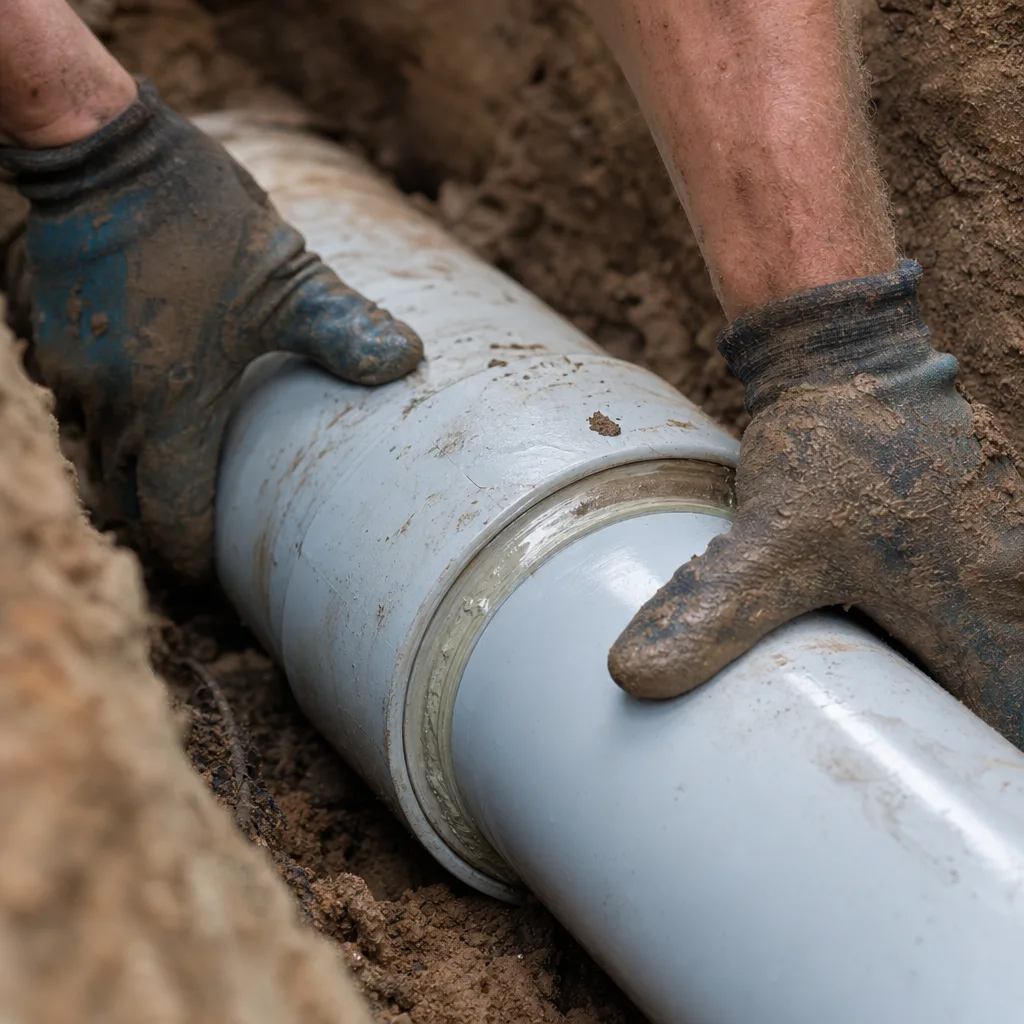
Here’s what tends to point past a simple clog and toward the main line:
- More than one fixture backs up at the same time, like a toilet and a tub together.
- Water comes up in your shower or tub when you flush a toilet or run the washing machine.
- Toilets gurgle or bubble when another drain is running.
- You smell sewage inside the house or out in the yard, and it doesn’t go away.
- A patch of lawn over the sewer path stays soggy, or grows greener and faster than the rest.
- Your outdoor cleanout cap is wet, or water and waste come up from it.
- A clog keeps coming back a few weeks after it was cleared.
That last one matters more than people think. If you’ve had the same drain snaked twice and it backs up again, clearing it isn’t fixing the cause. Something in the line keeps catching waste, and it’s often a break or a root mass that a cable only pokes through.
In North Texas, the ground itself plays a part. Our clay soil swells when it’s wet and shrinks during long, dry summers. That movement can shift buried pipe, pull joints apart, or create a low spot where waste settles. Tree roots go looking for water, so once a joint opens, they find their way in. A line can look fine for years and then start showing signs after a hard drought or a wet spring.
Picture this. You run a load of laundry, and a few minutes later there’s dirty water standing in the downstairs shower. Nothing is wrong with the shower. The water simply has nowhere to go, so it comes up at the lowest drain in the house. That’s a classic main line sign.
Still, signs only tell you where to look. They don’t tell you what’s broken or exactly where. A sewer camera inspection sends a small camera down the line so you can see the actual problem, whether that’s a crack, a sag, or roots. That way, the repair targets the damaged section instead of guessing. If the camera shows the line is sound and you’ve just got a stubborn clog, you’ll know you don’t need a sewer repair at all.
If you’re seeing sewage come up into your home, stop running water and flushing until the line is checked. It keeps a messy situation from getting worse.
Frisco’s Clay Soil Is a Common Cause of Line Damage
A lot of Frisco homeowners are surprised to hear their sewer line has a problem. The house might be 15 or 20 years old, with plastic pipe that won’t rust. So how does it break? In most cases the pipe itself isn’t the weak spot. It’s the ground around it.
Clay soil moves with the weather, as we covered above. A sewer line is a long, rigid run of pipe sitting in that moving ground, and it only works if it keeps a steady downhill slope all the way to the city tap. When the soil pushes, settles, or pulls away, the line can’t flex much. Something has to give, and it’s usually in one of a few predictable ways.
- A belly, or sag. One stretch of pipe settles lower than the rest. Water and waste pool there instead of flowing on, and solids build up until you get backups.
- An offset joint. Two pieces of pipe shift out of line at the joint, leaving a lip that catches paper and waste.
- A separated joint. The pieces pull apart enough to leave a gap. Sewage leaks into the soil, and roots find the opening.
- A crack or break. Pressure from swelling soil or a shifting slab puts stress on the pipe until it splits, often near a fitting.
There’s one more spot to watch. Most Frisco homes sit on a slab foundation, and the sewer line runs under or out from that slab. When the foundation moves, even a little, the point where the pipe leaves the house takes the strain. A small shift there can open a joint right at the edge of your home.
Newer subdivisions have their own wrinkle. When a line is first buried, the dirt packed back over it can keep settling for years. Add a long dry summer followed by heavy spring rain, and a line that drained fine at move-in can start to sag. Plastic pipe helps against corrosion, but it doesn’t stop the ground from moving.
Here’s why this matters to you. Each type of damage points to a different fix, and the wrong fix can cost you twice.
Take a belly. A trenchless liner follows the shape of the pipe it’s put into, so lining a sagging section just gives you a newer pipe with the same low spot. Waste still pools. Fixing a sag usually means digging up that section and resetting it at the right slope. A cracked pipe or a separated joint on an otherwise straight run is a different story. It may be a good fit for a trenchless repair, depending on the pipe’s condition.
That’s the real value of seeing inside the line first. On a camera, a belly shows up as standing water that sits in one stretch. An offset joint looks like a ledge. Roots show up as a tangle at a joint. Once you know which one you’ve got, and exactly where it is, the repair can be sized to the damaged section, not the whole yard. That’s how you avoid paying for more digging than the problem needs.
How Sewer Line Repair Works, Step by Step
A sewer line repair isn’t a mystery once you see the steps. The repair covers four things: finding the damage, getting to it, fixing it, and testing the line so you know it flows the way it should. Here’s what each step means for your home and your yard.
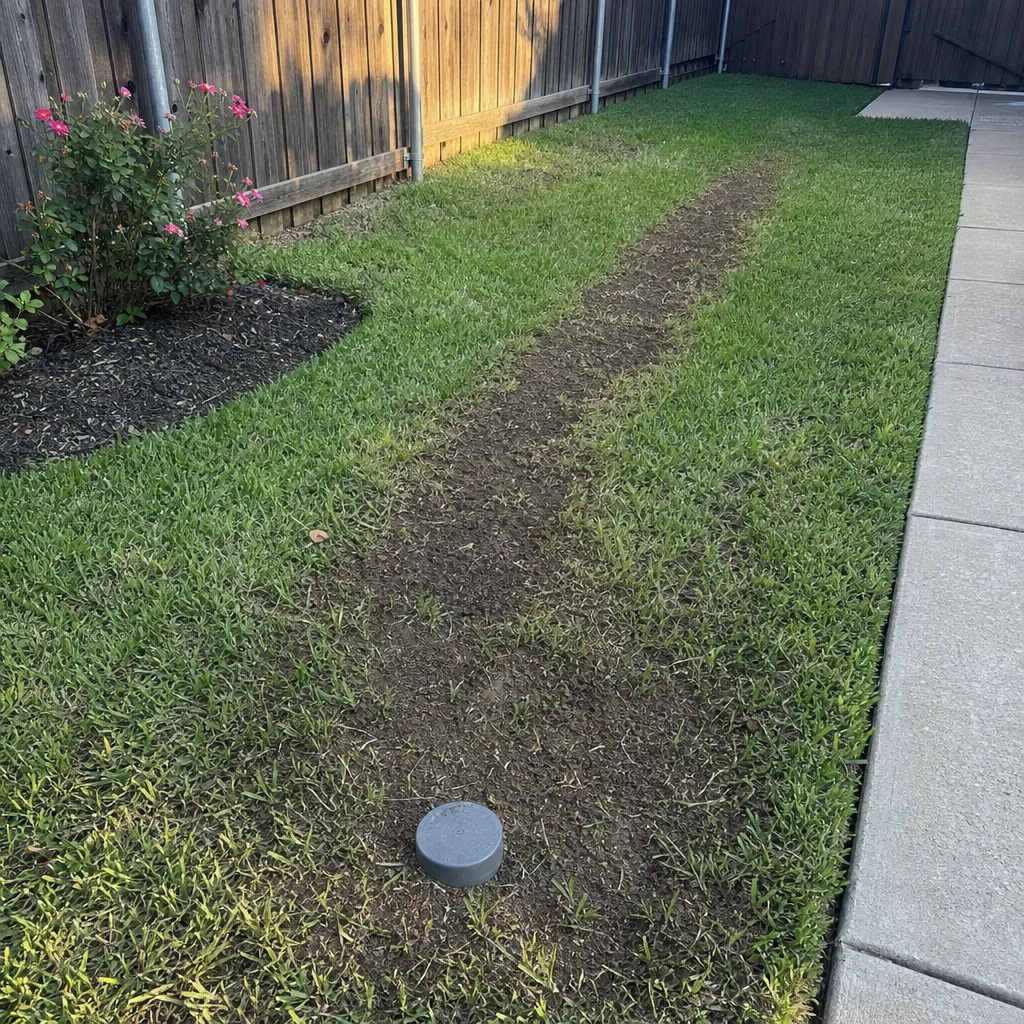
Step 1: Find the exact spot. The camera shows what’s wrong, as we covered above. The next question is where it is underground. Many sewer cameras have a small transmitter in the head. A handheld locator on the surface picks up that signal, so the tech can mark the spot on your lawn and estimate how deep the pipe sits. Depth matters, because a line 3 feet down is a much smaller dig than one 8 feet down.
Step 2: Choose the repair method. This choice depends on the type of damage the camera found. A sag or a badly offset joint usually means digging up that section. A crack or separated joint on a straight run may be a good fit for trenchless repair, which works through the cleanout or a small access hole instead of a long trench. You should hear which method fits your line and why before any work starts.
Step 3: Get ready to dig. Before anyone breaks ground, buried gas, power, water, and cable lines need to be marked so the crew doesn’t hit them. Sewer work can also need a city permit and inspection. Permits aren’t included unless they’re written into your estimate, so ask about them up front.
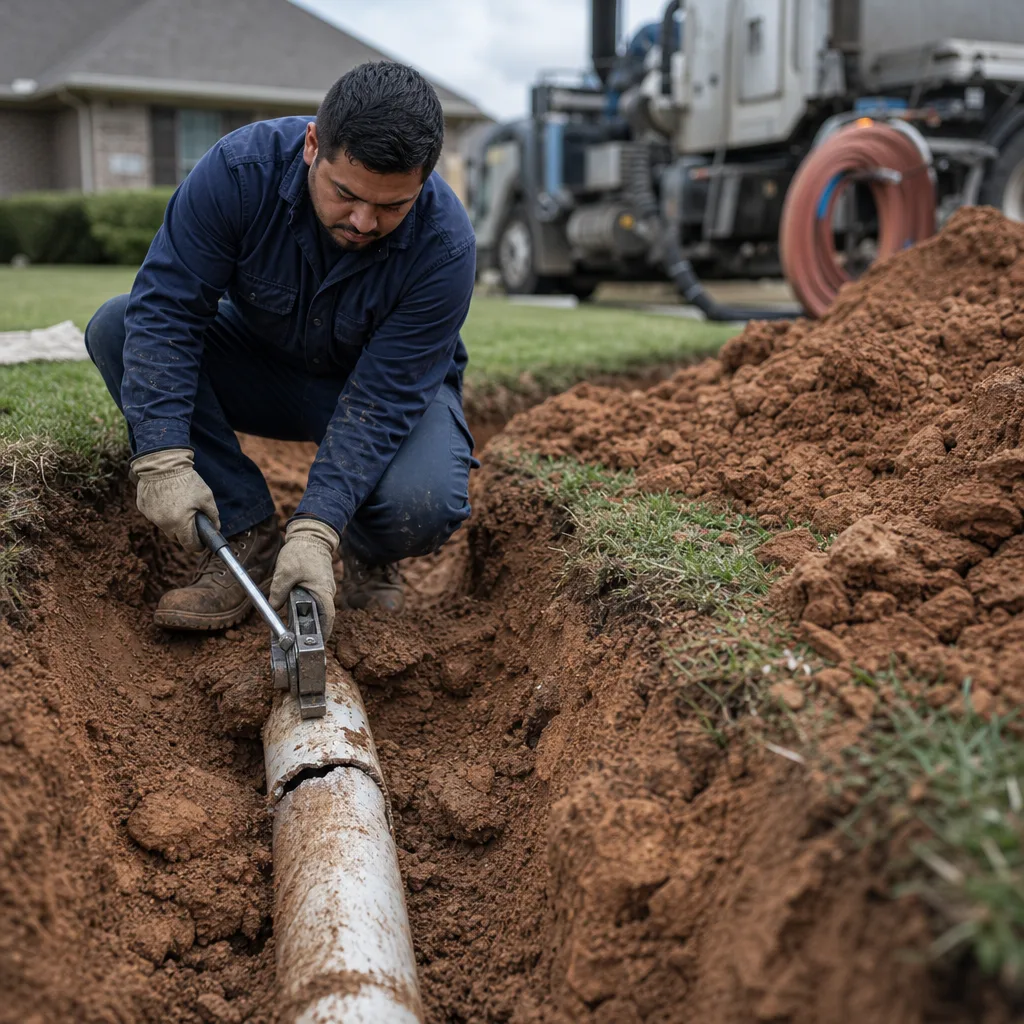
Step 4: Open it up and make the repair. For a dig repair, the crew digs straight down over the marked spot. The goal is a hole just big enough to work in safely, not a trench across the whole yard. Then the repair goes in:
- The damaged section of pipe is cut out.
- New pipe is fitted in with couplings that seal tight to the old pipe on both ends.
- The new section is set on firm bedding at a steady downhill slope, so waste keeps moving toward the city line.
- If roots caused the problem, the root mass is cleared so it doesn’t block the new joint.
If the break sits under your slab, the job gets harder. Getting to the pipe may mean tunneling under the foundation or cutting through the floor, so expect a longer conversation about access before work begins.
Step 5: Test before it’s covered. This is the step that tells you the job worked. The line gets run with water to confirm proper flow, and a second camera pass can show the new section clean and level, with no standing water. Ask to see that footage. It’s your proof the problem is fixed, not just buried.
Step 6: Backfill and clean up. The hole is filled back in and packed down. Know going in that restoring sod, landscaping, a sidewalk, or a driveway isn’t part of the repair. If the dig goes through concrete, plan for that separately. A small, well-placed dig keeps that cost down.
With a dig and replace on one section, your water use is limited while the line is open. Once it passes testing, you can use every drain in the house again.
Need help with Sewer line repair?
Call Today, Get Service Today. Xtreme Air Services — Frisco is ready to help.
What’s Included in Your Sewer Line Repair Quote
Most sewer line repair jobs land between $1,500 and $4,000. That’s for the most common job: finding the damaged section of your sewer line, repairing or replacing it, and checking that it flows the right way. Across all sewer line repairs, the typical range runs from $1,500 to $7,000. Where your job falls depends on what the camera finds and where the damage sits.
You’ll see the price before any work starts. Upfront flat-rate pricing means you approve the number first, and there’s no meter running while the crew digs. There’s also no extra charge for nights or weekends. A backup on a Saturday night costs the same as one on a Tuesday morning.
Here’s what your quote covers:
- Locating the damaged section of the line
- Excavation or other access to reach the pipe
- The repair itself
- Testing to confirm the line flows the way it should
And here’s what isn’t included unless it’s written into your estimate:
- Replacing the full sewer line from the house to the city tap
- Landscaping, sod, or concrete restoration after the dig
- Permits, unless they’re stated in your quote
It helps to know this now rather than find out later. If your repair runs under a driveway or a back patio, plan for that concrete work as its own cost.
Three things move the price up or down. The first is how deep the damaged run is and how long it is. A short break near the surface is a smaller job than a long stretch farther down. The second is access and excavation. Open lawn is easier to dig than a spot under a fence line, a slab, or a mature tree. The third is whether trenchless methods fit your damage. As we covered earlier, a sag usually needs a dig, while some cracks and separated joints can be handled with less digging. Published pricing is based on a dig-and-replace section, so ask how the method affects your number.
There’s a $26 to $99 service-call fee to come out and look at the problem. If you go ahead with the repair, that fee is credited toward the job. For larger repairs, flexible financing is available on qualifying installations and larger jobs, on approved credit.
Whoever you call, these questions will help you compare quotes fairly:
- Can I see the camera footage of the damage?
- Are you fixing one section or replacing the whole line, and why?
- Is the price fixed, or can it change once you dig?
- Are permits and restoration included, or extra?
- How will you test the line before you fill the hole?
A good contractor will answer every one of these without hedging. Licensed and insured, background-checked technicians will walk you through the footage, the method, and the price in plain English. Then you decide.
Watch Our Video
See How We Handle Sewer line repair in Frisco
Xtreme Air Services — Frisco
Why Pipe Depth and Access Change the Repair Method
Once you know what’s broken, two more things decide how it gets fixed: how deep the pipe sits and what’s on top of it. The same crack can be a simple dig in open lawn, or it can make trenchless repair worth a look because a driveway sits right over it.
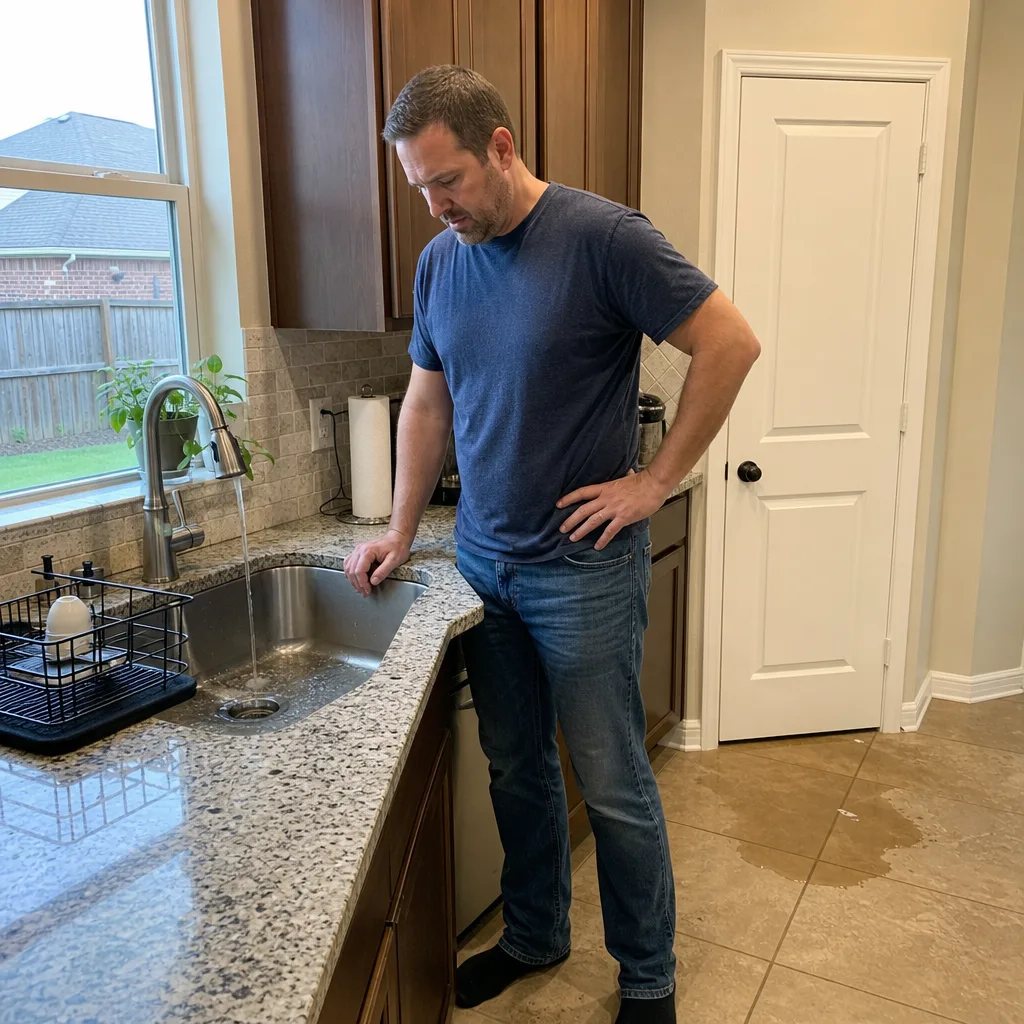
Start with depth. A sewer line has to slope downhill the whole way, so it’s often shallowest near your house and deeper out toward the street. A deeper break means more dirt to move, a wider hole, and more time. Deep holes also need sloped sides or bracing so the walls don’t cave in on the crew. Clay is heavy and sticky when it’s wet and rock hard when it’s dry, so either way, deep digging here is slow work.
Then look at what’s above the pipe. These are the things that most often change the plan:
- A driveway, sidewalk, or patio. Concrete has to be cut out and poured again, and that restoration isn’t part of the repair.
- A mature tree. Digging near the trunk can hurt the tree, and its roots may be part of the problem in the first place.
- A fence, pool deck, or retaining wall that would have to come down to reach the pipe.
- Other buried lines. Gas, water, power, cable, and sprinkler lines near the sewer path mean slower, careful hand digging.
- Your slab. A break under the house brings the access problems we covered in the step-by-step section.
Here’s how that plays out. Say the camera finds a cracked joint about 4 feet down under your front lawn. Digging is usually the simplest choice. You get a hole, a new section of pipe, and some sod to replace. Now move that same crack under the apron of your driveway. Digging means breaking concrete and paying to replace it later. If the pipe is a good fit for trenchless work, going in through the cleanout can leave the driveway alone.
Trenchless isn’t automatic just because access is hard. It needs a way in, usually a cleanout or a small access pit. It also needs a pipe that’s still in good enough shape to work with. If the damage needs a dig, like a sag, then the concrete or the tree may simply have to be part of the job. A good tech will tell you that straight instead of selling a method that won’t hold.
When you’re talking through options, ask two simple questions. How deep is the pipe at the damaged spot? And what has to be removed or restored to reach it? With those answers, you can weigh the cost of digging plus fixing the surface against a trenchless repair, and pick the one that makes sense for your home and your yard.
Frequently Asked Questions
Common questions about Sewer line repair
Does homeowners insurance cover sewer line repair?
Usually not, unless the damage came from a sudden, named event like a burst pipe. Most policies exclude damage from wear, tree roots, or shifting clay soil, since insurers treat that as gradual deterioration rather than an accident. Check your policy’s water and sewer backup rider, since some homeowners add that coverage separately.
Is it worth fixing a sewer line instead of replacing it all?
Yes, if the damage is limited to one section and the rest of the pipe is in good shape. A camera inspection shows whether you’re dealing with one bad joint or a line that’s failing in multiple spots. Repairing just the damaged section costs less and avoids digging up pipe that’s still working fine.
Can a broken sewer line cause damage besides backups?
Yes, a leaking sewer line can soften the soil under your home and contribute to foundation movement over time. In Frisco’s clay soil, a leak near your slab adds extra moisture that the clay wasn’t expecting, which can make existing foundation shifting worse. That’s one more reason to get a camera inspection as soon as you notice signs of a sewer problem.
Ready to Get Started?
Call (469) 490-3595 Today, Get Service Today.