


Boiler Installation in Irving: Know What’s Included Before You Decide
Boiler installs for buildings that heat with water, with what's included and what drives the cost explained.
What’s Covered on This Page
- Signs Your Boiler Needs Full Replacement, Not Another Repair
- What a Boiler Installation Includes From Start to Finish
- Residential and Commercial Boiler Installation Under One Mechanical Division
- What Drives Boiler Installation Cost Up or Down
- Permits and Licensing Questions to Ask Before You Hire
- Can I keep using my boiler while I wait to schedule installation?
- Do I need to be home during the boiler installation?
- What happens to my old boiler after it’s removed?
Signs Your Boiler Needs Full Replacement, Not Another Repair
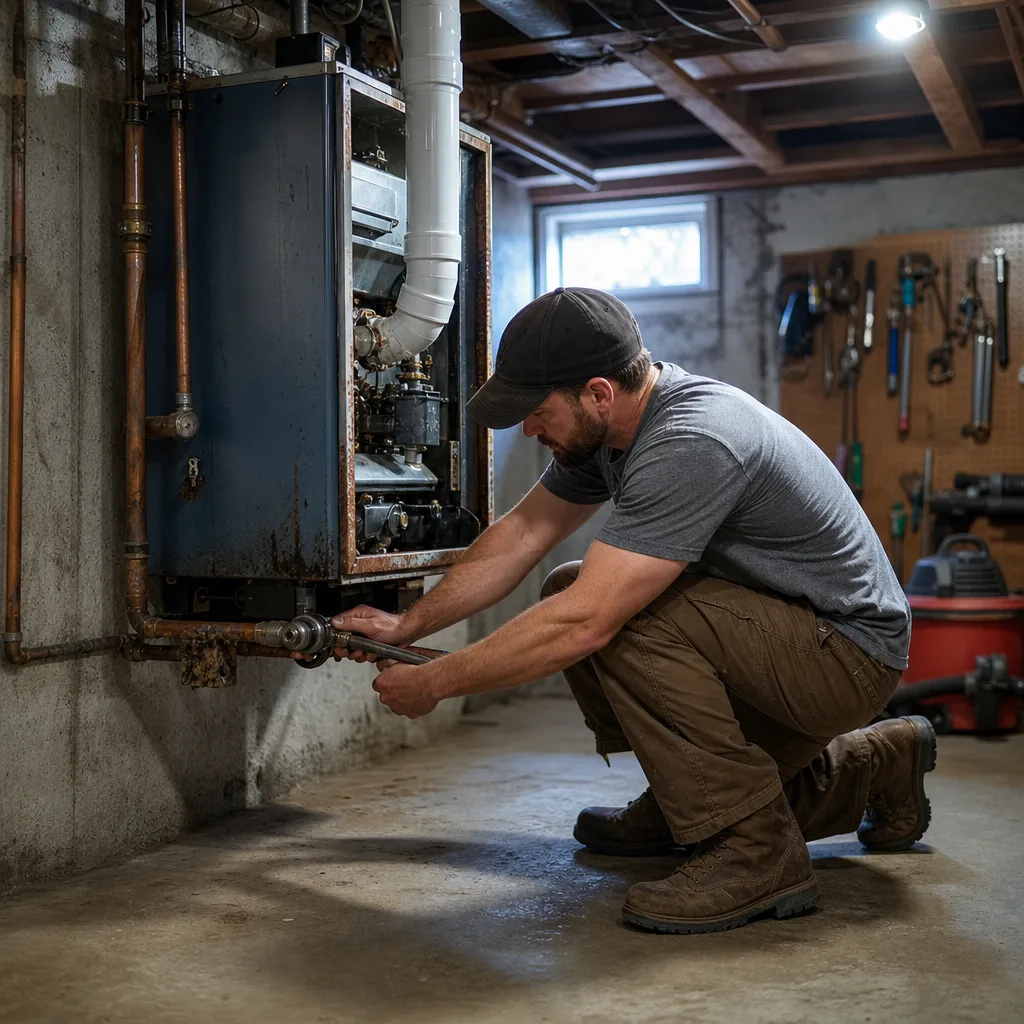
Most people don’t wake up wanting a new boiler. You usually get here after the third or fourth service call, when you start asking yourself if you’re just paying to put off the inevitable. That’s a fair question. Here are the signs that tell you it’s time to stop patching and start planning a replacement.
- The same problem keeps coming back. If you fixed the pump last winter and something else broke this winter, the boiler is wearing out as a whole, not one piece at a time.
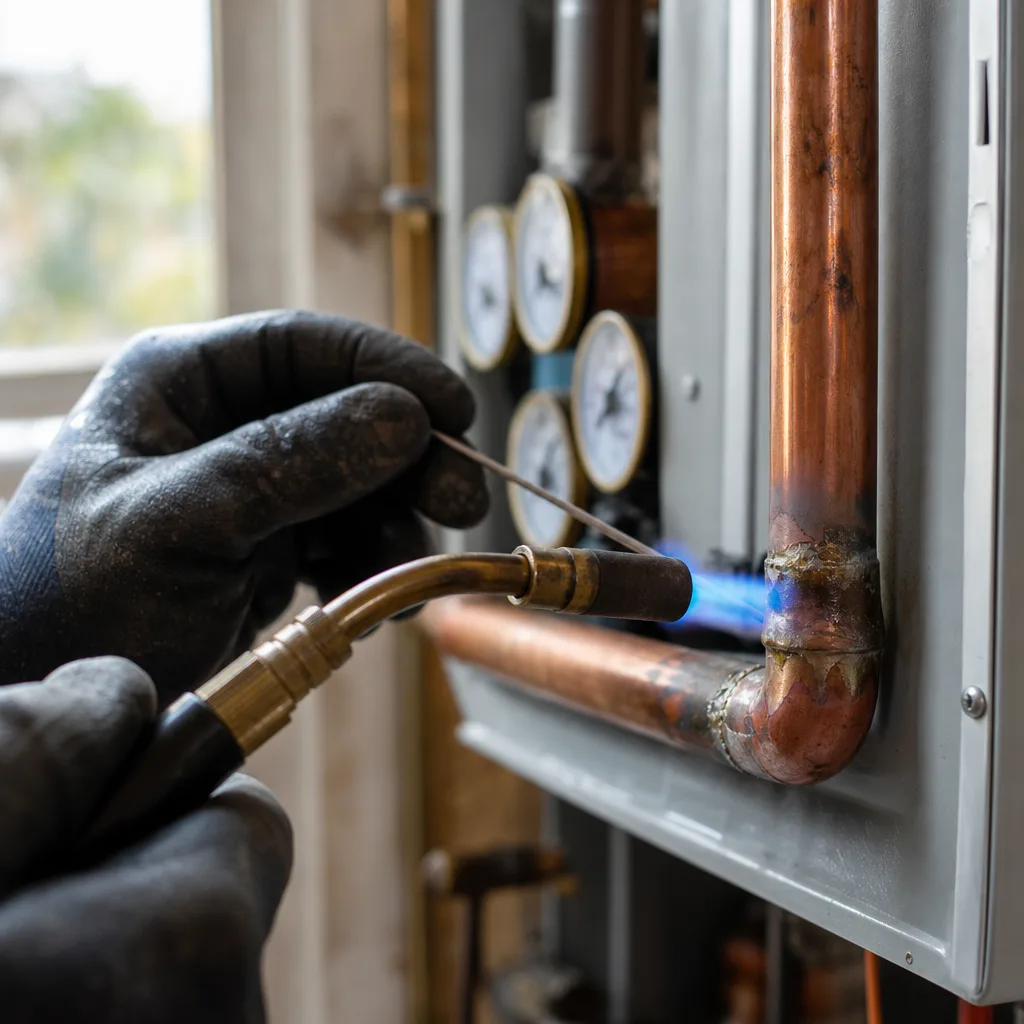
- The heat exchanger is cracked or leaking. This is the heart of the boiler. When it fails, the repair can cost close to what a new unit costs, and it rarely makes sense on an older system.
- Rooms won’t get warm on a cold night. When a North Texas cold front drops temperatures fast and your boiler can’t keep up, it may have lost efficiency, or it may never have been sized right for your space.
- Heavy scale and corrosion. Hard water is common here in North Texas, and over the years mineral buildup coats the inside of a boiler. It makes the system work harder, run louder, and heat less.
- Water around the base or rust on the cabinet. Leaks from the tank or body usually mean the metal itself is breaking down, and that can’t be patched for long.
- Your gas bills keep climbing. If you’re using the boiler the same way and paying more each season, it’s burning more fuel to make the same heat.
- Parts are hard to find. Older boilers can need parts that aren’t made anymore. When a repair means waiting weeks on a part, you’re left without heat in the meantime.
Here’s the honest side. Not every boiler problem means you need a new one. A bad thermostat, a worn igniter, a stuck valve, or a circulator pump on a boiler that’s otherwise solid can usually be fixed. Same goes for a system that just hasn’t had regular boiler maintenance. A good cleaning and tune-up can bring back a lot of lost performance. If that’s where you are, a repair is the right answer, and you should hear that from whoever looks at your system.
A simple test helps: add up what you’ve spent on repairs over the last couple of years, then think about what the next repair might cost. If you’re putting real money into a boiler that keeps letting you down, that money is better spent on a new system that’s sized right and set up to run for years.
For businesses, the math leans even harder toward replacement. A boiler that fails on a cold morning can mean unhappy tenants, a closed office, or lost business for the day. If your building’s boiler has turned into a guessing game every winter, planning a replacement on your schedule beats an emergency swap when it finally quits.
Our licensed and insured technicians will look at the whole system, not just the part that broke, and tell you plainly whether repair or replacement makes more sense for your home or building.
What a Boiler Installation Includes From Start to Finish
A boiler installation is more than pulling out the old unit and setting a new one in its place. A standard job from us includes the equipment and materials, professional installation, standard connections, startup and testing, and haul-away of your old unit. You’ll see an upfront flat-rate price and approve it before any work starts, so there’s no meter running while we’re in your home or building.
Here’s what a proper boiler installation should cover from start to finish, whoever does the work:
- Sizing the new boiler to your space. The label on the old boiler isn’t proof it was the right size. If rooms never warmed up on cold nights, sizing may be part of the reason.
- Shutting down and draining the old system safely. That means turning off the gas, power, and water before anything gets disconnected.
- Removing the old boiler and hauling it away, so it isn’t left sitting in your garage, closet, or mechanical room.
- Setting the new boiler and hooking it up to your existing water piping, gas line, venting, and power.
- Filling the system and bleeding out trapped air. Air left in the pipes can cause banging noises and cold spots.
- Starting it up and testing it. The burner, controls, safety shutoffs, and venting should all be checked while the boiler runs, not just at a glance.
That last step matters most. A boiler can fire up and still not be running right. Testing at startup is how you find out it’s heating well and venting safely before the installer leaves.
Now for what’s not in a standard price, so you’re never caught off guard. Our standard job is like-for-like, meaning the new boiler uses the connections you already have with no major changes. Not included unless your quote says so:
- Changes to your ductwork, electrical, or plumbing
- Code corrections
- Permits
Why would those come up? Sometimes the new boiler needs a different vent setup than the old one had. Sometimes the gas line or wiring that worked for a decades-old boiler doesn’t meet today’s code. If your home is an older North Texas house that has had a few owners and a few DIY fixes, there’s a fair chance something behind the boiler needs attention. That’s not a reason to worry. It’s a reason to ask before you sign.
Whoever you hire, ask these three questions: Is the permit in the price? Is haul-away of the old unit included? What gets tested at startup? Clear answers tell you a lot about how the job will go.
If you run a business, expect a bigger scope. Commercial jobs cost more, and larger systems often need more than a basic startup. For those, we also offer boiler commissioning to confirm the whole system runs the way it was designed to.
Residential and Commercial Boiler Installation Under One Mechanical Division
Boiler installation sits in our mechanical division, so the team that sets a boiler in a home closet also handles boilers in office buildings, apartments, and businesses. Whichever one you have, the job starts the same way. We look at the whole system, size the new boiler to your space, and tell you what the job really involves before you agree to anything.
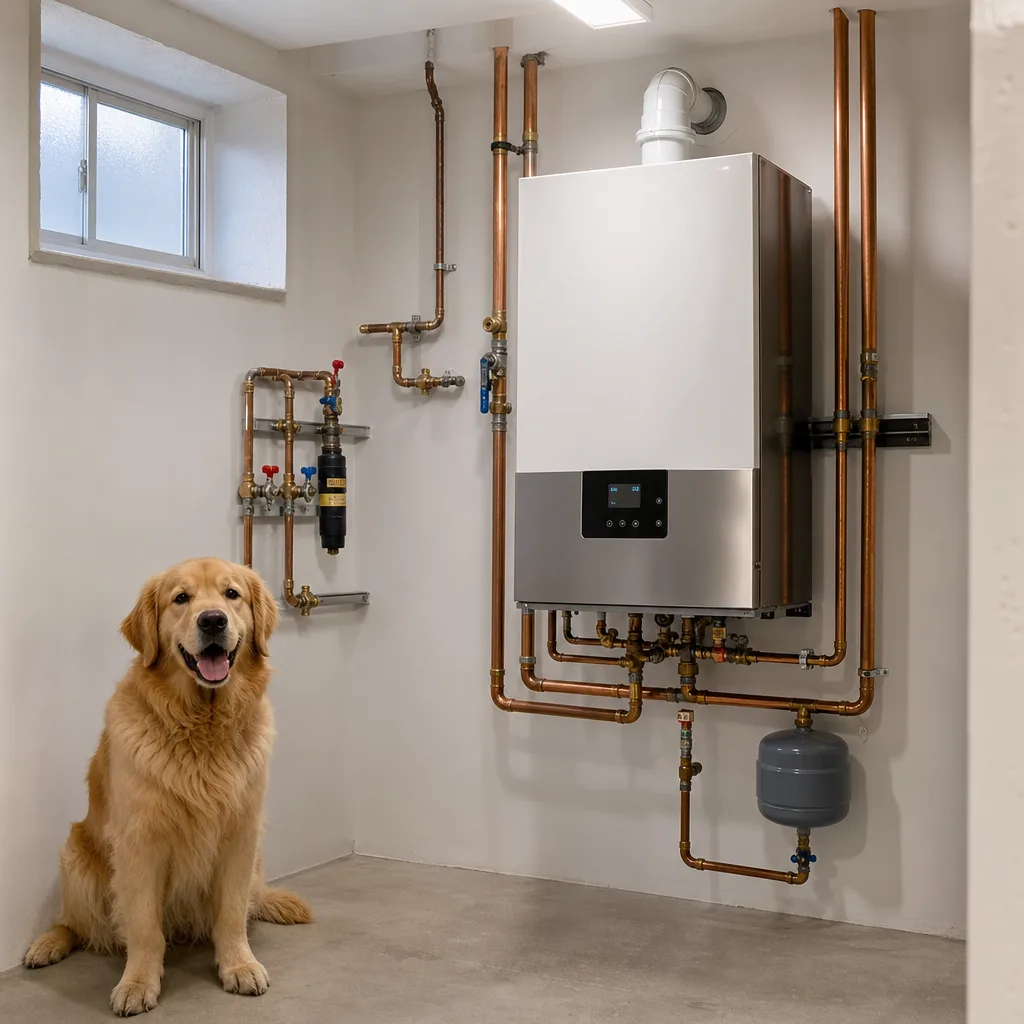
Here’s what you’re likely asking first: what will it cost? Our typical boiler installation runs $6,000 to $20,000. Our most common job is a standard like-for-like swap that uses your existing connections with no major changes, and it runs $8,800 to $14,500. Commercial jobs cost more.
Where your job falls in that range depends on a few things:
- Size and efficiency. A bigger boiler, or one with a higher AFUE rating, costs more up front. AFUE tells you how much of the fuel you pay for turns into heat in your home.
- Brand and model. Different boilers come with different features and price points.
- Access. A boiler in an open mechanical room is easier to swap than one in a tight closet or attic.
- The condition of what’s already there. Old wiring, piping, or venting can need work before the new boiler goes in.
- Code upgrades, permits, and any custom fabrication your system needs.
Remember the extras we covered earlier, like plumbing or electrical changes and code corrections? This is where one team pays off. We’re licensed and insured for HVAC, plumbing, and electrical work, so if the old gas line or wiring doesn’t fit the new boiler, you aren’t stuck calling a second or third contractor and waiting on their schedule. You get one crew, one plan, and one upfront flat-rate price you approve before work starts.
For business owners, the bigger concern is downtime. A building can’t sit cold for a week while different trades take turns. Our mechanical team also handles hydronic heating, pump installation and repair, piping installation, and boiler system design, so a larger job stays with one accountable crew from planning through startup.
A new boiler is a big purchase, and you shouldn’t have to make the decision under pressure. Flexible financing is available on qualifying installations and larger jobs, on approved credit. If you’d like us to take a look first, there’s a $26 to $99 service-call fee, and it’s credited toward the work if you go ahead with us.
Our office is at 5000 Riverside Drive in Irving, and our licensed, background-checked technicians serve homes and businesses across the city and the rest of the DFW Metroplex. We’re a family-owned Trane Comfort Specialist with a 4.8-star reputation across more than 2,900 reviews on Google, Angi, and HomeAdvisor. Our HVAC License is #TACLA29023C.
Call 469-200-2166
Have questions? We’re happy to help.
Call Today, Get Service Today. Xtreme Air Services — Irving is ready to help.
What Drives Boiler Installation Cost Up or Down
Most of the price swing comes from a few things you can spot before any work starts. Does the new boiler fit the connections you already have? How much efficiency are you paying for? How hard is the old one to reach? Once you know which of those apply to you, you’ll have a good idea where your job lands in the range we covered above.
These are the things that tend to push the price up:
- Switching to a high-efficiency condensing boiler. These usually need different venting than an older boiler. They also need a drain for the water they make while running. That’s extra parts and labor on top of the boiler itself.
- Moving the boiler. A new spot means new gas, water, vent, and power runs to reach it.
- Changing the size or adding zones. If the old boiler never kept up, the fix may be a bigger unit or more control over which rooms get heat.
- Tight access. A boiler wedged into a small closet or up in an attic takes more time and hands to get out and replace.
- Worn piping. Years of hard-water scale can narrow the old pipes. Sometimes they need flushing or replacing before a new boiler can do its job.
- Buying in a hurry. When a boiler dies during a cold snap, you lose the time to compare options and plan the work.
And these are the things that keep it down. You’re doing a true like-for-like swap, with the same fuel, the same spot, and venting that’s still in good shape. There’s a clear path to the boiler. You plan the replacement in the fall, before the first hard cold front. And a well-kept system usually has fewer surprises hiding behind it.
Here’s an honest note about efficiency. North Texas winters are short compared to up north, so a home boiler doesn’t run nearly as many hours a year. That means a top-efficiency model takes longer to pay for itself through lower gas bills. It can still be the right choice, especially if you plan to stay in your home a long time. But you shouldn’t feel pushed into the most efficient model just because it’s the most expensive. A building that runs heat many hours a day is a different story. There, the gas savings add up faster, and higher efficiency often earns its keep.
When you compare quotes, line them up item by item. A quote that looks lower may leave out the permit, the haul-away, or the venting changes a new boiler needs. Then those costs show up later. A higher quote may already include them. Ask each installer what size boiler they’re putting in and why. Ask what venting it needs. Ask what’s left out of the price. If someone can’t explain how they picked the size, that tells you something.
That’s how we price our own jobs. We look at your setup first, then give you an upfront flat-rate price that spells out what’s included. You’ll know where your job lands before you agree to anything.
Watch Our Video
See How We Handle Boiler installation in Irving
Xtreme Air Services — Irving
Permits and Licensing Questions to Ask Before You Hire
Before you hire anyone to install a boiler, you should ask two things. Will this job be permitted and inspected? Is the person doing it licensed for every part of the work? A boiler burns gas, vents exhaust out of your home, and runs on electricity. That’s three places where a shortcut can turn into a safety problem, so these questions aren’t nitpicky. They’re how you protect your family or your tenants.
In Irving, boiler replacements generally go through the city’s permit and inspection process. An inspector checks the gas connection, the venting, and the safety controls after the work is done. That second set of eyes is worth having. It’s also a record that the work was done to code, which can matter when you sell your home or file an insurance claim.
Here are the questions to ask, and what a good answer sounds like:
- Who pulls the permit? The installer should handle it. If they ask you to pull it yourself as the homeowner, the responsibility for the work shifts to you.
- Is the permit in the price, or added later? We covered this earlier. Just make sure it’s written down either way.
- What license do you hold, and can I look it up? HVAC contractors in Texas are licensed through the Texas Department of Licensing and Regulation. You can check a license number on the TDLR website in a couple of minutes.
- Who’s doing the gas and electrical work? Hooking up a gas line or wiring a boiler takes the right license for that trade. Ask if it’s the same company or a subcontractor you’ve never met.
- Are you insured? Ask for proof. If someone gets hurt or something gets damaged in your home, you don’t want to be the one paying for it.
- Will you be there for the inspection? A good installer shows up, answers the inspector’s questions, and fixes anything flagged without arguing about it.
If you own a business or an apartment building, add one more question. Does your boiler need a state certificate of operation or regular state inspections? Texas has a boiler inspection program for many commercial and multi-unit boilers. Most single-family homes aren’t covered. An installer who works on commercial systems should know which side your building falls on and plan for it.
Watch for one red flag. A contractor might offer to knock some money off if you skip the permit. That saves you a little today, but it leaves you with gas and venting work nobody checked. You may also have to redo it later when you sell or when a claim gets denied. Saying no to that offer is easy once you know why it’s being made.
You can ask us every one of these questions. We’re licensed and insured for HVAC, plumbing, and electrical work, so the gas line, wiring, and boiler stay with one team. Our HVAC license number is on this page for you to check. We’ll tell you up front how the permit is handled on your job before you agree to anything.
Call 469-200-2166
Frequently Asked Questions
Common questions about Boiler installation
Can I keep using my boiler while I wait to schedule installation?
Yes, if it’s still heating safely, but watch for warning signs like rust at the base or rooms that won’t warm up. If you notice a recurring problem, such as a pump or valve that keeps failing, it’s safer to plan the swap before it quits on a cold night. Waiting too long on a failing unit often turns a planned job into an emergency one.
Do I need to be home during the boiler installation?
You should be home at the start and end of the job so you can walk through the system with the crew. You’ll want to see the startup and testing step, where the burner, controls, and venting get checked while the boiler runs. Being there also lets you ask questions about what was done before the crew leaves.
What happens to my old boiler after it’s removed?
Your old boiler gets hauled away as part of a standard installation, so you’re not left storing it in your garage or mechanical room. This is one of the items worth confirming in writing before work starts, since not every contractor includes haul-away in their price.
Ready to Get Started?
Call (469) 200-2166 Today, Get Service Today.