


Commercial HVAC Repair & Maintenance in Irving
Repair or maintenance? Start with one simple question, then know what happens during a commercial repair visit.
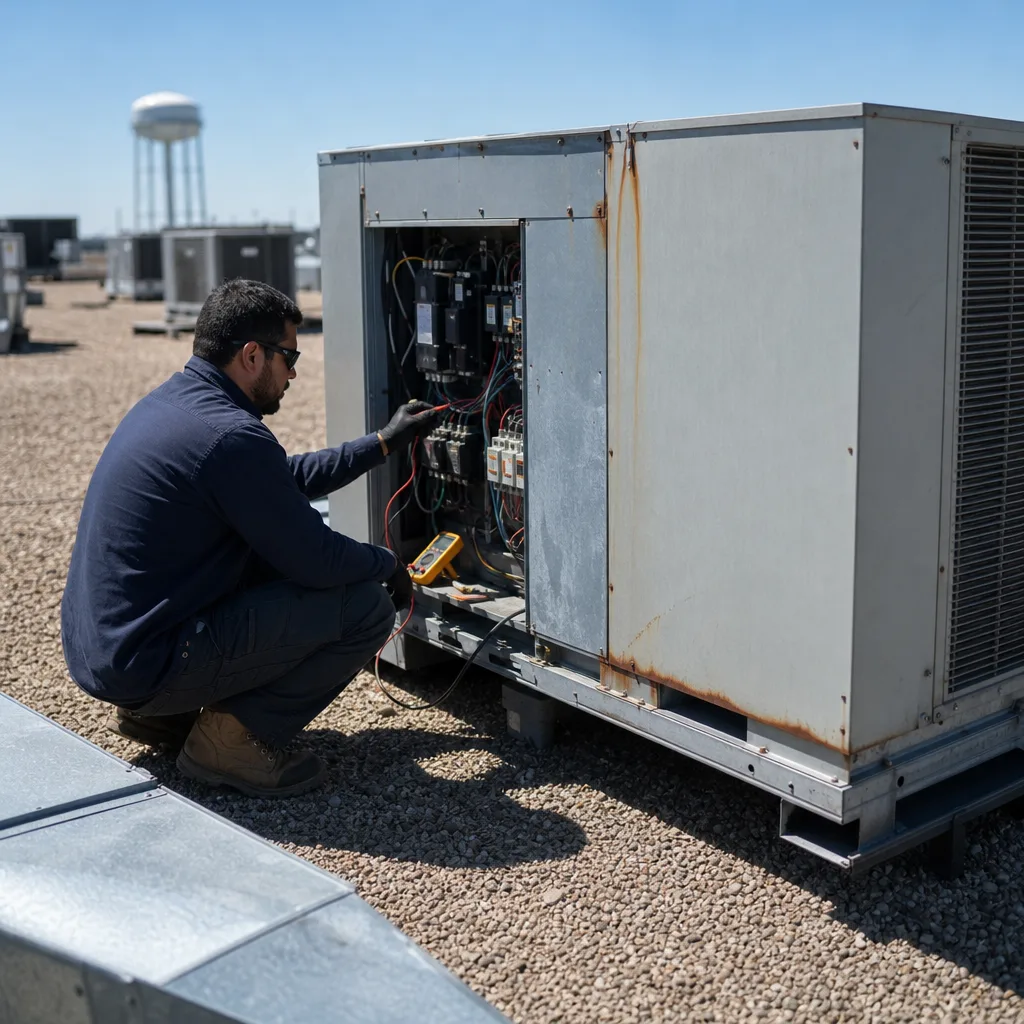
What’s Covered on This Page
- Repair Versus Maintenance Is the First Decision
- Signs Your Commercial System Needs a Repair Call Now
- When You Don’t Need to Call for Repair
- What Happens During a Commercial Repair Visit
- What Drives Commercial Repair Cost Up or Down
- Can you work on our rooftop unit without shutting down the whole building?
- How often should a commercial HVAC system get maintenance in Irving?
- Who do I call if my landlord is supposed to handle HVAC repairs?
- Does a tripped breaker always mean the HVAC unit needs repair?
Repair Versus Maintenance Is the First Decision
Before you call anyone, ask yourself one simple question: is the system working right now? Your answer tells you which kind of visit you need. A repair call is about getting your business back to normal today. A maintenance visit is about keeping it that way through a long Texas summer.
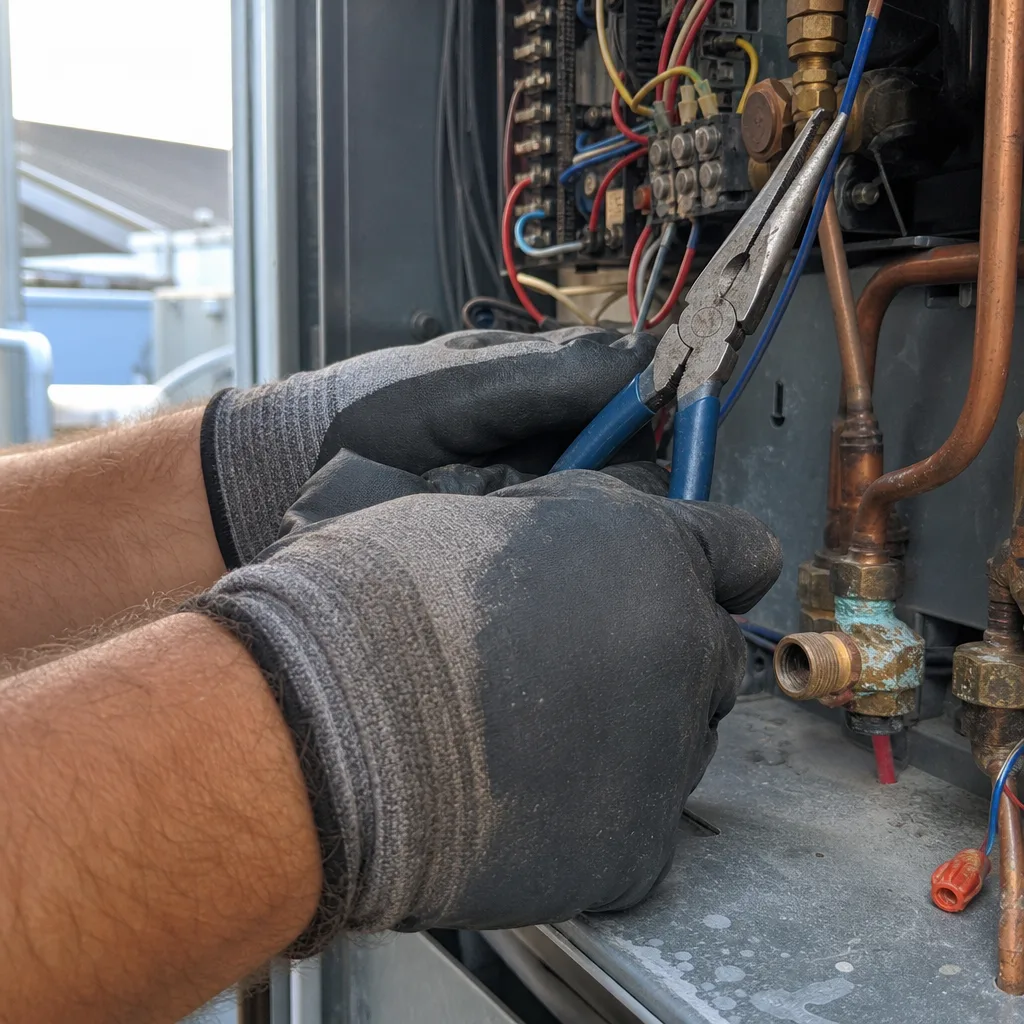
You need a repair if you notice any of these:
- The unit won’t turn on, or it shuts off soon after starting.
- Warm air comes from the vents while the thermostat calls for cooling.
- Some rooms, offices, or suites are much hotter than others.
- You hear grinding, squealing, banging, or loud buzzing from a rooftop unit or air handler.
- Water is pooling near the indoor unit or dripping from the ceiling.
- Breakers keep tripping when the system kicks on.
You need maintenance if the system still cools and heats, but it hasn’t been looked at in a year or more, your energy bills are creeping up, or it just sounds like it’s working harder than it used to. Maintenance is also the smart choice before peak heat, when a small worn part is far easier to replace on your schedule than in the middle of a busy day.
Here’s what a repair visit looks like with us. We find the failed part, repair or replace it, and then check that the system runs correctly before we leave. Most calls are a single common failure fixed on the first visit. That kind of job usually runs $300-$2,400. Diagnosis, labor, the standard replacement part, testing, and cleanup are all included. Extra failed parts, major components, code upgrades, or permits are quoted separately, so you’ll know before any of that work starts.
There’s a $26-$99 service-call fee, and it’s credited toward the repair if you go ahead with us. If your unit quits on a Saturday night, you pay no extra charge for nights or weekends. You shouldn’t have to choose between waiting until Monday and paying overtime.
Now the honest part. Sometimes you don’t need us yet. If the system stopped, check that the thermostat is set to cool and has power, and look at the breaker. If the filter is caked with dust, swap it and see whether airflow improves. If that fixes it, great. Book maintenance later so a tech can look over the rest. If the problem comes right back, or you see water, smell burning, or hear a new noise, stop there and call for a repair.
Not sure which bucket you’re in? That’s fine. Tell us what you’re seeing and hearing, and we’ll help you figure out whether it’s a same-day repair or a maintenance visit that can wait for a day that suits your business.
Signs Your Commercial System Needs a Repair Call Now
Some problems can wait a day. Others get worse and cost more every hour you leave them alone. Call for a repair now if the problem is a safety risk, if it’s spreading damage to your building or equipment, or if it’s costing you customers, tenants, or product.
Treat these as call-now signs:
- A burning or hot electrical smell from vents, the air handler, or the rooftop unit. That points to wiring, a motor, or a part that’s overheating. It isn’t something to watch and wait on.
- A breaker that trips again right after you reset it. One trip can be a fluke. Repeat trips mean something is drawing too much power, and resetting it over and over can make it worse.
- Water near ceiling tiles, light fixtures, electrical panels, or stored inventory. A clogged drain line or overflowing pan can soak drywall and ruin stock long before anyone notices a stain.
- Ice on the copper refrigerant lines or the indoor coil. Ice usually means an airflow problem or low refrigerant. The longer it runs that way, the harder it works the parts that are most expensive to replace.
- A unit that clicks on and off every few minutes. Short cycling, which means starting and stopping too fast to finish a cooling cycle, puts heavy strain on the compressor. The compressor is the heart of the system, and it’s not where you want a small repair to end up.
That last point matters for your budget. A worn capacitor or a dirty sensor is a single-part fix. If it’s left running long enough to take out a compressor or motor, you’re into the major components we mentioned earlier, and those are quoted separately. Calling early is often what keeps a repair small.
Then there are the signs that hit your business directly, even if nothing looks broken yet:
- Your server room or IT closet is warmer than usual. Network gear and computers don’t handle heat well.
- Tenants or employees are calling about one suite or floor, and the thermostat can’t catch up.
- Customers are commenting on the heat, or walking out of a restaurant, salon, or shop sooner than they normally would.
- Products that need to stay cool are sitting in a space that’s getting warmer by the hour.
Timing matters in an Irving summer. A rooftop unit that’s barely keeping up at 10 a.m. has even less room to spare once the afternoon sun is beating on the roof and every space in the building is calling for cooling. If your system is struggling in the morning, it’s unlikely to get better on its own by 3 p.m.
If the trouble is in a walk-in cooler or freezer rather than your building’s air, that’s a commercial refrigeration repair. It’s every bit as urgent when you have inventory inside.
When you call, a few details help our licensed, background-checked technicians come prepared. Tell us which unit or area is affected, what you’re seeing, hearing, or smelling, and when it started. We answer the phone around the clock and can get to you the same day, so you don’t have to guess whether it’s bad enough to bother someone. If you’re seeing any of these signs, it is.
When You Don’t Need to Call for Repair
Not every odd sound or warm afternoon means something is broken. Here are the common cases where your system is doing what it’s built to do, or where the fix is a setting and not a part. If one of these fits, you can save yourself the service call.
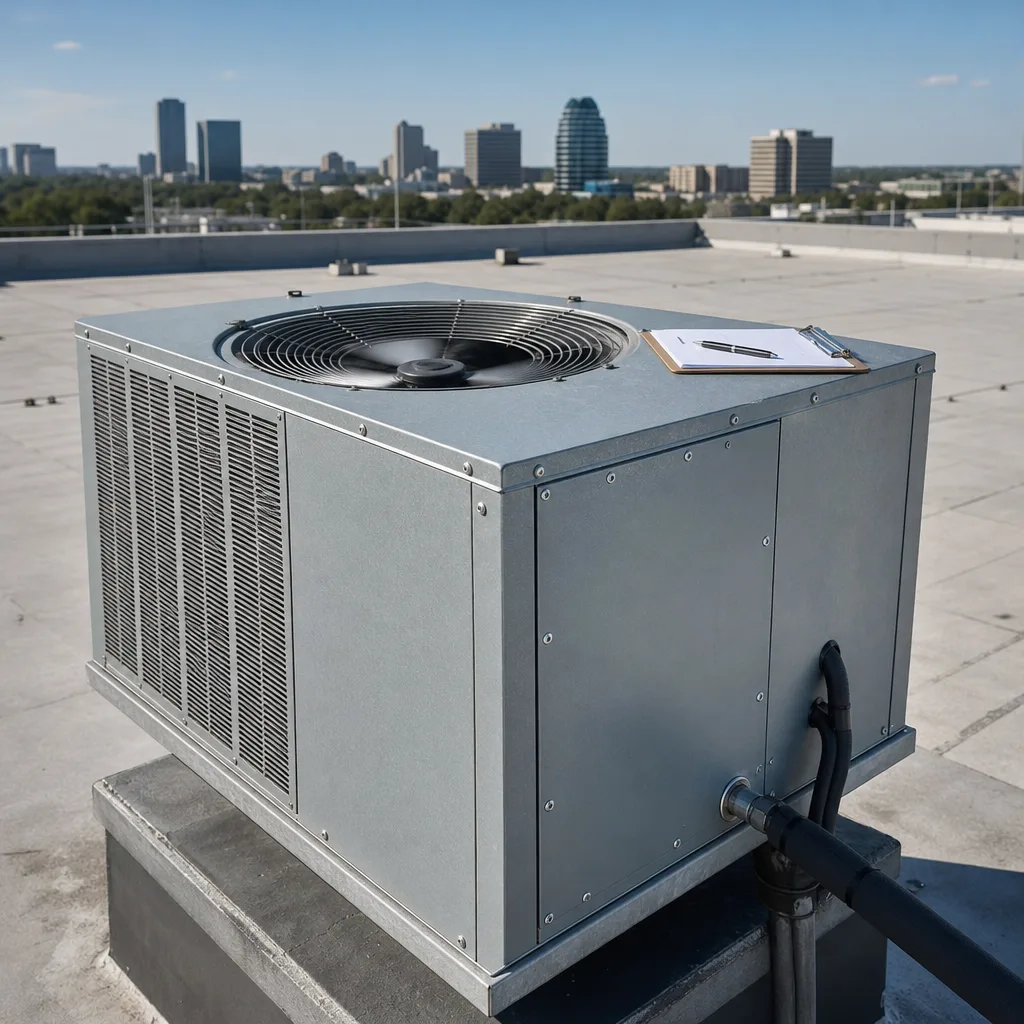
It runs nonstop on the hottest afternoons but still holds close to your set temperature. On a brutal Irving summer day, a properly sized rooftop unit may run for hours without a break. That’s normal. Commercial systems are designed to keep up with peak heat, not to cycle off and rest. If the space stays comfortable and the air from the vents feels cold, the system is working. It becomes a repair call when the building keeps losing ground through the afternoon and doesn’t recover after sundown.
Water is dripping outside from a small pipe. Your system pulls a lot of moisture out of humid Texas air, and that water has to go somewhere. A steady drip from the condensate line where it exits the building is a sign the drain is doing its job. Water inside the building is the problem, and we covered that one earlier.
The power blinked and the unit didn’t start right away. Many systems have a built-in delay that keeps the compressor from restarting the instant power comes back. That delay protects the compressor. Give it several minutes before you decide something’s wrong.
You see a puff of steam from a rooftop heat pump on a cold morning. When a sudden North Texas cold front comes through, heat pumps go into a defrost cycle to melt frost off the outdoor coil. You may see a short burst of steam and hear the fan stop for a bit. That’s normal and it passes on its own. A unit that stays coated in ice is a different story.
The building is warm first thing in the morning or after a holiday. Check the schedule before you assume a failure. Programmable thermostats and building controls often set back temperatures overnight, on weekends, and on holidays. They can also drift after a daylight saving time change or a power outage. A tenant or employee may have changed a setting, too. If the schedule says the system shouldn’t be cooling yet, update it and give the space time to catch up.
Your lease puts the HVAC on someone else. If you rent your space, read your lease or ask your property manager before you book anyone. Many commercial leases say who handles repairs and maintenance, and some buildings already have a service contract in place. Calling outside that arrangement can leave you with a bill your landlord was supposed to cover.
If you’ve ruled these out and the system still isn’t right, then it’s time for a technician. Until then, you don’t need to pay someone to tell you your equipment is working.
Not sure what your Commercial HVAC repair & maintenance project needs? Ask us.
Call Today, Get Service Today. Xtreme Air Services — Irving is ready to help.
What Happens During a Commercial Repair Visit
A commercial repair visit has three jobs. Find what failed, fix it, and prove the system runs right before the technician leaves. Most calls are a single common failure fixed on the first visit. A little prep on your end helps keep it that way.
Before the technician arrives, have these ready:
- Roof access. Many rooftop units sit behind a locked hatch or a maintenance closet. Know where the key is, or who in the building has it.
- Which unit serves which space. If your building has several rooftop units, a quick note on which one serves the problem suite saves real time.
- A heads-up to building management or security, so the technician isn’t stuck waiting at the front desk.
- Recent service records, if you have them. Past repairs and the last filter change help narrow things down.
- When the problem started and what changed. A storm, a power blip, or a new tenant moving in can all be clues.
A good diagnosis goes past the symptom. Warm air from the vents could come from a worn capacitor, a stuck contactor, a dirty condenser coil, low refrigerant, or a controls problem. Sound troubleshooting usually means testing electrical parts, checking refrigerant pressures and temperatures, looking at airflow and filters, and making sure the drain is clear. The goal is to learn why a part failed, not just that it did. If you swap a part without fixing the cause, it can fail again.
Once the problem is found, you get upfront flat-rate pricing, and you approve it before any work starts. There’s no meter running while someone’s on your roof. If testing turns up a second failed part or a major component, that’s quoted separately, and the decision is still yours. For larger jobs, flexible financing is available on approved credit.
Part availability can affect your timeline. Common parts on common equipment are the easy case. Older or less common equipment may need a part ordered. Ask whether the part is on hand or needs to be ordered, so you can plan around it with your staff or tenants.
After the repair, the system is tested to confirm it runs correctly, and the work area is cleaned up. You can do your own check, too:
- Cold air coming from the vents in the space that had the problem.
- The thermostat reaching its set point over the next few hours.
- No water near the indoor unit and no tripped breakers.
- Comfort holding through the afternoon. That’s when an Irving rooftop unit works hardest, so it’s the real test.
The person on your roof and walking through your suites matters as well. Our technicians are licensed, background-checked, and drug-tested, and our HVAC work is done under Texas license TACLA29023C. You can feel good about having them around your employees, tenants, and customers. If a quieter hour works better for your business, nights and weekends cost the same as a weekday.
Watch Our Video
See How We Handle Commercial HVAC repair & maintenance in Irving
Xtreme Air Services — Irving
What Drives Commercial Repair Cost Up or Down
Most single-part repairs land in the range we covered earlier. Across all the commercial repair and maintenance work we do, a job typically runs $300-$5,000. Where yours falls depends on a handful of real factors, and it helps to know them before anyone climbs on your roof.
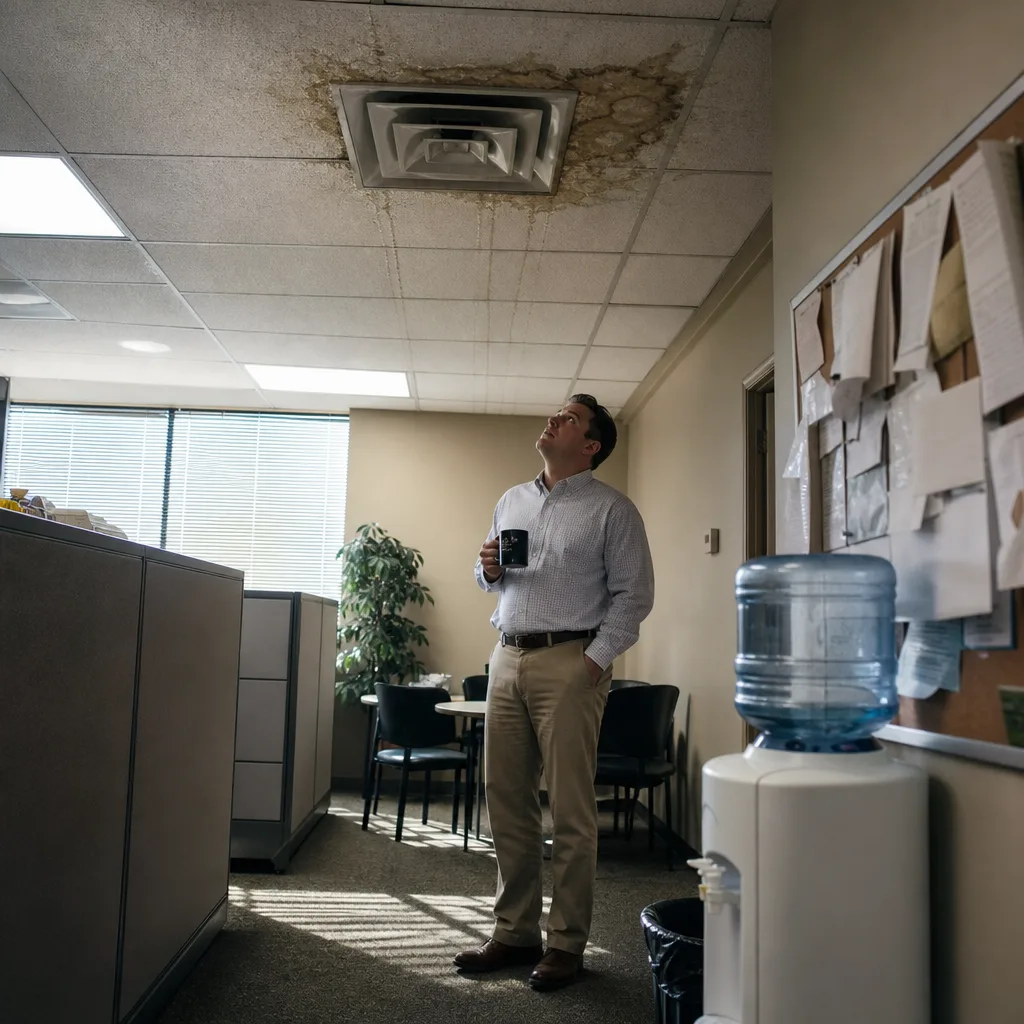
- How far the failure went. A worn capacitor or a stuck contactor is a small part and a quick swap. A failed compressor or blower motor is a major component, and it costs more in both parts and labor.
- Whether more than one part failed. One bad part can take others down with it. A motor that overheats can damage the wiring around it, and a system that ran low on refrigerant may have strained other parts along the way. Each extra failed part adds to the bill.
- Part cost and availability. Common parts for common equipment usually cost less and are easier to get. Parts for less common or discontinued equipment can cost more, and a part that has to be ordered can stretch the job out.
- Equipment age and brand. Older units often need older parts, and those are harder to find. Some brands use parts that cost more than others. Age also shapes the bigger question of whether a repair still makes sense.
Timing is a driver with a lot of contractors, but not with us. Since nights and weekends cost the same as a weekday, a breakdown at 9 p.m. on a Friday doesn’t change your price. And because you approve a flat rate before work starts, the clock running doesn’t change it either.
If your building has several rooftop units, remember that each one is its own piece of equipment with its own age and repair history. The unit over your front office might be a few years old while the one over the back suite has been running for decades. Two calls in the same building can come out very differently.
On an older unit, a big repair can start to look a lot like a down payment on new equipment. If a technician quotes a major component on a system that’s been giving you trouble for a while, it’s fair to ask what a commercial HVAC installation would look like, too. Seeing both numbers side by side lets you decide with the full picture, not under pressure.
Whoever you call, these questions will tell you a lot before you approve anything:
- Is the price a flat rate I approve before work starts, or is it hourly?
- Is there a service-call fee, and does it count toward the repair?
- What’s included, and what would be quoted separately?
- Is the part on the truck, or does it need to be ordered?
- Do you charge more for nights, weekends, or holidays?
- Is your company licensed for HVAC work by the Texas Department of Licensing and Regulation?
A contractor who answers those plainly is one you can work with. If the answers come back vague, that tells you something too.
Frequently Asked Questions
Common questions about Commercial HVAC repair & maintenance
Can you work on our rooftop unit without shutting down the whole building?
In most cases, yes. A technician can usually access and repair one rooftop unit while the rest of your building keeps running on its own separate units. If your building only has one system serving the whole space, we’ll walk you through what to expect before we start. Having a key to the roof hatch or maintenance closet ready ahead of time keeps the visit moving quickly.
How often should a commercial HVAC system get maintenance in Irving?
At least once a year, ideally before peak summer heat hits. Irving summers push rooftop units hard for hours at a stretch, and a system that hasn’t been checked in a year or more is more likely to fail on a busy afternoon. If your energy bills are creeping up or the system seems to be working harder than before, that’s also a sign it’s time for a maintenance visit.
Who do I call if my landlord is supposed to handle HVAC repairs?
Check your lease or call your property manager first, not a repair company. Many commercial leases spell out who covers HVAC repairs and maintenance, and some buildings already have a service contract in place. Calling outside that arrangement can leave you stuck with a bill your landlord was supposed to pay.
Does a tripped breaker always mean the HVAC unit needs repair?
Not always, but a repeat trip usually does. One trip after a storm or power blip can be a fluke, so resetting it once is reasonable. If it trips again right after you reset it, something is drawing too much power, and that calls for a repair visit before the problem spreads to the motor or compressor.
Ready to Get Started?
Call (469) 200-2166 Today, Get Service Today.