
Cross connection plumbing control is the practice of preventing contaminants from entering your potable water supply through improper plumbing connections. The industry term for this discipline is “cross connection control.” It covers everything from device selection to annual testing programs.
Every home and commercial building has potential cross connections. Without proper controls, those connections become pathways for chemicals, bacteria, and sewage to reach your drinking water.
Backflow prevention devices like air gaps and reduced pressure zone assemblies are the primary tools used to block that contamination. Understanding what cross connection plumbing control involves is the first step toward protecting your water and staying compliant with local regulations.
What is cross connection plumbing control and why does it matter?
Cross connection plumbing control is any system of physical barriers, devices, and inspection programs that keeps non-potable water and contaminants from flowing backward into a clean water supply. A cross connection itself is any point where your potable water supply connects, or could connect, to a source of contamination.
That connection might be a garden hose sitting in a bucket of fertilizer, a boiler feed line, or an irrigation system tied into your home’s water supply.
The risk is not theoretical. Backflow contamination enters drinking water systems through routine pressure changes, not just catastrophic accidents.
When water pressure in the main supply drops, water can flow backward through any unprotected cross connection and pull contaminants with it. The importance of plumbing cross connection control comes down to one fact: your water looks clean even when it is not.
Local water purveyors, state health departments, and building codes all require cross connection control programs for this reason. Compliance is not optional.
Property owners who ignore these requirements face enforcement actions, service shutoffs, and liability for any illness caused by contaminated water.
What causes backflow and why is it a contamination risk?
Backflow is the reversal of normal water flow direction in a plumbing system. Two conditions cause it: backpressure and backsiphonage.
Backpressure occurs when the pressure in a downstream system exceeds the pressure in the supply line. A boiler or a pressurized irrigation system can push water backward into the potable supply if no prevention device is in place.
Backsiphonage occurs when supply pressure drops suddenly, creating a siphon effect that pulls water backward. The two most common triggers are water main breaks and high firefighting demand.
When a fire hydrant opens nearby and draws massive volume from the main, pressure in your street line can drop sharply. Any unprotected cross connection in your home becomes a vacuum at that moment.
The health hazards are serious. Contaminants that can enter through backflow include:
- Pesticides and fertilizers from irrigation systems
- Soap and detergents from submerged hoses
- Boiler treatment chemicals like chromate compounds
- Sewage and gray water from utility connections
- Industrial chemicals in commercial and manufacturing settings
Pro Tip: If you notice a sudden change in water taste, color, or odor after a nearby water main repair, stop using the tap and contact your water utility immediately. That is a classic sign of backsiphonage contamination.
Backflow happens more frequently than most homeowners realize. Normal pressure fluctuations in municipal systems create the conditions for backsiphonage on a regular basis.
The difference between a safe home and a contaminated one is whether a properly rated prevention device is installed at every cross connection point.
What are common cross connection plumbing examples?
The most common cross connection plumbing examples are hose bibs, irrigation systems, boiler feed lines, utility sinks, and fire suppression systems. Many of them hide in plain sight, so recognizing them on your own property is the first step toward controlling them.
- Hose bibs without vacuum breakers. A garden hose left submerged in a pool, pond, or bucket of chemicals is one of the most frequent residential cross connections. ASSE 1011-listed vacuum breakers are required on hose bibs to prevent backflow from submerged hoses. Many older homes still lack them.
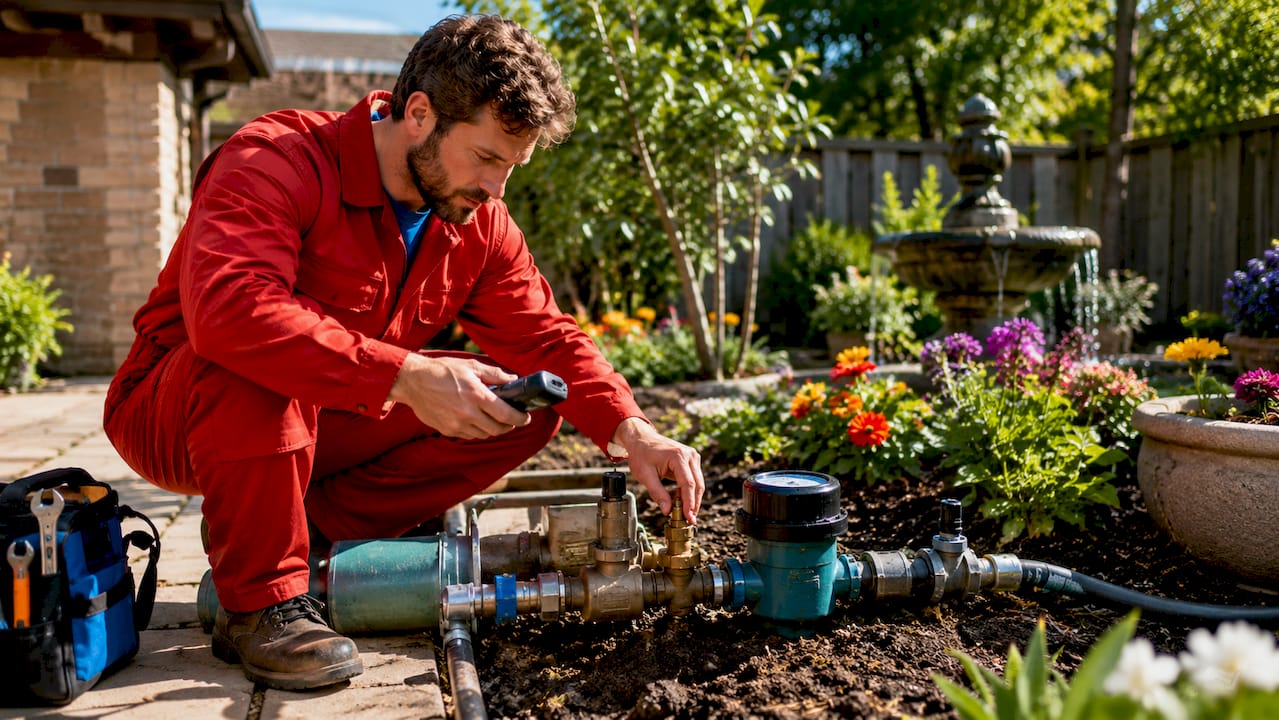
- Irrigation and sprinkler systems. Underground irrigation lines sit in soil that contains pesticides, fertilizers, and bacteria. Without a dedicated backflow preventer, that contaminated water can reverse into your home supply.
- Boiler feed lines. Boilers use treatment chemicals to prevent corrosion and scale. Those chemicals are toxic. A boiler feed line connected directly to the potable supply without a reduced pressure zone device is a high-hazard cross connection.
- Utility sinks and laundry connections. A utility sink faucet that extends below the flood rim of the sink, or a washing machine hose connected without an air gap, creates a direct path for gray water to siphon back into the supply.
- Fire suppression systems. Commercial fire suppression systems often contain antifreeze or stagnant water. The role of fire suppression plumbing in cross connection risk is significant, especially in multi-tenant buildings where system pressure can vary widely.
Facility managers face a wider range of cross connections than residential homeowners. These connections each require individual hazard assessments and approved protection devices:
- Chemical feed systems
- Cooling towers
- Decorative fountains
- Medical equipment connections
What cross connection control methods and devices are approved?
Approved cross connection control methods are stratified by hazard level. The higher the hazard, the more protective the required device.
Matching the right device to the right hazard is not optional. A low-hazard device on a high-hazard connection fails inspections and leaves your water supply unprotected.
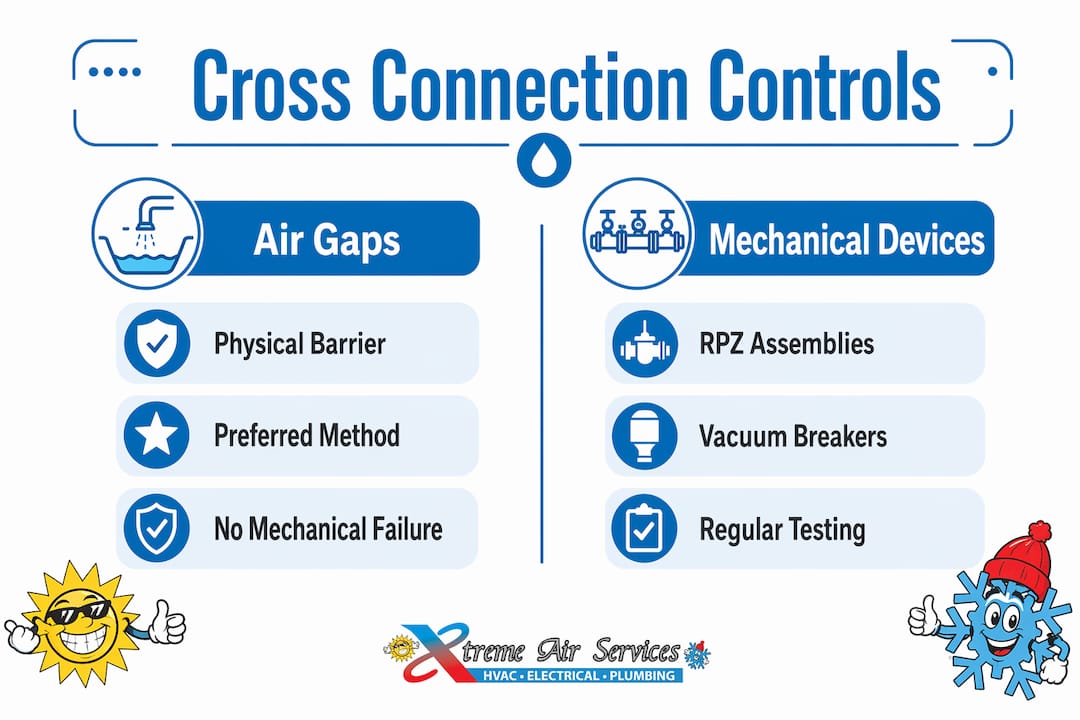
Air gaps
An air gap is the physical separation between a water outlet and the flood level rim of a receiving vessel. Air gaps provide physical separation with no moving parts and no testing requirements.
That makes them the most reliable form of backflow prevention available. A properly sized air gap cannot fail mechanically. The one limitation is space, because an air gap needs a break in the line, which is not always practical for pressurized systems.
Pro Tip: Where space allows, always choose an air gap over a mechanical device. It eliminates mechanical failure risk entirely and requires zero maintenance.
Mechanical backflow prevention assemblies
When an air gap is not practical, mechanical assemblies are the next line of defense. The table below shows the most common devices, their hazard ratings, and their testing requirements.
| Device | Hazard level | Testing required | Typical application |
|---|---|---|---|
| Reduced Pressure Zone (RPZ) | High | Annual | Boilers, irrigation, fire suppression |
| Double Check Valve Assembly | Medium | Annual | Commercial cooling, non-toxic systems |
| Pressure Vacuum Breaker | Low to medium | Annual | Irrigation systems |
| Atmospheric Vacuum Breaker (ASSE 1011) | Low | None | Hose bibs, lab faucets |
High hazard connections require ASSE 1013-listed RPZ devices. An RPZ device contains a relief valve that opens if the check valves fail, discharging water to the ground rather than allowing backflow. That design makes it the most protective mechanical option for toxic or high-risk connections.
Atmospheric vacuum breakers, listed under ASSE 1011, are non-testable devices suited only for low-hazard applications. Using an ASSE 1011 device on a boiler feed line or chemical injection system is a code violation. The device will not provide adequate protection, and it will fail inspection.
Understanding your home plumbing system helps you identify which connections exist and which hazard level applies to each one before a certified tester arrives.
What are the compliance responsibilities for homeowners and facility managers?
Property owners carry the legal responsibility for installing, maintaining, and testing backflow prevention assemblies. That responsibility does not transfer to tenants or water utilities.
Annual inspection by certified technicians is mandatory for all testable assemblies. Failure to conduct yearly tests leads to non-compliance, even if the devices appear intact.
The compliance process typically follows these steps:
- Identify all cross connections. Conduct an on-site survey of every point where potable water connects to a non-potable source. Facility managers in commercial buildings should hire a certified cross connection control specialist to perform this survey.
- Install approved devices. Match each connection to the correct device based on hazard level. All devices must meet ASSE standards and local code requirements. Check plumbing code compliance standards for your state before purchasing equipment.
- Schedule annual testing. Testable assemblies like RPZ devices and double check valve assemblies must be tested every year by a certified backflow tester. The tester submits results directly to your local water purveyor.
- Maintain documentation. Keep records of every test, repair, and device replacement. Water purveyors track compliance by property address. Missing records are treated the same as failed tests.
- Respond to enforcement notices. If your water purveyor sends a compliance notice, you typically have 30 days to correct the deficiency. Repeated violations can result in water service termination.
Cross connection control programs in many states require monitored efforts covering residential, commercial, and industrial systems. That means your local utility may already have your property flagged for inspection. Waiting for a notice is not a sound strategy.
A home plumbing maintenance checklist is a practical starting point for homeowners who want to stay ahead of compliance requirements before an inspector arrives.
Backflow preventers at the meter protect the public water supply but leave internal building cross connections completely unprotected. This is the most common misconception among property owners.
A meter-level device does not substitute for point-of-connection protection inside your building.
Key Takeaways
Cross connection plumbing control requires matching the right prevention device to each hazard level, testing testable assemblies annually, and maintaining documentation to stay compliant with local water purveyor requirements.
| Point | Details |
|---|---|
| Define your cross connections | Survey every point where potable water meets a non-potable source before selecting devices. |
| Match device to hazard level | High-hazard connections require ASSE 1013-listed RPZ devices; low-hazard hose bibs need ASSE 1011 vacuum breakers. |
| Prioritize air gaps | Air gaps require no testing or maintenance and eliminate mechanical failure risk entirely. |
| Test assemblies every year | Annual certification by a licensed tester is mandatory for all testable backflow prevention assemblies. |
| Meter protection is not enough | A backflow preventer at the water meter does not protect internal building cross connections. |
What most property owners get wrong about cross connection control
The single biggest mistake I see from homeowners and facility managers is assuming that protection at the water meter covers everything inside the building. It does not.
The meter device protects the public supply. Every cross connection inside your walls is your responsibility, and most buildings have several that have never been assessed.
The second mistake is treating mechanical devices as set-and-forget equipment. An RPZ assembly that has not been tested in three years may look fine from the outside.
Internally, the relief valve seat can corrode, the check valves can stick, and the device can fail silently. Annual testing is not a bureaucratic formality. It is the only way to confirm the device is actually working.
I also see facility managers install atmospheric vacuum breakers on irrigation systems connected to chemical injection lines. That is a low-hazard device on a high-hazard connection. It fails inspection and, more importantly, it fails to protect occupants.
The cost difference between an ASSE 1011 device and a proper RPZ assembly is small compared to the liability of a contamination event.
My honest recommendation: start with an air gap wherever the plumbing layout allows it. Air gaps are not glamorous, but they are the only backflow prevention method that cannot fail mechanically.
When you cannot use an air gap, install the highest-rated mechanical device the hazard requires, and put it on an annual testing schedule from day one.
— Xtreme
Professional plumbing inspections that protect your water supply
Xtreme Air Services provides certified plumbing inspections and backflow prevention services for homes and commercial properties across the Dallas, Plano, Irving, and Sunnyvale areas.
A licensed technician from Xtreme Air Services can handle the full cross connection program for you:
- Survey your property for cross connections
- Recommend and install the correct prevention devices
- Handle annual backflow assembly testing so your documentation stays current with your local water purveyor
The EPA provides additional guidance on protecting public drinking water systems from cross connection hazards.
Paired with a scheduled maintenance plan, professional plumbing inspections give you a complete picture of your property’s water safety and mechanical health.
Contact Xtreme Air Services to schedule a cross connection survey and get ahead of compliance requirements before your next inspection cycle.
FAQ
What is a cross connection in plumbing?
A cross connection is any point in a plumbing system where the potable water supply is or could be connected to a non-potable source. Common examples include submerged garden hoses, irrigation lines, and boiler feed connections.
What devices prevent backflow in residential plumbing?
The most common residential backflow prevention devices are atmospheric vacuum breakers for hose bibs, pressure vacuum breakers for irrigation systems, and air gaps for fixtures like dishwashers and utility sinks.
How often do backflow prevention assemblies need to be tested?
Testable assemblies must be inspected annually by a certified backflow tester. Results are submitted to the local water purveyor, and failure to test is treated as a compliance violation.
Does a backflow preventer at the water meter protect my whole building?
No. A meter-level device protects the public water supply but does not protect cross connections inside your building. Internal connections require their own point-of-connection prevention devices.
What happens if I do not comply with cross connection control requirements?
Local water purveyors can issue compliance notices, require corrective action within a set timeframe, and terminate water service for repeated violations. Property owners also carry liability for any illness or damage caused by contaminated water from unprotected cross connections.