If multiple drains in your home are slow or backing up at the same time, especially with gurgling sounds or water surfacing in a tub or floor drain when you flush, that’s a main drain clog. Stop using water right away. If sewage is actively coming up into a sink, tub, or floor drain, shut off your main water supply and call a plumber immediately.
TL;DR:
- Multiple fixtures failing simultaneously, especially on different floors, strongly indicates a main sewer line clog rather than isolated fixture issues.
- If sewage appears at the cleanout, or if there are persistent odors and bubbling sounds, the blockage is likely downstream of the cleanout and requires urgent professional help.
- Stopping water use and shutting off the main supply at the first sign of backup can prevent further damage and contamination, especially when sewage is visible inside the home.
- DIY attempts like plunging, enzyme cleaners, or boiling water are only effective for small, localized clogs and rarely resolve deep, main-line blockages.
- Professional diagnosis usually begins with a camera inspection, followed by targeted repairs like motorized augers or hydrojetting, depending on the cause of the blockage.
Table of Contents
- What Clogged Main Drain Symptoms Actually Look Like
- What to Do the Moment You Notice a Backup
- Safe Checks You Can Try Before Calling for Help
- When to Call a Plumber and What Happens Next
- What’s Actually Clogging Your Main Line
- Why Sewage Backups Are a Health Risk, Not Just a Mess
- Our Take: Speed Beats Guesswork Every Time
- Get Your Main Line Checked Before It Becomes an Emergency
- Sources
- FAQ
What Clogged Main Drain Symptoms Actually Look Like
A single slow sink is a fixture problem. A main line clog announces itself across the whole house, and once you know the pattern, it’s hard to miss.
The clearest sign is multiple fixtures failing at once, particularly when running one high-volume appliance sets off a reaction somewhere else. Flush the toilet and watch the bathtub drain bubble. Run the washing machine and the toilet water rises. That cross-fixture reaction happens because everything downstream of the clog shares one pipe, and water has nowhere else to go but backward through the path of least resistance.
Here’s what to watch for, room by room:
- Multiple slow or backed-up drains. Not one sink, but several fixtures on different floors or in different rooms acting up around the same time.
- Gurgling or bubbling noises. Trapped air escaping past a partial blockage makes toilets glug and tubs pop, usually right after you run water elsewhere in the house.
- Backups at your lowest fixtures. Floor drains, basement showers, and ground-level tubs sit at the bottom of your drain system, so they’re the first to show standing water when something upstream runs.
- Sewer odors indoors or in the yard. A rotten egg or sewage smell near a drain, or around your yard’s sewer cleanout, means gas or waste is escaping somewhere it shouldn’t.
- Visible sewage at the cleanout. If the cap on your sewer cleanout is wet, bulging, or has waste pooling around it, the blockage is downstream of that point.
- Toilets that won’t flush right or fluctuate on their own. Water level rising and falling without you touching the handle usually means air pressure is shifting somewhere in the line.
Any one of these on its own might be nothing. Two or three together, especially the multi-fixture pattern, point straight to a blocked main sewer line rather than a single clogged trap.
What to Do the Moment You Notice a Backup
Every extra gallon you send down the drain while the main line is blocked has to go somewhere, and it’s usually the lowest point in your house. Act in this order:
- Stop using water immediately. No flushing, no showers, no running the dishwasher or washing machine until you know what’s going on.
- Shut off your main water supply if backups are active. The shutoff valve is typically near your water meter or where the main line enters the house, often in a basement, crawl space, or utility closet. Turn the valve clockwise until it stops.
- Keep people and pets away from any standing water. Treat it as contaminated until you know otherwise.
- Block off affected rooms if sewage has reached the floor, so nobody tracks it through the house.
- Call a plumber the same day if you see sewage inside the home, more than one fixture affected, or a smell that won’t clear.
Pro Tip: Jot down which fixtures backed up and in what order before you call for help. That sequence tells a technician roughly where the blockage sits in the line, which can shave real time off the diagnosis.
Safe Checks You Can Try Before Calling for Help
You can gather useful information without making the clog worse or exposing yourself to sewage. Run one fixture at a time, in a different room each time, and note what happens elsewhere in the house. That pattern alone tells you whether the problem is isolated or systemic.
A few safe moves:
- Check your sewer cleanout cap from the outside. If it’s dry and unremarkable, that’s a decent sign. If it’s under pressure or has waste around it, back away. Never crack open a cleanout that’s under pressure.
- A plunger or a pot of boiling water can sometimes clear a small, localized clog in a single fixture, but these fixes rarely touch a real main-line blockage.
- Enzyme-based drain treatments are gentler than chemical cleaners and safe to try on minor, isolated slow drains.
- Skip chemical drain cleaners entirely on a suspected main-line issue. They won’t reach the blockage and can damage older pipe.
- Stop the moment sewage appears anywhere. That’s your signal this is beyond a DIY fix.
When to Call a Plumber and What Happens Next
Same-day professional help is warranted the moment sewage shows up inside the home, more than one fixture is affected, or a foul smell persists after you’ve stopped using water. Waiting rarely makes these problems smaller.
A professional visit typically starts with access through the sewer cleanout, followed by a CCTV camera inspection to pinpoint exactly where and what the blockage is, whether that’s roots, grease, a collapsed section, or debris. From there, the fix depends on what the camera finds:
- Motorized augers (rooters) cut through and pull out root intrusions and solid blockages.
- Hydrojetting blasts high-pressure water through the line to scour grease and buildup off pipe walls, useful when a snake keeps hitting the same spot.
- Spot repair addresses a single damaged section without touching the rest of the line.
- Trenchless repair replaces or relines pipe with minimal digging, versus full excavation when the damage is extensive.
A typical visit runs diagnosis, the recommended fix, and a cleanup pass, usually completed within a few hours for a straightforward clog and longer for anything requiring excavation or trenchless repair. Costs vary widely by severity and access, which is exactly why the camera inspection comes first: it lets a technician quote you based on what’s actually happening in the pipe rather than a guess.
What’s Actually Clogging Your Main Line
Roots are the most persistent offender. They find hairline cracks in aging pipe, work their way in chasing moisture, and grow into a mesh that traps everything else that passes through. Grease, hair, wipes, and other non-flushable items build up in layers over months or years until the opening narrows to almost nothing.
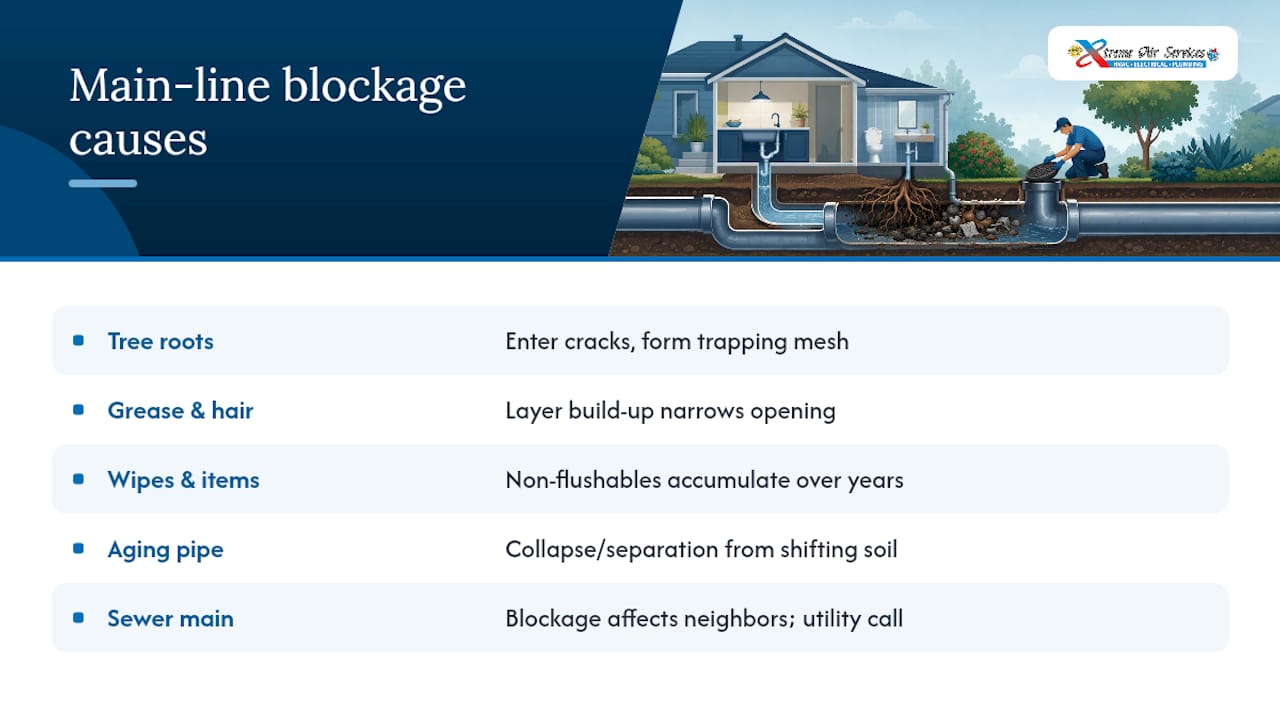
Older systems fail differently. Pipe collapse or separation from age, shifting soil, or ground settling can choke off flow even with clean pipe walls. And sometimes the problem isn’t your line at all. If neighbors on your block report the same backups around the same time, the municipal sewer main may be blocked, which means a call to your local utility, not just your plumber.
Why Sewage Backups Are a Health Risk, Not Just a Mess
Raw sewage carries bacteria and pathogens that regular household cleaning products aren’t designed to handle. Any backup that reaches carpet, drywall, or personal belongings usually calls for professional sanitization and documentation for insurance, not a DIY scrub session.
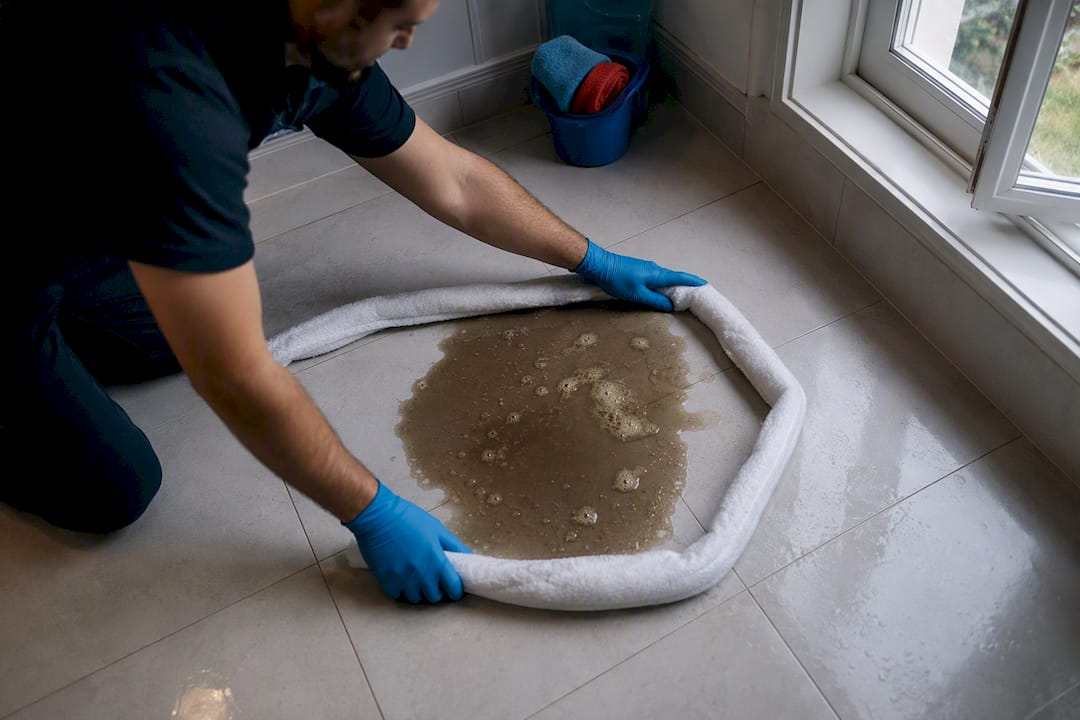
For small, isolated spills, glove up, ventilate the area, keep pets and kids out, and disinfect hard surfaces once the water is gone. Anything larger than that belongs to a remediation crew.
Our Take: Speed Beats Guesswork Every Time
The homeowners who fare best with main line clogs are the ones who stop using water at the first gurgle instead of waiting for a second bathroom to back up too. Every hour of delay gives standing wastewater more time to find drywall, subfloor, or carpet to soak into, and that damage costs far more to fix than the clog itself.
For maintenance habits that head off recurring backups, our home plumbing maintenance checklist is worth bookmarking. When you do call in a professional, expect a camera inspection before any tool touches your pipe. That’s how a real diagnosis works.
— Xtreme
Get Your Main Line Checked Before It Becomes an Emergency
Recurring gurgles, slow drains, or that faint sewer smell rarely resolve on their own, and waiting usually means a bigger repair bill later. Xtreme Air Services handles everything from routine drain cleaning to full sewer line repair for homes and businesses in the Dallas, TX area, with camera diagnostics that pinpoint the actual problem before any work starts. If your main line has failed once, it’s worth understanding your pipe materials too, since some are far more prone to root intrusion and collapse than others. It is advisable to schedule an inspection before a slow drain turns into standing water on your floor.
Sources
- Main Drain Clog Symptoms (How to Tell If Your Sewer Line Is Blocked) | HomeTips
- Signs of a Sewer Drain Clog | The Spruce
FAQ
How Do I Know If My Main Drain Line Is Clogged?
Watch for multiple fixtures slowing down or backing up together, gurgling sounds when you flush or run water, and backups at your lowest drains like a basement floor drain. That combination points to the main line rather than a single clogged fixture.
How Can I Unclog My Main Drain Pipe Myself?
Minor, localized clogs sometimes respond to a plunger, boiling water, or enzyme cleaners, but these rarely clear a real main-line blockage. For anything beyond a single slow fixture, a plumber using a motorized auger or hydrojetting is the reliable fix.
How Do You Unblock a Main House Drain?
Professionals typically access the line through the sewer cleanout, run a camera to locate the blockage, then clear it with a motorized auger for roots and debris or hydrojetting for grease buildup. Severely damaged pipe may need spot repair or trenchless replacement instead.
How Long Does It Take to Unclog a Main Sewer Line?
A straightforward clog cleared with an auger or hydrojetting often takes just a few hours once a technician is on-site. Jobs involving pipe damage, trenchless repair, or excavation take longer and depend on the extent of the damage found during the camera inspection.