


Air Conditioning Repair Service in Dallas
Same-day AC repair for Dallas homes, starting with the real reason your system stopped cooling.
What’s Covered on This Page
- AC Not Cooling Diagnosis Finds the Real Problem Fast
- Emergency / Same-Day AC Repair Gets a Technician There Fast
- Central Air Conditioning Repair for Dallas Homes
- AC Compressor Replacement for Major Component Failure
- AC Capacitor Replacement Solves Common Start-Up Failures
- Refrigerant Recharge / Leak Repair Restores Proper Cooling
- Frozen Coil Repair Clears Ice Buildup and Restores Airflow
- AC Preventive Maintenance Catches Problems Before They Spread
- AC Tune-Up Service Covers a Complete System Checklist
- 24-Hour AC Repair for Nights and Weekends
- How fast can you get a technician to my home in Dallas?
- Why did my AC just stop working out of nowhere?
- How do attic-mounted units in Dallas homes affect repairs?
- How do I know if I need a diagnosis or a full system repair?
- What’s the difference between same-day repair and emergency repair?
- Does my home’s age affect what kind of AC repair I need?
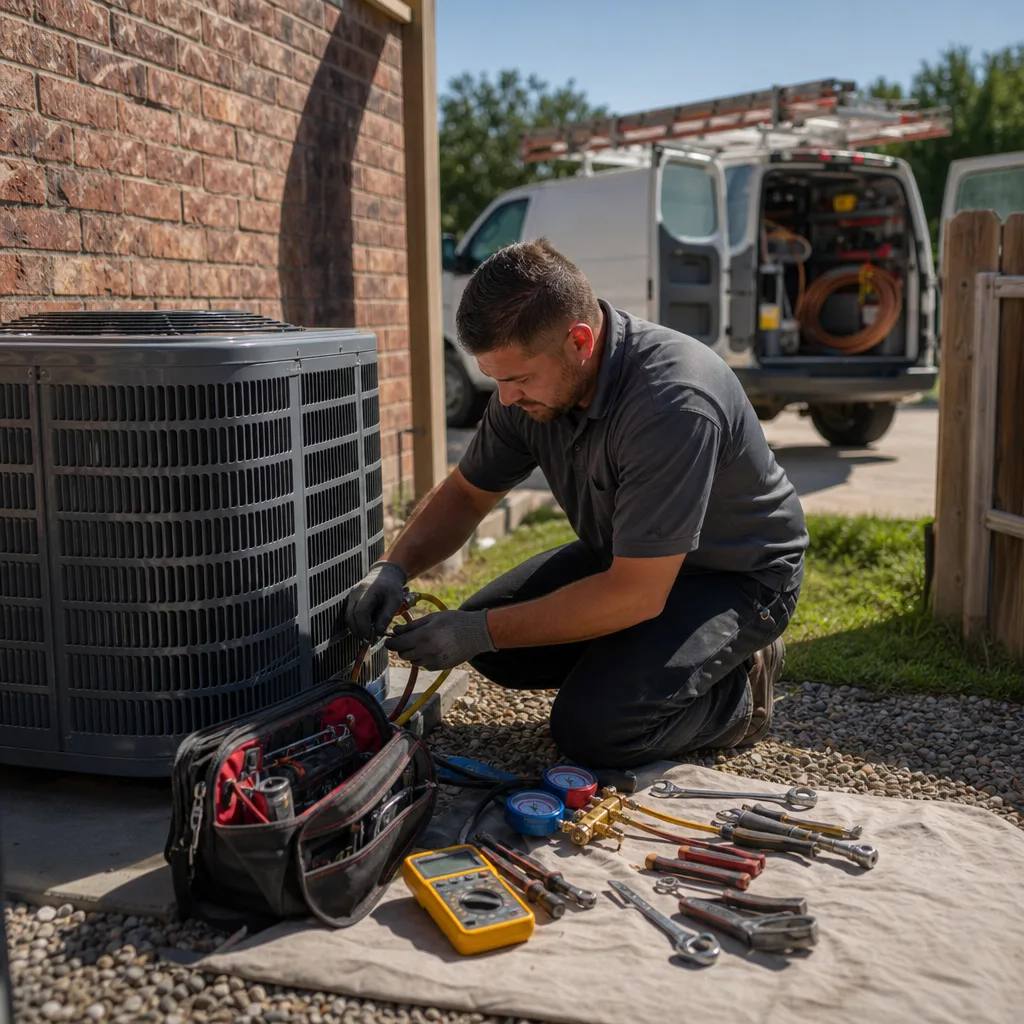
Warm air from the vents, a unit that hums but won’t start, ice on the copper lines. Each of these points to a different problem, and each one needs a different fix. At Xtreme Air Services – North Dallas, our air conditioning repair service in Dallas starts with one rule: find the real cause before anything gets replaced.
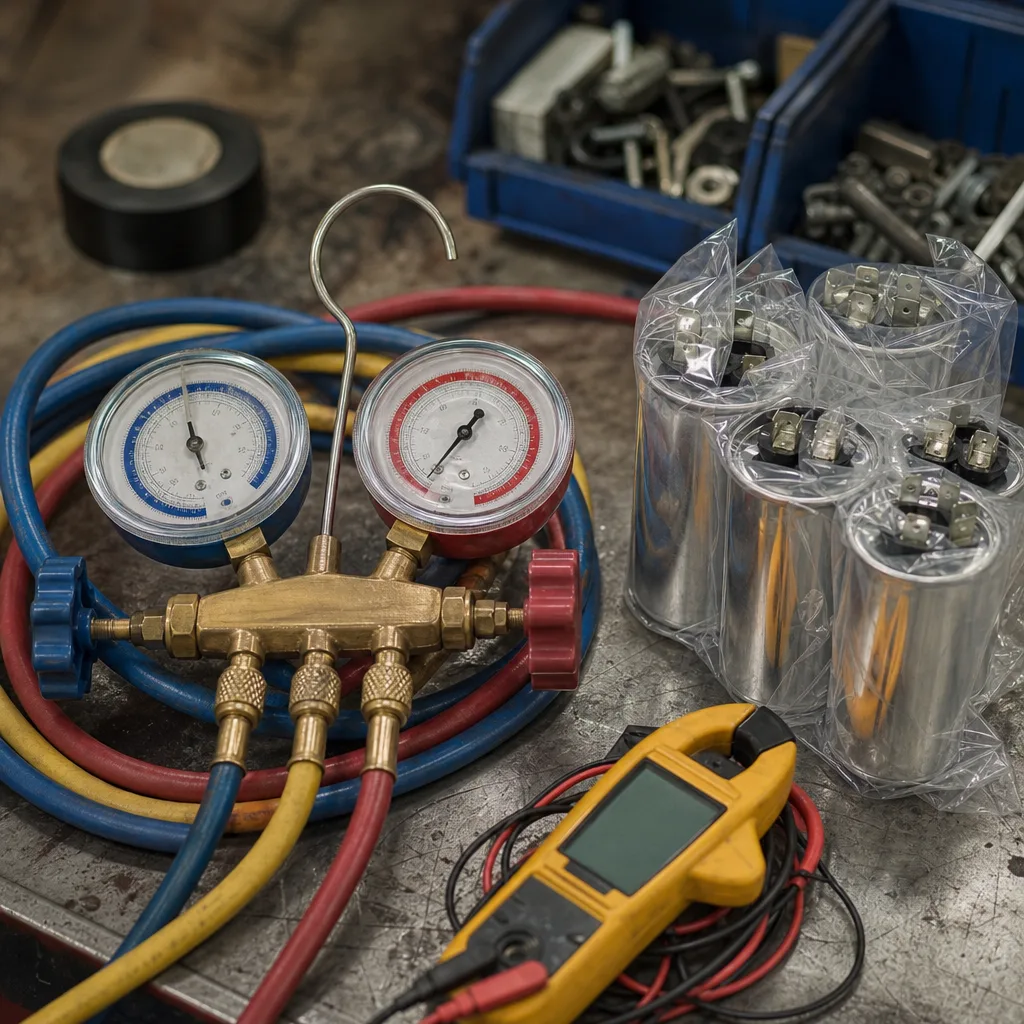
That idea runs through this whole page. The right repair starts with the right diagnosis. Below you’ll find each AC service we offer in Dallas, what it covers, and how it differs from the service next to it. If you just moved here, this page can help you figure out what you need before you pick up the phone.
We’ve been serving Dallas since 2009, and we work under HVAC License #TACLA29023C. Heating and other whole-system work belong to our HVAC contractor side, so this page sticks to one job: getting a struggling AC cooling again. Not sure where your problem fits? Call 469-213-3107 and talk to a real person today.
AC Not Cooling Diagnosis Finds the Real Problem Fast
Is your AC running but the air feels warm, or is it barely moving at all? That’s the most common reason people call us, and it’s where an AC not cooling diagnosis comes in. It’s the starting point. We don’t order a compressor, capacitor, or coil until we know what’s wrong.
A good AC not cooling diagnosis follows a set order. It starts with the simple things and works toward the bigger parts:
- Airflow first: the filter, the blower, and the supply vents and return.
- Refrigerant next: system pressures and any signs of a leak.
- Electrical parts last: the capacitor, contactor, wiring, and thermostat signal.
This order is the step people want to skip. They’ve read online that it’s the compressor, and they want it swapped today. But a clogged filter or a weak capacitor can look a lot like a dead compressor from inside the house. Checking things in order keeps you from paying for a part you didn’t need.
Once we know the cause, we’ll explain it in plain English and tell you which repair makes sense for your home. Learn more about how we track down cooling problems on our AC Not Cooling Diagnosis page.
Emergency / Same-Day AC Repair Gets a Technician There Fast
It’s mid-afternoon in July. The thermostat says 84 and climbing, and you’ve got kids or older parents at home. You don’t want an appointment next Thursday. You want a technician at your door today.
That’s what emergency / same-day AC repair is for. You call, we find a spot on today’s schedule, and a technician heads your way with the parts most likely to get you cooling again. Call Today, Service Today is how we plan our day, not just a line on a truck.
Texas summers are why this matters so much. When it’s over 100 degrees outside, a house without AC heats up fast. That’s hard on people and pets, and a quick response makes a real difference.
Here’s how emergency / same-day AC repair differs from 24-hour AC repair. Same-day is about how fast we respond once you call. 24-hour repair is about being available at any hour, even late at night. Most same-day calls come in during the day, when you notice the house can’t keep up.
If your home’s getting hot right now, see how our Emergency / Same-Day AC Repair team handles short-notice visits, or just give us a call.
Thinking about Air Conditioning Repair Service? Let’s talk.
Call Today, Get Service Today. Xtreme Air Services — North Dallas is ready to help.
Central Air Conditioning Repair for Dallas Homes
Central air conditioning repair covers the whole system that cools your house. That includes the outdoor condenser, the indoor coil and blower, the thermostat, and the ductwork that carries cool air to every room. It’s the broadest repair we do, and it’s usually where you land when you know something’s off but don’t know which part failed.
Most Dallas homes run on ducted central systems, and the indoor unit often sits in the attic. That location matters. Summer attic heat puts extra strain on wiring, drain lines, and the blower.
The age of your home changes the approach too. Older slab-on-grade ranch homes from the 1950s through the 1990s often have systems that were added, swapped, or patched over the years. In those homes, we look at how all the pieces fit together, not just the part that quit. Newer subdivisions tend to have more recent equipment with more sensors and tighter settings, so the repair often comes down to electronics and controls.
Either way, central air conditioning repair means looking at the whole system before fixing one piece. Get a closer look at how we handle whole-home systems on our Central Air Conditioning Repair page.
Not sure which part of your system is acting up? Call 469-213-3107 and we’ll help you sort it out today.
AC Compressor Replacement for Major Component Failure
Dallas summers don’t give your AC a break. When it’s 100 degrees for weeks at a time, the compressor runs almost nonstop, and it takes the hardest hit of any part in your system.
The compressor sits in the outdoor unit and pumps refrigerant through the whole system. It’s the biggest moving part your AC has. When it fails, cooling stops. AC compressor replacement swaps out that failed part so your system can move refrigerant again.
Signs that point toward the compressor include:
- A loud hum from the outdoor unit, but the system won’t start
- The breaker tripping soon after the AC kicks on
- A click from the outdoor unit, then nothing
- Warm air from the vents even though the outdoor unit seems to be running
Here’s the catch. Several of those signs also show up when a capacitor fails, and capacitor replacement is a smaller, faster fix. That’s why we always test the capacitor before we talk about AC compressor replacement. If the compressor really is done, we’ll show you what we found and lay out your options so you can decide what’s right for your home. No pressure.
You’ll find more about compressor work on our AC Compressor Replacement page.
AC Capacitor Replacement Solves Common Start-Up Failures
A failed capacitor can look a lot like a failed compressor. Both can cause a humming unit that won’t start or a breaker that keeps tripping. The big difference is the size of the fix.
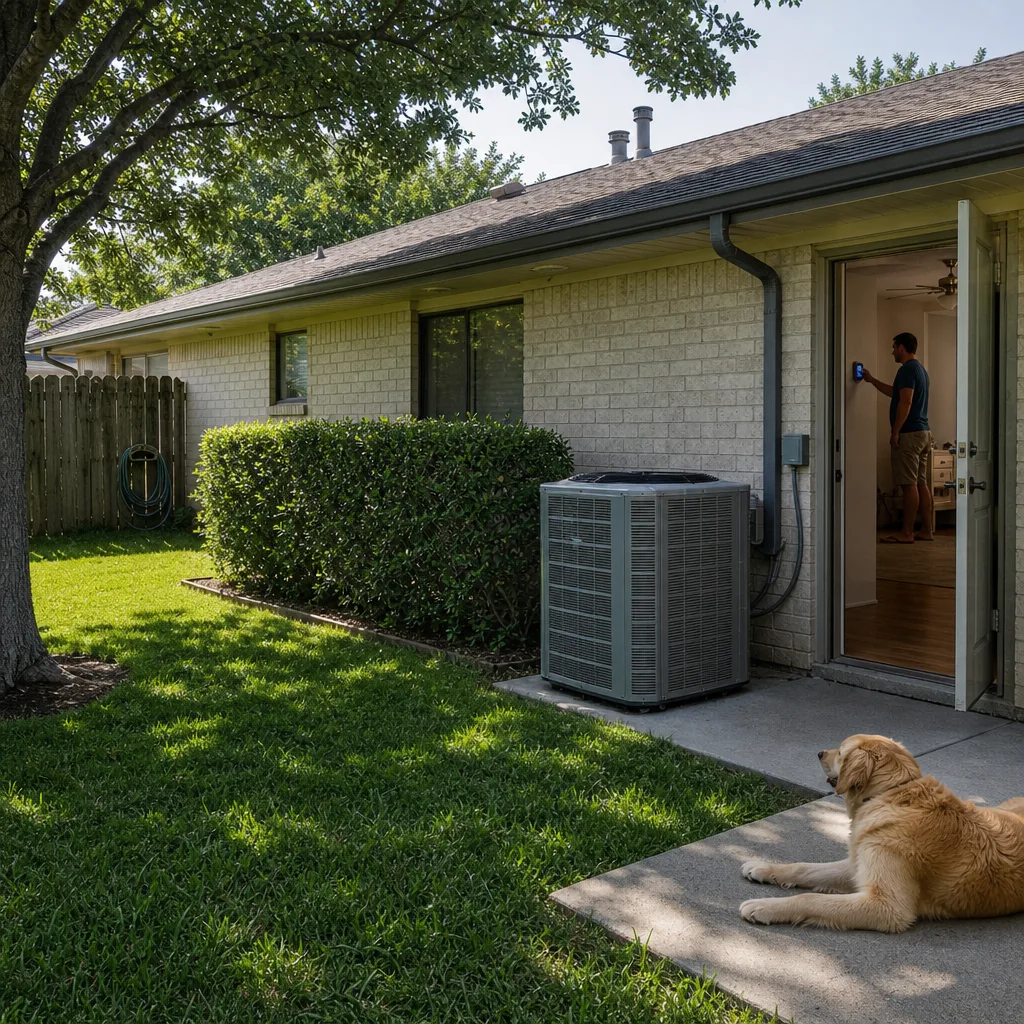
A capacitor is a small part, about the size of a soda can, that gives the compressor and fan motor a strong jolt of power to get started. When it weakens, those motors struggle or don’t start at all. Capacitors wear out often, and Dallas heat speeds that up.
AC capacitor replacement is quicker than compressor work because the part is small and easy to reach behind the outdoor unit’s service panel. A technician can test it with a meter, confirm it’s weak, and swap it on the same visit in most cases.
That’s why it gets checked first. If your unit won’t start, there’s a fair chance the capacitor is the cause, not the compressor. It’s worth knowing before you assume the worst.
A word of caution, though. Capacitors can hold a charge even with the power off, so this isn’t a safe DIY job. Leave it to a technician. Read more about capacitor work on our AC Capacitor Replacement page.
Ready when you are – get in touch today.
Call Today, Get Service Today. Xtreme Air Services — North Dallas is ready to help.
Refrigerant Recharge / Leak Repair Restores Proper Cooling
Refrigerant doesn’t get used up like gas in a car. It moves through a closed loop, so if your system is low, there’s a leak somewhere. That’s why refrigerant recharge / leak repair is really two jobs in one: find the leak, then fix it and refill the system to the right level.
Topping off refrigerant without finding the leak is like filling a tire that still has a nail in it. It’ll feel fine for a while. Then you’re right back where you started.
In our view, a top-off with no leak search isn’t doing right by you.
Refrigerant problems tend to show up in late spring. Systems sit through a mild winter, then get switched on and pushed hard as Dallas heats up. A small leak that didn’t matter in March can show up fast in May.
Low refrigerant has a few common signs: weak cooling, a system that runs and runs, a hissing sound near the lines, or ice forming on the coil or copper lines. That last one often ties into frozen coil complaints, though ice doesn’t always mean low refrigerant.
Learn how we find and fix leaks on our Refrigerant Recharge / Leak Repair page.
Frozen Coil Repair Clears Ice Buildup and Restores Airflow
You walk outside and see frost on the big copper line, or you find ice coating the indoor coil. That’s a frozen coil. Frozen coil repair comes down to two things: thawing it safely and fixing whatever caused it.
A lot of people assume a frozen coil always means low refrigerant. Sometimes it does. But restricted airflow is a frequent cause too. A clogged filter, a dirty evaporator coil, blocked returns, or a weak blower can all keep enough warm air from crossing the coil. The coil gets too cold and ices over.
Dallas has a pattern here. Systems that sit mostly idle through a mild spring often freeze up during the first long hot stretch. They restart under full load, and any airflow problem that built up over the off-season shows up all at once.
If you see ice, switch the system off and let it thaw. Running it frozen puts extra strain on the compressor. Don’t chip at the ice, either.
Frozen coil repair is different from an AC not cooling diagnosis. A frozen coil is a specific symptom you can see with your own eyes. An AC not cooling diagnosis is the broader check we use when the cause isn’t obvious yet. See more on our Frozen Coil Repair page.
Watch Our Video
See How We Handle Air Conditioning Repair Service in Dallas
Xtreme Air Services — North Dallas
AC Preventive Maintenance Catches Problems Before They Spread
A tune-up is one visit. AC preventive maintenance is the habit behind it – the ongoing approach of catching small problems before they turn into big ones.
Think of it as looking after your system all year, not booking a single appointment. It means getting the system checked on a regular schedule, changing filters on time, and dealing with small warning signs when you first notice them.
Here’s why that matters in Dallas. Say your airflow has been a little weak for a while. It’s easy to ignore. Weak airflow makes the system run longer and hotter, though, and come August, that extra load lands on the compressor. A small fix in spring can turn into a major repair at the worst time of year.
The hardest part of AC preventive maintenance isn’t the work, it’s remembering to do it before something breaks.
Good AC preventive maintenance gives you fewer surprises, steadier cooling, and a better shot at a long-lasting system. It’s the strategy. The tune-up is where the hands-on work happens.
Find out how we help you stay ahead of breakdowns on our Air Conditioning Repair Service page.
Not sure what your Air Conditioning Repair Service project needs? Ask us.
Call Today, Get Service Today. Xtreme Air Services — North Dallas is ready to help.
AC Tune-Up Service Covers a Complete System Checklist
An AC tune-up is the visit itself: one scheduled appointment where a technician works through a set checklist on your system. If preventive maintenance is the plan, the AC tune-up is the part where someone shows up with tools.
During an AC tune-up, we typically check:
- The air filter, and whether it’s the right size and type
- Electrical connections, capacitor readings, and the contactor
- Condenser and evaporator coil condition
- The condensate drain line, so water drains freely
- Thermostat operation and how the system cycles on and off
Most of what turns up on a tune-up is small. It might be a loose wire, a capacitor that’s starting to weaken, or a coil that needs cleaning. Catching those during a calm spring visit is a lot easier than finding them during a July breakdown.
At the end, we’ll tell you what we saw, what looks good, and anything worth keeping an eye on. You decide what happens next.
Spring is a smart time to book an AC tune-up in Dallas, before the heat sets in. See what’s included on our AC Tune-Up page.
24-Hour AC Repair for Nights and Weekends
Who picks up when your AC quits at 11 p.m. on a Saturday? That’s the question 24-hour AC repair answers. Same-day repair is about how fast we get to you once you call. 24-hour AC repair is about someone being there to answer at any hour.
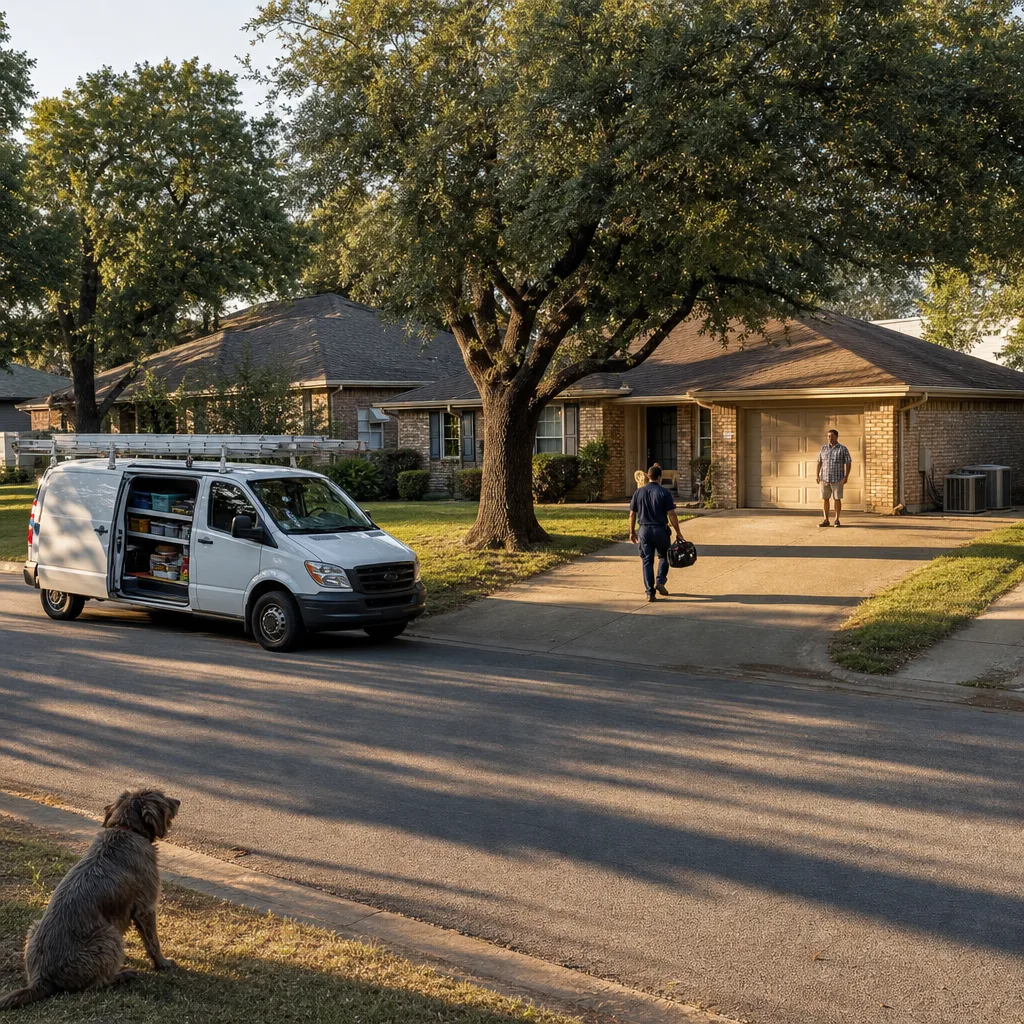
Dallas heat doesn’t clock out at 5 p.m. Some summer nights barely drop out of the 80s, and a house with no AC can stay uncomfortable well past midnight. Upstairs bedrooms get it worst. If you’ve got a baby, an older family member, or someone with health concerns at home, waiting until Monday isn’t a real option.
With 24-hour AC repair, you call and talk to a real person around the clock, not a voicemail box. We’ll ask what’s happening, walk you through any safe steps you can take right away, and get a technician headed your way.
After-hours repairs follow the same rule as everything else on this page. We find the real cause first, then get it done right the first time, no matter what the clock says. Learn more about our after-hours coverage on our 24-Hour AC Repair page.
If your AC quit today or tonight, call Xtreme Air Services – North Dallas at 469-213-3107 and talk to a real person who can help.
Frequently Asked Questions
Common questions about Air Conditioning Repair Service
How fast can you get a technician to my home in Dallas?
We aim for same-day service on most calls, especially during peak summer heat. Call 469-213-3107 and we’ll find the soonest spot on the schedule. When it’s over 100 degrees outside, a house without AC heats up fast, so we treat these calls with urgency and send a technician with the parts most likely to fix common failures.
Why did my AC just stop working out of nowhere?
Sudden AC failure usually traces back to airflow, refrigerant, or an electrical part like a capacitor or contactor. A tripped breaker, a dead capacitor, or a clogged filter can all make your system quit without warning. We check these in order, starting simple, before we talk about bigger repairs like compressor work.
How do attic-mounted units in Dallas homes affect repairs?
Attic heat puts extra strain on wiring, drain lines, and the blower in most Dallas central air systems. Many homes here have the indoor unit sitting in the attic, so summer temperature swings can wear down parts faster than in a conditioned space. This is a big reason attic systems need a full once-over, not just a quick part swap.
How do I know if I need a diagnosis or a full system repair?
Start with a diagnosis if you’re not sure what’s wrong, since it finds the real cause before any parts get ordered. If your system is older or problems keep popping up in different spots, central air conditioning repair looks at the whole system together. A good technician will tell you which one fits your situation.
What’s the difference between same-day repair and emergency repair?
Same-day repair means we respond quickly once you call during the day, usually when you first notice the house can’t keep up. Emergency or 24-hour repair covers availability at any hour, including late at night. Most calls in Dallas come in during the afternoon heat, so same-day service covers the bulk of what homeowners need.
Does my home’s age affect what kind of AC repair I need?
Yes, older slab-on-grade homes from the 1950s through the 1990s often have systems that were patched or swapped over the years, so repairs need to account for how the pieces fit together. Newer subdivisions tend to have equipment with more sensors, so issues there often come down to electronics and controls instead.
Ready to Get Started?
Call (469) 213-3107 Today, Get Service Today.